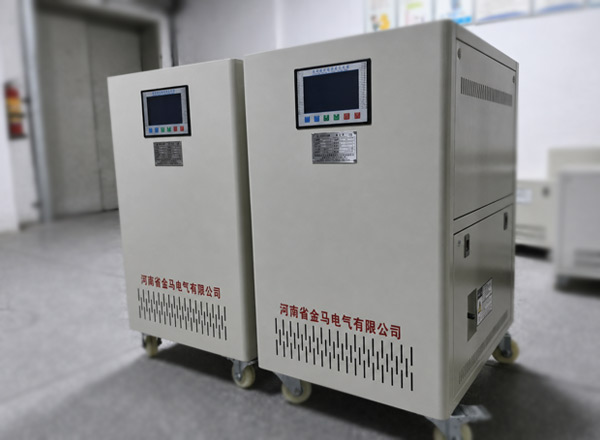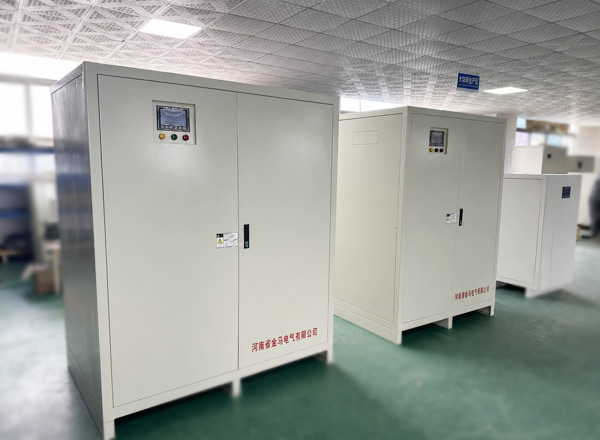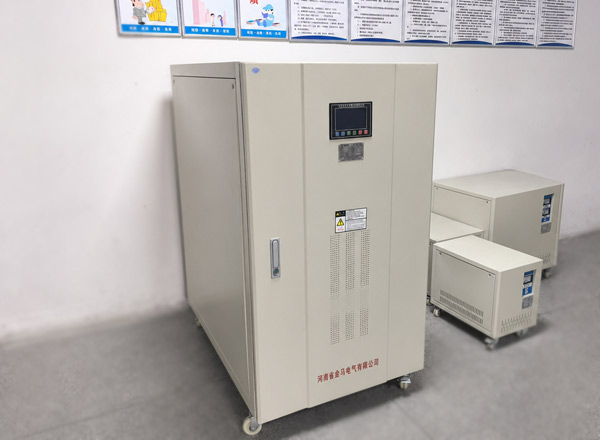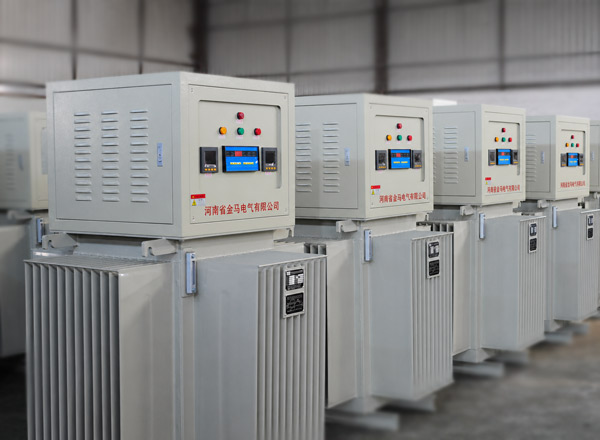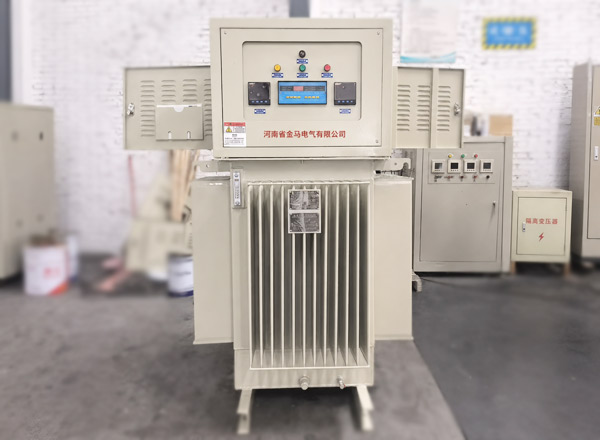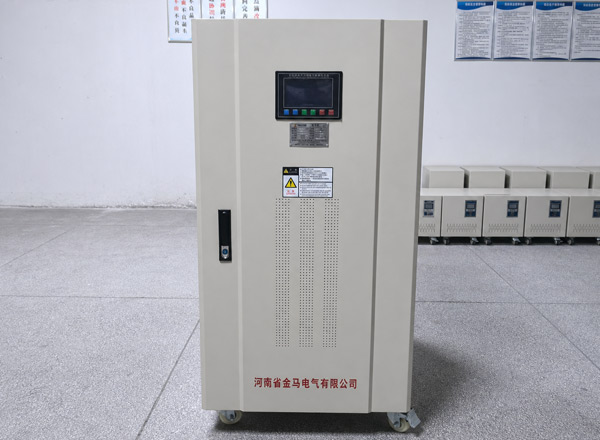
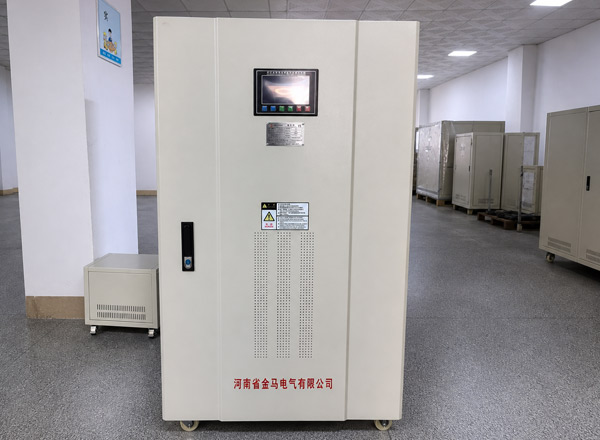
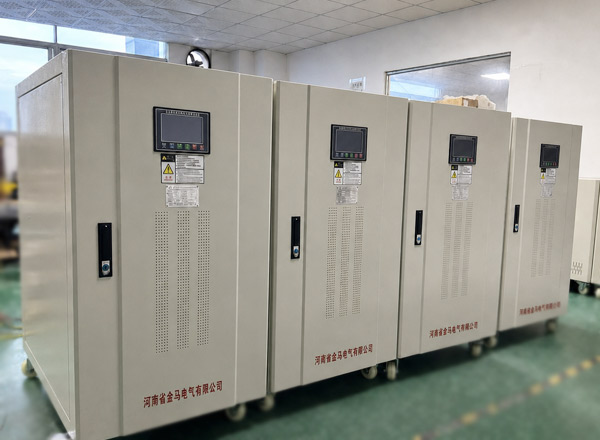
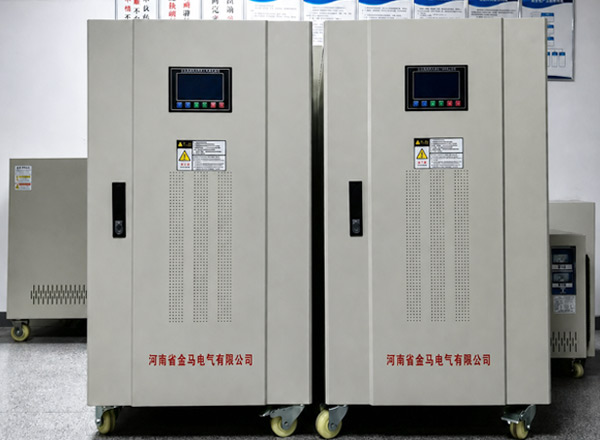
A three-phase photovoltaic voltage stabilizer is an AC power-conditioning device that monitors the operating voltage and compensates for overvoltage or undervoltage.
It is installed on the AC side of the photovoltaic system. Solar panels generate DC electricity, while the inverter converts that power into three-phase AC. The stabilizer does not replace the inverter or connect directly to the PV modules.
Its function depends on the installation:
The stabilizer capacity should be selected from the maximum AC apparent power passing through the unit, not directly from the solar array’s DC kWp rating.
Use the following basis for different installation positions:
| Maximum AC Apparent Power | Suggested JINMA Stabilizer | Typical PV Application |
| Up to 8 kVA | 10 kVA | Small three-phase PV auxiliary feeder |
| 8–12 kVA | 15 kVA | Monitoring, lighting, ventilation, and small pumps |
| 12–16 kVA | 20 kVA | Small commercial PV load circuit |
| 16–24 kVA | 30 kVA | Commercial solar-powered equipment feeder |
| 24–32 kVA | 40 kVA | Small three-phase inverter or auxiliary system |
| 32–40 kVA | 50 kVA | PV-powered workshop or building-service loads |
| 40–48 kVA | 60 kVA | Commercial PV inverter or mixed-load feeder |
| 48–64 kVA | 80 kVA | Medium solar self-consumption system |
| 64–80 kVA | 100 kVA | Factory PV feeder or larger auxiliary system |
| 80–96 kVA | 120 kVA | Commercial or industrial PV connection |
| 96–120 kVA | 150 kVA | Larger inverter feeder or solar-powered production line |
| 120–160 kVA | 200 kVA | Industrial rooftop PV or distributed-generation feeder |
| 160–200 kVA | 250 kVA | Large industrial self-consumption system |
| 200–240 kVA | 300 kVA | Multi-inverter commercial PV installation |
| 240–320 kVA | 400 kVA | Large factory PV feeder or centralized connection point |
This table includes approximately 20–25% preliminary capacity allowance. It is intended for model shortlisting rather than final electrical design.
A larger stabilizer may be required when:
For a three-phase circuit, apparent power can be estimated from:
kVA = 1.732 × Line Voltage × Maximum Current ÷ 1,000
For an inverter-side installation, use the manufacturer’s maximum AC output current, not only its nominal kW rating.








No. It operates on three-phase AC power after the photovoltaic inverter, not on the solar array’s DC output.
No. A standard stabilizer may support only one-way power flow. Grid export requires a specifically approved bidirectional configuration.
Use the maximum inverter apparent power or maximum simultaneous load passing through the unit. Include reactive-power operation and design margin.
It may help with correctable AC voltage deviations. It cannot bypass anti-islanding, frequency, grid-code, or internal inverter protection.
Independent phase regulation can be configured when necessary. Phase-by-phase voltage and current measurements are required for selection.
Potentially, but power-flow direction, transfer sequences, frequency control, grounding, and inverter compatibility must be reviewed before installation.
Modern inverters may provide voltage-support functions, but their behavior depends on settings, available reactive-power capacity, and grid requirements. A dedicated stabilizer serves a different system-level role.
No. A separate frequency converter is required when the source and equipment frequencies differ.