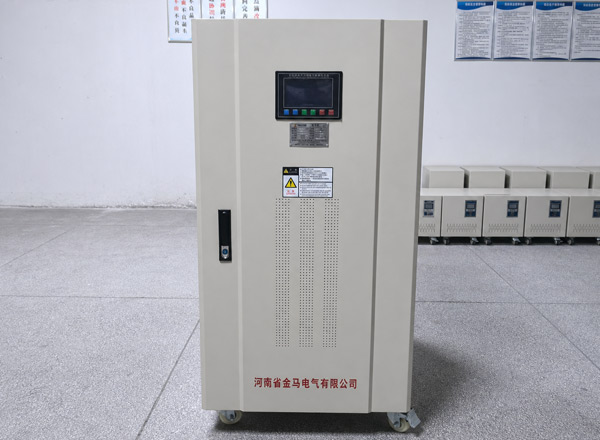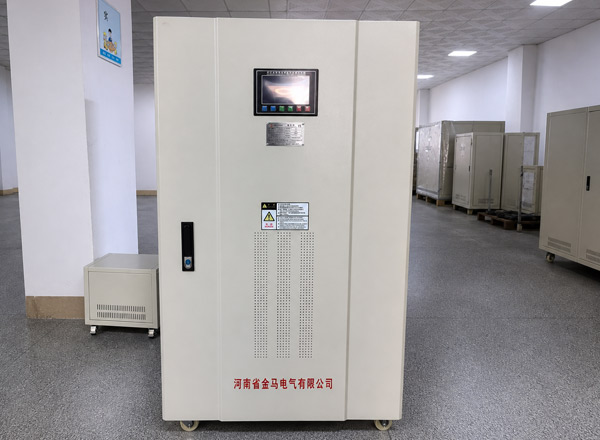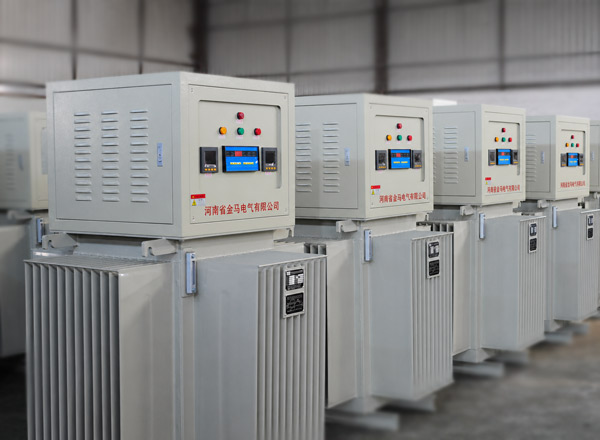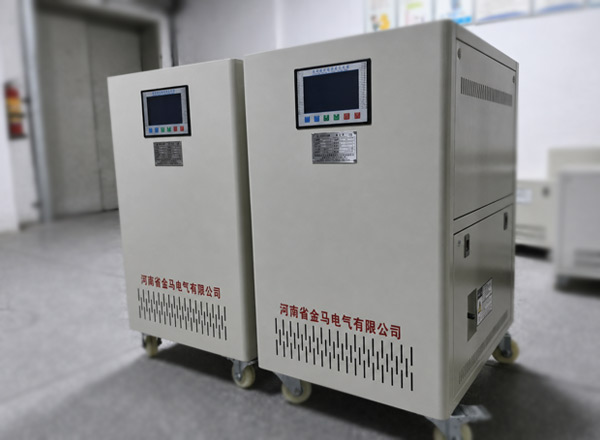
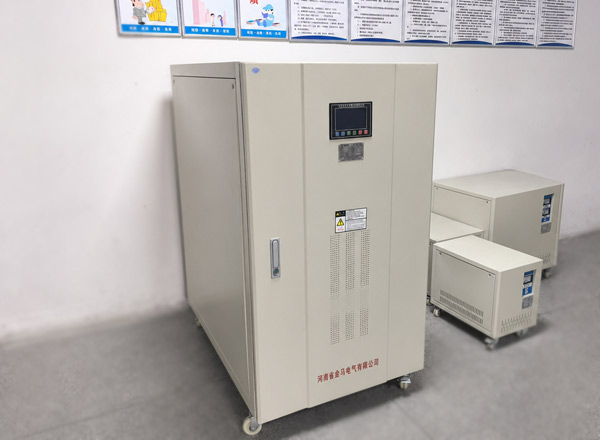
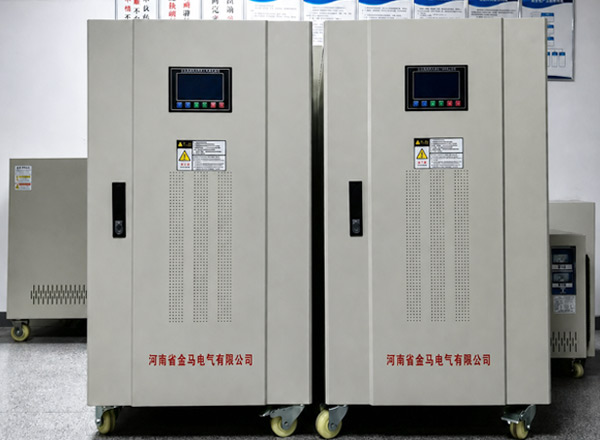
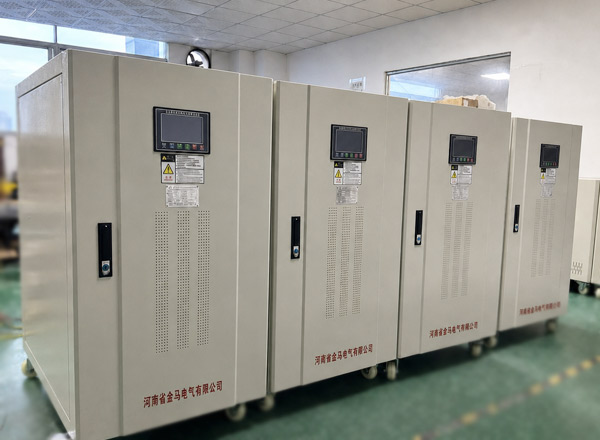
It is a three-phase automatic voltage regulation system designed to monitor incoming power and compensate for overvoltage or undervoltage before electricity reaches the connected equipment.
The numbers 380V, 415V, and 440V normally represent alternative nominal system or equipment voltages. A standard unit is configured to maintain one specified output voltage. It should not be assumed that the same stabilizer simultaneously supplies all three voltages unless a dedicated multi-voltage design is requested.






The Industrial Voltage Stabilizer is always monitoring the three-phase supply and making a comparison with what it should be putting out. If the voltage strays, the control system kicks in and tells the stabilizer to add a bit of corrective voltage to get things back on track.
This correction has the output slowly heading back towards the specified 380V, 415V, or 440V. Depending on what’s needed, this regulation can apply to all three phases or each one can be controlled independently. Independent phase regulation is often the way to go if the supply coming in or the loads are not balanced.
First and foremost, you need to confirm the minimum and maximum incoming voltage on all three phases during different production periods. A nominal supply value does not give you the full picture of what you need.
Provide JINMA ELECTRIC with all the necessary information including:
In a nutshell, a standard stabilizer is usually manufactured for one specific nominal output. To get a stabilizer that can output multiple voltages you need a custom engineered configuration.
The answer is quite simple – you use the voltage stated on the connected equipment nameplate. Verify that it matches the motor, control transformer, drives, heaters, and auxiliary circuits.
Yes it can, but you do need to select an independent phase-regulation design. Get the voltage measurements for each phase so we can evaluate the right topology.
Don’t just use the running power of the motors – take into account the combined maximum load, power factor, simultaneous operation, and starting current. Motors and compressors need to be properly sized.
Nope. The output frequency follows the incoming supply. If you need to change frequency, you’ll need to add a frequency converter.