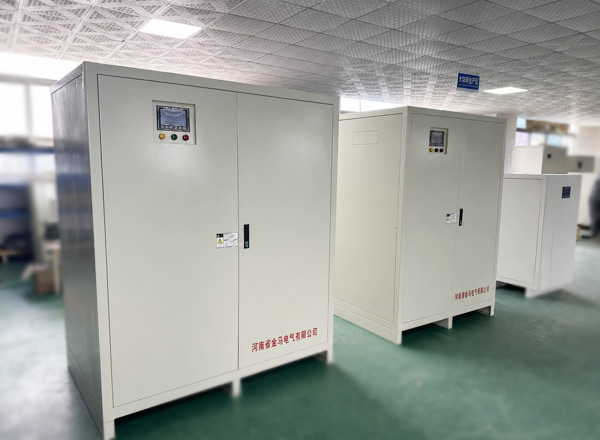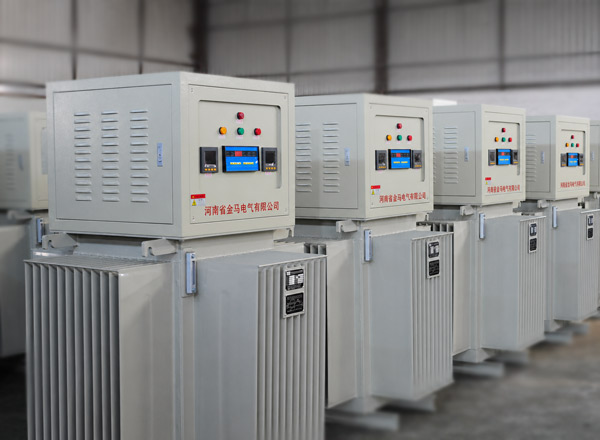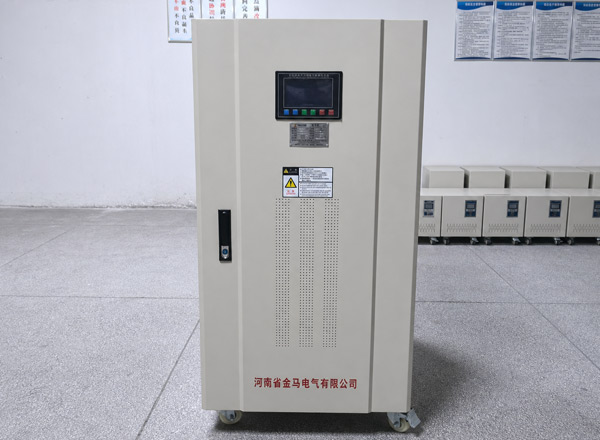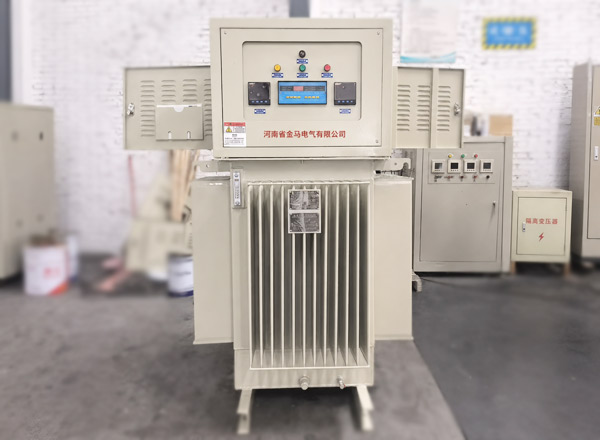
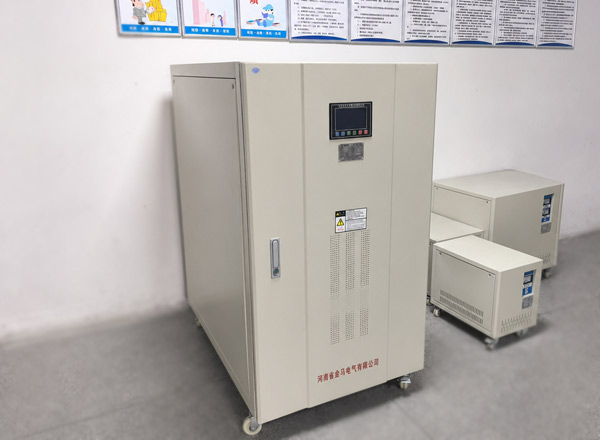
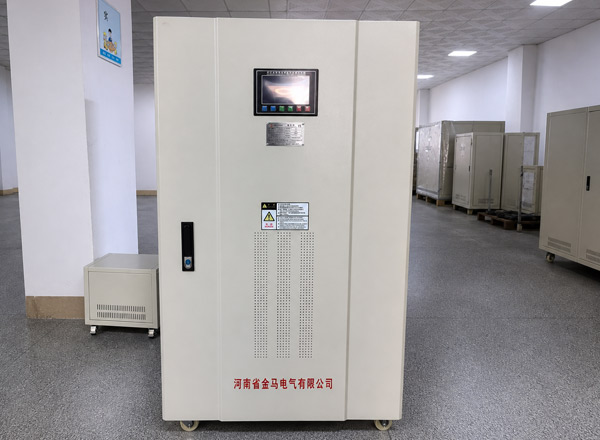
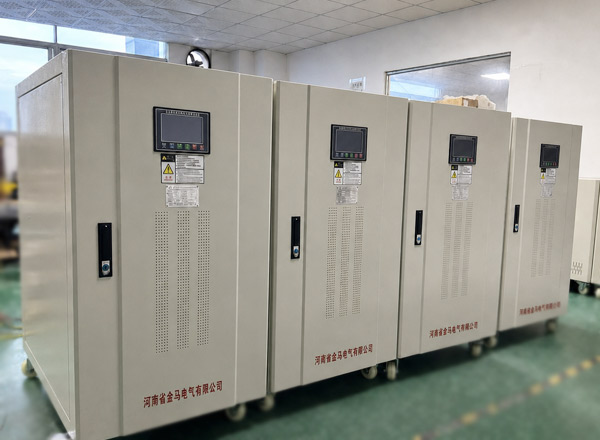
An industrial voltage stabilizer is an automatic power-conditioning device installed between the incoming electrical supply and the printing machine or line distribution panel.
It continuously measures the operating voltage and adjusts a compensation circuit when the supply deviates from the configured output value. This provides a more controlled electrical environment for motors, PLCs, drives, registration controls, print heads, heaters, and other machine components.
The stabilizer does not directly control color, registration, ink delivery, or curing temperature. Instead, it supplies suitable AC voltage to the systems responsible for these functions.
| Maximum Simultaneous Load | Suggested Stabilizer | Typical Printing Configuration |
| Up to 8 kVA | 10–15 kVA | Small digital printer, cutter, or screen-printing station |
| 8–20 kVA | 15–30 kVA | Single compact offset press or digital production printer |
| 20–40 kVA | 30–50 kVA | Printing machine with feeder, compressor, and auxiliary equipment |
| 40–65 kVA | 60–80 kVA | Multicolor press or flexographic line with pumps and dryers |
| 65–95 kVA | 100–120 kVA | Larger press with UV curing, ventilation, or finishing equipment |
| 95–160 kVA | 150–200 kVA | High-speed gravure or flexographic line with drying tunnels |
| 160–320 kVA | 200–400 kVA | Multiple presses or a centralized printing-workshop feeder |
These are preliminary recommendations. Motor starting current, UV or thermal drying load, low-input-voltage operation, and future expansion may require a larger model.







Printing lines often combine several types of load:
The stabilizer must be sized from the complete load profile rather than only the rated power of the printing press.
Provide the equipment nameplate voltage, maximum current, frequency, power factor, operating sequence, and wiring arrangement. Identify which dryers, compressors, pumps, ventilation fans, and finishing machines operate simultaneously.
Record the minimum and maximum voltage on every phase. Where VFDs, rectifiers, or electronic UV systems represent a substantial load, harmonic measurements may also be required.
Compact machines may require 10–30 kVA, while presses with dryers and auxiliaries may require 60–200 kVA. Final sizing must use maximum simultaneous load.
Yes. Include the UV unit’s maximum input current, cooling equipment, exhaust fans, and any transformers or electronic power supplies.
Yes, if it is sized for their combined load and startup sequence. Separate downstream circuit protection remains necessary.
Independent phase regulation can be configured when required. Provide voltage and current measurements for each phase.
Not necessarily. Voltage regulation and harmonic filtering are different functions. Drives and rectifiers may require reactors or filters.
Yes, after confirming voltage, frequency, phase, neutral, grounding, and load requirements. Voltage conversion or isolation may require an additional transformer stage.