Reliable Dry-Type Transformers Manufacturer & Supplier

Jinma’s Dry-Type Transformers are a new generation of reliable, safe, eco-friendly, and energy-efficient power solutions. They are especially suitable for environments with high humidity, strict fire safety requirements, or fluctuating loads, such as airports, high-rise buildings, commercial complexes, industrial facilities, and energy infrastructure projects.

Contact our experts for a fast quote and customized solution tailored to your exact requirements!

What is a Dry-Type Transformer?

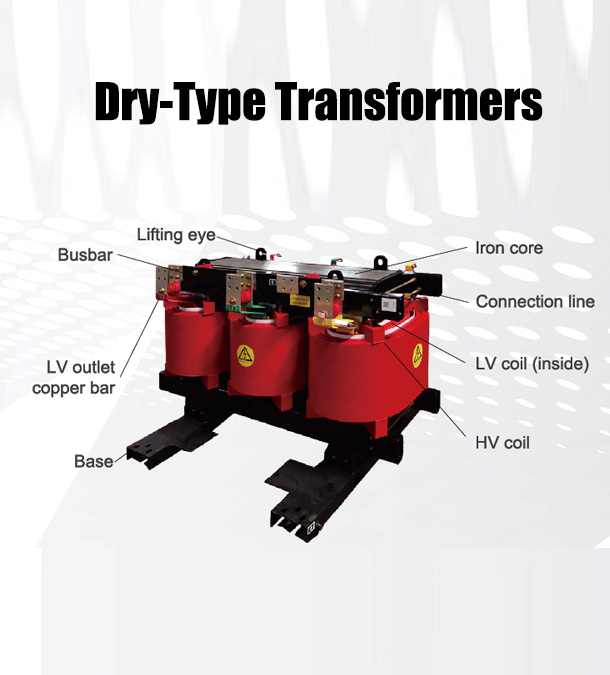
Dry-Type Transformers

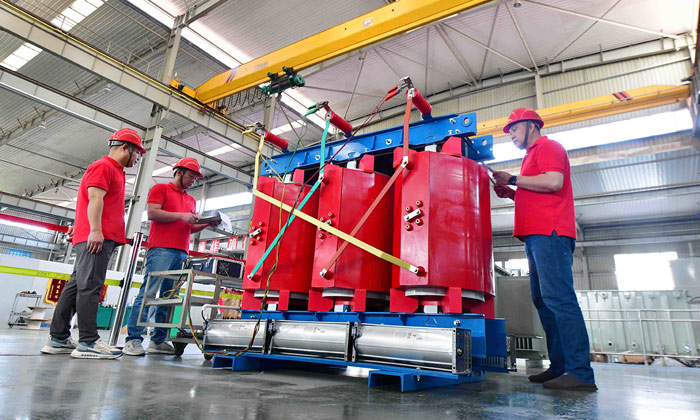
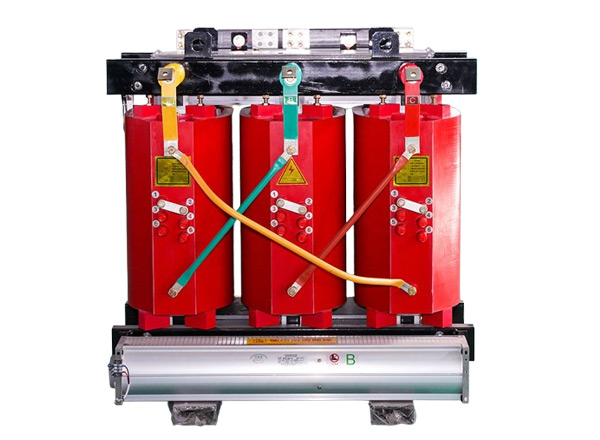
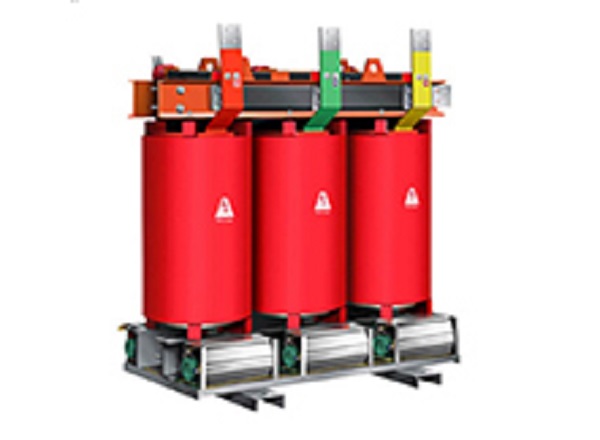
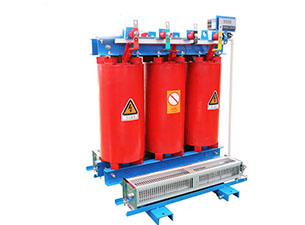
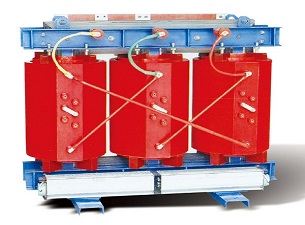
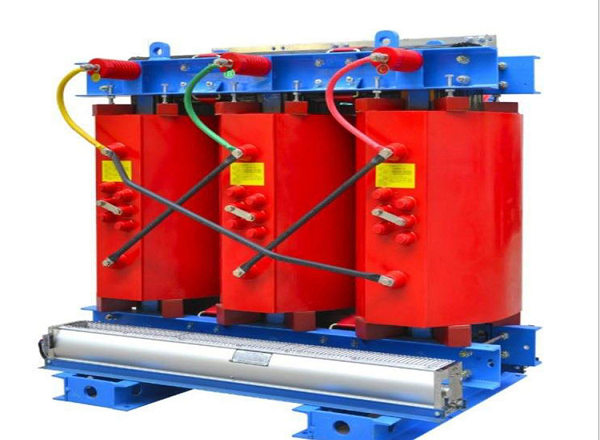
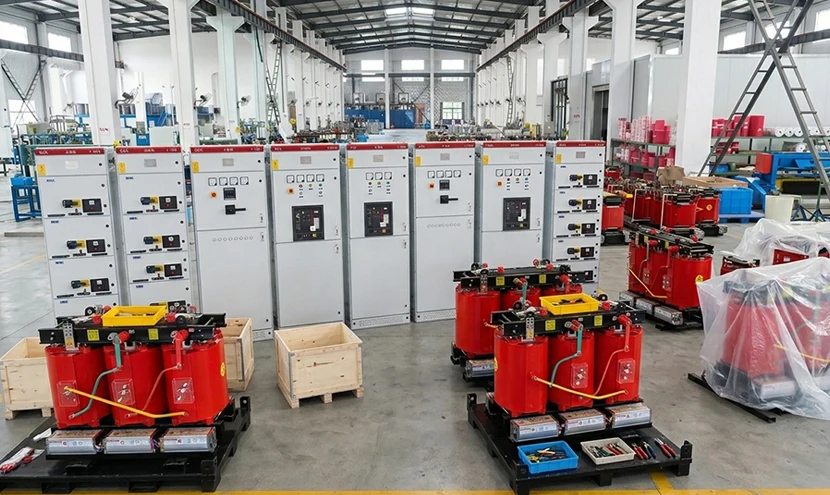
Dry-type transformers is a static electrical device that uses air as the cooling medium and solid insulation materials (such as epoxy resin) to insulate the windings. It transfers electrical energy between circuits through electromagnetic induction, converting alternating current (AC) from one voltage level to another without changing the frequency.

As a core component in indoor power supply systems, dry-type transformers perform three key functions:

  1. Step up/down voltage for indoor power transmission and terminal use;
  2. Ensure safe operation with fire-safe and pollution-free design, suitable for densely populated areas;
  3. Stabilize voltage output to protect sensitive electrical equipment from voltage fluctuations.

They are widely used in indoor and harsh-environment scenarios due to their superior safety, environmental friendliness and compact structure, making them indispensable for buildings, data centers and industrial facilities with high fire safety requirements.

Dry-Type Transformers

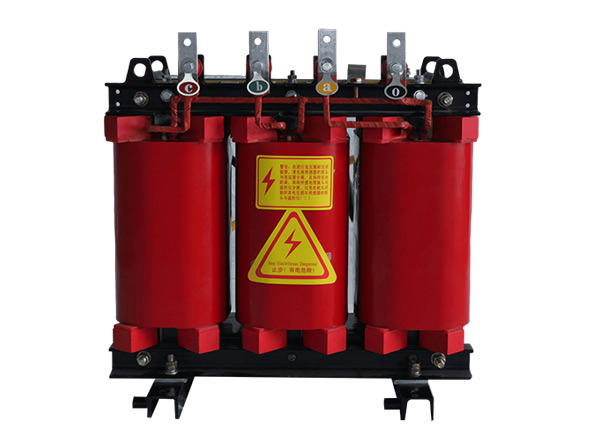
SCB18 6-11KV Dry Type Transformer

Rated Capacity: 30-2500kVA
Primary Voltage: 6/6.3/6.6/10/10.5/11kv
Secondary Voltage: 0.4kv
Specification: Customized
Certification: GB, CCC, IEC, IEEE, ANSI, UL, CE, KEMA

SCB14 6-11KV Dry Type Transformer

Rated Capacity: 30-2500kVA
Primary Voltage: 6/6.3/6.6/10/10.5/11kv
Secondary Voltage: 0.4kv
Specification: Customized
Certification: GB, CCC, IEC, IEEE, ANSI, UL, CE, KEMA

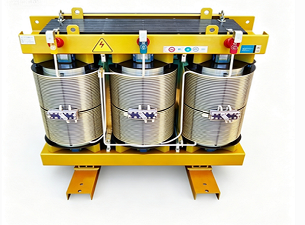
SGB13 non-encapsulated dry-type transformer

Rated Capacity: 30-2500kVA
Primary Voltage: 6/6.3/10kv
Secondary Voltage: 0.4kv
Specification: Customized
Certification: GB, CCC, IEC, IEEE, ANSI, UL, CE, KEMA

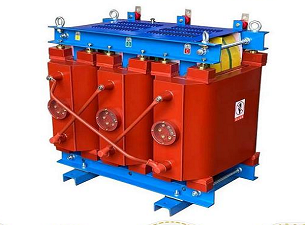
SCB13 6-10KV Epoxy Resin Cast Dry Type Transformer

Rated Capacity: 30-2500kVA
Primary Voltage: 6/6.3/10kv
Secondary Voltage: 0.4kv
Specification: Customized
Certification: GB, CCC, IEC, IEEE, ANSI, UL, CE, KEMA

SCB H15 amorphous alloy dry-type transformer

Rated Capacity: 30-2500kVA
Primary Voltage: 6/6.3/6.6/10/10.5/11kv
Secondary Voltage: 0.4kv
Specification: Customized
Certification: GB, CCC, IEC, IEEE, ANSI, UL, CE, KEMA

SCB13 10kV Epoxy Resin Cast Dry-Type Transformer

Rated Capacity: 30-2500kVA
Primary Voltage: 10kv
Secondary Voltage: 0.4kv
Specification: Customized
Certification: GB, CCC, IEC, IEEE, ANSI, UL, CE, KEMA

SCB12 6-11KV Dry-type Transformer

Rated Capacity: 30-2500kVA
Primary Voltage: 6/6.3/6.6/10/10.5/11kv
Secondary Voltage: 0.4kv
Specification: Customized
Certification: GB, CCC, IEC, IEEE, ANSI, UL, CE, KEMA

SC11 35KV Epoxy resin cast dry-type transformer

Rated Capacity: 800-25000kVA
Primary Voltage: 35/36/37/38.5kv
Secondary Voltage: 3.15/6/6.3/10/10.5/11kv
Specification: Customized
Certification: GB, CCC, IEC, IEEE, ANSI, UL, CE, KEMA

SCB11 10KV Dry-type transformer

Rated Capacity: 30kVA-2500kVA
Primary Voltage: 10kv
Secondary Voltage: 0.4kv
Specification: Customized
Certification: GB, CCC, IEC, IEEE, ANSI, UL, CE, KEMA
working principle
Benefits
why choose us
case
Buying Guide
Key Differences
faq

How a Dry-Type
Transformer Works

Dry-type transformers operate based on two core principles: electromagnetic induction (energy transfer) and air circulation cooling (heat dissipation). The detailed working process is as follows:

1. Energy Transfer via Electromagnetic Induction
•Primary Winding Activation: When alternating current (AC) flows through the primary winding, it generates a changing magnetic flux in the laminated iron core.
•Magnetic Flux Transmission: The iron core concentrates and guides the magnetic flux to the secondary winding, minimizing energy loss.
•Voltage Induction: The changing magnetic flux induces an alternating voltage in the secondary winding, with the voltage ratio strictly proportional to the turns ratio (V1/V2 = N1/N2).
•Energy Transfer: Electrical energy is transferred from the primary side to the secondary side through the magnetic field, completing voltage conversion.

2. Heat Dissipation via Air Circulation
•Heat Generation: During operation, the windings and core generate heat due to electrical resistance and magnetic losses.
•Air Heating: The surrounding air absorbs the heat from the windings and core, causing it to expand and rise.
•Circulation & Cooling: For natural cooling (AN) models, the heated air is replaced by cold air through natural convection. For forced air cooling (AF) models, fans blow cold air over the winding surface, accelerating heat dissipation. The cooled air circulates continuously to maintain stable operating temperature.

The solid insulation materials (epoxy resin) used in the windings provide excellent electrical insulation and mechanical strength, ensuring safe operation without oil leakage risks.
Dry-Type Transformers for sale

Core Advantages of
Our Dry-Type Transformers

Our dry-type transformers stand out in the global market with superior performance and cost-effectiveness, supported by advanced technology and strict quality control. Below are the core advantages that make us a preferred partner for global clients:

Fire-Safe & Environmental Friendly

All transformers adopt epoxy resin or cast resin insulation, featuring non-flammable, non-toxic and pollution-free properties. They eliminate the risk of oil leakage and combustion, complying with international fire safety standards (F1 class), making them ideal for indoor and densely populated areas.

Low Noise & Compact Design

The optimized winding and core structure, combined with high-quality insulation materials, reduce operating noise to ≤55dB (AN models) – 10-15dB lower than industry averages. The compact size saves installation space by 20-30% compared to traditional transformers, suitable for indoor environments with limited space.

High Insulation & Reliability

The windings are vacuum-cast with high-quality epoxy resin, providing excellent dielectric strength and mechanical strength. They can withstand harsh operating conditions (temperature range: -20℃ to +40℃) and have strong resistance to moisture, dust and corrosion, ensuring stable operation with a failure rate of less than 0.1%.

Maintenance-Free & Long Lifespan

No insulating oil or related maintenance is required, reducing operational costs by 30-40% over the product lifecycle. The high-quality core and windings extend the service life to 25-30 years, 5-10 years longer than ordinary dry-type transformers.

Flexible Customization

We support full-custom solutions for voltage level (10kV-110kV), capacity (5kVA-2000kVA+), insulation type (epoxy resin/cast resin), cooling method (AN/AF) and compliance with international standards (IEC, IEEE, ANSI, GB). Our engineering team can design products to meet unique project requirements, such as special voltage ratios and high-temperature adaptability.

Global Compliance & Certification

All products pass IEC 60076, ISO 9001, CE, UL and CB certifications, including specific fire safety certifications (e.g., UL 2200, IEC 61558). We provide customized certification documents for specific markets, facilitating customs clearance and project acceptance.

Why Choose Us as Your Dry-Type Transformer Partner?

10+ Years of Professional Manufacturing Experience

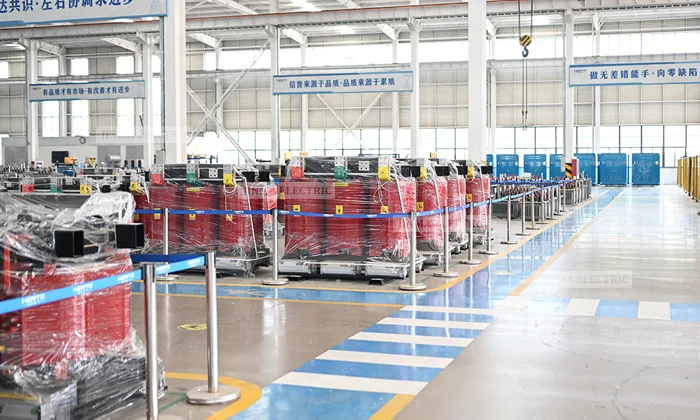
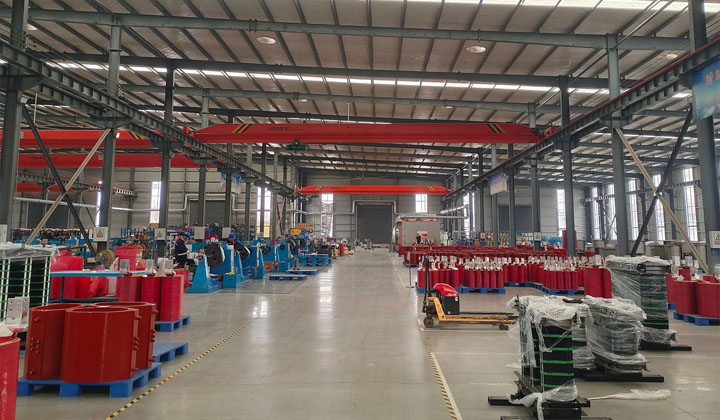
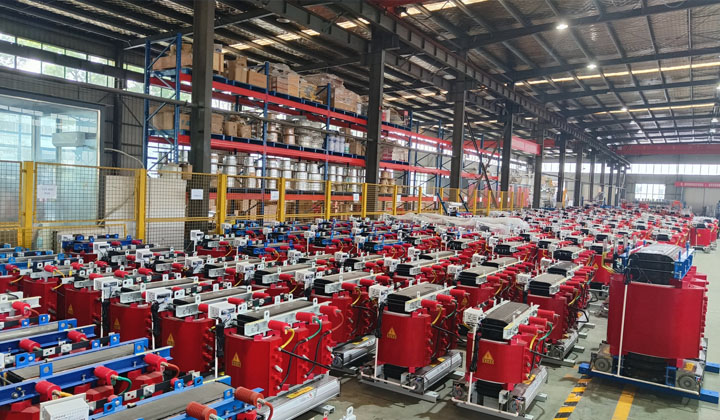
We have focused on dry-type transformer production for over 10 years, with a professional R&D team composed of senior engineers specializing in high-voltage dry-type power equipment. Our factory covers 12,000 square meters, equipped with advanced production lines (including automatic vacuum casting machines, precision winding machines) and strict quality control systems, with an annual production capacity of 8,000 units, enabling us to meet large-scale orders and ensure on-time delivery.

Global Project Experience & One-Stop Service

We have supplied dry-type transformers for data centers in Europe, high-rise buildings in Southeast Asia, and industrial facilities in North America. Our one-stop service covers project consultation, customized design, production manufacturing, logistics transportation, on-site installation guidance and after-sales maintenance. Our multilingual team (English, Spanish, Arabic, German, French) ensures smooth communication and efficient problem-solving for global clients.
OUR PROJECTS

Types Of Dry-Type Transformers — Buying Guide

Choosing the right dry-type transformer is critical to project performance, safety and cost-effectiveness. This buying guide helps you understand different types and select the most suitable model for your project:

By Insulation Type

(1)Epoxy Resin Dry-Type Transformer
•Core Features: Windings coated with epoxy resin; good insulation and mechanical strength; cost-effective.
•Advantages: Low cost, mature technology, easy maintenance; suitable for general indoor scenarios.
•Disadvantages: Lower moisture resistance than cast resin models; not suitable for humid environments.
•Capacity Range: 5kVA-1000kVA
•Best For: Small-medium indoor substations, office buildings, commercial shops, general industrial facilities.
(2)Cast Resin Dry-Type Transformer
•Core Features: Windings vacuum-cast with epoxy resin; fully sealed insulation; superior performance.
•Advantages: Excellent moisture resistance, corrosion resistance and dielectric strength; suitable for harsh environments.
•Disadvantages: Higher cost than epoxy resin models; longer production cycle.
•Capacity Range: 50kVA-2000kVA+
•Best For: Data centers, medical facilities, humid industrial environments, high-voltage indoor substations.

By Cooling Method

(1)Natural Air Cooling (AN)
•Core Features: Natural air convection cooling; no fans; low noise, low energy consumption.
•Advantages: Simple structure, reliable operation, maintenance-free; suitable for small-medium capacity.
•Disadvantages: Limited heat dissipation capacity; not suitable for large-capacity or high-temperature environments.
•Capacity Range: 5kVA-500kVA
•Best For: Office buildings, residential complexes, small indoor substations, low-load industrial facilities.
(2)Forced Air Cooling (AF)
•Core Features: Forced air cooling with fans; enhanced heat dissipation capacity.
•Advantages: Higher capacity than AN models; stable performance in high-load conditions.
•Disadvantages: Slightly higher noise; requires fan maintenance.
•Capacity Range: 250kVA-2000kVA+
•Best For: Large industrial plants, data centers, high-voltage indoor substations, high-load commercial complexes.

Configuration Comparison Table

Configuration FeatureEpoxy Resin (AN)Epoxy Resin (AF)Cast Resin (AN)Cast Resin (AF)
Insulation PrincipleEpoxy resin coatingEpoxy resin coatingVacuum-cast epoxy resinVacuum-cast epoxy resin
Capacity Range5kVA-500kVA250kVA-1000kVA50kVA-800kVA500kVA-2000kVA+
Noise Level≤ 50dB≤ 60dB≤ 52dB≤ 62dB
Moisture ResistanceGeneralGeneralExcellentExcellent
Maintenance CostVery LowLowVery LowLow
Initial CostLowMediumMediumHigh
Applicable EnvironmentDry indoorDry indoorHumid/dry indoorHumid/dry indoor

Buying Suggestion:
1.Determine insulation type based on environmental conditions (dry environment: epoxy resin; humid/corrosive environment: cast resin);
2.Select cooling method according to capacity and load (small capacity/low load: AN; large capacity/high load: AF);
3.Consider local standards and certification requirements (e.g., UL for North America, IEC for Europe);
4.Consult our engineers for free project-specific recommendations, including customized solutions for special scenarios.

Dry-Type Transformer Vs. Oil-Immersed Transformer — Key Differences

Dry-type and oil-immersed transformers are the two main types of power transformers, with distinct differences in structure, performance, application and cost. Below is a detailed comparison to help you choose the right type:

Dry-Type Transformer

Insulation & Cooling Medium:Epoxy resin/cast resin + air
Capacity Range:Small-large (5kVA-2000kVA+)
Voltage Level:Low-high voltage (10kV-110kV)
Cooling Method:AN/AF (air cooling)
Application Scenario:Indoor, high fire safety requirements (buildings, data centers, medical facilities)
Fire Safety:Excellent (non-flammable, no oil leakage)
Weather Resistance:Poor (not suitable for outdoor)
Weather Resistance:Very Low (no oil maintenance)
Initial Cost:Very Low (no oil maintenance)
Lifespan:25-30 years

Oil-Immersed Transformer

Insulation & Cooling Medium:Mineral oil + oil circulation
Capacity Range:Small-extra large (5kVA-2500kVA+)
Voltage Level:Low-ultra high voltage (10kV-220kV+)
Cooling Method:ONAN/ONAF/ODAF (oil circulation + air cooling)
Application Scenario:Outdoor, large-scale power supply (grids, industrial plants, substations)
Fire Safety:General (risk of oil leakage/combustion)
Weather Resistance:Excellent (sealed design, suitable for outdoor)
Weather Resistance:Low-medium (oil testing, tank inspection)
Initial Cost:Lower (per kVA)
Lifespan:25-30 years

Compliance & Certifications

Distribution transformers provided for infrastructure, utility or industrial projects should comply with relevant standards. The below certificates are typical of the standard specification of purchase:

IEC 60076

IEC 60076

IEC 60076

IEC 60076

GOT A QUESTION?

Frequently Asked Questions

What is the difference between epoxy resin and cast resin dry-type transformers? Which one should I choose?

Epoxy resin transformers have windings coated with epoxy resin – cost-effective, suitable for dry indoor environments (e.g., offices, commercial shops). Cast resin transformers have windings vacuum-cast with epoxy resin – excellent moisture resistance and corrosion resistance, suitable for humid, dusty or corrosive environments (e.g., data centers, industrial plants). We recommend epoxy resin for general dry scenarios; cast resin for harsh environments – our engineers can provide professional advice based on your project conditions.

Can you customize the voltage and capacity of dry-type transformers? What about special standards?

Yes! We fully support customization for voltage level (10kV-110kV), capacity (5kVA-2000kVA+), insulation type (epoxy resin/cast resin), cooling method (AN/AF) and voltage ratio. We can also design products to comply with local standards, such as IEC (Europe), IEEE (North America), ANSI (USA), GB (China), DIN (Germany), etc. Just provide your project details and requirements when inquiring.

What is the delivery time for dry-type transformers? How do you package and transport them?

Delivery time: 20-35 working days for standard models (10kV/35kV, 5kVA-500kVA); 25-50 working days for large-capacity/high-voltage models (110kV, 800kVA+); 30-60 working days for customized models. Packaging: Sealed wooden cases with moisture-proof, shock-proof and dust-proof treatment. Transportation: By sea (for bulk orders) or by air (for urgent orders); we cooperate with professional logistics companies to ensure safe delivery, and provide complete shipping documents (bill of lading, commercial invoice, packing list, certification documents).

What standards do your dry-type transformers comply with? Will they pass local fire safety inspections?

All our products comply with international standards such as IEC 60076, IEEE C57.12.00 and hold certifications including ISO 9001, CE, UL and CB. For fire safety, our transformers meet UL 2200 and IEC 61558 standards, which are widely recognized globally. We provide fire safety test reports and certification documents to ensure compliance with local inspection requirements. Our transformers have passed fire safety inspections in over 45 countries.

How to maintain dry-type transformers? What are the key maintenance points?

Dry-type transformers are basically maintenance-free, but regular inspections can extend their lifespan: 1) Clean the windings and 外壳 to remove dust and debris (especially for AF models, ensure fan air intake is unobstructed); 2) Check the cooling fans for normal operation and replace damaged fans in time; 3) Inspect the insulation surface for cracks or discoloration; 4) Measure insulation resistance regularly (recommended once a year). We provide a detailed maintenance guide with specific operation steps.

Reliable Quality
Better Price

Reliable Quality to Avoid Risks, Better Price to Cut Costs, Faster Delivery to Seize Opportunities!

    sales@jinmatransformer.com
    +86 15136484918
    +86 15136484918


      SEND YOUR INQUIRY

      X