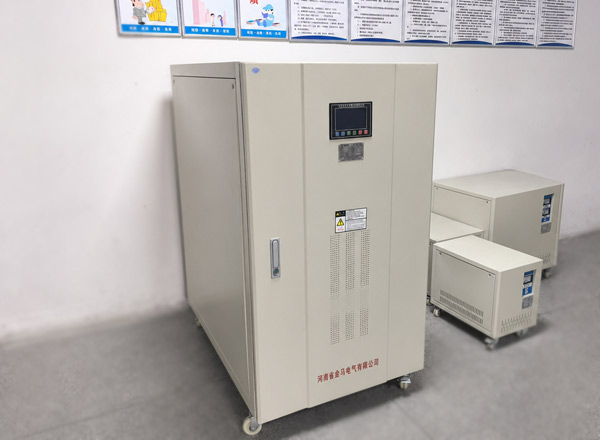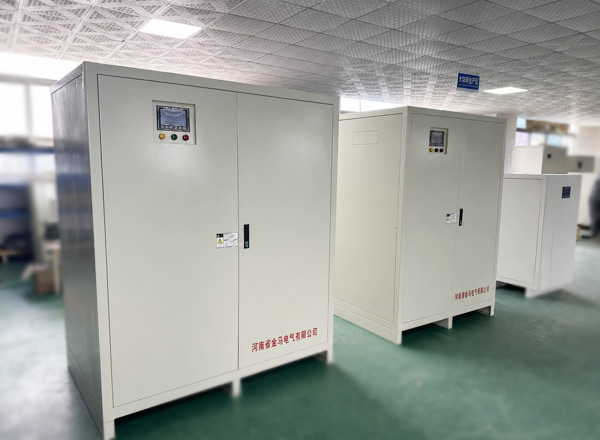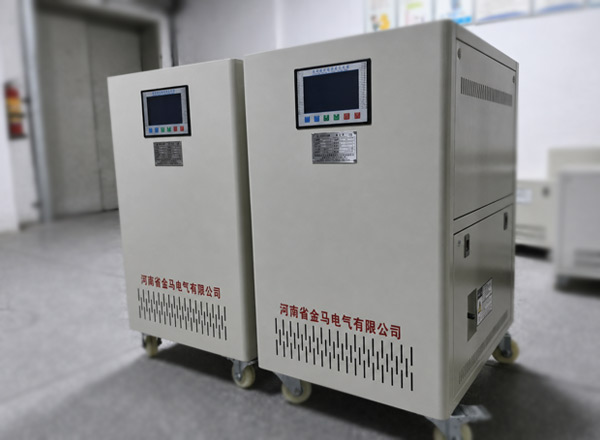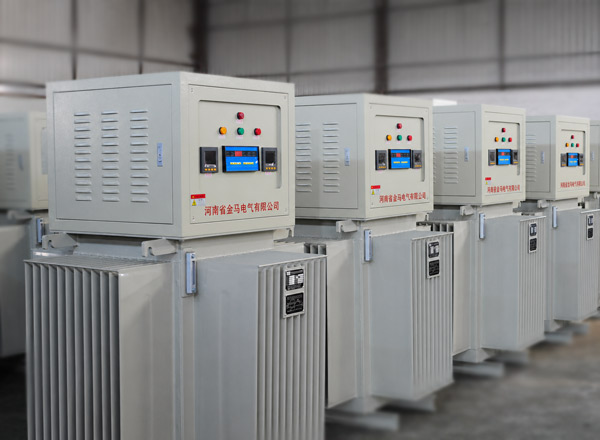
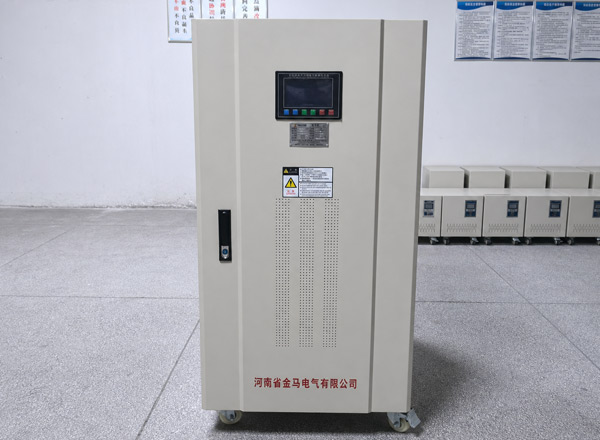
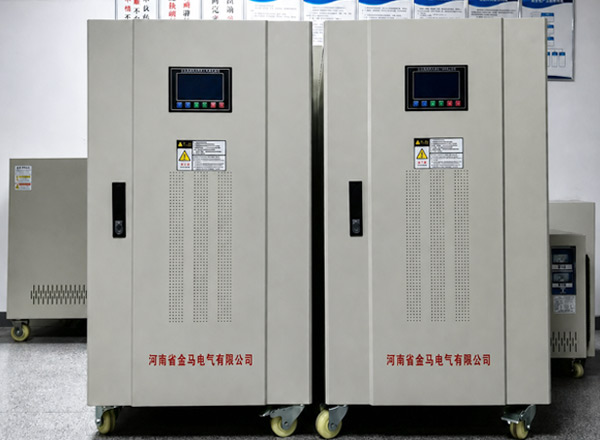
It is a wide-input three-phase automatic voltage regulator designed to accept a line-to-line input that may vary between approximately 300V and 500V and regulate it toward a nominal 400V output.
The 300–500V specification describes an operating range rather than two fixed input settings. Because this is a particularly wide range, buyers should confirm whether the selected model can support its rated load throughout the complete range. Low input voltage results in higher input current for the same output power, which affects conductor sizing, thermal design, protection, and available capacity.






The control system samples the incoming and outgoing three-phase voltages and compares the output with the configured 400V setpoint. When the input voltage rises or falls, the regulating mechanism changes the compensation voltage supplied through the transformer circuit.
The compensation may boost a low incoming voltage or reduce a high incoming voltage. Regulation continues automatically as grid conditions and connected loads change.
Depending on the power system, JINMA ELECTRIC can evaluate common three-phase regulation or independent phase control. Independent control is generally considered where the three input voltages or phase loads are significantly unbalanced.
Record the actual minimum and maximum voltage on every phase during startup, full production, light-load periods, and generator operation. Do not select a 300–500V model from one abnormal reading or the nominal utility voltage alone.
Provide the following information:
A wider input range may require a larger regulator and transformer section. Final capacity should therefore be based on the lowest operating input, load current, duty cycle, and temperature—not only the machinery’s rated kilowatts.
It can be designed with independent phase regulation when required. Voltage measurements from all three phases are needed to select the appropriate configuration.
It represents the intended operating window, but continuous full-load performance across the entire range must be confirmed for the selected capacity and cooling design.
It regulates toward a nominal 400V setpoint. The permissible output tolerance depends on the selected regulation technology, input condition, load, and project specification.
Use the maximum simultaneous load, power factor, operating current, and motor starting demand. Additional capacity may be required at the 300V input limit.
Potentially, but generator capacity, voltage behavior, frequency stability, waveform, load steps, and stabilizer control compatibility must be reviewed before selection.
No. The output frequency follows the input frequency. A frequency converter is required when the machinery needs a different frequency.