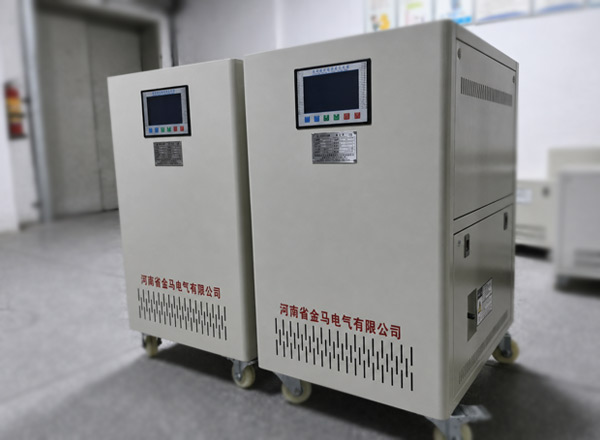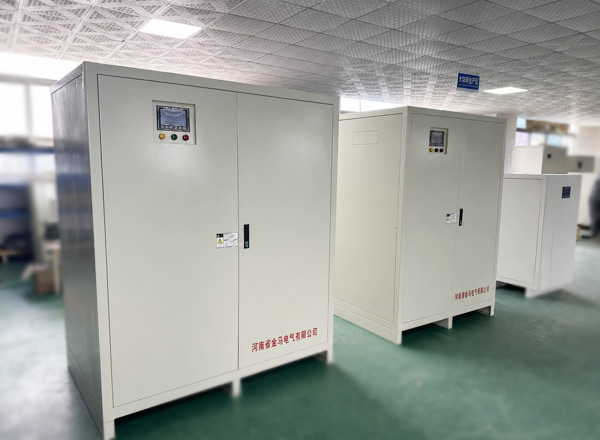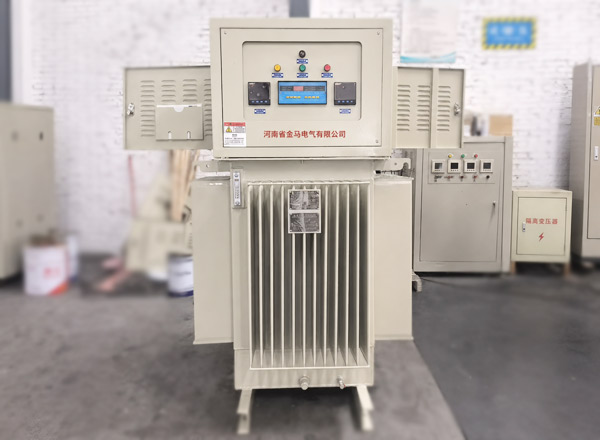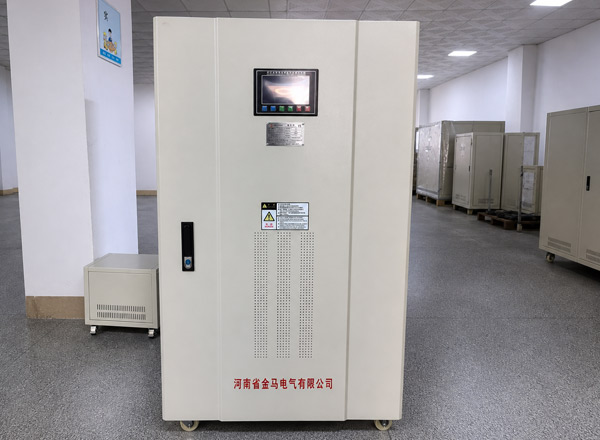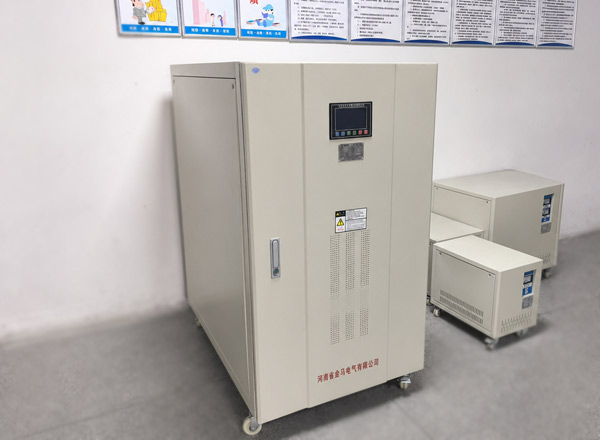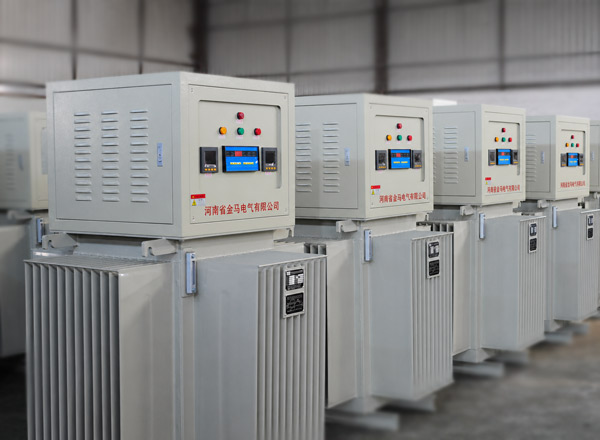
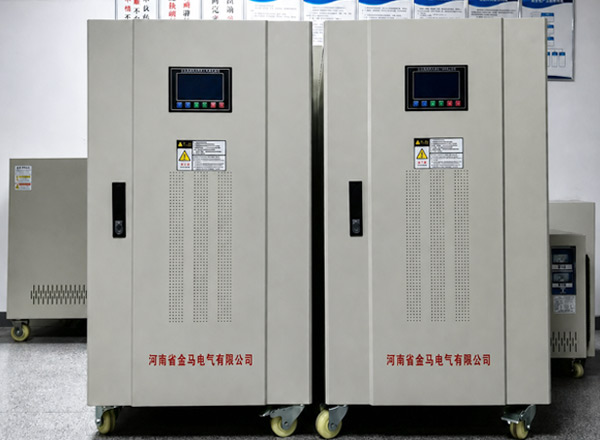
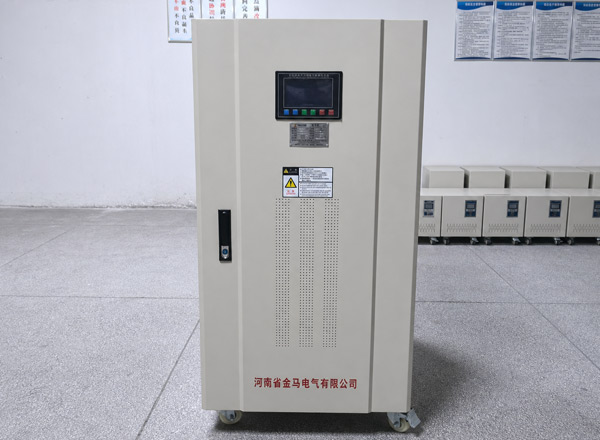
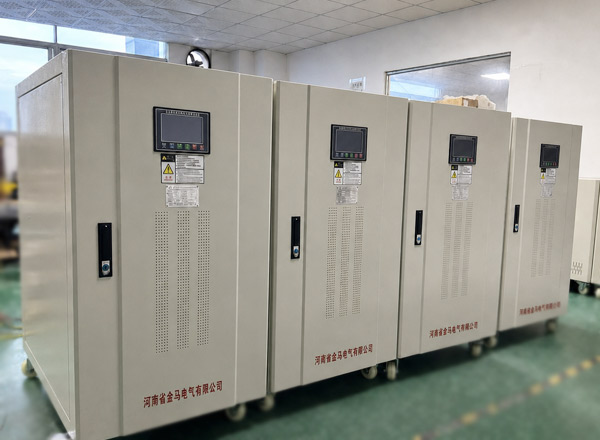
An industrial voltage stabilizer is a clever power-conditioning device that finds its way between the incoming AC supply and the coating machine – or even a line distribution panel. It keeps a weather eye on the supply voltage and tweaks a compensation circuit whenever the input strays from what it’s supposed to be.
This stabilizer doesn’t actually have any say over things like coating thickness, spray voltage, oven temperature, web tension, or material flow – but it does make sure that the AC supply to the electrical systems that control these functions is a lot more consistent.
Since “coating machine” actually covers a whole bunch of different processes, the right stabilizer is going to depend on whether you’re talking about roll-to-roll coating, vacuum deposition, powder coating, liquid spraying, thermal spraying, or one of the other specialized processes that are out there.
JINMA ELECTRIC offers industrial voltage stabilizer ratings from 10 to 400 kVA. The following table provides a preliminary shortlist based on the maximum simultaneous apparent load, including equipment operating at the same time.
| Maximum Simultaneous Load | Suggested Stabilizer Capacity | Suitable Coating Applications |
| Up to 12 kVA | 15 kVA | Laboratory coaters, manual spray stations, small pumps, controllers, and light extraction equipment |
| 12–24 kVA | 20–30 kVA | Single automatic spray cells, compact conveyors, powder recovery units, and small ventilation systems |
| 24–48 kVA | 40–60 kVA | Small powder or liquid coating lines with conveyors, fans, pumps, controls, and compact curing equipment |
| 48–80 kVA | 80–100 kVA | Medium coating lines combining electric heaters, exhaust fans, compressors, pumps, and automated handling |
| 80–120 kVA | 120–150 kVA | Roll-to-roll coaters, vacuum coating systems, chillers, vacuum pumps, dryers, and synchronized drive systems |
| 120–200 kVA | 200–250 kVA | Large coating lines with multi-zone ovens, high-capacity ventilation, compressors, and several motor-driven sections |
| 200–320 kVA | 300–400 kVA | Multiple coating lines or centralized feeders supplying coating, curing, cooling, extraction, and material-handling systems |
These capacities are preliminary recommendations rather than fixed rules. They assume that the reported load is already expressed in kVA and include a basic allowance above the maximum simultaneous demand.
Additional capacity may be necessary when the line includes:







Coating lines often throw together a load of different characteristics as they go:
So because of all this, the stabilizer needs to be sized up to handle the whole electrical load profile from start to finish, not just the main coating unit on its own.
Thermal and plasma spraying: Can give you the upstream AC regulation you need, after you’ve confirmed the spray-system power rating, input current, frequency, and load
Yes, if it is sized for the combined simultaneous load, startup current, phase balance, and distribution arrangement. Downstream branch protection is still required.
Use the maximum apparent-power demand of all simultaneous loads. Include motor starting current, curing-oven heaters, compressors, pumps, chillers, and planned expansion.
It can support heater loads when the rated current, switching stages, operating duty, and simultaneous machinery demand are included in the capacity calculation.
No. The stabilizer regulates the machine’s incoming AC supply. The electrostatic gun controller generates and regulates the high process voltage separately.
Independent phase regulation can be selected when necessary. Provide phase-by-phase voltage and current measurements for technical evaluation.
Not necessarily. Voltage regulation and harmonic filtering are different functions. A harmonic study may indicate the need for reactors, filters, or another power-quality solution.