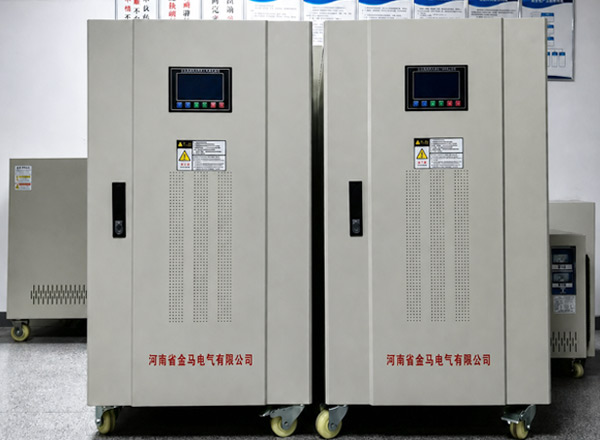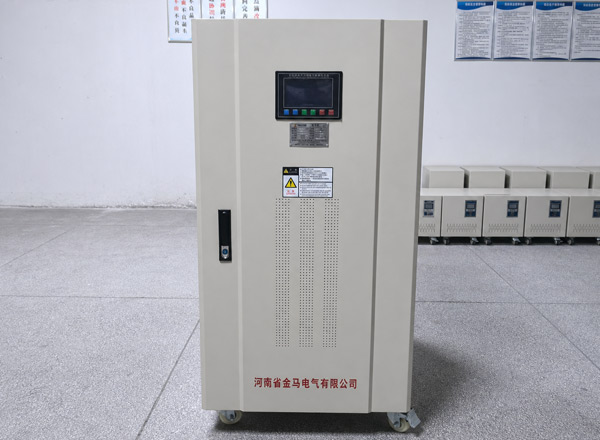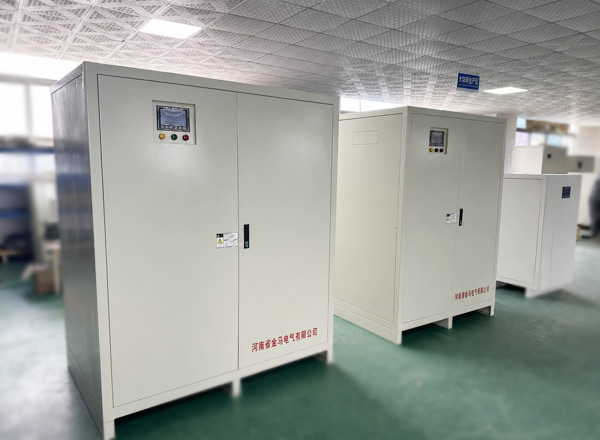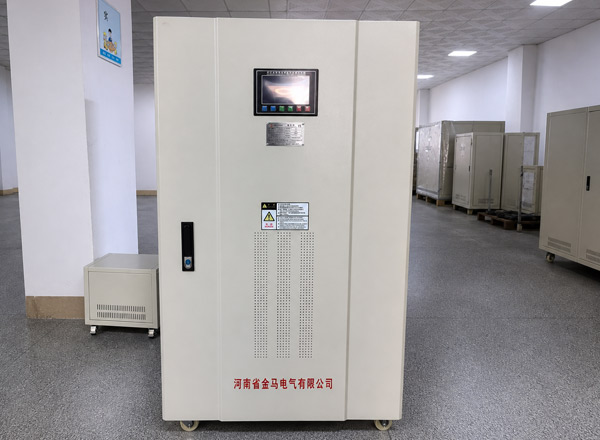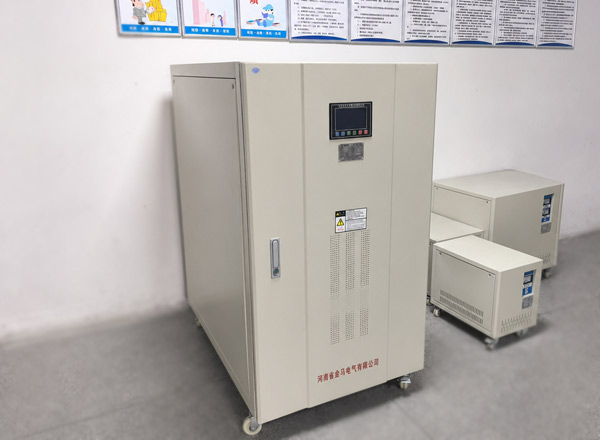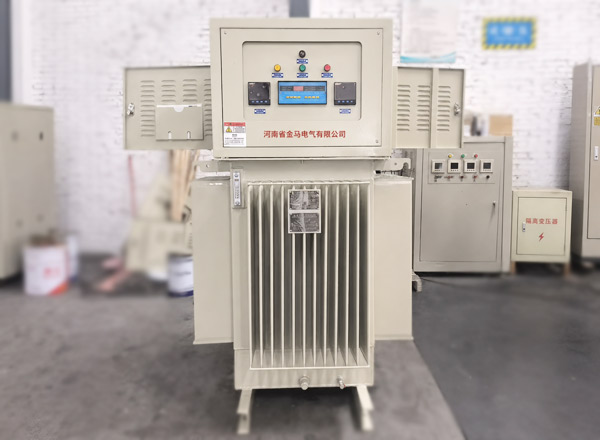
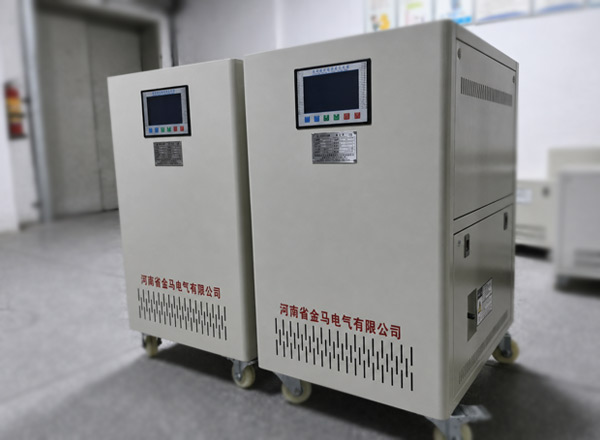
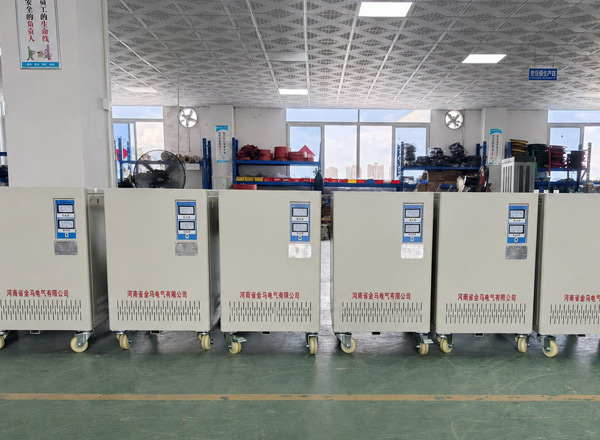
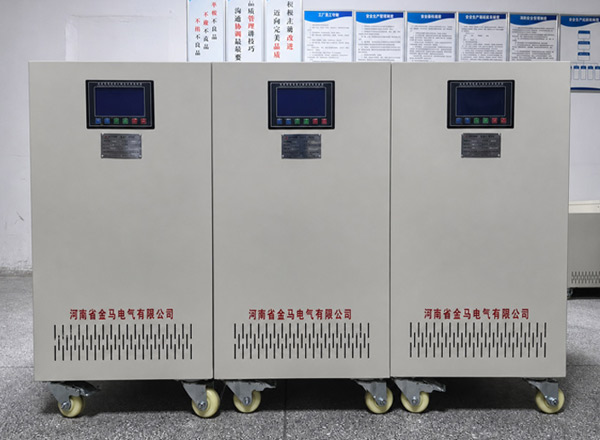
An SBW industrial voltage stabilizer – basically a high-capacity AC power conditioner – gets plugged in between your utility supply and the industrial equipment you’ve got hooked up.
It’s always keeping an eye on the voltage and automatically kicking in to make adjustments when the supply voltage starts to drift outside the acceptable operating range. Its main job is to give the connected load a more steady voltage without forcing you to manually fiddle with it again and again.
It’s worth noting the SBW is different from a transformer, which just changes the nominal voltage level – it corrects the fluctuations around the required voltage. And it’s not like a UPS, which only really kicks in during an outage – an SBW doesn’t usually give you a backup power during a complete blackout.
The SBW series is especially useful in situations where voltage instability is causing:
| Model | Rated Capacity (kVA) | Rated Voltage | Cabinet Dimensions (mm) | Weight (kg) |
| ZFSBW-10 | 10 | 380 V | 350 × 500 × 470 | 40 |
| ZFSBW-15 | 15 | 380 V | 350 × 500 × 470 | 46 |
| ZFSBW-20 | 20 | 380 V | 380 × 500 × 700 | 90 |
| ZFSBW-30 | 30 | 380 V | 380 × 500 × 700 | 100 |
| ZFSBW-40 | 40 | 380 V | 450 × 600 × 820 | 120 |
| ZFSBW-50 | 50 | 380 V | 450 × 600 × 820 | 130 |
| ZFSBW-60 | 60 | 380 V | 450 × 600 × 820 | 146 |
| ZFSBW-80 | 80 | 380 V | 500 × 620 × 970 | 180 |
| ZFSBW-100 | 100 | 380 V | 600 × 980 × 1210 | 240 |
| ZFSBW-120 | 120 | 380 V | 600 × 980 × 1210 | 260 |
| ZFSBW-150 | 150 | 380 V | 650 × 1030 × 1260 | 305 |
| ZFSBW-200 | 200 | 380 V | 700 × 1030 × 1310 | 370 |
| ZFSBW-250 | 250 | 380 V | 700 × 1030 × 1310 | 415 |
| ZFSBW-300 | 300 | 380 V | 800 × 1100 × 1700 | 510 |
| ZFSBW-400 | 400 | 380 V | 800 × 1100 × 1700 | 644 |
Custom voltage ranges, protection functions and communication requirements should be confirmed during technical selection.








JINMA ELECTRIC SBW industrial voltage stabilizers can support:
A separate stabilizer-transformer solution may be required when the equipment needs both automatic voltage regulation and nominal voltage conversion.
Provide the following information before requesting a quotation:
For a three-phase load, apparent power can be estimated using:
kVA = √3 × line voltage × line current ÷ 1000
The selected capacity should also account for starting current, future expansion and applicable derating. Avoid choosing a model solely from the normal running power.
JINMA ELECTRIC’s trick up their sleeve is that they manage to pack a voltage stabiliser, a transformer and frequency conversion all in one. This lets their engineers figure out whether you’re after just a stabiliser, a voltage converter or the whole works – an integrated power solution that really gets the job done.
The SBW range they’ve got documented covers 15 standard capacities – from a pretty modest 10 kVA right up to a healthy 400 kVA. And they’ve got all the manufacturing and inspection gear to match too – we’re talking winding machines, VPI vacuum-pressure impregnation, withstand-voltage testing and the works.
But that’s still not all – JINMA ELECTRIC can also take a look at any unusual voltage conditions, what you’ll need to export your gear outside of the country and even come up with custom control options that fit the bill for your specific project.
The SBW stabilizer works by just continuously monitoring and adjusting the voltage levels in a closed-loop. Here’s how it goes down:
First, the voltage detection circuit is always sampling the incoming or output voltage and the controller is checking that against the reference voltage.
When it spots a voltage that is either too high or too low, the regulator just adjusts the compensation voltage to bring the output back on track. And then – because the voltage levels can change constantly – the controller just keeps monitoring and adjusting the compensation voltage as needed.
The JINMA ELECTRIC SBW series is designed to regulate the voltage smoothly without causing any waveform distortion. And in terms of safety and comms, you can usually arrange to get some pretty smart protection and comms functions built in according to the end product you’ve got in mind.
No way! A stabiliser is just meant to sort out those pesky voltage fluctuations, while a transformer on the other hand changes the normal voltage and may just provide some isolation in the process. There are some projects out there that will actually need both – or one of those integrated systems.
Not on your life! What it does is regulate whatever power is available from the grid at the time, but it’s not meant to kick in and give you juice when the power goes out.
When it comes down to it, the right capacity for you will depend on your simultaneous load, the power factor, the starting current and the site voltage range. And don’t even get me started on high-inrush loads like super-powerful motors – you might need some extra capacity there to give you some breathing room.