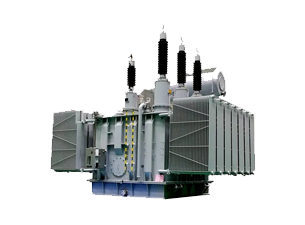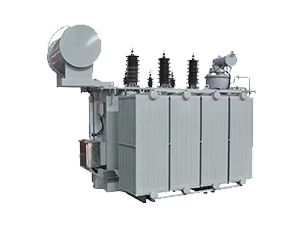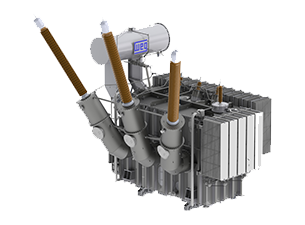


In modern power systems, power transformers are the most basic and core electrical equipment. From the high-voltage transmission of power plants, to the distribution of power supply in urban neighborhoods, and then to the normal operation of household chargers, industrial machinery and equipment, are inseparable from the support of the transformer.
The vast majority of people every day to enjoy the convenience of power brought by the transformer, but little is known about its work logic, core structure and operating characteristics. Many electrical practitioners, purchasers, also often on the principle of transformers, efficiency, heat dissipation and application scenarios have questions. This article will be centered on the working principle of power transformers to start, through the five industry core issues, a full range of answers to the doubts.
What is a power transformer?
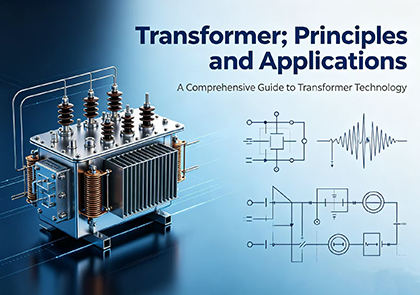
Power transformer is the most basic static electrical equipment in the power system, the machine without any mechanical moving parts, no friction, no rotating loss during operation. Its core working principle relies on the law of electromagnetic induction to realize the transmission and conversion of electric energy across the circuit, is an indispensable core equipment in the power transmission system.
Transformer itself does not have the function of power generation, will not produce electricity out of thin air, will not change the original frequency of alternating current (AC), the whole only for AC voltage level for accurate step-up or step-down conversion, to realize the transmission of power efficiently and appropriately. Power transformer is currently one of the most energy-efficient electrical equipment, the mainstream operating efficiency of up to 95% ~ 99.7%, large-scale high-voltage power transformer efficiency is close to 99.7%, energy loss is extremely low.
From the practical application point of view, the core value of the power transformer is to adapt to the whole scene of the voltage demand, to solve the power generation, transmission, distribution, power use of all aspects of the voltage mismatch. In the high-voltage transmission link, it can boost the low-voltage power output from the power plant to ultra-high-voltage level, effectively reducing the power loss of long-distance transmission and realizing cross-regional transmission of power. In the terminal power distribution, it can reduce the high voltage transmission voltage step by step to the standard voltage that can be safely carried by civil, commercial and industrial equipment. With flexible voltage regulation capability, power transformer becomes the key hub connecting power grid transmission and terminal electricity, supporting the stable, safe and efficient operation of the entire power system.
Question 1: What is the working principle of power transformer?
Many newcomers to the core of the question, is the transformer without mechanical movement, how to realize the voltage rise and fall and power transmission. In fact, the transformer’s whole set of operating logic, completely relying on Faraday’s law of electromagnetic induction, relying on magnetic coupling to achieve contactless power transmission.
Core logic
The first step, the input alternating current generates a magnetic field. When the AC current into the transformer primary side (primary) winding, the alternating current will produce periodic changes in the alternating magnetic field around the winding.
In the second step, the iron core converges to conduct magnetic flux. Transformer’s silicon steel sheet iron core has low reluctance characteristics, can converge the flux of the alternating magnetic field accurately, constraints in the iron core, to avoid flux leakage, to ensure the efficient transmission of magnetic energy.
In the third step, the secondary winding induces voltage. The changing magnetic flux continues to cut the secondary side (secondary) winding coil, according to the principle of electromagnetic induction, the secondary winding will induce the same frequency alternating voltage, and ultimately realize the transmission of electric energy from the primary circuit to the secondary circuit.
It is important to note that the transformer cannot be adapted to direct current. The magnetic field generated by DC is a constant static magnetic field, which can not form a flux change, and the secondary winding can not induce a voltage, so the transformer only supports the conversion of alternating current.
Turns ratio formula: the core of voltage and current conversion
Transformer voltage rise and fall, current size changes, completely by the primary and secondary winding coil turns ratio decision, the core formula: Vs / Vp = Ns / Np.
The meaning of the parameters in the formula is clear: Vs for the secondary side of the output voltage, Vp for the primary side of the input voltage, Ns for the number of turns of the secondary winding, Np for the number of turns of the primary winding.
Combined with the formula can be derived from the core law: the more turns of the winding, the higher the corresponding side voltage; the fewer turns, the lower the corresponding side voltage. Step-up transformer secondary turns is much larger than the number of primary turns, step-down transformer is just the opposite.
At the same time, the transformer follows the principle of power conservation (ignoring small losses), the voltage is inversely proportional to the current. Boost voltage increases, current decreases, step-down voltage decreases, current increases, which is also the core principle of high-voltage power transmission low loss.
Real Case of Power Transformer
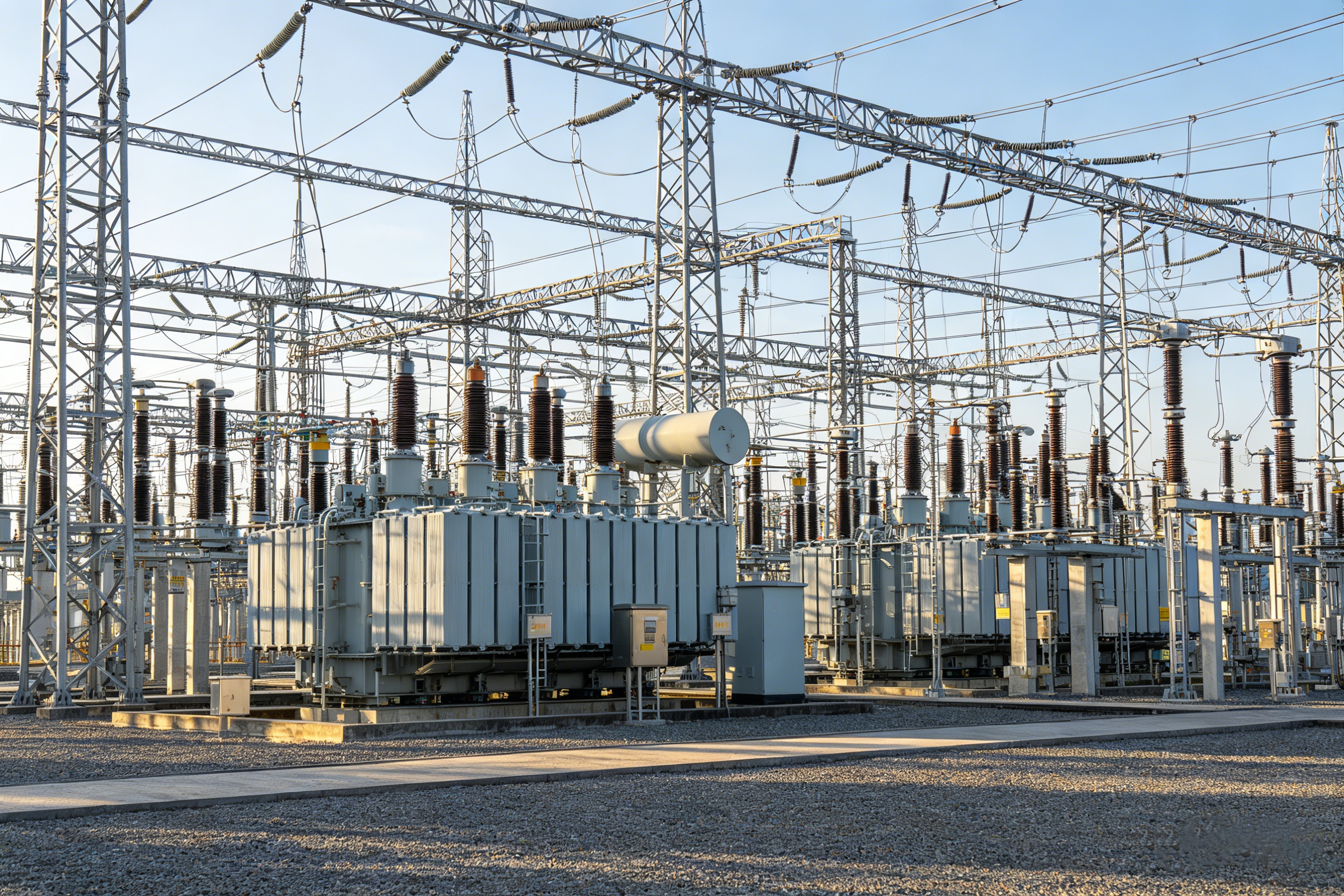
In the power plant scenario, the generator output voltage is only 11~25kV, which can’t meet the demand of long-distance power transmission. Through the step-up transformer, the voltage is increased to 138kV~765kV ultra-high voltage, which greatly reduces the transmission current and line energy consumption.
In the terminal power distribution scenario, the voltage of the high-voltage transmission line is stepped down step by step through the substation and platform transformer, and finally reduced to 220V/380V, which is fully suitable for the safe use of household electricity, store office and small industrial equipment.
Question 2: What are the components of electrical transformers?
The efficient, stable and safe operation of the power transformer relies on the precise structural design and high quality raw materials. The whole set of equipment is divided into five major components, as well as a variety of auxiliary protection components, different parts of a clear division of labor, to complete the conversion of electrical energy, insulation, heat dissipation and protection work.
Magnetic core: magnetic energy transfer
Iron core is the core of the magnetic circuit of the transformer, the core role is to provide low reluctance channel, convergence of alternating magnetic flux, so that the magnetic energy efficiently in the primary and secondary windings between the transfer, reduce magnetic flux leakage and magnetic energy loss. The core material of power transformer is high grade oriented silicon steel sheet, containing 3%~4% silicon elements, with high permeability and low loss characteristics. In order to reduce eddy current loss, the core will be processed into 0.23 ~ 0.35mm sheet, the surface of the insulating paint spraying after stacking molding.
High-end energy-saving transformers will use amorphous alloy material, compared with the traditional silicon steel sheet, can reduce 70% ~ 80% of the iron core loss, energy saving effect is greatly improved. Iron core structure is mainly divided into core type and shell type two kinds, suitable for different capacity transformer equipment.
High and low voltage windings: power conversion
Winding is the core of the circuit of the transformer, divided into primary winding and secondary winding, is the key component for carrying current and inducing voltage.
The primary winding of the power transformer is mainly connected to the grid input power supply, responsible for receiving the original frequency power, the power is converted into alternating magnetic field energy; The secondary winding is connected to the transmission and distribution load, responsible for inducting the generation of the target voltage, completing the transformation of the magnetic field energy into electrical energy, and outputting the standard voltage power for the appropriate working conditions.
High-voltage, large-capacity power transformers are uniformly made of high-purity oxygen-free copper as the winding material, high conductivity and low resistance of copper, which can effectively reduce the I²R copper loss under the operation of high current, high temperature resistance, excellent overload resistance, and can be adapted to meet the needs of 24-hour uninterrupted full-load operation of the power grid.
All power transformer winding coil, will adopt multi-layer insulation protection process, coil surface wrapped with high-strength insulating varnish, special insulating paper or Nomex high-temperature resistant insulating material. It can effectively isolate the turn-to-turn and layer-to-layer circuits, eliminate turn-to-turn short circuits, leakage and breakdown faults under high-voltage conditions, and comprehensively improve the safety and stability of grid-connected operation of power transformers.
Insulation system: equipment safety
Insulation system is an indispensable safety protection system for power transformers, and it is also the core barrier to ensure the long-term stable operation of high-voltage equipment. Power transformer long-term in high-voltage, frequency, all-weather operation, there are internal high and low voltage potential difference.
Power transformer insulation system after professional optimization design, according to the equipment capacity, voltage level with standardized insulation configuration. The whole adopts multi-layer composite insulation structure, the core insulation substrate with high temperature resistance, high voltage resistance, anti-aging, high insulation strength characteristics.
Can withstand long-term power transformer operation temperature fluctuations and high-voltage impact, will not easily appear insulation cracking, aging, breakdown and other problems, suitable for power grid all-weather, uninterrupted, highly reliable operation requirements.
Heat dissipation cooling system: temperature control and consumption reduction
Transformer operation of copper loss, iron loss will continue to generate heat, if the heat accumulation, will accelerate the insulation aging, burn the winding, greatly shorten the life of the equipment. The core role of the cooling system is to dissipate the residual heat in time, stabilize the operating temperature of the equipment.
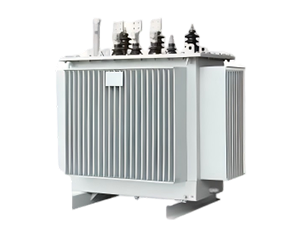
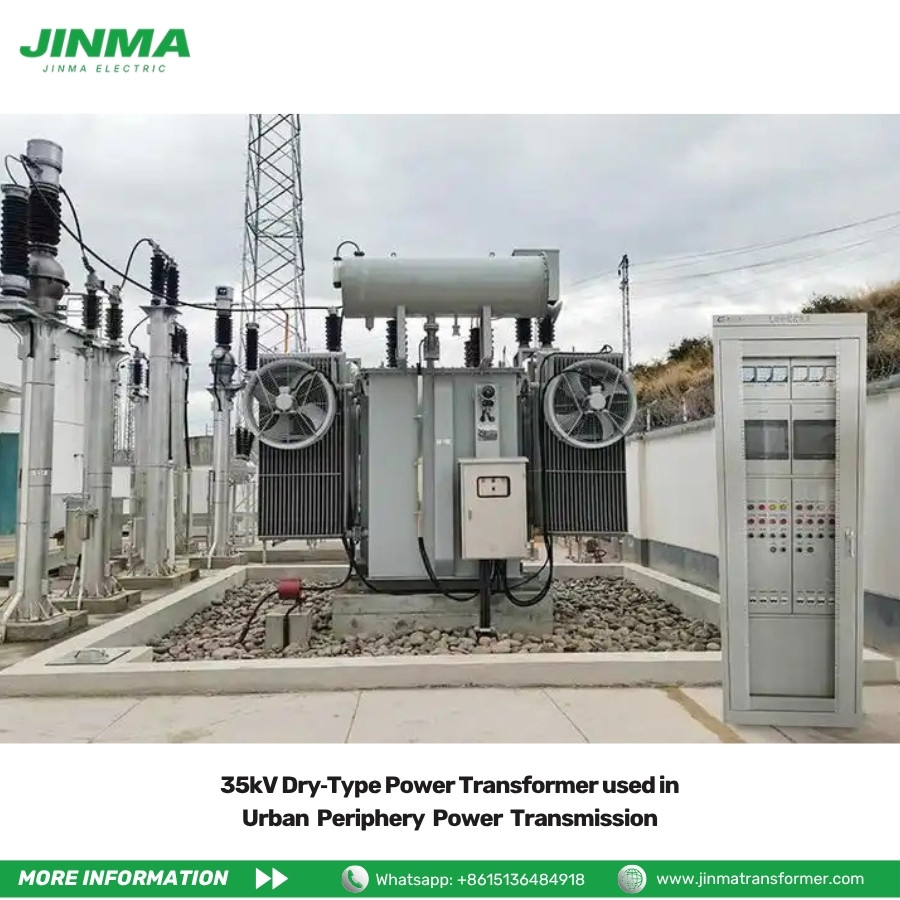
Small dry-type transformer adopts natural air cooling mode, relying on natural air convection heat dissipation, simple structure, maintenance-free. Large and medium-sized oil-immersed transformer is equipped with radiator, cooling fan, circulating oil pump, through the insulating oil circulation to take away the heat, to realize the forced heat dissipation.
Oil tank and shell: protection bearing
Oil tank and shell is the core protection bearing structure of power transformer, which bears the important role of internal core components fixing, sealing protection and environmental isolation. The whole structure adopts high strength steel processing molding, high mechanical strength, impact resistance, corrosion resistance, suitable for outdoor power grid, substation complex operating environment.
Sealed oil tank of power transformer can completely wrap the core, winding and other core active parts, maintain the stability of the internal structure of the equipment, and at the same time adapt to the storage and circulation of heat dissipation medium, with special oil storage structure, can be perfectly adapted to the physical properties of the medium thermal expansion and contraction, to protect the integrity of the equipment seal.
Equipment shell after waterproof, dustproof, anti-corrosion, anti-rust specialization, can effectively isolate the rain, dust, debris, humid air invasion equipment. Can protect the internal electrical structure of the power transformer in all aspects, to avoid the external environmental factors triggered by short circuit, moisture, insulation degradation and other faults.
Other power transformer components
Large and medium-sized power, distribution transformers will be equipped with professional auxiliary components to achieve voltage regulation, fault protection, condition monitoring, to enhance the stability and safety of the equipment, the core auxiliary components function is as follows:
Tap changer: divided into on-load voltage regulation and no-load voltage regulation two kinds, can fine-tune the winding turns ratio, accurate adjustment of the output voltage, adapt to the grid voltage fluctuation scenarios, to protect the power supply voltage stability.
Gas relay: the core fault detection parts, can monitor the transformer internal short-circuit, overheating fault gas, timely trigger alarm or trip, to avoid equipment burnt, fire accident.
Breather: built-in desiccant, can adsorb the moisture and impurities into the tank air, prevent the insulating oil from moisture deterioration, to protect the stability of insulation performance.
Monitoring and protection components: including oil level meter, temperature sensor, pressure release valve, grounding device, real-time monitoring of equipment operation status, overpressure, over temperature, lack of oil timely protection, to eliminate potential safety hazards.
Question 3: Why Are Electrical Transformers So Efficient?
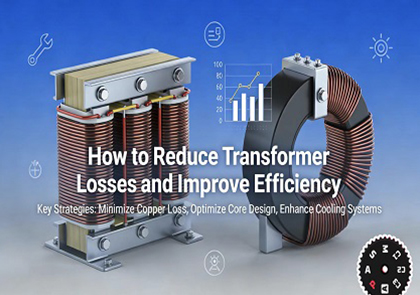
Among all power equipment, transformers are far ahead in terms of energy efficiency performance. Small electronic transformer efficiency up to 85% ~ 95%, distribution transformer efficiency 97% ~ 98.5%, large high-voltage power transformer efficiency up to 99.7%. The core reason for the ultra-high efficiency stems from three major advantages: no mechanical loss, low-loss materials, and optimized structural design.
Zero mechanical loss
Motors, generators and other power equipment rely on mechanical rotation operation, the operation process will produce friction, wind resistance, bearing loss and other mechanical energy consumption. Power transformer is pure static equipment, without any moving parts, the whole set of energy conversion process rely on magnetic field coupling to complete, completely avoid all mechanical loss, from the root to reduce energy waste.
Low loss iron core design
Iron core loss is the fixed loss of transformer, mainly including hysteresis loss and eddy current loss. The industry through the material and structure optimization, minimize the iron core loss. The material is made of highly permeable silicon steel sheet or amorphous alloy, which has a very low hysteresis coefficient and consumes very little energy during the repeated magnetization process. The structure adopts thin-layer stacked insulation design, completely blocking the eddy current circuit, significantly reducing the eddy current loss. At the same time, the iron core is processed by precision technology, the magnetic flux leakage is extremely low, the magnetic coupling coefficient can reach more than 0.99, almost all the magnetic energy can participate in the transmission of electric energy, the energy utilization rate is very high.
Moreover, the iron core loss of the transformer is fixed value, not with the load change; copper loss is variable loss, with the load increase and rise. Engineers will accurately balance the two types of losses according to the common load range of the equipment. The rated operating conditions of conventional distribution and power transformers precisely match the daily operating loads, allowing the equipment to operate in the peak efficiency zone for a long period of time.
Low resistance winding design
Winding copper losses are directly related to current and resistance (I²R losses). In order to reduce copper losses, transformers use large cross-sectional area, high conductivity copper/aluminum conductors to significantly reduce winding resistance.
Large transformers will optimize the winding layered structure, to avoid the skin effect, the neighborhood effect brought about by the additional loss, so that the current is evenly distributed in the winding, minimize the load energy consumption.
Comparison of efficiency parameters
Small electronic transformer (within 1kVA): 85%~95% efficiency, suitable for small home appliances, small power supply equipment;
Conventional power distribution transformer (10~5000kVA): efficiency 97%~98.5%, suitable for distribution of community and neighborhood;
Large power transformer (more than 100MVA): efficiency 98.5% ~ 99.7%, suitable for distribution of grid trunk transmission.
Question 4: Why Do Transformers Need Cooling Systems?
Many users are puzzled: power transformer efficiency is extremely high, the loss is very low, why do you still need a special cooling system for heat dissipation? The core reason is that the transformer’s tiny loss, will continue to be converted into heat accumulation, long-term high temperature operation will directly damage the equipment.
The core source of transformer heat
Transformer operation of all energy loss, will eventually be converted into heat. Mainly contains two parts, one is the iron core hysteresis, eddy current losses generated by iron loss heat, the second is the winding current through the resistance generated by copper loss heat.
Although the proportion of loss of a single unit of equipment is low, but the transformer is mostly 24-hour uninterrupted operation, the long-term accumulation of heat is great, if it can not be dissipated in time, it will cause heat accumulation. High temperature is the biggest killer of transformer life. Transformer insulation materials, insulating oil have temperature tolerance limit, long-term over-temperature operation will accelerate insulation aging, cracking, deterioration. Insulation failure, it is very easy to cause winding turn-to-turn short circuit, ground breakdown, equipment fire and other serious failures, directly leading to the end of the transformer, and even cause large-scale power outages, safety accidents.
Mainstream transformer cooling method classification
According to the equipment capacity, different use scenarios, transformers are adapted to different cooling programs, four mainstream cooling methods to cover the full range of scene requirements:
Natural air-cooled (AN): suitable for small dry-type transformers, relying on natural air convection cooling, no fan, oil pump, simple structure, maintenance-free, low noise, suitable for small indoor power distribution scenes.
Oil-immersed natural cooling (ONAN): small and medium-sized oil-immersed transformers mainstream program, through the natural circulation of insulating oil to take away the heat, with the radiator to dissipate the heat, suitable for outdoor platforms, industrial common power distribution scenarios.
Forced air cooling (ONAF / OFAF): large and medium-sized transformer special, in the natural cooling based on the addition of cooling fans, forced to accelerate air circulation, significantly improve the cooling efficiency, suitable for high load, large capacity conditions.
Forced water cooling (OFWF): ultra-high voltage, large capacity power transformers, through the water cycle to take away the heat of the insulating oil, heat dissipation efficiency is very high, suitable for the grid backbone hub, large power plant core equipment.
Question 5: What are the application scenarios of power transformers?
Transformer is the universal core equipment of the power system, as long as there is a scene of electric energy production, transmission, distribution and use, it is inseparable from the transformer. Its application covers power grid, civil, industrial, new energy, special field eight core scenes, penetrate all walks of life.
Power generation and high-voltage transmission scenarios
The ultra-high voltage delivered by high-voltage transmission lines cannot be directly used by residents and ordinary equipment, and there are great safety risks. The power system needs to complete the voltage gradient degradation process through multi-stage step-down power transformers.
Power transformers can be 110kV, 35kV high-voltage transmission voltage, step by step down to 10kV medium-voltage distribution voltage, and finally step down to 0.4kV civilian standard voltage, perfectly matching the end of the electricity safety norms.
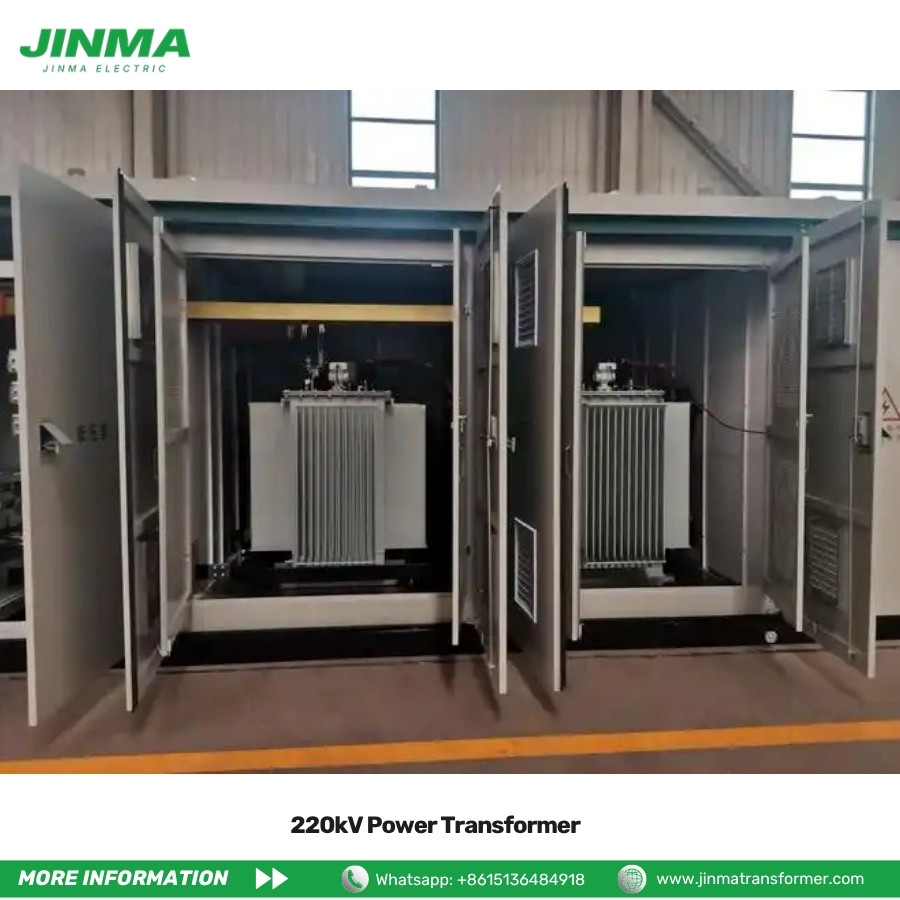
Power transformers in urban and rural power grids are widely deployed in urban neighborhoods, townships and villages, outdoor bases of neighborhoods and power distribution rooms in parks. As the core equipment of terminal power distribution, it undertakes the daily power supply tasks for residents, stores and small and micro enterprises in the area.
Scenes of urban and rural power distribution network
The ultra-high voltage delivered by high-voltage transmission lines cannot be directly used by residents and ordinary equipment, and there are great safety risks. The power system needs to complete the voltage gradient degradation process through multi-stage step-down power transformers.
Power transformers can be 110kV, 35kV high-voltage transmission voltage, step by step down to 10kV medium-voltage distribution voltage, and finally step down to 0.4kV civilian standard voltage, perfectly matching the end of the electricity safety norms. Desk area power transformers in urban and rural power grids are widely deployed in urban neighborhoods, townships and villages, outdoor pedestals in subdivisions and power distribution rooms in parks.
Civil and commercial building scenes
Modernized large-scale civil and commercial building complexes with dense power equipment, large power loads and high requirements for power supply stability. Residential neighborhoods, office buildings, large shopping malls, hospitals, hotels and other places, will be exclusive supporting power distribution transformers. The power transformer can provide continuous and stable power support for the lighting system, central air conditioning, elevator equipment, water supply and drainage power system, fire fighting equipment and other infrastructure inside the building.
In addition to the main power supply transformer, the building power system will also be equipped with special isolation power transformers, control transformers. Specialized for fire control systems, intelligent monitoring equipment, weak power intelligent system and other precision equipment to provide pure, safe and independent power supply.
Industrial production and manufacturing scenarios
Industrial and mining enterprises, chemical plants, metallurgical workshops, manufacturing plants and other industrial scenarios are characterized by large electrical loads, complex equipment working conditions and special voltage requirements. Ordinary civil power supply can not meet the production demand. Industrial plants must be equipped with special industrial-grade power transformers to provide accurately adapted working voltages for large drive motors, arc furnaces, welding equipment, electrolytic chemical equipment, assembly line power systems and other high-power equipment.
New energy power system scenarios
Photovoltaic power station, wind power station, energy storage power station is the core application of the transformer of the new scene. The output voltage of photovoltaic and wind power equipment is unstable and low grade, which needs to be stabilized and boosted by special step-up transformer and then connected to the power grid.
Energy storage power station, charging pile cluster also need supporting distribution transformer, complete voltage adaptation and power distribution, is the new energy power grid, consumption of key equipment.
Transformer-related FAQ
Q:Why can’t transformers work with DC power?
The core of transformer relies on alternating magnetic flux induced voltage. After DC power is passed into the winding, the magnetic field generated is a constant static magnetic field, no flux change, the secondary winding can not induce a voltage, can not realize the conversion of electrical energy, so the transformer is only suitable for AC power.
Q:How long is the service life of conventional power transformers?
In the standardized installation, regular operation and maintenance, under normal load conditions, the service life of high-quality power transformers can reach 20~30 years. High-temperature overload, moisture, oil aging, short-circuit impact, will significantly shorten the service life of the equipment.
Q:What does kVA stand for on the transformer nameplate?
kVA is the rated apparent power of the transformer, representing the maximum carrying capacity of the equipment. Distinguished from the active power kW, kVA contains active power and reactive power, is the core parameter of selection, load matching, directly determines the transformer’s carrying capacity.
Conclusion
As the core cornerstone of the power system, power transformers support global power production, transmission and end-use by virtue of their static low loss, safety and stability, and strong adaptability. If you need to customize high-voltage power transformer, you can consult Jinma Electric professional technical team to provide one-on-one working condition adaptation, accurate selection, program customization and a full set of after-sales technical services.