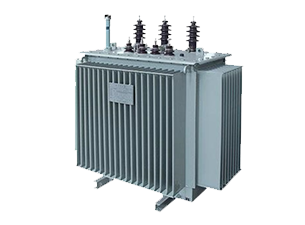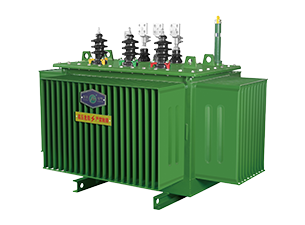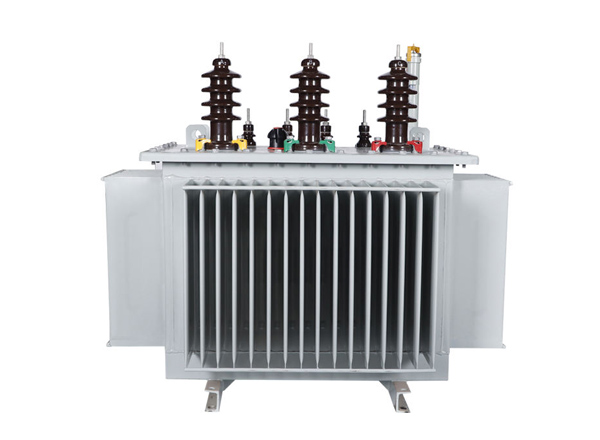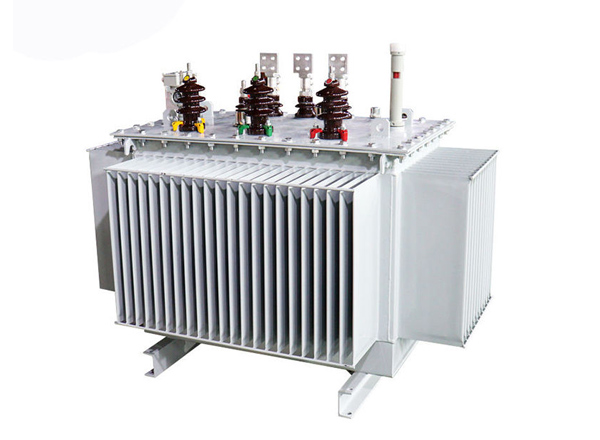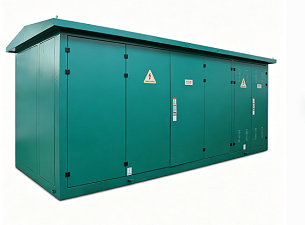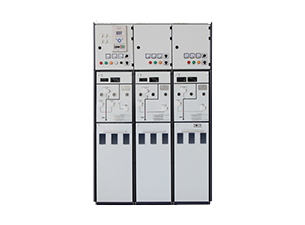


Data show that more than 62% of all fires and explosions in oil-immersed transformers are caused by high-energy faults in the on-load tap-changer (OLTC). A gas relay protects the transformer’s main tank and an oil surge relay (OSR) protects the on-load tap-changer exclusively. Both are indispensable, and the absence of an OSR can easily lead to major damage to the transformer.
This article explains the principle of oil flow impact relay, fault monitoring capabilities, protection value, applicable industries, operation and maintenance specifications and selection points, to help electrical practitioners standardize the application of equipment to ensure the stable and safe operation of the transformer.
What Is an Oil Surge Relay?
The oil flow impact relay is a special fast-acting protection device for oil-immersed power transformers. It exclusively protects the on-load tap-changer (OLTC) switching tank, and is a purely mechanical and independent protection component that operates autonomously without external power supply.
It is used to monitor the high-speed inrush of insulating oil caused by a tap changer fault and to block the regulating action in milliseconds, to contain the deterioration of the fault and to avoid transformer fires, explosions and grid outages.
In contrast to electronic control and protection devices, the oil flow impact relay operates passively, is resistant to electromagnetic interference and is not affected by the failure of the electronic control system, making it the last mechanical safety guard for the on-load tap-changer.
How Does an Oil Surge Relay Work?
Internal Mechanical Action Process
The current mainstream baffle magnetic suction structure operation steps:
- flow baffle: the device has a built-in articulated high-strength metal flow baffle structure, which is vertically facing the high-speed insulating oil flow under fault condition, and can stably receive the fluid impact force, and smoothly deflect after the force is applied, so as to provide mechanical power for the back-end inductive linkage.
- permanent magnetic module: tightly assembled on the outside of the flow baffle, completely separated from the magnetic induction components under normal working conditions, maintaining a passive standby state, eliminating false induction action.
- magnetic reed switch: built-in normally open magnetic induction contact, access to the transformer special tripping circuit, sensing the magnetic suction signal after rapid closure conduction, accurate power failure protection command.
- Fault linkage: The high-speed oil flow pushes the baffle plate to deflect, the permanent magnet is close to the reed switch, and the magnetic suction contact leads to the tripping circuit, immediately cutting off the power supply of the transformer and blocking the tap changer voltage regulation operation;
- Action time: the device linkage action takes only milliseconds, which is faster than conventional electrical protection, and can quickly isolate the faulty cavity, contain the fault spread, and protect the core components of the transformer.
Standard Installation Position
The oil flow impact relay must be installed vertically in the middle of the connecting oil pipeline between the on-load tap-changer tank and the exclusive oil conservator. According to the State Grid Transformer Construction Standard, the connecting pipeline must maintain a constant upward inclination of 2°-5° throughout the entire process, and horizontal laying and reverse downhill installation are strictly prohibited.
Compliance with the inclination angle can independently regulate the insulating oil circulation flow direction, avoid pipeline gas accumulation, oil stagnation, local vortex chaos, eliminate the monitoring errors brought by the installation conditions, ensure that the internal baffle plate of the relay accurately perceives the dynamic changes in the fault oil flow rate and direction, and ensure that the protection action is judged accurately and without error.
Equipment Normal Operation Logic
Under the steady-state operating conditions of transformer load regulation at the regular stall, thermal expansion and contraction of the insulating oil caused by the rise and fall of the ambient temperature during the day and night, and normal respiration and venting of the on-load tap-changer cavity, the flow rate of the oil inside the piping is gentle and weak, and the flow rate is generally lower than 50 cm/s, which is always lower than the factory calibrated protection triggering threshold value of the relays;
The device inflow baffle is not subject to effective fluid impact, and always maintains the initial static state, the permanent magnet module and the reed contacts remain separate, the relay maintains passive standby for a long period of time, which can completely avoid the problem of false triggering and false tripping caused by the disturbance of conventional working conditions.
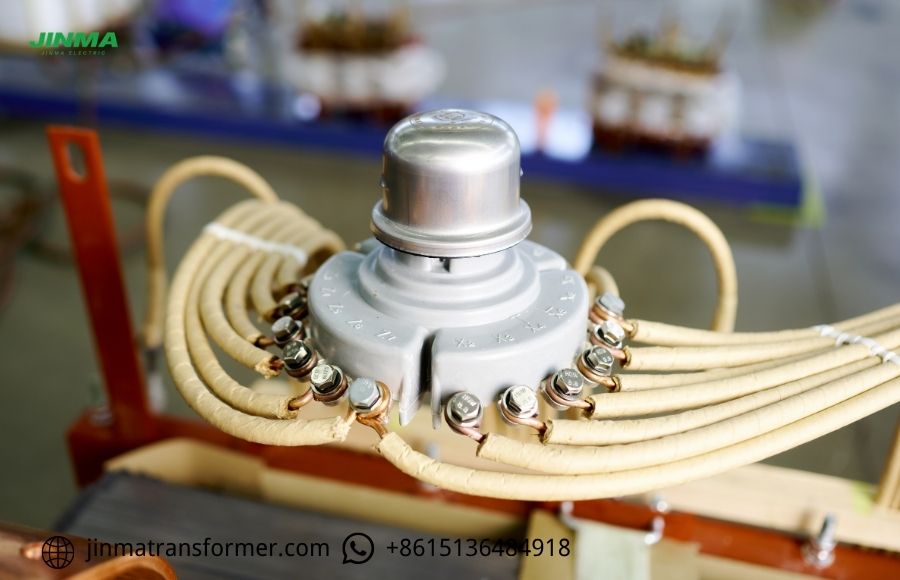
Common Transformer Faults Detected by Oil Surge Relays
Oil flow impact relay can not monitor the aging, slight discharge and other progressive hidden trouble, this kind of hidden trouble need to rely on the oil dissolved gas analysis DGA, vibration detection equipment investigation; relay exclusive capture can quickly generate high-pressure oil flow transient high-energy faults, accurate avoidance of malicious accidents.
Types of high-frequency triggered tripping faults
- Abnormal arc ignition at the on-load tap-changer contacts: Ablation of the switching contacts with carbon deposits, excessive contact resistance, misalignment of the alignment offset, regulating arc ignition exceeding the standard limit values, and thus generating persistent high-temperature arcs;
- Short-circuit between diverter switch phases: overloaded voltage regulation, aging of the insulation in the inner cavity, accumulation of oil impurities, breakdown of the tap changer insulation components, triggering short-circuit failures between phases, instantaneous release of huge energy, pushing the insulating oil to surge at high speed;
- Cavity-to-ground flashover breakdown: moisture aging of the insulation components of the inner cavity, adhesion of conductive impurities, attenuation and failure of the insulation voltage resistance, inducing flashover discharges to ground and phase-to-phase, squeezing the insulating oil to form a high-speed impact oil flow;
- Insulating oil media breakdown: cavity insulating oil moisture carbonization, conductive particles are enriched, insulation media performance deterioration, by the high-voltage impact of breakdown discharge, cavity internal pressure rises, giving rise to high-speed oil flow triggered protection action;
- Mechanical failure secondary arc: transmission mechanism stagnation, energy storage spring failure, loose terminals fall off, voltage regulating gear misalignment offset, inducing intense secondary arc;
- Transition resistance/reactor damage: regulator load overload, component aging, poor heat dissipation conditions, component breakdown short-circuit, high-energy arc generated in the cavity, catalyzing the impact of oil flow triggering relay tripping.
Why Oil Surge Relays Are Essential for Transformer Safety
Millisecond Fault Isolation
The space inside the on-load tap-changer cavity is small, so a small fault arc can quickly heat up the insulating oil, the air pressure inside the cavity rises sharply, and the cavity tank can be cracked and the insulating oil ignited in just a few seconds.
The oil-flow impact relay cuts off the power supply in milliseconds, effectively restrains the release of fault energy and prevents the fault from spreading and eroding the core components of the transformer main windings and busbar bushings, thus keeping the scope of the fault damage under strict control in the localized area of the on-load tap-changer cavity.
Independent Protection by Zones
The gas relay is not sensitive to the short-term high-speed oil flow at the on-load tap-changer and has a blind spot. The oil flow impact relay realizes partitioned protection of the on-load tap-changer cavity, which simplifies the operation and maintenance investigation process by directly determining the fault location as the on-load tap-changer after tripping. At the same time, the purely mechanical structure is independent of the electronic control and differential protection, which provides underlay protection in case of failure of the electronic protection.
Reducing Secondary Risks
Effectively preventing the transformer box burst, spontaneous combustion of insulating oil fire, the spread of fire in the substation, the leakage of insulating oil contamination of soil and groundwater in the field station and other safety and environmental protection accidents;
Blocking single faulty transformer damage from escalating into busbar tripping and area-wide power outage, maximizing the avoidance of direct economic losses and secondary operation and maintenance losses caused by interruption of power supply to people’s livelihoods, industrial line shutdowns, and load shutdowns in parks.
Strong Operational Stability
The whole machine adopts passive integrated mechanical structure, without external control and power supply, and can withstand complex working conditions such as station vibration, geological vibration, extreme temperature change, outdoor sand and dust, high humidity, etc.; it is isolated from electromagnetic interference of measurement and control cabinets and inverter equipment, and its stability in extreme working conditions is far better than that of electronic monitoring and protection devices.

Compliance with Global Electrical Safety Standards
The equipment complies with the IEC power device standard, IEEE substation operation and maintenance standard, NFPA 850 substation special fire protection standard and the current power operation and maintenance regulations of the State Grid and the Southern Power Grid.
Comprehensively meets the requirements for grid acceptance, station fire verification, insurance verification of industrial special equipment, and special inspections by the Safety Supervisory Commission, making up for the shortcomings of tap changer protection compliance and effectively avoiding all kinds of compliance risks such as O&M negligence, safety liability, and insurance refusal.
Key Benefits of Installing Oil Surge Relays
- Extremely fast response: The action response rate is better than that of overcurrent and differential electrical protection devices, and can be used to trip the tap changer quickly for instantaneous oil flow faults, maximizing the protection of the core components of the transformer main winding.
- Cost control and loss reduction: Most OSR tripping faults can be resumed only by replacing the on-load tap-changer components without replacing the entire transformer, saving hundreds of thousands to millions of dollars in equipment purchasing costs for a single incident and significantly reducing overhaul costs.
- Precise fault location: The relay action can lock the tap changer fault without the need to investigate the main tank and circuit lines section by section, which significantly shortens the repair, test and power delivery periods and optimizes the outage control indexes of the field station.
- Enhance power supply stability: Effectively reduce the number of forced outages, optimize the two core assessment indexes of grid SAIDI average power supply outage duration and SAIFI power supply failure frequency, and adapt to the new grid conditions of new energy grid connection and increased load fluctuation.
- Suitable for station-wide automation: anti-vibration mechanical structure design, extremely low false action rate, annual verification can meet the operational requirements; can be seamlessly connected to the SCADA backstage measurement and control system, to realize remote fault alarm and action signal uploading.
Industries That Rely on Oil Surge Relays
- Municipal power transmission and distribution industry: covering 33kV-400kV municipal substations at all levels, regional power transmission and distribution stations, as the core application scenarios of this equipment, all-round protection of the main grid regulating main transformer operation safety, and effective prevention of large-scale grid outages in the area.
- Wind and new energy industry: mountain wind farms, centralized photovoltaic power station boosting station main transformer, load fluctuation day and night frequently, tap changer regulator frequency is extremely high, the risk of failure has increased significantly, must be equipped with standard oil flow impact relay protection.
- Energy-consuming heavy industry: metallurgy, steelmaking, open-pit mining, petroleum refining, cement and chemical plant substations, plant load uninterrupted operation, transformer downtime costs are extremely high, OSR for the plant power system must be protected devices.
- Urban core key infrastructure: large-scale data centers, three hospitals, hub airports, urban business districts, power distribution substations, do not allow short-term power outages, relying on oil current impact relay to enhance the safety of transformer fault tolerance, to protect the lifeline of electricity stability.
- Railway transportation industry: high-speed railroads, urban railroad traction substation voltage regulator transformer, outdoor working conditions are complex, load impact, standard with special anti-corrosion oil flow impact relay, suitable for rail transportation harsh power supply standards.
Selecting the Right Oil Surge Relay for Your Transformer
Selection Parameters
- Transformer voltage level: 33kV small and medium-capacity main transformers are suitable for 70-130cm/s conventional flow rate models; 220kV and above large-capacity high-voltage main transformers need to be customized to adjust the trigger flow rate of the protection, so as to avoid frequent load fluctuations triggering the device to trip accidentally;
- Pipe fitting parameters: differentiate between 25mm small caliber and 50-80mm large caliber connecting pipe specifications, and check the size of the other side/round flange and the distance between the holes of the base bolts to ensure seamless installation of the equipment at the site;
- Tap changer adaptation type: according to the field resistance type, reactance type two types of diverter switch category, selection of exclusive calibration flow rate relay type;
- Circuit electrical parameters: 48V-220V AC and DC universal tripping circuit, according to the station measurement and control needs, optional remote alarm auxiliary contacts;
- Working condition protection level: outdoor corrosive stations use IP67 waterproof and anti-corrosion integrated shell, the equipment temperature range covers -25℃~+115℃, suitable for the whole country outdoor temperature conditions.
Standardized Selection Steps
- comprehensively survey and collect basic parameters of on-site equipment, accurately register the rated capacity of transformer, operating voltage level, pipe diameter of connecting oil pipe, inclination angle of pipe, original model of on-load tap-changer and factory parameters, and establish equipment parameter ledger;
- linkage of transformer and on-load tap-changer original technical personnel, matching the original factory certification to adapt to the oil flow impact relay model, to avoid non-standard parts poor adaptation, installation inconsistency;
- verify the core parameters of protection trigger flow rate, flange mounting dimensions, tripping circuit voltage and contact capacity one by one to ensure that the indicators match the working conditions on site and meet the acceptance standards of the power grid;
- Prioritize the selection of new compliant passive reed relays, eliminating old mercury contacts and float inefficient models, and improving the equipment’s anti-interference capability and long-term operational stability;
- Collect and organize equipment factory quality inspection reports, type test certificates, network qualification documents, and file and keep accounts to meet the requirements of later operation and maintenance verification, safety supervision and inspection, and equipment traceability filing.
- Old mercury contacts and float relays are directly replaced by new magnetic OSRs of the same caliber without changing the piping base; non-standard and shaped piping is customized with adapter flanges in advance to reduce the cost of retrofitting construction.
Best Practices for Oil Surge Relay Maintenance
Routine Visual and Mechanical Inspections
Regular working condition stations carry out appearance inspection once every 6-12 months; for dusty, saline, high humidity and corrosive outdoor stations, the inspection frequency is increased to once every 3 months. Inspection focuses on verification of flange seal oil seepage, shell corrosion, integrity of operating handle, pipeline flow direction marking, oil level in oil storage cabinet, and verification of pipeline installation inclination in accordance with construction standards.
Functional/Operational Testing
- Each year, using the transformer annual power outage window, the site to carry out manual toggle simulation tripping test, verify the internal reed contact sensitivity, circuit conduction stability, check contact oxidation stagnation, circuit wiring false connection hidden trouble;
- Every 1-2 years power outage to carry out 500V megohm meter insulation resistance special test, verification of external tripping circuit, built-in reed contact insulation performance, the regulation of qualified insulation resistance needs to be greater than 10MΩ, resistance value does not meet the standard need to check the line broken skin, contact moisture insulation defects and rectification;
- During the overhaul of large transformers, disassemble and overhaul relays, clean internal components, calibrate the flexibility of the baffle plate, investigate structural defects, debugging and retesting performance, and guard against failure of protection refusal.
Electrical and Insulation Checks
- Sampling and delivery of insulating oil for tap changer according to the cycle, carrying out special testing of insulating withstand voltage and dissolved gas components, and pre-judging hidden discharges in the cavity and hidden dangers of oil deterioration;
- Regularly inspect the status of the discolored silica gel of the breather, replace and dry the moisture-discolored and moisture-absorbing saturated silica gel in time, isolate the external water vapor from invading the cavity, and maintain a dry insulating environment of the on-load tap-changer inner cavity to avoid the hidden danger of moisture deterioration of the oil material;
- Regular inspection and dredging of the oil circuit connecting the on-load tap-changer and relay, cleaning of the wall of the pipe of deposited sludge, metal debris and insulating impurities, to ensure that the oil circuit diameter is intact and the oil flow is transmitted smoothly, so as to avoid the relay refusing to operate caused by congestion of the oil circuit and the malfunction caused by the disturbance of the oil flow from the source.
Supporting Systems Maintenance
It is strictly prohibited to reset and send power directly on site after fault tripping, and the standardized disposal process:
- The first step: isolate the faulty transformer, disconnect the high and low voltage side switch and isolation switch, standardize the layout of safety grounding wire, implement electrical lockout, site warning enclosure measures, completely isolate the equipment power supply, to eliminate secondary electrocution, the risk of erroneous power delivery.
- Step 2: Inspect the on-load tap-changer cavity with endoscopic instruments, check the contacts, components, insulation and casing faults, and register the fault information for fault diagnosis;
- Step 3: Extraction of the insulating oil seal from the on-load tap-changer cavity for inspection, testing of the insulation withstand voltage, oil and gas components, and judgment of the nature of the fault and damage level.
- Step 4: Calibrate the operating parameters of the oil-flow impact relay, and after checking the qualified performance indicators, reset the device and complete the closing of the circuit breaker to send power.
Compliance Ledger Management
Strictly following the IEC power operation and maintenance standards and network and provincial power grid operation and maintenance management regulations, complete filing of equipment inspection, functional testing, fault tripping disposal of the whole process of operation and maintenance ledgers; old contact relays in batches to carry out special technical reforms to improve the quality of the latest grid acceptance specifications to meet the requirements of closed-loop control of the station’s normalized operation and maintenance.
Conclusion
Oil-immersed transformers equipped with on-load tap-changers must be equipped with oil-flow impact relays, which can make up for the blind spot of gas relay protection. The device is passive, durable, responsive, easy to operate and maintain, and low-cost to avoid transformer damage, grid outages and other major safety risks.
Combined with accurate selection of transformer voltage and capacity, and implementation of annual preventive operation and maintenance, the device can play a long-term and stable protective effect, and comprehensively protect the assets of the equipment, personal safety of operation and maintenance personnel, and continuity of power supply to the grid, and it is a standard safety device for modern substations and industrial distribution transformers.