

Substation is the core hub of the power system, and its design reliability directly determines the stability, safety and economy of power distribution. With the current growth in power demand and increased complexity of the power grid, the design of reliable distribution substations has become a core issue in the industry.
The Core Significance of Reliability in Substation Design
Core Objectives
There are three main core objectives: first, to ensure continuous and stable power supply, reduce interruptions, and meet the needs of all types of customers; second, to strengthen community safety, reduce equipment failures and other hidden dangers, and protect personnel and equipment; and third, to control environmental impacts and achieve environmental compliance.
Conceptual Analysis
Reliability is the basis of power system transmission, which is defined in ISO 8402 as “the ability of an item to perform a required function under specific environmental and operating conditions”, where “item” covers all types of substation components and systems. The “required function” is the function related to power transmission and conversion.
Reliability Subdivision
Substation reliability is divided into system adequacy and system security: the former refers to the ability of the system to continue to meet the power demand of users after considering various types of shutdowns; the latter refers to the ability to resist sudden disturbances such as short circuits and avoid system collapse, which together constitute the core of reliability.
Challenges
The current scale and complexity of the power system, as well as the upgrading of substation control and operation technologies, have led to more complex failure scenarios and causes, and any omission may trigger a chain reaction, so it is crucial to strengthen the reliability design.
Potential hazards of unreliable design
Unreliable substation design has significant hazards:
Firstly, it leads to power supply interruption, affecting users’ normal use of electricity; Secondly, it triggers safety hazards, threatening the safety of personnel and causing equipment and property losses.
Choosing the right substation configuration
During the design process, it is necessary to clarify the functions of the core components and select the optimal configuration in combination with the actual demand to realize the balance between reliability and economy.
Configuration design core description and mainstream configuration
The core components of substation configuration are busbar, circuit breaker and switch: busbar is used for power collection and distribution, circuit breaker can disconnect the circuit to ensure safety in case of load or short circuit, and switch is used to isolate the components for easy maintenance. Configuration selection needs to be combined with the voltage level, the number of circuits, reliability requirements and costs, taking into account the economy and practicality.
There are 4 mainstream configurations:
Firstly,one is the main bus and transfer bus configuration, including two independent buses, the main bus is often energized, maintenance circuit breaker does not interrupt the power supply, low cost, small footprint, easy to expand, but the bus or circuit breaker failure affects the whole bus, applicable to 230kV and below the old substation, large substations can be sectioned bus to reduce the impact of the failure;
Secondly, one and a half circuit breaker configuration for ultra-high voltage substations, two buses are often energized, three circuit breakers correspond to two circuits, high reliability, maintenance without interrupting the circuit, the need to balance the interval circuit layout
Third, ring bus configuration, simplified from one and a half circuit breaker configuration, for 3-5 circuits, maintenance is open loop, secondary faults may expand the impact of more circuits can be upgraded;
Fourth, double circuit breaker double bus configuration, each circuit corresponds to two circuit breakers, the impact of the fault is small, but the cost is high, mainly used for large power stations, conventional transmission and distribution substations are not cost-effective.
Selection of high-quality transformers
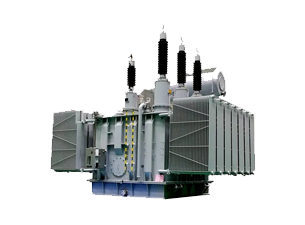
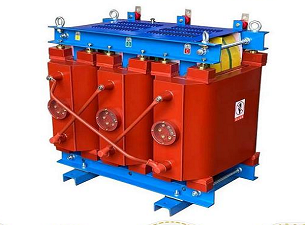
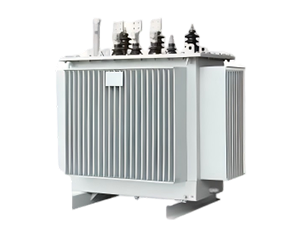
Transformer as the core equipment of the substation, its performance directly affects the overall reliability and operational efficiency, the core points are as follows:
Core function: efficiently complete the conversion of different voltage levels of electric energy, provide end users with qualified power, is the core support for the stable operation of the substation;
Quality requirements: to meet the dual standards of design and materials, design optimization of magnetic flux, insulation and thermal management, material selection of oxygen-free copper and other high-quality materials to ensure stable operation;
Selection principle: Priority is given to products with scientific design and high quality materials, to avoid the problems of failure and cost increase brought by low-quality transformers, and to take into account the actual operational needs and improve the reliability of power supply.
Ensure effective protection and control system
Substation protection and control system is the key to equipment safety and fault disposal, the core of which is timely detection and rapid disposal, which is divided into two major modules:
Arc flash protection: Arc resistant switchgear, arc mitigation relay system, and ultra-fast grounding switches are adopted to prevent and control potential safety hazards;
Operation and maintenance monitoring: remote monitoring to realize preventive maintenance, integrated control system (in line with IEC 61850 standards, such as ABB DCS system) real-time identification of faults, linkage disposal, and enhance the efficiency of operation and maintenance.
Safety and Compliance Design
The core of safety and compliance design is centered around two points, which are concise, clear and focused:
Grounding design: Since many HV substations are adjacent to residential areas, grounding design is of utmost importance, which requires scientific calculation of core elements such as grid resistance, current distribution, ground potential rise, and so on; it should be in accordance with standards such as IEEE 80:2000 and AS/NZS 60479:2002, and safety indicators should be calculated by combining relevant parameters, and residential areas should additionally comply with AS/NZS 4853:2000 to ensure pipeline safety. Neighboring residential areas need to follow AS/NZS 4853:2000 standards to ensure pipeline safety.
Hidden danger prevention and control: If the pole electrode and connector bay grounding system of the substation feeder is close to the public area, it is easy to spread the earth potential rise (EPR), so it is necessary to comprehensively analyze and follow the guideline to optimize the layout and prevent the risk.
Optimized Layout and Environmental Adaptability
Substation siting and layout are directly related to power supply reliability, economy and environmental impact, and are important links in reliable design. Scientific site selection can optimize the grid structure, improve power supply reliability, control costs, reduce environmental impact, fit the long-term development of the city and reserve space for technological upgrades.
Site selection and layout should integrate the nine core factors, such as grid adaptation, power supply security, cost control, environmental impact, etc., so as to realize the unity of practicality and foresight.
Summary
Reliable substation design is a systematic project, the core of which is to take “reliability” as the core, integrate configuration selection, equipment selection, protection control, safety compliance and layout optimization, and achieve the goals of stable power supply, safety and efficiency, and environmental compliance. In the actual design, it is necessary to combine the voltage level, circuit size and other actual conditions, select high-quality equipment, strengthen the protection and compliance design, optimize the layout, taking into account the reliability and economy, to ensure the long-term stable operation of the substation to support the safe and efficient operation of the power system.