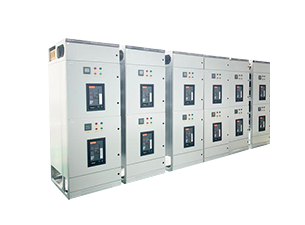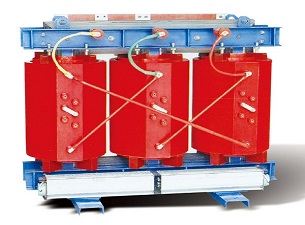


Pre-installation planning and site preparation
Installation of switchgear before the preparatory work to do enough in order to make the subsequent construction smoother, we have to find out the site temperature, humidity, pollution and altitude conditions, to ensure that these environmental data can meet the needs of the equipment operation, and at the same time to check the disconnecting switch and the system voltage, current level can not be adapted to figure out the mode of operation of the equipment and the installation of the scene is indoor or outdoor, these conditions are confirmed to be in place. All these conditions should be confirmed in order to avoid the problem of mismatch in the later stage.
Site safety program should be developed in advance, the arrangement of qualified, experienced personnel responsible for the construction, no relevant documents can not participate in the operation of the personnel, the base, the cable trench, the infrastructure should be checked against the manufacturer’s requirements one by one, the site lighting to ensure that sufficient grounding lines and cable direction should also be planned in advance, the details of the implementation of these in place, the installation process can be a lot less trouble.
Site inspection and equipment acceptance
To the installation site to first check the equipment and environment clearly, can be in advance to eliminate many hidden dangers, we have to circuit breakers, disconnect switches, busbar these core components one by one to check, to confirm that there is no damage, no aging, the equipment fixed, aligned and grounded state are in line with the standard, switchgear in the transport bracket, scattered accessories should also be cleaned up, tools and spare parts properly stowed away, to avoid loss or clutter to affect the Operation.
Parameters on the nameplate of the equipment should be completely corresponding to the project drawings, specifications of fuses, circuit breakers and protection settings should be in line with the project requirements, and the relevant information of the equipment should be retained in full to facilitate the later maintenance of access to references, a lot of on-site safety issues are due to the lack of careful acceptance, such as the switch box shell is not dealt with in a timely manner when the shell is broken, the line is not properly and clearly labeled, which will expose the staff to the electric shock or the risk of misoperation.
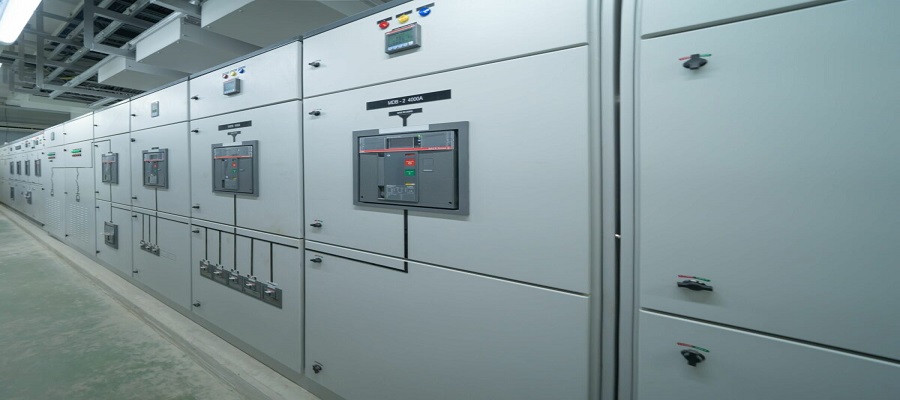
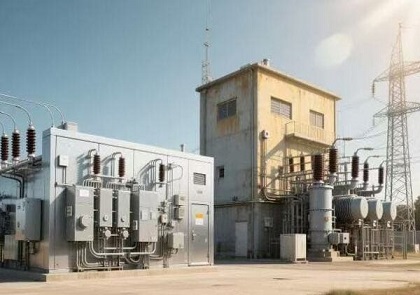
Interior of electrical room. Power energy motor machinery cabinets in control or server room, main operator station network and circuit center in industry factory manufacturing system. generator
Safety Standards Compliance and Risk Assessment
When installing switchgear in industrial scenes, we should strictly comply with international standards such as IEC 61439 and IEC 61936-1. We should do appearance inspection, cleaning and lubrication, and component testing on a daily basis, and organize and keep inspection and maintenance records, so that it is convenient to check the status of the equipment at any time, and the medium- and high-voltage equipments will have a higher risk when operating, so we should sort out the possible problems in advance, and do a comprehensive risk assessment. We should sort out possible problems in advance and do a comprehensive risk assessment to avoid the hidden dangers brought by the environment, equipment and operation in advance.
Distribution box to post obvious safety warning signs, leakage protection switches should be installed firmly, the cover remains intact, protective measures in place, you can significantly reduce the possibility of electrocution, these seemingly basic details, often in the critical time to protect the safety of personnel on site.
Standardized installation process and electrical connection practice
When the equipment is received and handled, it should be handled gently with a compliant lifting method and stored in a dry environment to avoid moisture affecting the performance, when the components are assembled and connected to each other, it should be operated in accordance with the steps instructed by the manufacturer, the strength of the bolt fastening should be controlled, the grounding system should be constructed perfectly, and the way of the cable laying and the terminal processing should be in line with the specification requirements.
Circuit breakers should be accurately aligned and then fixed, control lines in accordance with the wiring diagram layout, the use of color-coded wires will be more convenient to identify and overhaul, the operating personnel should wear the corresponding protective equipment, strict implementation of the process of locking operations, high-voltage and low-voltage equipment installation requirements are not the same, high-voltage equipment to do a better job more stringent safety control.
Switchgear installation standards and fixing requirements
When installing the switchgear, it is necessary to ensure that the overall level and fix firmly, the base will not vibrate during operation, the insulators should be kept clean and aligned, without cracks, the contact arms and blades can slide smoothly, the connection position should be wiped clean without residual oil, and the commissioning should be completed by applying lubricant according to the requirements, so as to prevent the deviation of the contact position from causing the arc fault.
Cable bus should be selected according to the load demand for the appropriate type, reserved for subsequent expansion of space, bracket assembly precision alignment, can effectively reduce power loss, professionals should check all the connection points, and then carry out the corresponding safety tests, NEMA 2021 industry report mentioned that the cable bus system compared with the traditional conduit installation, can improve the installation efficiency by 30%, IEEE 2022 The IEEE 2022 study also demonstrates that precise alignment during installation results in more stable and reliable system operation.
Testing, commissioning and post-verification
Testing and debugging after the equipment installation is completed is an important part to ensure safe commissioning, we have to do insulation resistance, contact resistance, dielectric strength of these basic tests, check the working performance of circuit breakers, protection relays and other components, through the voltage test, short-circuit fault simulation, thermal imaging detection and other means to detect hidden problems, so that the equipment and the transformer, the switchboard and other components are smoothly coordinated to meet the requirements of the industry standard.
Before formally put into operation, another comprehensive safety inspection is done to confirm that there are no cracks and dust accumulation on insulators, no burn marks on busbar joints, no residual debris inside switchgear, no damage to cable terminals, and that all hidden dangers are eliminated before the equipment is put into operation to ensure the subsequent stable and safe operation for a long period of time.
Conclusion
The safe installation of switchgear in industrial projects is a systematic project, and the implementation of safety standards and risk assessment is the core guarantee throughout the whole process. Installation work must strictly follow international standards such as IEC 61439 and IEC 61936-1, and every step from pre-planning, equipment acceptance, on-site construction to commissioning is carried out in accordance with specifications to ensure that the technical parameters, construction techniques, and protective measures are all up to standard.
Comprehensive risk assessment can identify all kinds of hidden dangers in the environment, equipment and operation in advance, and reduce the risks of electric shock, misoperation and arc faults at source by formulating special safety programs, implementing personnel qualification control, and improving grounding and warning signs. Only when safety standards are put into practice and risk control is carried out throughout can we guarantee the safety of personnel operations, the stable operation of equipment and the long-term reliability of industrial power distribution systems.