

Core differences between the two types of substations and the impact on transformer maintenance
Differences in construction and installation
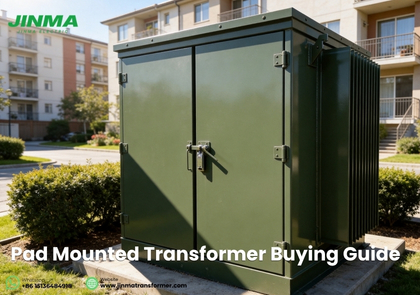
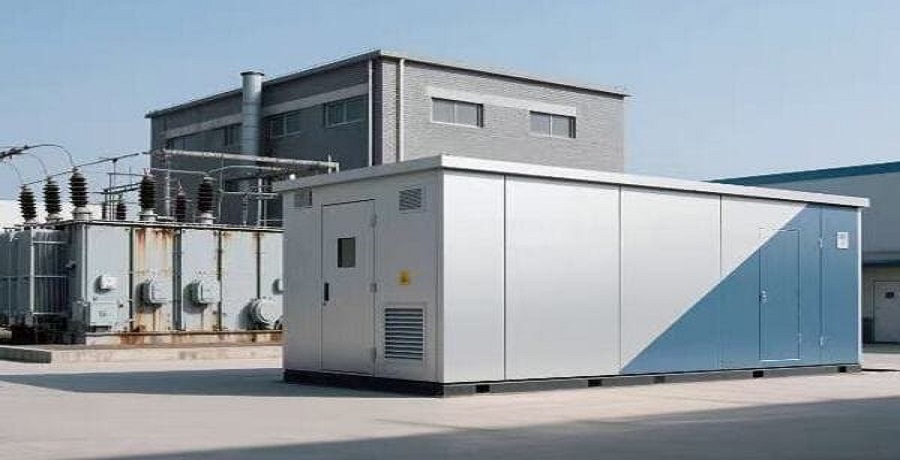
Box-type substation is an integrated “complete set of electrical boxes”, transformers, switches, protection equipment are all installed in the closed box, occupies a very small area, to the field can be used, especially suitable for cities, neighborhoods such as space constraints. But because it is a closed structure, the internal space is small, maintenance and inspection is not so convenient.
Traditional substation is open layout, equipment placed separately, large site, operating space enough, maintenance is smooth, but covers a large area, the construction cycle is longer.
Difference in maintenance basis
Box-type substation to check more box sealing, ventilation, corrosion; traditional substation equipment exposed, daily view, maintenance are more trouble-free. Both can be installed sensors to do real-time monitoring, box-type stations rely more on remote monitoring, traditional station site view, remote monitoring are convenient.
Condition monitoring adaptability
Both types of substations can be equipped with sensors to realize real-time data monitoring, box-type substations rely more on digital remote monitoring, while traditional substations can take into account the local inspection and remote monitoring, adapting to different operation and maintenance scenarios.
Load Monitoring and Thermal Management: Comparison of Cooling System Control Strategies
Transformer core cooling mode
Transformer cooling is divided into four stages: ONAN natural oil natural wind, ONAF natural oil forced wind, OFAF forced oil forced wind, ODAF guided oil forced wind, and different cooling modes directly affect the cooling efficiency.
Traditional and advanced temperature control strategy
traditional substation mostly use fixed temperature thresholds, timed cycle, manual control, simple strategy but high energy consumption; box-type substation adapted to advanced intelligent temperature control, through the load prediction start cooling, temperature optimization efficiency, environmental temperature compensation, to achieve dynamic temperature control adjustment. The new generation of intelligent cooling management also carries variable frequency fans and health rotation algorithms to further enhance cooling efficiency and equipment life.
Equipment accessibility and daily inspection: the difference in maintenance convenience
The core inspection points of the two types of substations transformer maintenance are centered on insulation, cooling, bushings, tap changers, protection system five core components, the core objective is to control the temperature, protection of insulation life, from the root to avoid overheating, moisture, insulation aging and other failures.
Box-type substation exclusive inspection points
In addition to conventional testing, you need to focus on checking the box sealing, ventilation channels, corrosion layer and flame retardant materials, while verifying the cable terminals, hatch seals and other interfaces, to avoid equipment failures due to box problems.
Advantages of traditional substation inspection
Open layout allows visual inspection, torque calibration, cleaning and maintenance operations to be more efficient, without the need for restricted space operations, and a more standardized maintenance process.
Core Maintenance Practices and Transformer Life Enhancement
Three-layer standardized maintenance system
substation operation and maintenance adopts three-layer mode of preventive, predictive and condition maintenance: preventive maintenance is regular visual inspection, cleaning and function verification; predictive maintenance monitors the trend of temperature, load, dissolved gas and other parameters; and condition maintenance triggers alarms through sensor thresholds, and maintenance is initiated locally or remotely, which greatly improves the accuracy of operation and maintenance.
Early Fault Detection and Life Cycle Management
Partial Discharge Detection is the core means of early fault diagnosis, which can provide early warning of insulation degradation, and together with factory FAT and on-site SAT testing, ensure the initial integrity of the equipment. Combined with full life cycle management, covering the entire process of planning, operation and maintenance, and decommissioning, it optimizes equipment utilization and reduces the risk of unplanned downtime through asset tracking and risk assessment.
Summarize
Box-type substations and traditional substations are not absolutely good or bad, it just depends on whether they are suitable for you or not.
For urban sites with little space and quick commissioning, choose a box-type substation, where maintenance is more concerned with sealing the box and working in a compact space.
For outdoor projects with ample space and less maintenance, choose a traditional substation.
Regardless of which one you choose, as long as you take care of heat dissipation and temperature control, condition monitoring, regular inspections, and early detection of faults, you can significantly extend the life of the transformer, making the substation more stable and more cost-effective.