

Walking down neighborhood streets or country roads, we can always see cylindrical devices hanging from utility poles or low green metal boxes in lawns. Many people have seen these devices but don’t know what they do. These two types of equipment are residential transformers, which are the core equipment for stable electricity consumption of every household, and bear the heavy responsibility of power conversion of the “last kilometer” of the power grid. Many electrical practitioners have questions: What is the use of residential transformers? How does it ensure household electricity safety? How to choose different types of transformers? This article will answer all relevant questions.
What is a residential transformer?
Residential transformers are also often referred to as distribution transformers or service transformers, which are power conversion equipment specifically designed to serve residential electricity. It belongs to the core device at the end of the power grid and is widely used in urban areas, suburban houses, rural houses and other scenes.
From the perspective of the overall structure of the power grid, the power output from the power plant is ultra-high voltage, which is transmitted to the distribution lines around the residential area after step-by-step voltage reduction in the substation. Residential transformer is the last step-down equipment before the power enters the home, directly connecting the municipal distribution line and the household power system.
Its core working logic is very clear, and it specializes in the conversion of medium and high-voltage electricity to civilian low-voltage electricity. The input end of the equipment is adapted to the medium voltage grades such as 7.2kV, 12.47kV and 14.4kV commonly used in municipal administration, and the output end is converted to household standard voltage. 120/240V voltage division is common in North America, and 230V civil voltage is used in most countries around the world.
This device is a passive power device, no complex moving parts in the process of operation, only rely on electromagnetic induction principle. Due to its simple structure and mature technology, residential transformers have ultra-high stability and can operate stably for decades under normal maintenance. They are core equipment with extremely low failure rates in the power grid.
Core use of residential transformers
Many users mistakenly believe that grid power can be directly into the home, which is a typical cognitive misunderstanding. The high-voltage electricity of municipal distribution lines cannot be directly connected to families, which will directly burn down household appliances, breakdown lines, and even cause serious electric shock and fire accidents. Residential transformers exist to solve the problem of adaptation between high voltage transmission and low voltage power consumption.
pressure-relief
Long-distance power transmission must adopt high-voltage mode. The higher the voltage, the smaller the loss in the power transmission process, which can greatly reduce the operation cost of the power grid and improve the transmission efficiency. This is also the core reason for the global grid to adopt high voltage transmission.
However, high-voltage electricity is completely unsuitable for home scenes and cannot directly drive civilian equipment such as lamps, household appliances and smart homes. The primary core use of residential transformers is to complete terminal step-down treatment. It accurately converts medium and high voltage electricity in the line into safe and compliant civil voltage, avoiding the risk of high voltage electricity consumption from the root.
Covering the whole house and district power supply
Residential transformers support the stable operation of all household electrical equipment. Daily lighting, socket power supply, refrigerators, televisions, washing machines, computers and other conventional household appliances all rely on low-voltage power converted by transformers to work. Without compliance step-down, all civil electrical equipment cannot be used properly.
With the upgrading of home improvement electrification, modern home high-power equipment continues to increase. Central air conditioning, floor heating, heat pumps, household charging piles, high-power water heaters and other equipment have extremely high requirements for electric load. Dedicated residential transformers can carry such high load power demand, avoiding voltage sag, tripping and other problems when high-power equipment starts.
In terms of power supply coverage, the adaptation scenario of residential transformers is very flexible. Rural single-family houses can be equipped with dedicated single transformers to ensure the stability of power consumption of single-family houses. A single transformer in urban and suburban residential areas can provide stable power to multiple homes and entire residential buildings at the same time, meeting the centralized power demand of the area.
Extended value
Residential transformers provide excellent electrical isolation, physically isolating the municipal grid from the internal wiring of the home. This isolation design can effectively block power grid fluctuation, instantaneous high voltage and surge current, greatly reduce the probability of household appliances burning and line short circuit, and improve the safety of household electricity consumption.
In terms of power stability, it can continuously and stably output standard civil voltage, effectively avoiding the problem of voltage fluctuation. Stable voltage can not only ensure the normal operation of household appliances, but also reduce equipment loss and prolong the service life of household appliances.
At the same time, residential transformers can reduce the transmission loss of power terminals and improve the overall energy-saving effect of the power grid. For newly built residential areas and expanded residential areas, the transformer capacity can be upgraded and expanded flexibly, easily adapting to the demand of increasing residents and rising power load in the area, and has strong scene adaptability.
Residential transformer working principle
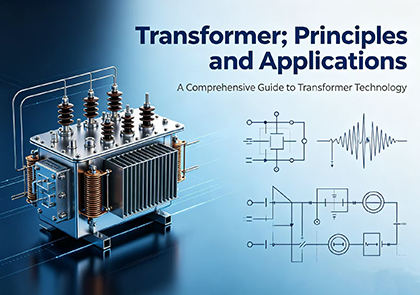
Many people wonder how residential transformers accurately realize high voltage to low voltage? In fact, its working principle is not complicated, the core relies on electromagnetic induction principle to operate, the whole process is physical power conversion, no chemical energy, quiet and efficient operation.
In order to facilitate the understanding of ordinary users, we abandon complex professional formulas and disassemble their working process with step-by-step popular logic to clearly restore the whole process of power conversion.
Step 1: input high-voltage alternating current. The medium and high-voltage alternating current from municipal distribution lines is connected to the primary coil of the transformer, which is the input end of power conversion and carries the high-voltage power transmitted by the power grid.
Step 2: generate alternating magnetic fields. The direction and magnitude of alternating current are continuously changing. After flowing through the primary coil, a continuously changing alternating magnetic field will be formed inside the equipment, which is the core foundation of electromagnetic conversion.
Step 3: magnetic field conduction synergy. The transformer is internally equipped with silicon steel laminated core, which can concentrate and guide the magnetic field transmission and greatly reduce the heat loss caused by magnetic field diffusion. At the same time, the magnetic connection and electrical isolation of the primary and secondary coils are realized to ensure the safety of the equipment.
Step 4: Induction generates low voltage electricity. When the alternating magnetic field penetrates the secondary coil, it induces a completely new voltage. Residential transformers achieve voltage reduction by precisely designing the ratio of coil turns so that the primary coil has far more turns than the secondary coil.
Step 5: low voltage electricity into the home. The converted standard low-voltage alternating current is transmitted to household meters and distribution boxes through cables, and finally distributed to various circuits in the whole house for use by various household appliances. The North American voltage divider system can output two voltages of 120V and 240V at the same time, adapting to different power equipment.
It is important to note that transformers only support AC conversion. The magnetic field generated by DC is a static magnetic field, which cannot complete electromagnetic induction. This is also the core reason why AC is used in all civil power grids and transmission systems.
Modern residential transformers operate with extremely high efficiency, reaching 98%-99% under normal operating conditions. Operating loss is only a small amount of coil heating, magnetic core heating, almost no power waste, long-term operation of excellent energy saving.
Common types of residential transformers
In civil scenarios, residential transformers are mainly classified according to installation mode, power supply phase and cooling mode. Among them, pole-mounted transformer and ground-pad transformer are the two most mainstream types, which adapt to different community construction standards and power layout, and are also the categories that users need to distinguish most.
Pole-mounted transformer
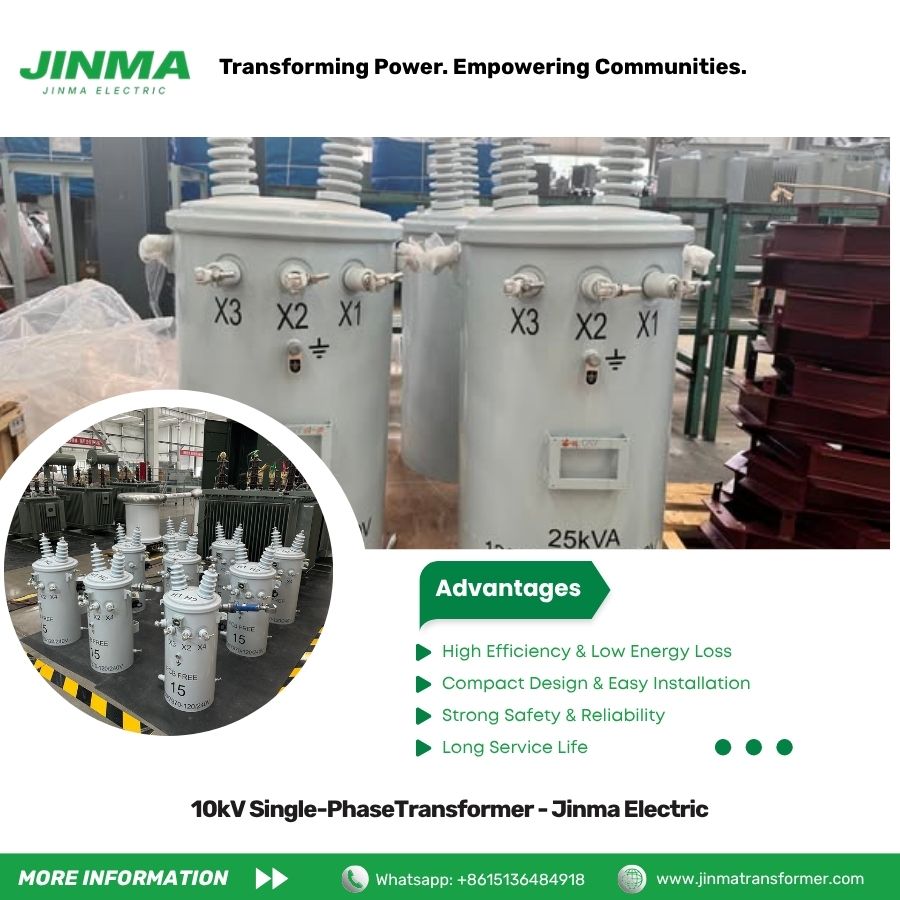
Pole-mounted transformers are the most common electrical equipment in old residential areas and rural areas. They are mostly cylindrical or rectangular boxes in appearance, directly fixed on outdoor power poles, and used in supporting overhead power lines.
The core advantages of this transformer are high cost performance, easy installation and convenient maintenance. The equipment has simple structure, mature technology, no complicated construction for troubleshooting and replacement maintenance, and extremely low operation and maintenance cost, which is very suitable for large-scale popularization in rural areas and suburbs. Pole-on-pole residential transformer is mainly suitable for old residential areas, rural self-built houses and suburban areas covered by overhead lines, which is the mainstream choice for old scenes with priority to cost performance.
Pad-Mounted transformer
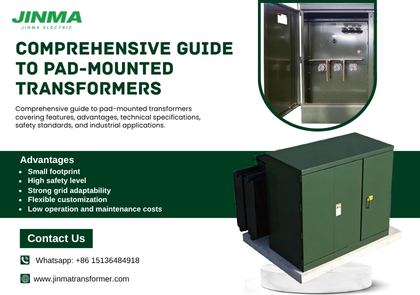
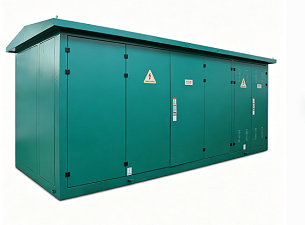
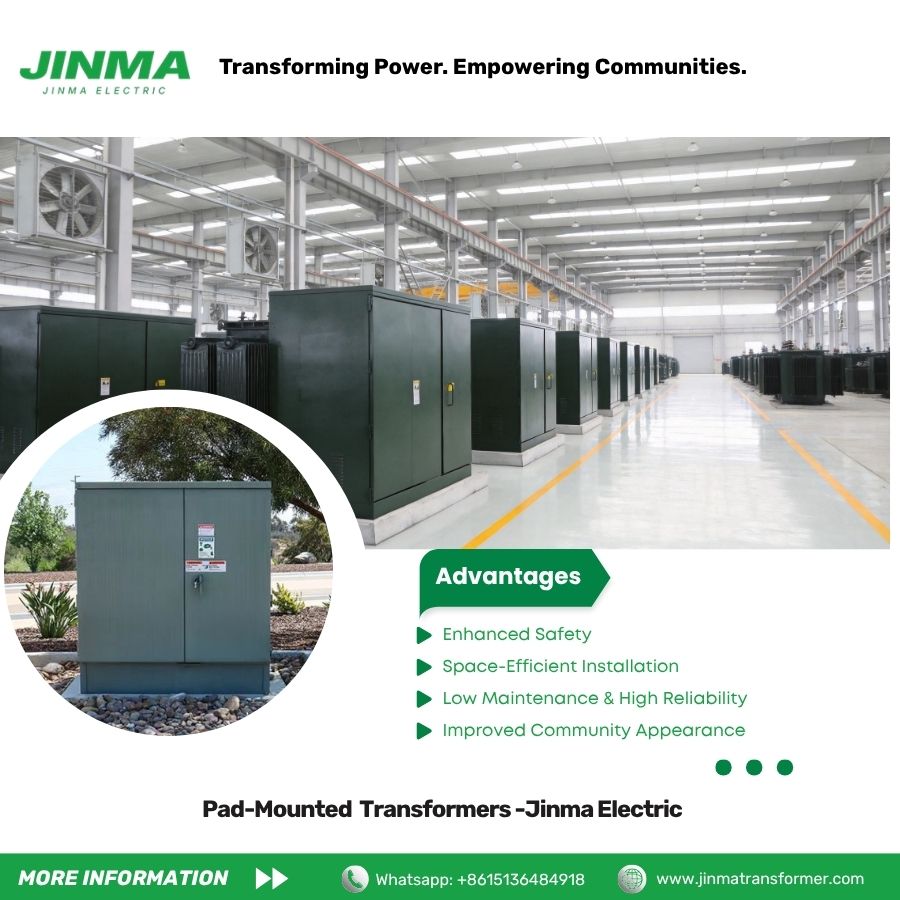
The green and gray square metal boxes that we see on the lawn and roadside of the new residential area are ground mat transformers. The equipment is fixed on the concrete base, supporting the underground cable pipe network, which is the mainstream configuration of modern residence.
The safety of pad-mounted transformer is far superior to that of pole-mounted products. The equipment adopts fully enclosed anti-theft box design, with anti-touch, anti-destruction, waterproof and moisture-proof, anti-corrosion functions, will not cause safety hazards to pedestrians, children and pets, and has stronger adaptability to human habitation. Box-type residential transformers have lower operating noise, good equipment concealment, and will not affect the overall landscape of the community. At the same time, it avoids the harsh environment at high altitude, is minimally affected by extreme weather, has stronger operation stability and lower failure rate.
Single phase vs three phase residential transformer
Single-phase transformer is the mainstream standard model of civil residence, which adapts to the electricity demand of most ordinary families. It has a simple power supply structure and lower procurement and operation and maintenance costs. It can stably drive conventional loads such as indoor lighting, daily appliances, and small kitchen and bathroom equipment, fully meeting the basic power consumption scenarios of single-family ordinary houses.
The three-phase transformer has stronger power supply performance, more balanced and stable power output, and can bear large instantaneous power load. It is not suitable for ordinary small-sized residential buildings, mainly for high-demand scenarios, such as large-sized self-built houses equipped with multiple household charging piles and large-scale heat pump equipment, as well as multi-storey apartments, commercial and residential complex buildings and other centralized electricity buildings.
Oil-immersed vs dry-type residential transformer
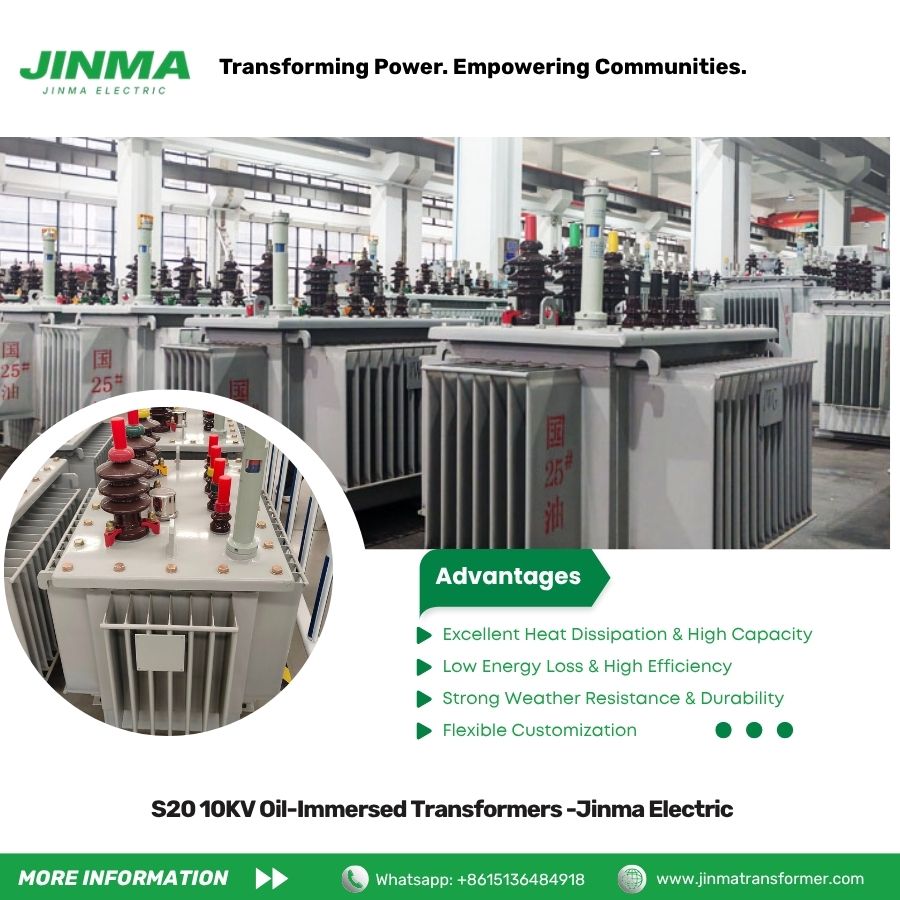
Oil-immersed transformer is the preferred equipment for outdoor residential scenes, and it is also the mainstream model for residential and rural power distribution. The equipment is filled with special insulating cooling oil, which has dual functions of heat dissipation and insulation, high heat dissipation efficiency and stable insulation performance. It can adapt to outdoor 24-hour uninterrupted operation, strong weather resistance, and adapt to various outdoor and outdoor landing installation scenarios.
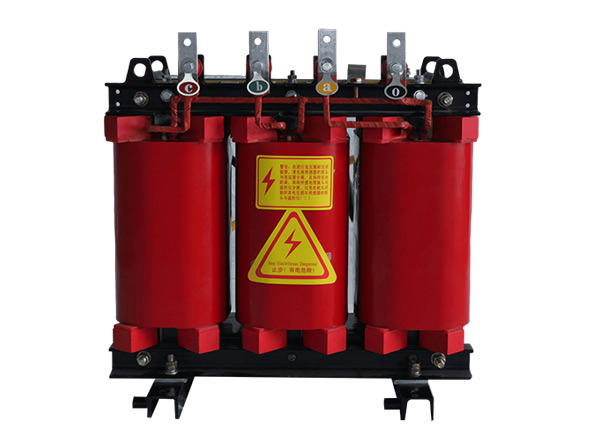
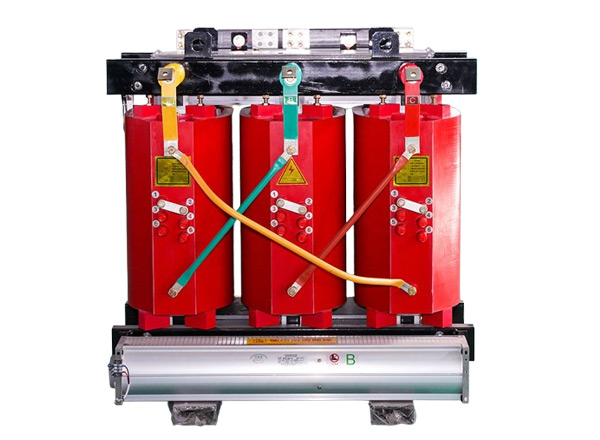
Dry-type transformer is air-cooled structure, no insulating oil inside, eliminating oil leakage and fire hazards from the root, and the safety level is higher. However, limited by the heat dissipation mode, the equipment is larger in size, higher in cost, and generally stable in outdoor operation. Therefore, it is rarely used for outdoor residential power distribution, and more suitable for indoor power distribution, confined spaces, and special scenes with extremely high fire rating requirements.
Pole-mounted vs. box-type residential transformers: Which one do you need?
In the civil power distribution system, pole mounted (pole mounted) and box type (ground mat/ground mounted) are the two most widely used residential transformers. The core functions of the two are the same, both of which are to reduce the high voltage in the power grid to household safety voltage, but there are significant differences in installation mode, adaptation scenario, safety performance, cost and aesthetics.
Pole-mounted transformer
In terms of core advantages, pole-mounted transformers have outstanding cost-performance advantages. The equipment has simple structure, compact volume, no need for concrete base construction, short installation period and low construction cost. At the same time, the equipment is installed in the air, the ground does not occupy space, and it is suitable for rural homestead and narrow road areas.
In the later operation and maintenance, the advantages of pole-type residential transformer are obvious. The equipment is exposed without closed shelter, and the electric power staff can quickly troubleshoot, repair and replace it. The operation and maintenance difficulty is low, and the after-sales cost is low. It is very suitable for popularization in large rural areas and suburban areas.
Pad-Mounted transformer
Safety performance is the biggest core highlight of box-type transformers. The equipment adopts fully sealed anti-theft box design, with waterproof, moisture-proof, dustproof, anti-human touch, anti-malicious damage multiple protection capabilities. The equipment is installed on the ground, without exposed high-altitude lines, eliminating potential safety hazards such as falling objects from high altitude, aging of lines, electric shock, etc. from the root, and is more friendly to the elderly, children and pets.
In terms of operating stability and experience, the pad-mounted transformer performs better. The equipment is installed on the ground base, which is minimally affected by extreme weather, wind and lightning, with low operation failure rate and more stable voltage output. At the same time, the noise reduction process of the equipment is better, the operating noise is lower, and it will not interfere with the daily life of the residents.
Comparison of core differences between the two models
The infrastructure is different. Pole-mounted transformers adapt to overhead power lines and rely on poles to build transmission networks; box-type transformers adapt to underground cable networks and are exclusive equipment for urban underground power distribution systems.
Second, the security level is different. Pad-Mounted transformer fully enclosed landing design, higher safety protection level; pole-mounted equipment and lines are completely exposed, greatly affected by the environment, relatively more potential safety hazards.
- The cost input is different.The procurement, construction and operation and maintenance costs of rod-mounted equipment are lower and the cost performance is high; the capital investment of box-type equipment in the early stage is large, but the failure rate in the later stage is low, the operation and maintenance frequency is less, and the long-term use stability is stronger.
- landscape adaptation is different. Pole-mounted lines are messy and visually poor; box-type equipment is neat and hidden, adapting to the aesthetic standards of modern communities.
How to determine which type of transformer is suitable for your home?
For urban commercial housing residents, there is no need to choose the transformer type independently. The type selection, installation and layout of the transformer in the residential area are planned by the developer and the power department. The old Urban area is equipped with pole-mounted transformer by default, and the newly-built modern residential area adopts box-type ground pad transformer uniformly.
For rural self-built houses and private reconstruction and expansion houses, flexible selection can be made according to the scene. In rural areas with limited budget, overhead lines and open sites, pole-mounted transformers with higher cost performance are preferred.
If the residence is located in the typhoon, rainstorm, lightning strike prone area, the pursuit of long-term power stability and safety, or self-built high-end residential, courtyard residential, preferred box transformer. It can effectively avoid the risk of power failure in extreme weather and improve the overall aesthetics of the courtyard.
Residential transformer selection key parameters
Ordinary residents do not need to pay attention to transformer parameters, but for self-built house owners, community renovation leaders, electrical construction personnel, parameter selection directly determines the stability and safety of electricity. Reasonable selection can avoid problems such as overload and burning, insufficient power, and excessive energy consumption.
kVA Capacity: Core Load Standard
Capacity is the core parameter of transformer, the unit is kVA, which directly determines the maximum electrical load that the equipment can carry. The common capacity range of civilian residential buildings is 15 – 250kVA, which can meet the electricity demand of different types and households.
Ordinary single-family self-built houses and small-sized houses can meet daily electricity consumption by using 25 – 75kVA capacity. For large-sized houses, multi-equipment home decoration, houses equipped with charging piles and heat pumps, it is recommended to select more than 100kVA capacity. Apartment buildings with multi-family centralized residence need to match larger capacity transformers.
Small capacity with large load is strictly prohibited during selection, which is prone to overheating, tripping and burning of equipment. At the same time, it is recommended to reserve 20%-50% capacity margin to adapt to the electricity consumption increment of later home appliance upgrade and house expansion, so as to realize long-term use.
Voltage level and phase matching
The type selection must match the input voltage of the local municipal power grid. Common medium voltage inputs are 7.2kV, 12.47kV and 14.4kV. Voltage mismatch will cause the equipment to fail to be connected to the grid or even burn down the equipment directly. The output voltage shall strictly correspond to the civil standard to ensure the normal use of household appliances.
Single-phase transformers are preferred for ordinary families, with high cost performance and complete adaptation to daily electricity consumption. In the case of high-power equipment and centralized power demand, it can be upgraded to three-phase transformer to ensure stable power output and avoid overload damage of equipment.
Efficiency, heat dissipation and certification standards
For residential transformers operating for a long time, priority should be given to high-energy-efficiency models, which meet industry energy-saving standards. Equipment with low-loss iron core and low-heating design can significantly reduce long-term operating energy consumption, reduce electricity consumption and equipment aging speed.
Oil-immersed transformer is preferred for outdoor civil scenes, with uniform heat dissipation, good insulation and all-weather operation. Dry-type transformers can be used indoors and in confined spaces to eliminate hidden dangers of oil leakage and provide higher safety. At the same time, attention should be paid to the noise parameters of the equipment, giving priority to low-noise models to avoid disturbing the public.
All household transformers must have formal industry certification and meet local power grid standards. Before the selection of self-built and modified projects, consult the local power department to ensure that the equipment can be connected to the grid normally and pass the acceptance.
Safety and Maintenance of Residential Transformer
Many owners have cognitive misunderstanding that transformer maintenance needs residents to be responsible. In fact, all residential transformers in residential areas and public areas belong to the power company, and professionals are responsible for overhaul, maintenance and replacement, and residents do not need to operate by themselves. However, transformer belongs to high-voltage power equipment and has potential safety risks. The owner has basic safety knowledge, which can effectively avoid potential safety hazards and ensure home safety.
Core safety specifications
It is necessary to keep a safe distance of at least 3m from the ground pad transformer in daily life. It is forbidden to pile up sundries, plant tall green plants and build temporary buildings around the equipment to avoid shielding the equipment and affecting heat dissipation, and eliminate potential safety hazards.
It is forbidden to touch, climb or knock the transformer equipment, open the box without permission, and pull the surrounding cables.
Transformer internal high-voltage power, non-professional operation is easy to cause electric shock, explosion accidents, belongs to high-risk violations.
Daily pay attention to the abnormal state of the equipment. In case of continuous abnormal noise, oil leakage, smoke, burnt smell, shell damage and other problems, immediately stay away and report to the power department. Do not check and repair by yourself.
Household daily maintenance and coordination work
Residents do not need professional maintenance, but can do a good job of daily cooperation. Regularly observe the state of transformer at home entrance, timely clean weeds and sundries around equipment, ensure smooth heat dissipation of equipment and smooth maintenance passage.
If equipment abnormality, line aging, box damage and other problems are found, call the power customer service for repair as soon as possible, early detection and early disposal can effectively avoid large-scale power failure, equipment burning and power safety accidents.
Self-built house exclusive transformer users can regularly invite professional electricians to inspect the equipment temperature, insulation performance, line status, extend the service life of the equipment, and ensure the stability of power consumption.
Conclusion
Safe, stable and efficient power distribution starts with reliable residential transformers. As a professional transformer manufacturer, Jinma Electric is committed to providing high performance pole and pad-mounted distribution transformers for residential communities, rural power grids and modern residential power supply systems worldwide. Whether it is a single-family residence, a rural independent residence or a large residential area, Jinma Electric can provide durable, economical and grid-compliant substation solutions. Contact us today for expert technical support and customized solutions!