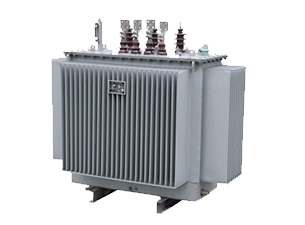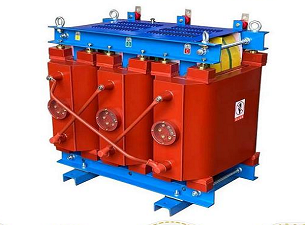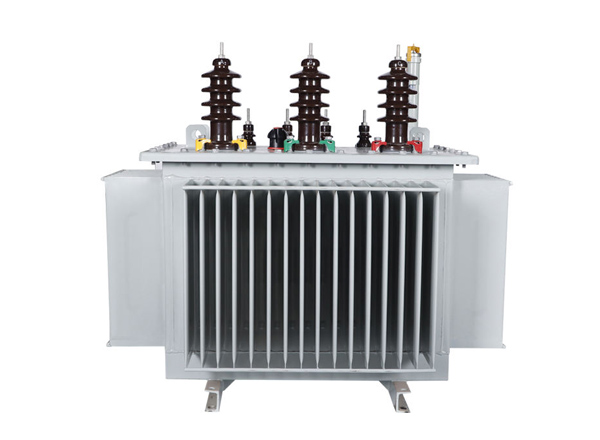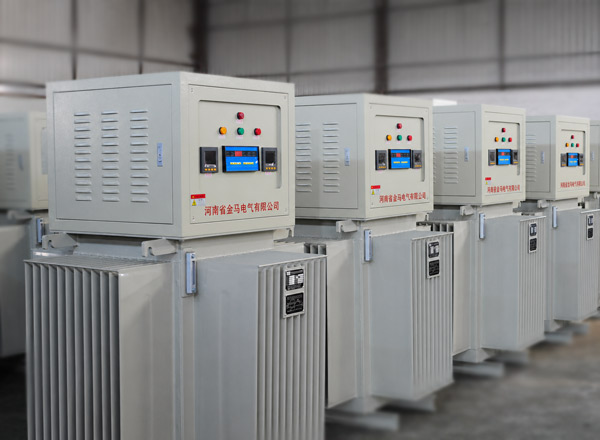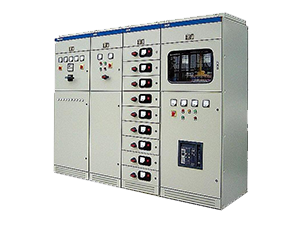


Residential areas, villas, rural self-built houses and other common pole cylindrical equipment, roadside green box equipment, are residential distribution transformers.Many people wonder: what kind of transformer is commonly used in residential areas, why do residential power supplies need special transformers, and what are their working principles, selection standards and maintenance methods?
This article will analyze the residential area special transformer from the seven dimensions of distribution necessity, mainstream type, working principle, phase sequence difference, core advantage, selection method and maintenance skills, and help you thoroughly understand the core knowledge of residential distribution transformer.
Why Are Transformers Needed in Residential Power Distribution?
Transformer is the core equipment of residential power distribution. The stable and safe power consumption in all residential areas cannot be separated from the voltage conversion function of transformer. Its core value focuses on two aspects: long-distance transmission energy saving and terminal power safety.
Realize long-distance low-loss power transmission
The power plant output voltage is 10 – 30kV and cannot be adapted to long-distance transmission.According to P=V×I and P loss =I²R formula, under the same power, raising the voltage can reduce the current and greatly reduce the heat consumption of the circuit.
Therefore, the power system will boost the voltage to 115kV, 230kV or even higher through step-up transformers for long-distance transmission.If the power transmission is directly carried out at low voltage, it will not only generate huge power loss, but also need to lay extremely thick transmission lines. The construction and operation and maintenance costs are extremely high, and it is completely impossible to land.
Converting safety voltage
High voltage transmission voltage can not be directly into the home, not only incompatible with household electrical equipment, but also has great electric shock, fire safety hazards.This requires step-down transformers to step down and convert high voltage into safe voltages for residents: the mainstream household voltage in North America is 120V/240V split voltage, and most countries in the world use 230V single-phase voltage.
The power transmission will go through two core voltage reductions, first the substation will reduce the high voltage of 100 kV to 4 – 35 kV medium voltage distribution, and then through the terminal transformer in residential areas, the medium voltage will be reduced to standard household voltage, so as to ensure the safety of household electricity and stable operation of equipment in all aspects.
What Type of Transformer Is Commonly Used in Residential Areas?
In civil residential scenarios, single-phase step-down distribution transformers are absolutely mainstream, mainly divided into two installation forms: pole-mounted and buried box-type, with oil-immersed insulation cooling structure as the main one, perfectly adapting to the power supply needs of residential areas, villages and suburbs.
Classification by installation method
The installation method is the most intuitive transformer differentiation standard in residential areas, which is suitable for overhead and underground two mainstream power distribution infrastructures:
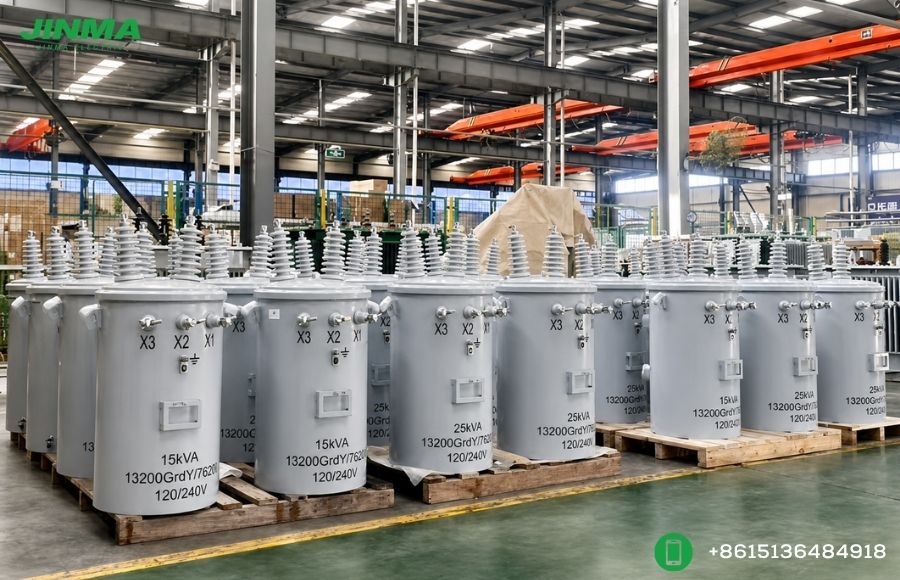
- l Pole-mounted transformer (overhead type): cylindrical tank structure, suspended from power poles, docking overhead transmission lines.The overall light and compact, low cost, easy installation and maintenance, capacity of 10 – 167 kVA, civilian mainstream 25 – 100 kVA, widely used in rural areas, suburbs and old residential areas.
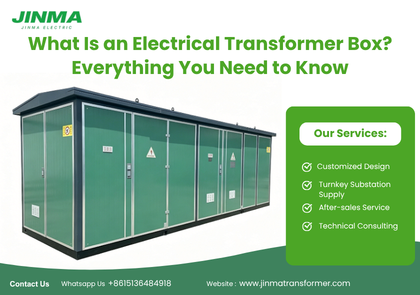
- l Cushion-mounted transformer (buried matching type): enclosed anti-theft metal box, fixed on the concrete base, mostly green, gray outdoor box, suitable for underground cable transmission.Capacity range 25 – 500 kVA, high safety, good aesthetics, no high-altitude hidden dangers, is the first choice for new residential areas and urban residential areas.
- l Small underground/pit transformer: installed in underground pipe network and special pit box, with strong concealment. It is mostly used for high-end residential buildings in high-density Urban area, but its construction and operation and maintenance costs are high, and it is rarely used in ordinary residential areas.
Phase-sequence Configuration Classification
According to the number of power supply phases to adapt to different residential load scales, divided into single-phase and three-phase two categories:
- l Single-phase transformer: mainstream residential models, can provide 120/240 V split voltage for single-family homes and small residential clusters.Simple structure, high cost performance, fully suitable for ordinary household lighting, household appliances, kitchen and bathroom equipment and other conventional loads.
- l Three-phase transformer: can output 208 Y/120 V balanced three-phase power supply, strong power supply stability, large load capacity.Only suitable for large villas, apartment buildings, commercial and residential integrated buildings, suitable for high-power HVAC, charging piles, industrial-grade equipment, ordinary single-family residential rarely used.
Classification by Insulation and Cooling Method
Determine the outdoor adaptability, heat dissipation capacity and service life of the transformer, divided into two categories: oil-immersed and dry-type:
- l Oil-immersed transformer: the absolute mainstream of outdoor residential power distribution, using mineral oil or environmentally friendly insulating oil, through natural oil circulation and air heat dissipation.It has excellent insulation and heat dissipation performance, strong overload capacity and long service life. Most pole-mounted and pad-mounted civil transformers are of this type.
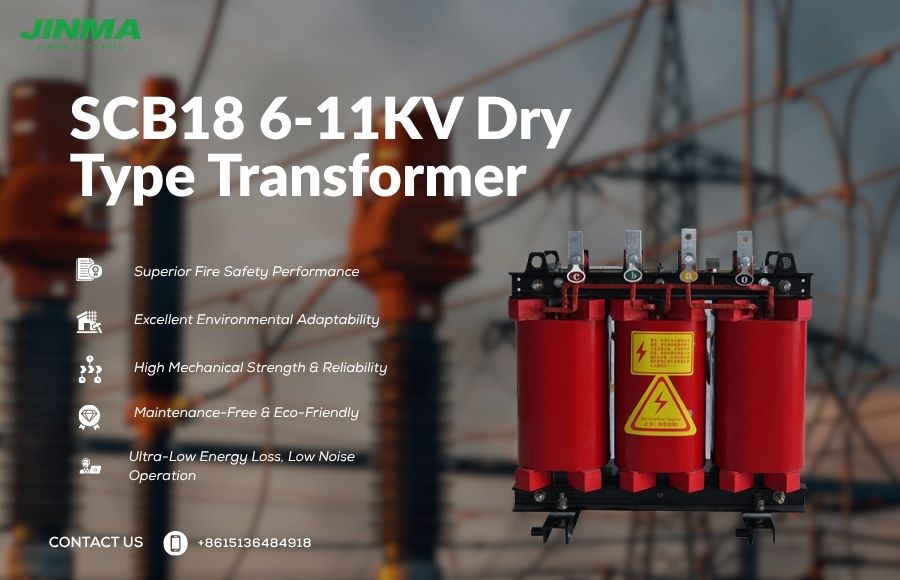
- l Dry-type transformers: Air-cooled or resin-cast insulation, no fuel, no fire hazards, and higher safety.However, the cost is high and the overload capacity is weak. It is only suitable for indoor power distribution or scenes with special environmental protection and safety requirements, and is not used for outdoor residential trunk power distribution.
Classification by Protection and Design Characteristics
Different protection designs determine the installation convenience, operation stability and power supply mode of the equipment:
- l Conventional transformer: no built-in protection structure, need to be equipped with external fuse, lightning arrester to complete overload, lightning protection, more supporting equipment, adapt to standardized large-scale power distribution scenarios.
- l CSP fully self-protected transformer: built-in primary fuse, secondary circuit breaker, surge protection device, no additional supporting protective equipment, simple installation, high reliability, is a common model of pole-mounted civil transformer.
- l Ring network/radiation power supply transformer: pad-mounted transformer supports ring network power supply mode, power can be supplied to multiple transformers in series, power supply redundancy is stronger, fault tolerance rate is higher; radiation type is one-to-one independent power supply, simple structure, suitable for small residential areas.
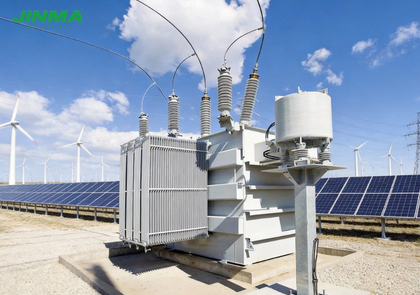
Generally speaking, single-phase, oil-immersed, CSP self-protected pole-mounted/pad-mounted transformers (25 – 75 kVA) are standard in ordinary single-family residential areas, and various categories can be freely combined. The power department will select the appropriate model according to the regional infrastructure, household load and site environment.
How Does a Residential Distribution Transformer Work?
AC in the power grid will produce a continuously changing magnetic field. The transformer conducts alternating magnetic field through the iron core to realize the energy transmission between the primary winding (high voltage side) and the secondary winding (low voltage side). There is no direct circuit connection on both sides, which has the effect of electrical isolation.
The voltage conversion ratio is determined by the winding turns ratio, and the core formula is: secondary voltage/primary voltage = secondary turns/primary turns.Simply put, the number of winding turns on the high voltage side is much more than that on the low voltage side, which can achieve accurate voltage reduction from medium voltage to household low voltage.The electric power is basically conserved, the voltage is reduced, and the output current is adapted to the household load demand.
Core Component
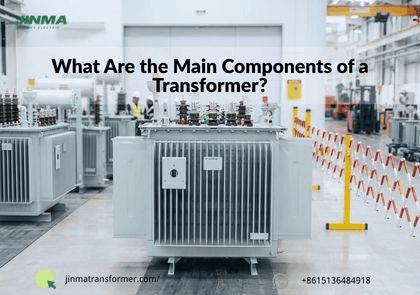
- l Silicon steel core: laminated design, reduce eddy current loss and hysteresis loss, provide low resistance conduction path for magnetic field;
- l High and low voltage winding: insulated copper/aluminum wire winding, high voltage winding connected to medium voltage grid, low voltage winding output household voltage;
- l Insulation cooling oil: filled in the tank interior, taking into account the dual role of insulation and heat dissipation;
- l Bushing and protection devices: Insulating bushings ensure the safety of line connections, and built-in fuses, lightning arresters, pressure relief valves, etc. are used to achieve overload, lightning strike, and short circuit protection.
Operating Efficiency
The mainstream residential oil-immersed transformers on the market have excellent heat dissipation performance, operating efficiency up to 98%-99% under rated conditions, only slight core loss and winding copper loss, and extremely low overall energy consumption, which can stably adapt to the 24-hour uninterrupted and all-weather power supply operation requirements of residential areas.
Single-Phase vs. Three-Phase Residential Transformers
Single-phase transformer and three-phase transformer perform their respective duties in residential power distribution scenarios. There are significant differences between them in applicable scenarios, voltage output, capacity interval, power supply performance and use cost. The specific text comparison is as follows:
Applicable Scenarios
Single-phase transformer is the mainstream choice of civil housing, mainly suitable for ordinary single-family houses, rural houses, small household clusters, fully meet the daily household basic electricity;
Three-phase transformers are mostly used in scenes with larger power loads, including large villas, multi-storey apartment buildings, integrated commercial and residential buildings, and residential buildings equipped with high-power special equipment.
Output Voltage
Single-phase transformer can output 120/240V split phase voltage, matching civil standard voltage level, suitable for household lighting, small appliances, kitchen and bathroom equipment and other daily civil electricity scenarios.
The three-phase transformer supports 208Y/120V, 480Y/277V and other balanced three-phase voltage outputs, and the power supply voltage is balanced and stable, which can meet the power specifications and operation requirements of industrial equipment and high-power loads.
Range of Capacity
Single-phase transformer capacity specifications are small, the conventional capacity range is 10 – 167kVA, which can fully meet the daily power load demand of small-sized houses and ordinary self-built houses.
Three-phase transformer has a wider capacity range and a higher load limit. The conventional capacity can reach 75 – 2500kVA and above. It is suitable for multi-household centralized power supply scenarios and can stably carry high-power and continuous power loads.
Power Supply Advantage
The single-phase transformer has simple structure, low cost, low operation and maintenance cost, and can perfectly adapt to light and medium daily power loads of ordinary houses.
Three-phase transformer power supply stability is stronger, voltage fluctuation is very small, power output is continuously balanced, can perfectly adapt to high-power central air conditioning, electric vehicle charging pile, large-scale HVAC equipment and other heavy-duty equipment.
Short Board and Cost Performance
Single-phase transformer under full load or heavy load conditions will significantly reduce operating efficiency, prone to load imbalance, voltage fluctuations and other abnormal power supply problems, difficult to support high-power, continuous electrical load;
Three-phase transformer equipment cost, construction and installation costs are higher, wiring structure is complex, for ordinary single-family houses, the function is excessive, the cost performance is extremely low, only suitable for high-load residential scenarios.
Advantages of Residential Distribution Transformers
The special residential distribution transformer has been standardized and designed to adapt to the civil power supply scenario. It has multiple advantages such as safety, high efficiency, economy and durability. It is the core guarantee of modern residential power system.
- l High transmission efficiency: Through the mode of high voltage transmission and terminal voltage reduction, the transmission loss of the line is minimized. The transformer itself has high operation efficiency. Long-term use can effectively reduce the power grid energy consumption and reduce the cost of residential electricity consumption.At the same time, there is no need to lay heavy high-voltage cables in residential areas, which greatly reduces the cost of power distribution infrastructure.
- l More stable power consumption: Transformer realizes electrical isolation between grid high voltage and household low voltage, avoiding high voltage electric shock risk from the source.The equipment is equipped with fuse, lightning protection, grounding protection, pole type high-altitude installation, pad-mounted enclosed protection, which can effectively eliminate power accidents caused by personal contact and external force damage, and ensure household power safety.
- l Durable and reliable: the equipment has no moving wear parts, solid structure, excellent temperature control and insulation ability, can adapt to high temperature, low temperature, rain and snow and other outdoor complex environment, support 24 hours of uninterrupted operation, normal operation life up to 30 – 50 years, failure rate is extremely low.
- l Economical and flexible: standardized single-phase transformers are low in cost and convenient to install. A single device can serve multiple households and share infrastructure and operation costs.At the same time, multi-specification capacity is optional, flexible selection can be made according to community scale and household load, suitable for different scenarios such as small self-built houses and large-scale communities, and compatible with new household power equipment such as photovoltaic and charging piles.
- l Voltage stabilization and quality assurance: It can effectively compensate for line voltage drop, stabilize residential terminal voltage, avoid problems such as low voltage during peak hours, equipment tripping, etc., reduce voltage fluctuation on household appliances and intelligent equipment, and improve power stability.
How to Choose the Right Residential Transformer
Residential transformer selection is mostly completed by the power operation and maintenance unit. The owner and construction party understand the selection standard, which can effectively avoid the problems of insufficient power supply and waste of resources. The core selection points are as follows:
Determine Your Electrical Load Requirements
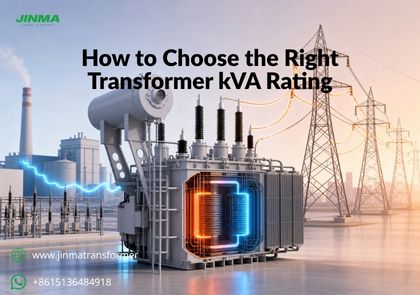
Calculate the total power of all residential electrical equipment, including lighting, household appliances, HVAC, water heaters, charging piles, etc., calculate the actual demand in combination with the simultaneous coefficient, and reserve 20%-50% expansion space to adapt to the later upgrading of household appliances and installation of new energy equipment.
General small-family residential adaptation 25 – 50kVA specifications, conventional single-family residential preferred 50 – 100kVA model, large-family residential and multi-family residential areas, you need to choose more than 100kVA large-capacity equipment or three-phase transformer, fully match the overall power load.
Choose the Phase Configuration
Single-phase transformer is preferred for ordinary families and small houses, which has excellent cost performance and can fully meet the conventional power demand of daily lighting and household appliances; for high-end large-sized houses equipped with large-scale central air conditioning, electric vehicle charging piles and high-power HVAC equipment, it is recommended to select three-phase transformer to ensure balanced and stable power supply and effectively avoid voltage fluctuation under heavy load conditions.
Select the Installation Type
In rural areas and areas equipped with old overhead lines, pole-mounted transformers are preferred, which have excellent cost performance, simple installation, low operation and maintenance cost in the later stage, and are suitable for rural basic power distribution scenarios;
Newly built residential quarters, urban core residential areas and areas with requirements for community landscape and environmental cleanliness are more suitable for pad-mounted transformers, which have the advantages of anti-theft silence, safety and reliability, regular and beautiful appearance, and meet the needs of modern urban residential power distribution.
Check Core TTechnical Parameters
When selecting the type, it is necessary to strictly match the standard parameters of the local power grid. The primary side voltage shall be adapted to the mainstream distribution voltage in the area, including 7.2kV, 12.47kV, 13.2kV and other common specifications. The secondary side voltage shall conform to the civil standard power supply voltage.
Oil-immersed natural heat dissipation structure is preferred for outdoor residential power distribution scenarios. CSP full-self-protection transformer is recommended. Fuses, circuit breakers and surge protection devices are built in the equipment. No additional supporting protective equipment is required, which can effectively simplify the installation process and improve the operation safety and stability of the equipment.
Avoid the Wrong Choice
Transformer selection should follow the principle of scientific matching, and eliminate two types of common problems:
- Overload operation of small capacity transformer is strictly prohibited. Long-term overload will cause overheating, unstable voltage and sudden reduction of service life of equipment.
- Avoid blind selection of ultra-large capacity equipment, which will not only increase the purchase cost, but also lead to light load operation and reduced work efficiency.
In addition, the type selection shall strictly conform to the local power specifications, reserve sufficient expansion space, adapt to the access requirements of new electrical equipment such as photovoltaic and charging piles, and meet the demand for future power upgrading.
Maintenance Tips for Residential Transformers
Most distribution transformers in residential areas are under the unified operation and maintenance management of electric power departments, and ordinary residents do not need to carry out professional maintenance operations.However, through normal safety observation, standardized environmental management and maintenance, and professional operation and maintenance work, the service life of equipment can be effectively prolonged, various power distribution faults can be avoided, and the power consumption stability of the area can be ensured.
Household Safety Observation Points
Transformer belongs to high-voltage power special equipment. There are extremely high electric shock safety hazards when touching, disassembling and repairing without permission.
- Residents can carry out normal observation within a safe distance, focusing on the appearance problems such as equipment oil leakage, shell rust, shell deformation and damage;
- At the same time, pay attention to the sound of equipment operation. The slight low-frequency buzzing of equipment is normal operation state. If there is sharp abnormal sound and crackling arc sound, it is fault signal.
- In addition, if there are frequent abnormal power consumption conditions such as light flashing, voltage fluctuation and unprovoked tripping at home, it is necessary to report to the power department for repair as soon as possible, and do not handle it by yourself.
Site Environmental Maintenance
- The 10 meters around the pad-mounted transformer should be kept open and transparent. It is strictly prohibited to stack sundries, plant tall trees and build enclosure facilities to ensure the ventilation and heat dissipation of equipment and inspection space.
- Regularly clean and trim the branches, vines and other vegetation around the transformer on the pole to prevent vegetation overlapping and winding the power line, effectively avoiding potential safety hazards such as short circuit and leakage.
- When carrying out construction, site repair and other operations, it is necessary to keep away from the transformer body and power lines to prevent external collision and extrusion of equipment, so as to avoid equipment damage and power safety accidents.
Professional Operation and Maintenance Standards
The power operation and maintenance unit will carry out standardized regular maintenance work, accurately check hidden faults such as equipment heating and loose lines through annual inspection, infrared temperature measurement and other professional means; at the same time, regularly detect the quality of insulating oil, grounding reliability and sensitivity of various protection devices, timely replace aging parts, eliminate potential safety hazards of equipment, and ensure that the transformer can operate stably and reliably for more than 30 years.
Extreme weather protection
In case of extreme weather such as rainstorm, typhoon, blizzard, etc., it is necessary to remotely check whether the transformer has hidden dangers such as water inflow, shell damage, equipment inclination, etc. Once any abnormality is found, it shall be reported to the power department immediately.For low-lying areas prone to ponding, pole-mounted transformers are preferred, which can effectively avoid equipment failures caused by flooding and improve power supply safety and stability.
Conclusion
In general, single-phase oil-immersed step-down transformers are widely used in ordinary residential areas, which are divided into pole-mounted and pad-mounted types; three-phase transformers are suitable for high-load residential and commercial scenes.The equipment relies on mature electromagnetic induction principle, safe, efficient, economical and durable, and is the key core equipment of civil power distribution.
Reasonable selection, standardized installation and regular maintenance can ensure the stability of power supply in residential areas to the maximum extent, adapt to diversified electricity demand such as ordinary household and new energy access, and protect household electricity consumption.