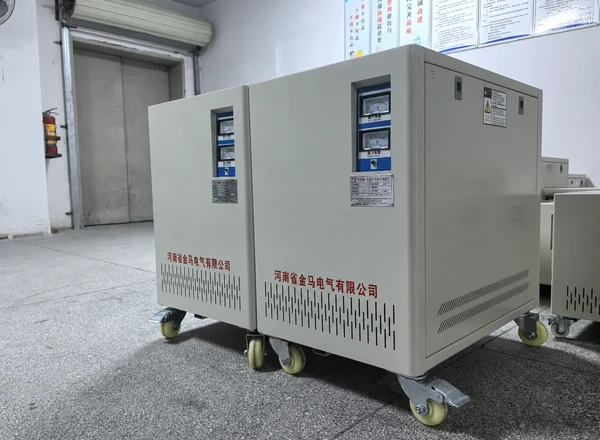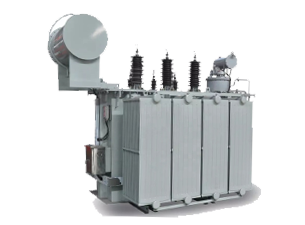


Transformer is the core equipment of power distribution system, and its kVA rating selection directly determines the safety, stability, energy consumption and operation and maintenance cost of power system.Most electrical faults and voltage abnormalities are due to improper selection: small capacity is easy to overload damage, and large capacity causes energy consumption and cost waste.
This paper will comprehensively explain the accurate selection scheme of transformer kVA from the core definition of kVA rating, the importance of selection, key influencing factors, step-by-step calculation method, standard specification application scenarios, differences between phase number and model selection, and common mistakes, so as to adapt to the design and transformation requirements of various distribution scenarios.
What Is Transformer kVA Rating?
kVA rating of transformer refers to the apparent power capacity of equipment (unit: kVA), which is the core parameter of selection. It refers to the maximum full-load capacity of transformer under the standard condition of 40 ℃ environment and 24 hours average operation, which can output stably for a long time, does not exceed the design temperature rise, and has no insulation damage and overload fault.
Transformer has short-term overload capability, but its overload upper limit is restricted by equipment heat dissipation structure and operation cycle, and the actual effective capacity will be affected by many operating conditions:
- l Heat dissipation mode: Common heat dissipation structure of transformer includes ONAN natural oil cooling, ONAF forced air cooling, dry fan cooling, etc.The higher the heat dissipation efficiency, the stronger the continuous current carrying capacity and rated load carrying capacity of the same volume equipment, which is the key condition to determine the upper limit of equipment capacity release.
- l Insulation grade and temperature rise: The mainstream temperature rise grade in the industry covers 80 ℃, 115 ℃ and 150 ℃, which directly defines the upper limit of heat resistance of transformer insulation system and determines the safety boundary and service life of equipment under long-term full load operation.
- l Environmental conditions: transformer standard rated capacity based on the altitude of 1000 meters, ambient temperature ≤ 40 ℃ reference condition design.High temperature, high altitude, dust and poor ventilation and other harsh environments will weaken the heat dissipation effect, equipment must be reduced capacity use, the actual effective load capacity will decrease.
- l Impedance value (% Z): core electrical parameters of transformer, directly determine the voltage regulation accuracy of equipment, system operation stability and short-circuit current tolerance, is an important selection index that takes into account power supply quality and fault protection.
Why Choosing the Right kVA Rating Is Important
Transformer kVA selection is not a simple specification match, but runs through the key links of equipment safety, system stability, energy consumption cost and compliance operation. Selection deviation will cause a series of chain problems.
- l Avoid equipment overheating and safety accidents: insufficient transformer capacity is easy to cause long-term overload, equipment high temperature operation, accelerated insulation aging, shortened equipment life, serious cases will lead to tripping, short circuit or even fire and other safety accidents, resulting in equipment damage, system shutdown.
- l Ensure stable operation of power system: high reliability requirements for industrial and commercial and data center power supply, insufficient capacity to withstand shocks and peak loads, easy to cause power failure, production and data loss.Accurate selection can adapt to complex working conditions to ensure continuous and stable power supply of the system.
- l Improve system energy efficiency: transformer capacity selection deviation will aggravate energy consumption loss, capacity is small copper loss surge, capacity is large iron loss is high.Accurate matching capacity allows equipment to maintain 35%-75% optimal operating load, reducing no-load and load losses, and effectively saving long-term electricity costs.
- l Control equipment full cycle cost: improper selection will push up the comprehensive cost, too large capacity will increase equipment and initial installation investment, small capacity is easy to damage repair, increase electricity consumption.Reasonable selection can balance the initial investment and the energy consumption cost of operation and maintenance in the later period, and improve the overall economic benefit.
- l Stable power supply voltage quality: transformer overload will increase voltage drop, causing abnormal electrical equipment, operating conditions and other problems.Reasonable matching of rated capacity can ensure voltage regulation accuracy and meet the high-quality power supply requirements of precision instruments, servers and other high-end equipment.
- l Adapting nonlinear harmonic loads: frequency conversion, UPS, servers and other equipment are prone to harmonics, reduce power factor, and aggravate transformer heating losses.Accurate matching capacity and anti-harmonic transformer can effectively suppress harmonic loss, delay equipment aging and ensure efficient and stable operation of the system.
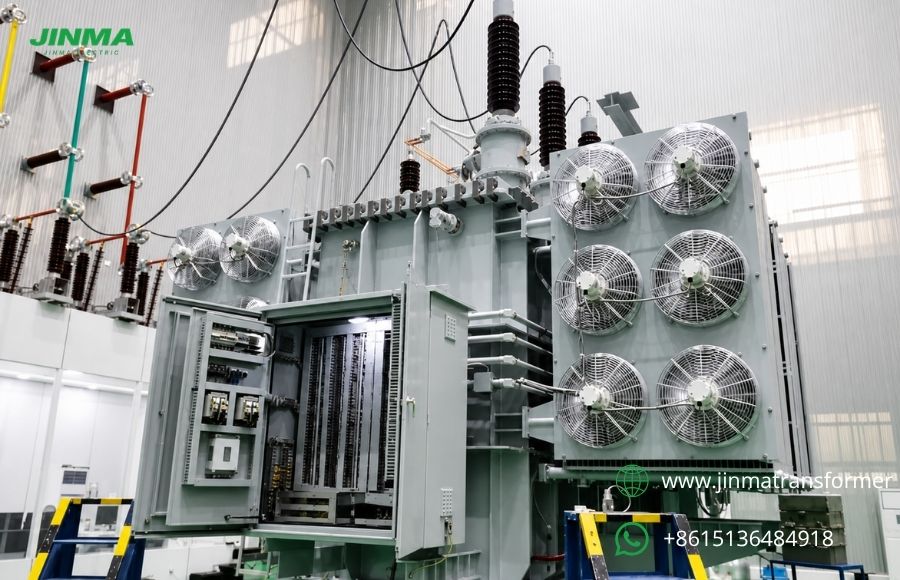
Factors to Consider When Choosing Transformer kVA Rating
Accurate selection requires comprehensive load conditions, environmental conditions, equipment types, compliance standards and other multiple factors, can not be simply estimated by equipment power, the following are the industry’s common core selection basis:
Actual Load Demand
It is necessary to count the total capacity of all electrical equipment in the whole field, and distinguish between average load and peak load; considering the simultaneous utilization rate of load, not all equipment will operate synchronously at full load;
Reserve 20%-50% capacity margin to adapt to later equipment expansion.In addition, large motors will generate 5 – 7 times the impulse current when starting, and the selection must be compatible with this instantaneous peak load.
load Power Factor
The power factor of loads such as motors, HVAC equipment and traditional fluorescent lamps is generally low, which will greatly increase the apparent power demand of transformers.According to the formula kVA = kW/power factor, the lower the power factor, the larger the required
Transformer kVA Capacity
If the long-term power factor of the distribution system is lower than the reasonable range of 0.85 – 0.9, the apparent power demand will increase significantly. In order to avoid overload heating and insufficient output of the transformer, the transformer selection capacity can be appropriately amplified, or the matching capacitor compensation device can be installed to optimize the power factor to ensure the efficient and stable operation of the system.
Nonlinear Load and Harmonic Interference
Power harmonics produced by nonlinear loads distort the waveform of power grid, increase transformer loss, increase temperature rise, cause insulation aging, shorten life, even cause overheating and tripping faults, and affect the safe operation of the system.
High harmonic conditions require reasonable selection of transformers: K4/K13/K20 anti-harmonic transformers can be selected as required; when ordinary transformers are used, the capacity should be reduced by 10%-30% according to the operating conditions to offset harmonic losses and meet the requirements for safe and compliant operation.
Site Environmental Conditions
NEC electrical code, IEEE industry standard, IEC international standard and local electrical code all have strict and uniform specification requirements for transformer capacity selection.
Once the selection parameters are not up to standard, it will not only lead to unqualified project completion acceptance, but also produce compliance loopholes and hidden risks in the later equipment inspection, operation and maintenance verification, insurance claims and other links.
Heat Dissipation Mode and Duty Cycle
Transformers are divided into dry natural heat dissipation, dry forced air cooling, oil immersion self-cooling, oil immersion air cooling and other heat dissipation types. The load carrying capacity and short-term overload performance of different types are significantly different, which is an Important Basis for Capacity Selection
For 24-hour continuous operation, the transformer shall be selected strictly according to the rated capacity standard to eliminate long-term overload operation; for intermittent operation, the short-term overload characteristics of the equipment can be reasonably utilized to optimize the capacity selection, giving consideration to safety and economy.
Voltage Regulation and Short-circuit Protection Requirements
Transformer impedance value (% Z) is directly related to system voltage stability and short-circuit withstand performance, and is an indispensable core technical parameter in the process of transformer capacity selection.
High impedance transformer can suppress short-circuit current and enhance system protection, but it will increase voltage drop and weaken voltage stabilization performance.In high-stability power supply scenarios such as medical treatment and data center, impedance parameters should be combined to match transformer capacity, giving consideration to short-circuit protection and voltage stability.
Equipment Efficiency and Loss Control
Transformer selection shall strictly refer to DOE 2016, TP-1 and other mainstream energy efficiency standards, comprehensively evaluate equipment no-load loss and load loss indicators, and ensure energy conservation compliance of equipment operation.
In most application scenarios, moderately amplifying the kVA capacity of the transformer and matching it with high-efficiency energy-saving models can effectively reduce the long-term operation energy consumption, greatly reduce the electricity cost of ten or even twenty years, and significantly improve the comprehensive cost performance of the whole life cycle of the equipment.
Installation Conditions and Compliance Costs
Transformer volume, weight, operating noise, installation space and operation difficulty, combined with local electrical specifications, fire protection standards and grid requirements, will restrict the selection of transformer kVA capacity.Indoor, outdoor, explosion-proof areas and other different installation conditions, the corresponding selection standards and adaptation requirements are significantly different, and accurate selection is required according to local conditions.
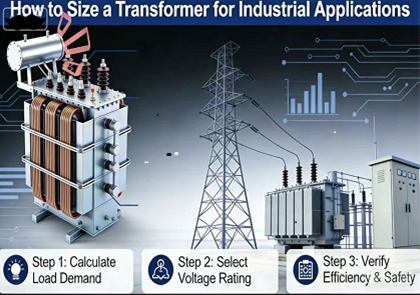
Step-by-Step Guide to Calculate the Required Transformer kVA
The following is a standardized transformer capacity calculation process in the electrical industry, taking into account accuracy and practicality, which can be directly used for various types of engineering selection.
Step 1: Collect all Load Base Data
Comprehensive statistics are made on the nameplate core parameters of all electrical equipment on site, covering key information such as equipment power (kW/HP), rated current, operating voltage, power factor, operating condition type (continuous operation/intermittent operation) and operating frequency, etc., combined with the overall project planning, sorting out the capacity expansion needs such as equipment capacity increase and operating condition upgrade in the later stage in advance, and providing accurate basis for capacity margin calculation.
Step 2: Unified Conversion to kVA Capacity
According to the equipment parameters, all loads are uniformly converted into apparent power:
- Known active power: kVA=kW † Power factor
- Three-phase equipment: kVA=(√3× voltage × current)÷1000
- Single-phase equipment: kVA=(voltage × current)<$1000
- Simple conversion of motor: 1 hp ≈1kVA under 480V working condition
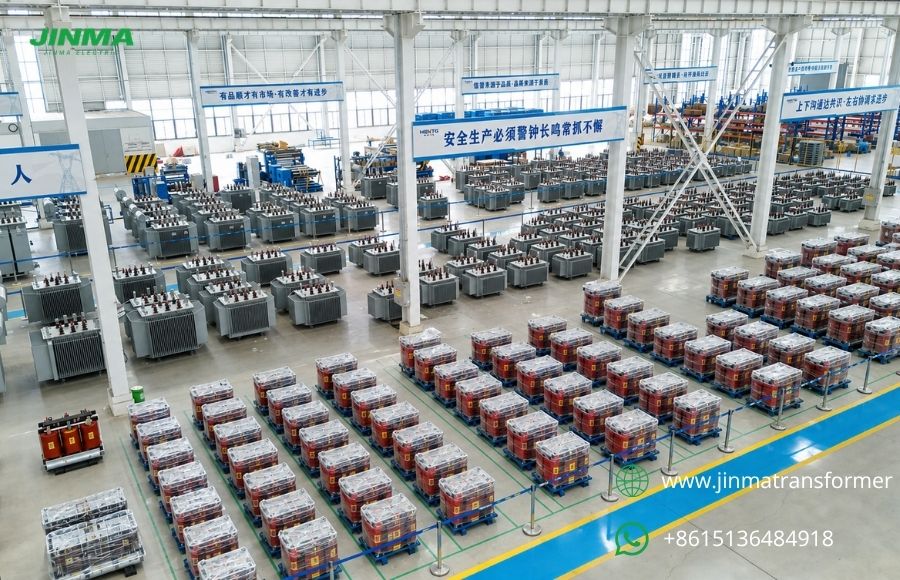
Step 3: Calculate Actual Peak ;oad
According to NEC industry standards and specifications, it is necessary to combine the actual simultaneous utilization rate of various types of electrical equipment for layered accounting and superposition of total load, so as to eliminate the problem of excessive redundancy in selection caused by full superposition load.
The conventional value standards are as follows: lighting load utilization rate is 80%-100%, socket load is 50%-100%, main core equipment such as motors and HVAC is calculated at 100% full load, and long-term continuous operation equipment needs to be additionally converted according to 125% safety factor.
Calculation formula: Total demand load kVA=Σ (kVA of single equipment × corresponding demand coefficient)
Step 4: Correct Power Factor and Harmonic Loss
If the overall power factor of the distribution system is lower than 0.9, the transformer selection capacity shall be appropriately amplified to offset the apparent power increment caused by low power factor; if there is a large number of nonlinear loads on site.
When harmonic interference is prominent, an additional 10%-30% capacity margin should be reserved to compensate for harmonic losses, and a K-class anti-harmonic transformer can be directly selected to adapt to the operating conditions, avoiding overheating and overload problems caused by harmonics from the root.
Step 5: Overlay Expansion and Safety Margin
The theoretical capacity obtained by conventional load correction is only suitable for static conditions and cannot adapt to complex dynamic conditions on site.Therefore, the transformer selection should reserve safety and expansion margin to avoid equipment start-up shock, environmental capacity reduction, equipment aging, late capacity expansion and other operational risks.
The industry’s conventional expansion margin is 20%-50%: 20%-30% for civil and general commercial scenarios, and 30%-50% for industrial, uninterrupted operation and high expansion demand scenarios.Transformer rated capacity calculation formula: rated kVA= total demand load ×(1+ expansion margin coefficient), to ensure long-term efficient and stable operation of equipment.
Step 6: Matching Standard Transformer Specifications
Transformer selection should give priority to industry standard specifications, and it is strictly prohibited to randomly adopt non-standard customized models.After the capacity calculation is completed, it is necessary to select the nearest standard kVA model with capacity greater than the calculated value according to the standard model parameters. It is strictly prohibited to select specifications less than the calculated value to avoid overload risk.
Standard models can ensure universal compatibility of equipment, reduce procurement costs, shorten supply cycle, and facilitate replacement of spare parts and compliance acceptance in later operation and maintenance.Industry standard transformer capacity specifications cover 15~2500kVA full series standard gear.
Step 7: Verify Optimization Parameters
Voltage accuracy, load rate and short-circuit tolerance shall be checked at the end of transformer selection to adapt to field conditions.Large power distribution system needs to complete short-circuit current check, relay protection setting value matching, to avoid protection abnormality and electrical fault risk.
Under the condition of multi-transformer parallel connection, it is necessary to optimize load distribution according to equipment capacity and impedance characteristics, eliminate partial load, overload and circulating current loss, and ensure balanced, safe and stable operation of distribution system.
Common Transformer kVA Ratings and Their Applications
The industry standardized kVA specification adapts to the distribution requirements of different scenarios, and the selection can balance the cost performance and practicality according to the needs. The specific application categories are as follows:
small Transformers
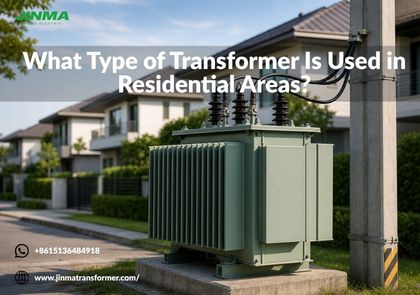
- l 3-15kVA: suitable for residential lighting, small pumps, equipment control boxes and other small power auxiliary distribution scenarios, suitable for light load, low power consumption demand.
- l 25-50kVA: Adapt to small shops, farms, municipal street lamps and other scenarios to meet the demand for small commercial and municipal basic electricity.
- l 75kVA: mostly used in small office buildings, small campus equipment, light HVAC systems and other scenarios, with single-phase, small three-phase models as the main selection.
medium transformer
- l 5kVA: Widely used in small and medium-sized office buildings, retail stores, clinics and other places, it is the basic mainstream specification of commercial power distribution.
- l 150kVA: Suitable for medium-sized office buildings, apartment buildings, primary and secondary school buildings and other scenes, it can stably carry the daily comprehensive electricity load of buildings.
- l 225-300kVA: suitable for medium and high load scenarios such as large office areas, small factories, hospital supporting facilities, data room branch power distribution, etc.
- l 500kVA: As the main power distribution equipment of large-scale supermarket, medium-sized processing plant and commercial complex, it adapts to the heavy load and continuous power demand of the scene.
large transformer
- l 750-1000kVA: suitable for large-scale public and industrial high-load power consumption scenarios such as large-scale factories, Grade A hospitals, urban core commercial buildings, etc.
- l 1500kVA: suitable for large-scale and high-stability power supply scenarios such as heavy industrial workshops, campus overall power distribution, municipal substations, etc.
- l 2000-2500kVA: specially configured for high-precision, high-energy consumption and uninterrupted power supply scenarios such as large intelligent manufacturing bases and large data centers.
- l More than 3000kVA: mainly used in core power supply scenarios such as municipal main substations, new energy power stations, heavy industrial bases, etc., mostly customized oil-immersed models.
Single-Phase vs. Three-Phase Transformer Sizing
The working principle, capacity calculation and applicable scenarios of single-phase and three-phase transformers are significantly different, and the wrong phase selection will directly lead to high energy consumption, poor stability and excessive cost.
Single-phase Transformer
Single-phase transformer adopts single-waveform power supply mode, the overall structure is simple and compact, the production and procurement cost is low, and the installation and operation are convenient. It is a common model for small power distribution scenarios.
However, its power supply output capacity is limited, the operating efficiency is greatly reduced under heavy load conditions, the equipment volume will be significantly expanded with the increase of capacity, and the power supply voltage stability is weak, which cannot meet the power distribution requirements of high power and high stability, and is only suitable for small capacity and small load scenarios.
Three-phase Transformer
Three-phase transformer adopts three-way waveform with 120°phase difference to supply power cooperatively, and the advantage of power transmission efficiency is outstanding.Under the same rated voltage and rated current conditions, its output power is 1.732 times that of single-phase transformer.
Unit capacity equipment is smaller, energy consumption is lower, power supply continuity and stability are stronger, it can stably bear medium and large load impact, perfectly adapt to industrial and commercial, industrial production and other high-power distribution scenarios, is the mainstream distribution transformer model at present.
Selection Rules
Single-phase transformer is preferred: suitable for civil and small commercial light load conditions of 50kVA and below, simple equipment structure, convenient installation and deployment, low operation and maintenance cost, stable and reliable power supply, excellent comprehensive cost performance.
Three-phase transformer is preferred: suitable for industrial and commercial medium and large load scenarios above 50kVA, with strong equipment carrying capacity, high power supply stability and excellent load impact resistance, which can meet the long-term uninterrupted operation requirements of equipment. It is the mainstream preferred equipment for industrial and commercial distribution system.
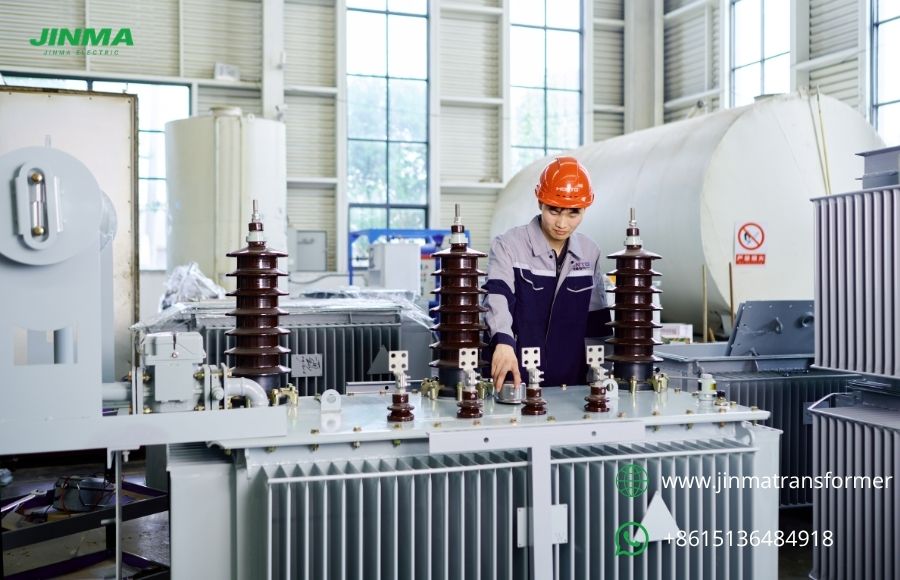
Oil-Filled vs. Dry-Type Transformers and kVA Selection
The selection of transformer cooling models directly affects the selection of kVA specifications under the same load, and the adaptation scenarios and capacity characteristics of the two types of models are obviously different.
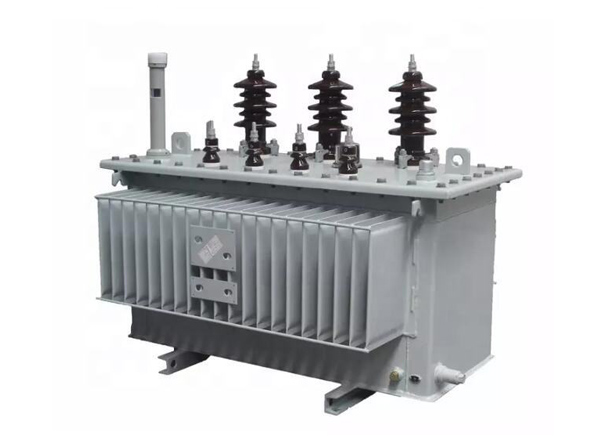
Oil-immersed Transformer
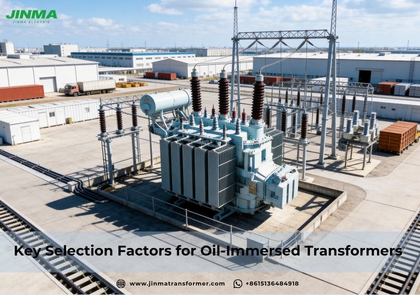
Insulation oil circulation heat dissipation mode, excellent heat dissipation efficiency, the same kVA capacity equipment smaller, the overall cost is low.The service life of the equipment can reach 25 – 40 years, with good short-term high overload capability, suitable for long-term continuous operation of high-power load conditions.
Widely used in outdoor power distribution, industrial plant, large station and other scenarios.The disadvantage is that there are certain fire safety hazards in the equipment, so it is necessary to regularly check the insulating oil state, and the maintenance cost in the later period is relatively high.
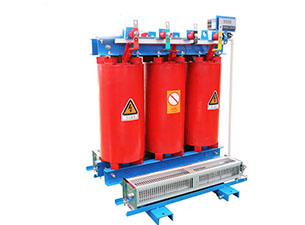
Dry-type Transformer
It adopts natural air cooling or forced air cooling mode, has no risk of insulation oil leakage, excellent fire and explosion prevention performance, simple operation and maintenance process, flexible installation layout and strong indoor adaptability. It is the first choice for indoor buildings, densely populated areas and key fire control scenarios.
The service life of the equipment is about 20 – 30 years, and the safety and adaptability are outstanding, but the short board is obvious: under the same load condition, the required kVA specification is larger, the equipment volume is larger, and the initial procurement cost is significantly higher than that of the oil-immersed transformer.
KVA Selection Principle for Different Scenarios
Dry transformer preferred scenarios: 15 – 500 kVA indoor commercial scenarios (office buildings, schools, hospitals), fire high-risk areas, harmonic load-intensive scenarios, can be matched with forced fans to increase the carrying capacity by 30%-50%.
Oil-immersed transformer optimization scenarios: large loads above 750 kVA, outdoor power distribution, industrial plants, municipal substations, heat dissipation advantages can be fully utilized, long-term energy efficiency is higher, and cost performance is better.
Common Mistakes When Selecting Transformer Size
Most of the power distribution faults are due to the selection error, the following are the industry high-frequency errors and standardized avoidance methods, can be directly applied to the ground:
- l Low load calculation: only calculated according to the full load of existing equipment, ignoring peak load and surge current.Avoidance: uniformly reserve 20%-50% capacity margin to adapt to instantaneous overload and later capacity expansion.
- l Ignoring apparent power kVA: Under low power factor load, kW value is too small, and direct selection according to kW will lead to equipment overload.Avoidance: All loads must be converted to kVA before selection.
- l Ignore nonlinear harmonic load: ordinary transformer adaptation frequency conversion, electronic load when heating seriously.Avoidance: Select K-class transformer for harmonic scene, or amplify 10%-30% capacity.
- l Ignore the motor start-up impulse current: select according to the equipment operating current, resulting in voltage sag and tripping during start-up.Avoidance: accounting for 5 – 7 times the starting current of large motors, superimposed to peak load.
- l Environmental conditions do not do capacity reduction treatment: high temperature, high altitude environment directly use nameplate capacity.Avoidance: over 40 ℃ environment, altitude over 1000 meters, according to the standard capacity reduction after selection.
- l Over-amplification capacity: blind over-selection, resulting in long-term low-load operation of the equipment, no-load loss surge.Avoidance: Control the load rate within the efficient range of 35%-75%, and eliminate over-selection by more than 2 times.
- l Wrong phase selection: misuse of single-phase transformer in high-load scenarios, easy to cause voltage fluctuation, low power supply efficiency, frequent failures, difficult to ensure stable operation of high-power equipment.Avoidance scheme: comply with the 50 kVA capacity boundary standard, and uniformly select three-phase transformers under large-capacity conditions to ensure stable and reliable power supply.
- l Model mismatch with scenario: oil-immersed in indoor high-risk scenarios and dry for large outdoor loads, resulting in substandard compliance and high energy consumption.Avoidance: Dry for indoor fire scenes, oil immersion for outdoor heavy loads.
- l Ignore voltage impedance and adjustment accuracy: only look at kVA capacity, ignore impedance parameters, resulting in unstable voltage of precision equipment.Avoidance: high precision load priority check voltage regulation performance.
Conclusion
Transformer kVA rated capacity selection is a systematic work that takes into account power supply safety, stable operation, energy saving and energy efficiency, economic cost and compliance standards. Its core selection logic is: accurate calculation of actual operating load, scientific reservation of expansion margin, reasonable matching of phase number and model specifications, and avoidance of various types of selection errors.
The transformer selection shall eliminate subjective estimation and capacity deviation, and strictly follow the standardized calculation process to select standard models, which can not only avoid electrical safety hazards, ensure stable operation of the system, but also reduce full-cycle energy consumption and operation and maintenance costs, and adapt to various power distribution scenarios.