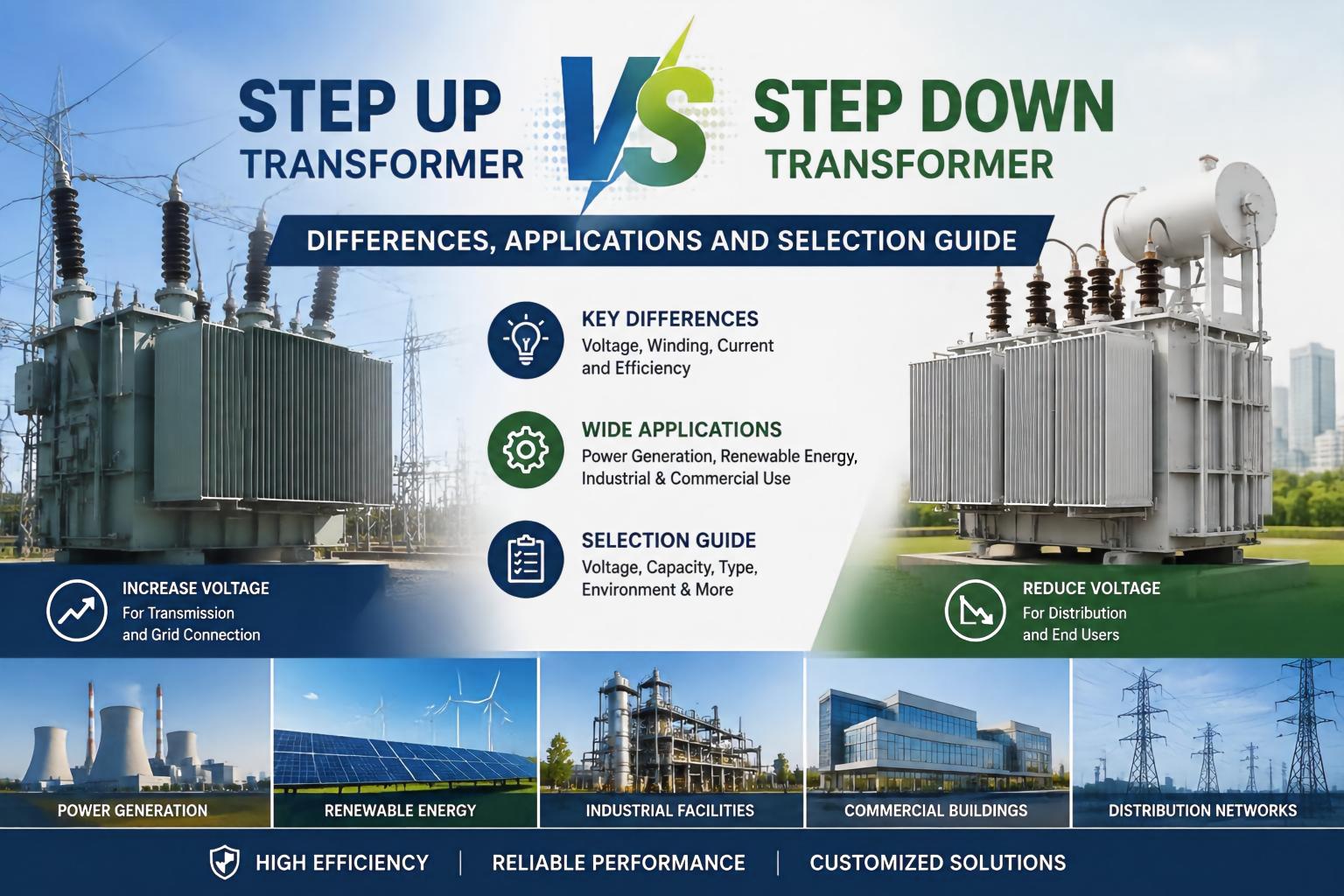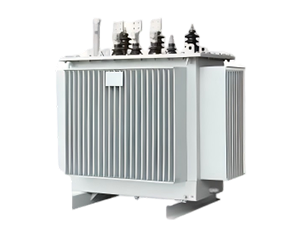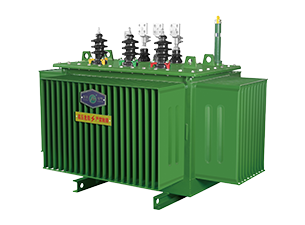


Why Proper Transformer Sizing is Crucial for Industrial Applications?
Industrial production relies on stable power, transformer as the core of power distribution, the accuracy of its selection directly affects the system performance. Size and specification mismatch will bring the burden of operation, only scientific selection in order to protect industrial power safety and cost control.
The potential risk of selecting a small size
Accelerate the aging of equipment: long-term overload leads to overheating, accelerate the aging of the insulation layer, damage to the iron core and winding, reduce insulation performance
Impact on production efficiency: frequent triggering of protection downtime, disrupting the production rhythm
Push up the operation cost: shorten the service life, replace it in advance, increase the procurement and operation and maintenance cost.
Practical disadvantages of selecting a larger model
Increased costs: increased procurement, long-term operation and maintenance and land costs.
Reduced efficiency: no-load loss increases with capacity, lowering the efficiency of the distribution system.
Key Factors to Consider When Sizing a Transformer
Accurate selection and size calculation is not a single numerical operation, but needs to be combined with the actual working conditions of industrial production, load characteristics, development planning and other factors, the following five core factors are the selection process can not be ignored.
Accurate calculation of load demand
Load demand is the basic basis for transformer selection, the calculation needs to focus on the three core indicators of voltage, current, power factor, at the same time clear two key concepts: the total connected load and the comprehensive calculation of load. Total connected load refers to the power distribution system of all the rated power of the equipment, while the integrated load calculation is to take into account the industrial production of the equipment is not running at full load at the same time, through the load factor converted to the actual running load. In the actual selection, not directly based on the total connected load, need to combine the production process, equipment operation rules to calculate the comprehensive calculation of the load, to avoid overestimation of transformer capacity is large.
Reserve a safe margin for future expansion
Industrial production is not static, the enterprise in the subsequent operation may add new production equipment, expand the production scale, so the selection of transformers need to reserve a reasonable safety margin. The industry’s conventional guideline for 1.25 times the actual integrated load calculation, this margin can not only cope with the peak load fluctuations in the production process, but also to meet the short-term equipment additions and operational expansion needs of enterprises. Avoid excessive conservatism when reserving the margin, otherwise it will fall into the error of selecting a large model, and need to be combined with the enterprise’s medium- and long-term development plan to determine the appropriate margin factor.
Cope with harmonic distortion of nonlinear loads
In modern industrial production, frequency converter (VFD), LED lighting, precision industrial machinery, rectifier equipment and other non-linear loads are increasingly widely used, such equipment will produce harmonic distortion, resulting in grid voltage, current waveform distortion, not only increase transformer losses, but also may lead to equipment malfunction, measurement errors and other problems. Selection should first identify the type and proportion of nonlinear loads in the system, for industrial scenes with high harmonic content, K-class transformers should be used, which are specially designed for harmonic environments, and can effectively inhibit the negative impact of harmonic distortion, and ensure the stable operation of the transformer and the power distribution system.
Matching voltage level and winding structure
The voltage level of the transformer must be completely consistent with the requirements of the power distribution system of industrial enterprises, including the primary input voltage and the secondary output voltage, if the voltage level is not matched, it will directly lead to the normal work of the power equipment, and even damage to the equipment. At the same time, according to the load characteristics of industrial production and power distribution requirements, select the appropriate winding structure, common ** star (Wye) and delta (Delta) ** winding each has its own applicable scenarios: star winding can be led out of the neutral line, suitable for three-phase, four-wire power supply scenarios, and can reduce the phase voltage of the winding; delta winding has a strong harmonic resistance, the winding current is small, applicable to three-phase load-balanced industrial scenarios. The delta winding is characterized by strong harmonic resistance and small winding current, which is suitable for industrial scenes with balanced three-phase loads.
Consideration of the influence of environmental conditions
Transformer operating performance and installation environment is closely related to the temperature, altitude, ventilation and other environmental factors will affect its actual output capacity, so the selection of environmental conditions need to be fully considered, if necessary, capacity reduction design. High temperature environment will accelerate the transformer insulation aging, reduce the heat dissipation efficiency; high altitude air thin, heat dissipation effect and insulation performance will be reduced; poor ventilation of the installation site is unable to timely dissipate the heat generated by the operation of the transformer.
For high temperature, high altitude, dusty, humid and other harsh industrial environments, need to be in accordance with the relevant standards for the rated capacity of the transformer capacity reduction correction, while choosing the appropriate level of protection and cooling.
Transformer Sizing Formula
Basic calculation formula
Applicable to three-phase load balanced linear load scenarios, the core formula: kVA = total power (kW) ÷ power factor.
l Linear loads (such as asynchronous motors, resistance furnace) power factor is about 0.8~0.9, and 1.0 for pure resistance load.
Example: 80kW pure linear load, power factor 0.8, transformer capacity 80 ÷ 0.8 = 100kVA.
Comprehensive load calculation formula
It is applicable to the mixed scene of multiple equipment, and it is necessary to calculate the integrated load first:
l Determine the load factor according to the type of equipment (0.3~0.5 for machine tools, 0.7~0.9 for ventilators)
l Sum up the rated power of each equipment × load factor.
l Capacity formula: kVA = integrated calculated load (kW) ÷ power factor
Calculation formula with safety margins
Commonly used formula in the industry: kVA = [Comprehensive calculation of load (kW) ÷ power factor] × (1 + margin factor)
l Conventional margin factor 0.25, can be adjusted as required (0.1 ~ 0.3)
Example: 120kW integrated load, power factor 0.8, margin 0.25, capacity (120 ÷ 0.8) × 1.25 = 187.5kVA, choose standard 200kVA capacity
Types of Transformers for Industrial Applications
Different types of industrial transformers in the structure, performance, installation methods, there are significant differences in its application of the scene and the size of the range also has its own focus, the selection needs to be combined with the installation site, load size, safety requirements and other factors, matching the corresponding type of transformer, while taking into account the size of its size and the suitability of the installation conditions.
Box-type transformer
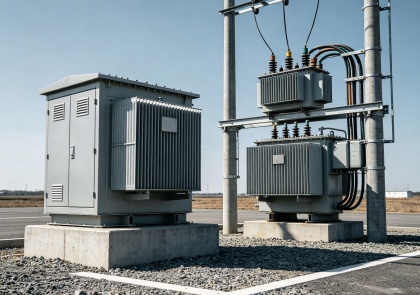
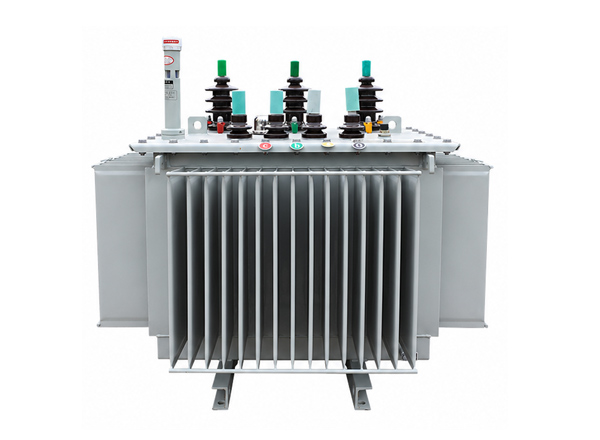
Box-type transformer integrated transformer, switch and protection device, compact structure, small footprint, good sealing, installation without distribution room. With a capacity of 10~1600kVA, it is suitable for use in parks, outside workshops and other scenarios. When selecting the model, it is necessary to consider the ground load-bearing and drainage conditions, and reserve space for operation and maintenance.
Substation transformers
The rated capacity of transformer for substation is more than 10MVA, which is used for power distribution in large parks and heavy industries. Its large size, heavy weight, selection needs to pay attention to impact resistance, short circuit resistance, combined with the substation layout to match the size and transportation conditions, to meet the insulation and heat dissipation requirements.
Dry-type transformer
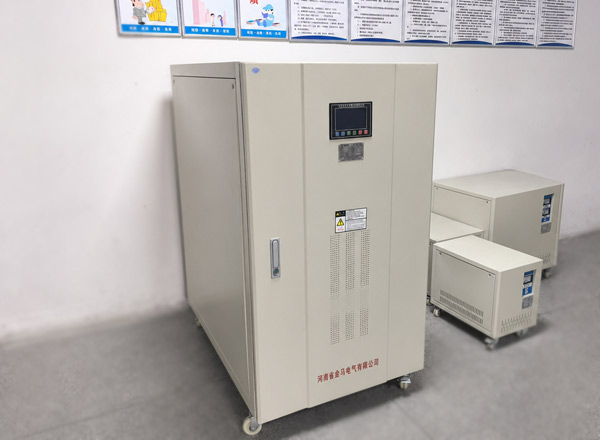
Dry-type transformer using air-cooled, oil-free design, with fire and explosion-proof, low-maintenance features, suitable for precision workshops, high-rise buildings and other fire safety requirements of the scene. Selection should be based on space and ventilation conditions to determine the capacity of size, ensure that there is a gap between the equipment cooling operation and maintenance, ventilation is not enough to be equipped with forced air-cooled device.
Safety Considerations When Sizing and Installing Transformers
Pre-installation Safety Specifications
Before the installation operation, all safety protection measures must be implemented: first, all construction personnel are required to wear appropriate personal protective equipment (PPE), including insulated gloves, insulated shoes, safety helmets, etc.; second, the installation work must be carried out by technicians with electrician’s license and qualified professional training, and unlicensed operation is strictly prohibited; third, the power supply to the transformer should be completely electrically isolated, and warning signs should be hung to prevent accidental closing of the gate to prevent accidental closing of the circuit breaker, which may lead to electrocution.
Site and equipment preparation
Installation site needs to be cleaned up in advance, remove debris, obstacles, to ensure that the site is level, well ventilated, and meet the installation and operation and maintenance of transformer space requirements; according to the weight and size of the transformer, the choice of rated load in line with the requirements of the special lifting equipment, such as forklifts, cranes, and at the same time, checking lifting tools, lifting tools intact, to avoid the equipment in the lifting and handling process of dumping, collision.
Installation and fixed safety requirements
The installation of transformer should ensure the level and firmness, use the special fixing hardware recommended by the manufacturer, pour the foundation or install the bracket according to the requirement of the equipment, to prevent vibration and displacement during the operation of the equipment; the electrical connection should strictly follow the national and local electrical norms, the terminals should be firmly contacted, and the phase sequence should be clearly marked, and at the same time, make a good and reliable grounding, and meet the norms of grounding resistance to eliminate the bad grounding and overvoltage caused by leakage and overvoltage. To eliminate leakage and over-voltage problems caused by poor grounding.
Test and operation after installation
After the installation of the transformer is completed, it can not be directly put into operation, need to carry out a comprehensive performance test and debugging: one is to carry out insulation resistance test and winding resistance test, check the insulation performance of the transformer and the winding connection; the second is to carry out the voltage adjustment calibration, verify the transformer voltage regulation ability under different loads, to ensure that the output voltage is stable; the third is to verify the operation effect of the cooling system under the condition of rated load, check the cooling fan, heat sink, and the cooling system, to ensure that the cooling system is stable, to ensure that the cooling system is stable. Check whether the cooling fan, radiator and other components work normally. After all the test indexes are qualified, the commissioning process can be completed and the transformer can be officially put into industrial production.
Common Mistakes to Avoid When Sizing a Transformer
In the actual industrial transformer selection process, many companies due to the load characteristics, environmental factors, operating rules and other knowledge is insufficient, easy to fall into all kinds of misunderstanding, resulting in selection deviation. The following are five common misconceptions and corresponding avoidance methods to help companies avoid selection traps.
Ignore the impact of power factor
Power factor is the core parameter of the transformer capacity calculation, if you ignore its impact, directly to the active power as the basis for selection, will lead to the actual capacity of the transformer is not enough. Low power factor will make the transformer’s apparent power can not be fully utilized, while increasing the line current loss and copper loss, reducing the efficiency of the distribution system. Avoidance method: Accurately measure or determine the actual power factor according to the type of load. In industrial scenarios, if there is no actual measurement data, 0.8 can be taken as the basis of accounting, and compared with the 1.0 power factor accounting results to ensure that the capacity is appropriate.
Underestimation of peak load demand
Some enterprises only take the average load as the basis for selection, ignoring the peak load in industrial production, such as the inrush current when the motor starts, the instantaneous load of the equipment starts at the same time, which will lead to overload operation of the transformer in the peak time. If the peak load exceeds the rated capacity for a long time, it will trigger transformer overheating, insulation breakdown, and even cause the whole power distribution system failure. Avoidance method: through on-site monitoring, equipment operation law analysis, etc., accurately assess the peak load of industrial production, and take the peak load into consideration when selecting models, or cope with peak fluctuations by reserving a safety margin.
Neglecting environmental capacity reduction factors
Environmental conditions have a significant impact on the actual output capacity of the transformer, many companies do not take into account the high temperature, high altitude and other environmental factors, directly according to the rated capacity selection, resulting in insufficient capacity of the transformer in actual operation. Relevant data show that the transformer operating temperature increases every 10 ℃, its service life will be halved; altitude, in 3300 feet (about 1006 meters) above, every 100 meters higher, the transformer efficiency will drop 0.4%. Avoidance method: according to the actual temperature, altitude, ventilation conditions of the installation site, according to the national standards of the rated capacity of the transformer capacity reduction correction, the harsh environment appropriate to increase the capacity reduction coefficient.
Miscalculation of total load demand
When calculating the load demand, some enterprises tend to omit part of the power equipment, such as the impact load of motor startup, workshop HVAC equipment, auxiliary production equipment, etc., while harmonic management equipment and power factor compensation equipment are not included in the load calculation, resulting in a low total load estimate. Avoidance method: sort out all the electric equipment in industrial production, including the main production equipment, auxiliary equipment, supporting electrical equipment, clarify the operating characteristics of each equipment, and at the same time, take into account the impact of harmonics and inrush current on the load, to ensure that there is no omission in the total load calculation.
Neglect the importance of routine maintenance
Even if the transformer selection is accurate, if the lack of routine maintenance, will also lead to its performance decline, frequent failures, many companies believe that “selection in place can be once and for all”, ignoring the regular maintenance of the transformer. Avoidance methods: the establishment of the transformer full life cycle maintenance system, regular insulation testing, oil testing (oil-immersed), heat dissipation system checks, terminal fastening and other work, timely detection and treatment of hidden equipment, to ensure that the transformer is always in a good state of operation.
How to Choose a Reliable Transformer Supplier
Accurate selection of transformers not only rely on professional calculation and analysis, but also need to rely on the supplier to provide technical support and quality products, an experienced, perfect service supplier, can provide enterprises with the whole process from the selection of the design, product customization to the installation and operation and maintenance of the solution. Selection of suppliers, the following four dimensions of comprehensive assessment.
Prioritize industry experience and market reputation
Supplier’s industry experience directly determines its degree of understanding of industrial transformer application scenarios, the selection of the first need to verify the supplier’s industry years of experience, project performance, focusing on the same industry, the same type of industrial scenarios in the transformer selection and application cases; at the same time, reference to the customer’s real evaluation, testimonial (customer testimonials), to verify the quality of its products and service level, the priority to choose in the field of industrial transformers with a reputation. Priority in the field of industrial transformers have a good market reputation, deep technical accumulation of suppliers.
Evaluate product system and customization capability
Different industrial scenarios have significant differences in the demand for transformers, high-quality suppliers should have a complete product system, can provide box-type, substation, dry-type and other types of industrial transformers, and product specifications covering different capacities, voltage levels, to meet the selection needs of conventional industrial scenarios; for enterprises with special working conditions, such as high altitude, high harmonic, explosion-proof scenarios, suppliers need to have customized selection and production capacity, according to the actual needs of enterprises. For enterprises with special working conditions, such as high altitude, high harmonic, explosion-proof and other scenes, the supplier should have customized selection and production capacity, and be able to design personalized transformer solutions according to the actual needs of enterprises.
Examination of production and delivery capacity
Industrial production project schedule usually has clear requirements, the supplier’s production and delivery capacity directly affects the project progress, the selection of suppliers need to understand the standard products and customized products production cycle, delivery security measures; at the same time, to examine its response to urgent needs of the flexibility, such as whether it has spare capacity, according to the enterprise’s project schedule to adjust the production schedule, to ensure that the transformer can be delivered on time, without affecting the progress of production and construction of enterprises. The enterprise’s production and construction progress.
Emphasis on after-sales support and full-process services
Transformer belongs to industrial heavy asset equipment, its later installation, commissioning, maintenance is crucial, quality suppliers should provide perfect after-sales support and full-process services: one is in the selection stage to provide professional technical guidance to assist enterprises to complete the load calculation, specification matching, scene adaptation and other work; two is to provide on-site technical support at the stage of installation, to guide the construction personnel to standardize the installation; three is to provide normalized maintenance services, timely supply of spare parts.
The third is to provide regular maintenance services after commissioning, timely supply of spare parts, and rapid response to equipment failures, efficient solution to minimize unplanned downtime of the enterprise.
Accurate selection and size calculation of industrial transformer is a systematic project, need to take the actual load demand as the core, combined with the safety margin, harmonic distortion, environmental conditions, equipment type and other factors, while following the scientific formula, to avoid all kinds of selection errors. Accurate selection can not only realize the transformer and industrial power distribution system perfect match, to protect the stability and safety of power supply, but also realize the system performance, energy efficiency and cost control of the balance for industrial enterprises to reduce costs and lay the foundation for efficiency.