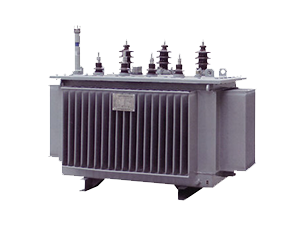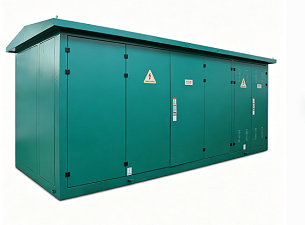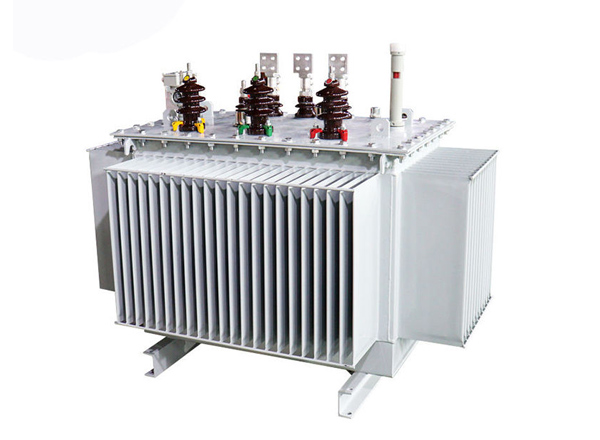


Power transformer is the core basic equipment of modern power system, whether it is the power output of thermal power plant, hydropower station, photovoltaic wind power station, or inter-provincial long-distance transmission, urban power distribution, industrial and civil power, all can not be separated from the support of power transformer. As a kind of static electromagnetic equipment, power transformer realizes voltage rise and fall and power transmission by virtue of electromagnetic induction principle, and has no mechanical moving parts in the whole process. It has the core advantages of super high operating efficiency and long service life. This article will explain the core knowledge of power transformer from multiple dimensions and provide professional reference.
What is a power transformer? Definition and Value
Power transformer is a static electrical equipment based on electromagnetic induction principle. Its core function is to realize AC voltage step-up, step-down and power transmission without changing AC frequency. It can efficiently transfer power between single or multiple circuits, and is an indispensable key equipment for power generation, transmission, distribution and use.
Different from ordinary small transformers, power transformers are mainly adapted to power grid trunk lines and large power scenarios. Equipment capacity can reach tens to hundreds of MVA, adapt to 110kV to 765kV and above EHV, UHV voltage level, dedicated to long-distance, large-capacity power transmission scenarios.
Large power transformers have extremely high operating efficiency, generally up to 95%-99.5%, and extremely low energy losses. At the same time, the service life of the equipment is considerable, and it can operate stably for 30 – 50 years under normal operation and maintenance conditions. It is one of the core equipment with the highest reliability and longest life cycle in the power system.
Simply put, without power transformers, long-distance, low-loss power transmission would not be possible. Power plants are unable to efficiently send electricity to the backbone grid, and end users are unable to obtain safe and stable domestic and industrial electricity.
Core Role of Power Transformer in Power System
There are multi-level voltage levels in power system from power generation to power consumption. Power transformer is the core hub connecting all levels, which directly determines the economy, stability and safety of power grid. The core role is embodied in six aspects.
Greatly reduce transmission losses
Power transmission loss follows the I²R loss law. When the line resistance is fixed, the smaller the current, the lower the loss.
The low voltage 11 – 25kV generated by the power plant can be boosted to 220kV, 500kV or even 1000kV by transformers, which can greatly reduce the transmission current.
This high-voltage transmission mode can control the long-distance transmission loss to 2%-6%, if the direct low-voltage transmission, the loss will exceed 50%, completely without practical value.
Adapting to grid multi-stage voltage matching
The optimal voltage standards of each link of the power system are completely different, and the voltages at all levels of power generation, transmission, distribution and consumption are incompatible. Power transformer can realize seamless voltage switching: power generation boost, transmission voltage regulation, distribution voltage reduction, terminal safety voltage reduction, so that different voltage levels of the power grid stable connection, coordinated operation.
Improve the safety of grid operation
The transformer has electrical isolation function, which can realize no direct electrical connection between high voltage side and low voltage side, forming galvanic isolation barrier. When short-circuit, lightning strike and overvoltage faults occur in high-voltage power grid, it can block fault conduction, protect terminal equipment and personnel safety, and avoid large-scale power failure and equipment burning accidents.
Reduce grid construction and costs
High-voltage transmission current is small, so thinner transmission wires can be used, which greatly reduces cable consumables and infrastructure investment.
The ultra-high operating efficiency of power transformers can save energy loss for a long time, and the economic benefits of the whole life cycle are extremely high, which greatly reduces the overall operation and maintenance cost of the power grid.
Power transformer operating principle
The core working principle of power transformer is based on Faraday’s law of electromagnetic induction and mutual inductance principle, which is only applicable to AC conditions and cannot convert DC voltage. There is no direct electrical connection in the whole energy transmission process, and the energy transmission is realized by magnetic field.
Complete workflow
First of all, AC current into the primary side winding (input coil), will produce periodic changes in the alternating magnetic field.
Second, the laminated core concentrates and guides the alternating magnetic flux, providing a low reluctance path for the magnetic field to penetrate completely through the secondary winding (output coil).
Finally, the changing magnetic field induces induced electromotive force in the secondary winding, which in turn generates an output current to complete the transmission of electrical energy from the primary side to the secondary side.
Voltage conversion core logic
The output voltage of transformer is proportional to the winding turns, and the voltage ratio of secondary side is basically equal to the winding turns ratio, which is the core basis of voltage rise and fall.
Step-up transformer secondary winding turns more, can raise the output voltage, mainly used for power station power transmission, long-distance transmission.
Step-down transformer secondary winding turns less, can reduce the output voltage, suitable for power grid distribution, terminal power scenarios.
Power Balance and Operating Efficiency
Under ideal conditions, the transformer input power and output power are basically equal, satisfying the formula: primary side power ≈ secondary side power.
In actual operation, there is only a small amount of core loss and winding loss, and the large power transformer has extremely low loss, which can operate stably and efficiently for a long time and meet the all-weather uninterrupted work requirements of the power grid.
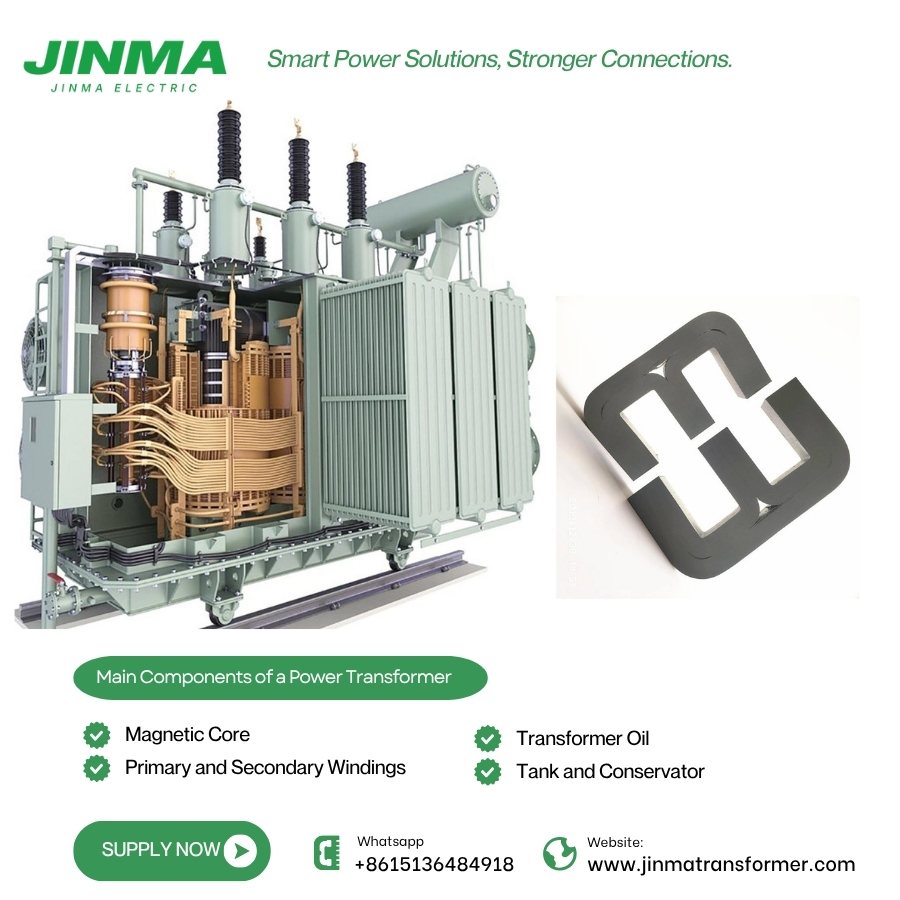
Core components and functions of power transformer
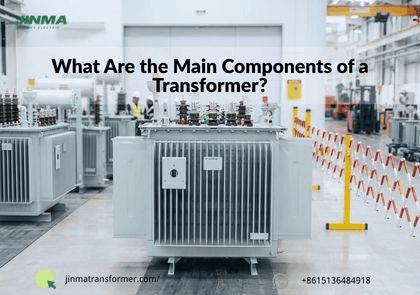
Power transformer is a complete set of electrical equipment with precise structure and high integration degree. Each core component directly determines the operation stability, safety and service life of the equipment. The core components and functions are as follows:
Iron core
The core is laminated with 0.23 – 0.35mm high magnetic silicon steel sheets, and the surface is insulated to eliminate the whole sheet conduction problem.
Its core function is to concentrate magnetic flux, reduce magnetic reluctance and improve electromagnetic conversion efficiency. At the same time, eddy current loss and hysteresis loss can be greatly reduced to ensure low loss operation of equipment from the hardware level.
High and low voltage winding
Winding is the conductive core of transformer. The main material is copper with high conductivity. Some economical equipment adopts aluminum. It is divided into two groups of coils on the primary side and the secondary side.
Winding adopts multi-layer insulation winding technology, according to the voltage level design disk type, spiral type structure, responsible for carrying current, generating magnetic field, induced voltage, is the core carrier of electric energy conversion.
Insulation system
Insulation system is a barrier for safe operation of transformer. Core materials include insulation paper, insulation cardboard, transformer oil, synthetic ester, etc. The system can completely isolate windings, iron cores, oil tanks and other components, avoid high voltage short circuit, leakage, breakdown failure, ensure safe isolation of high and low voltage systems, adapt to high voltage operating conditions.
Oil tank and conservator
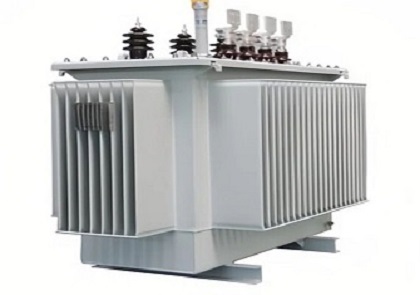
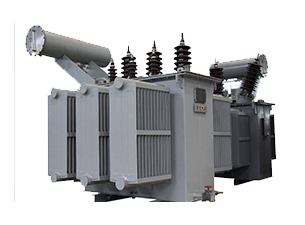
The steel oil tank is the main body shell of the equipment, which can completely enclose the iron core, windings and insulating oil, and provide mechanical protection and grounding guarantee. The oil conservator (expansion cabinet) is an auxiliary structure, which can adapt to the characteristics of thermal expansion and cold contraction of insulating oil, reduce the contact between insulating oil and air, and avoid moisture and oxidation deterioration of oil.
Cooling system
Transformer operation will produce copper loss, iron loss heat, cooling system can quickly dissipate heat, the equipment temperature control in a safe range, is the key to continuous operation.
Common cooling methods include natural oil cooling, forced air cooling, forced water cooling, etc. Different cooling schemes are suitable for power transformers with different capacities and different operating conditions.
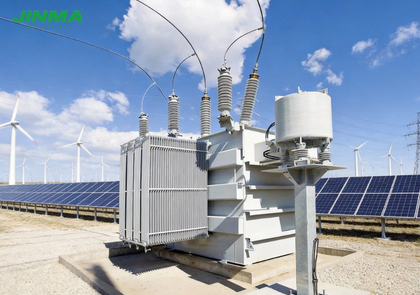
Bushing and tap changer
The bushing is a high-voltage insulation penetrating part, which can let the high and low voltage leads safely pass through the oil tank to realize external wiring and prevent high-voltage short circuit to ground. Tap changer is divided into on-load voltage regulation and no-load voltage regulation, which can adjust the winding turns ratio, compensate the voltage fluctuation of the power grid, and ensure the stability of the output voltage.
Protection and monitoring devices
Core protection accessories include gas relays, pressure release valves, temperature monitors, oil level gauges, moisture absorbers, etc.
Real-time monitoring of equipment internal fault, oil temperature, oil level, pressure changes, timely warning, trip protection, to avoid equipment burning, fire and other major accidents.
Common types of power transformer
There are rich categories of power transformers, which are divided into multiple categories according to installation scenarios, cooling modes, voltage grades and application purposes in the industry. Different categories have significant differences in adaptation scenarios, so accurate differentiation shall be made during type selection.
Classification by cooling method
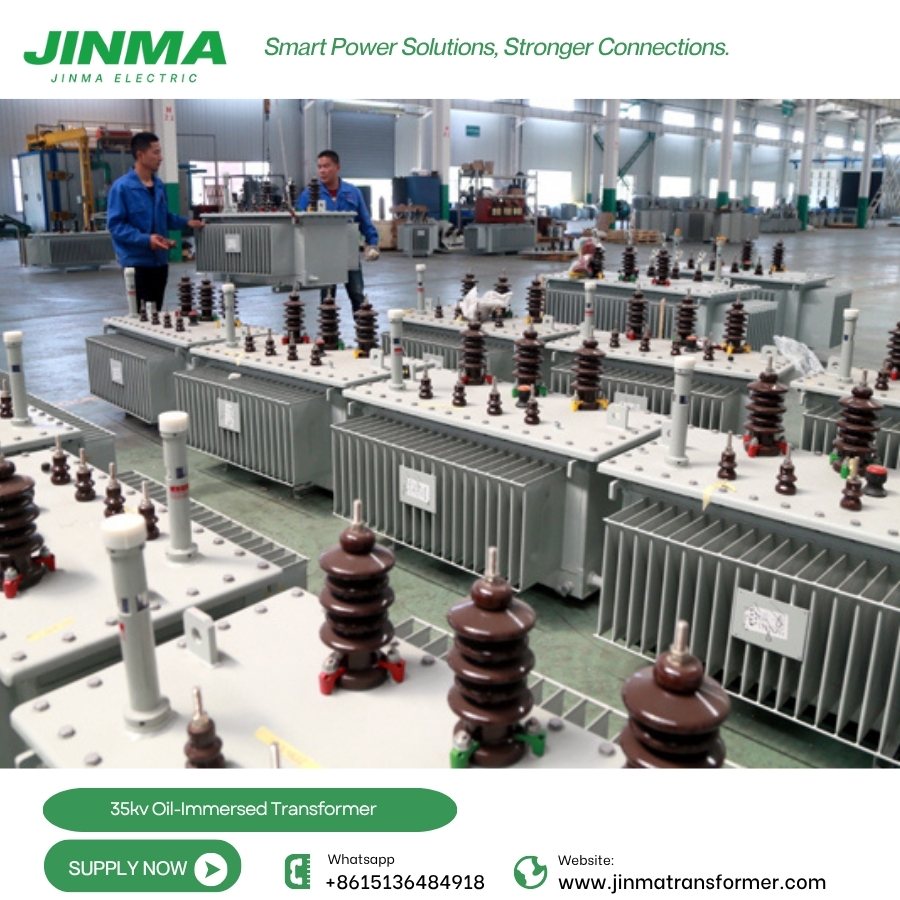
Oil-immersed transformer: the mainstream type in the industry, relying on transformer oil to complete insulation and heat dissipation, including ONAN natural oil cooling, ONAF oil cooling air cooling, OFAF forced oil cooling air cooling and other modes. The advantages are large capacity, good heat dissipation, long service life, and adaptation to high-pressure and large-capacity scenarios; the disadvantage is that there is slight explosion risk, and the oil quality needs to be maintained regularly.
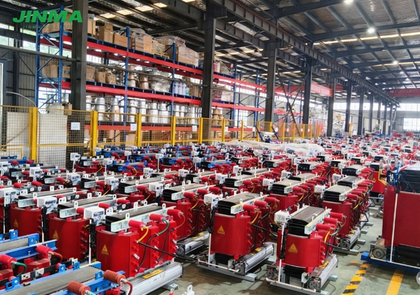
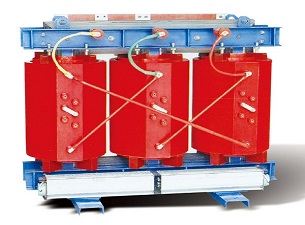
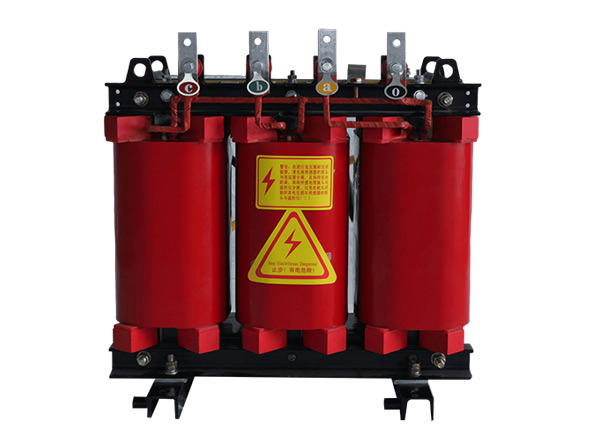
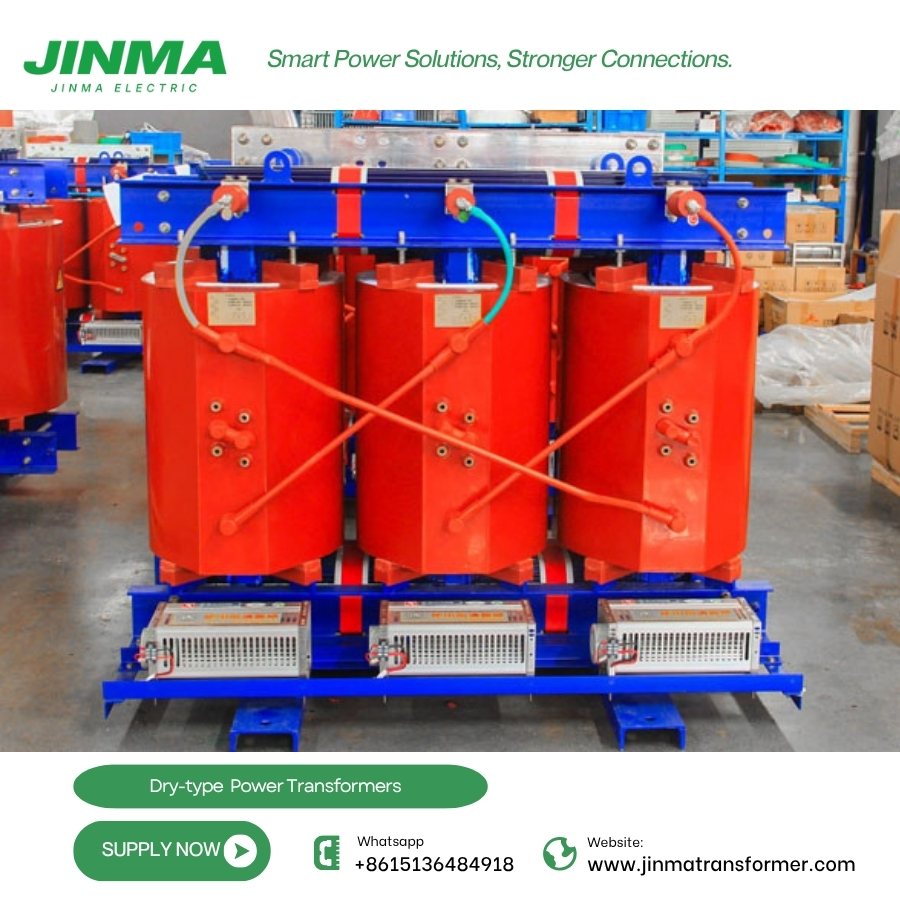
Dry-type transformer: rely on natural or forced air cooling, epoxy resin casting insulation, no insulating oil. Advantages: fireproof, explosion-proof, maintenance-free, environment-friendly and safe, suitable for indoor, crowded, flammable and explosive scenes; disadvantages: smaller capacity in the same volume, higher cost and slightly higher operation noise.
In addition, there are special cooling types such as SF6 gas insulation and water cooling, which are only used in special high-voltage and ultra-large-capacity industrial scenarios.
Classification by voltage class
Medium-voltage transformer (1 kV~36 kV): It is mainly used for terminal power distribution in cities and plant areas, covering civil and small and medium-sized industrial power consumption scenarios.
High-voltage transformer (36 kV~230 kV): used for regional trunk power grid and local substation, undertaking regional power transfer and transmission tasks.
EHV/UHV transformer (230 kV~1200 kV): used for trans-provincial long-distance power transmission and power transmission from large power stations, and is the core equipment of national trunk power grid.
Classification by application purpose
Main power transformer: large capacity, high voltage, used in power plant and power transmission substation, responsible for power step-up transmission and voltage regulation of main power grid.
Distribution transformers: medium and small capacity, for the terminal grid, to step down the medium voltage to 380 V/220 V for civil and industrial use.
Application Scenarios of Power Transformer
Power transformer is the core hub equipment of power system, which runs through the complete link of electric power generation, transmission, distribution and terminal power utilization. Different application scenarios have great differences in the requirements for voltage class, capacity, cooling mode and protection grade of transformers. Accurate matching of scene selection is the core premise to ensure stable power supply, reduce operation and maintenance costs and adapt to working conditions and environments.
Power-end applications
Both traditional energy power station and new energy power station, the generating voltage of generator unit is generally low, and the conventional interval is 11 kV~25 kV, which cannot directly meet the demand of long-distance transmission. Therefore, all power stations must be equipped with step-up power transformers to complete the voltage level jump.
Traditional power stations such as thermal power plants, hydropower stations and nuclear power plants are equipped with large-capacity oil-immersed high-voltage power transformers, which can boost the voltage to 220 kV, 500 kV or even UHV levels, so as to meet the demand of large-scale and continuous power transmission.
Photovoltaic power stations, Liushang and offshore wind farms and other new energy stations have intermittent and fluctuating power generation characteristics. The supporting step-up transformer shall have stronger voltage adaptation capability and anti-fluctuation performance to ensure the stable integration of new energy into the trunk power grid and assist the consumption of new energy.
Transmission substation application
The high-voltage, ultra-high-voltage and ultra-high-voltage hub substations at all levels are the core nodes of power grid power dispatching, and the core equipment is high-capacity high-voltage power transformer. In the step-up substation on the transmission side, the transformer is responsible for further raising the transmission voltage and reducing the power loss of long-distance transmission. In the step-down substation on the receiving side, the equipment can step down the high-voltage transmission voltage to adapt to the access standard of the regional distribution grid. The transformers in this scenario are mostly large-capacity oil-immersed power transformers equipped with on-load voltage regulating system and a full set of intelligent protection devices, which can operate continuously all day long and adapt to the large-scale and high-reliability dispatching requirements of the power grid.
Distribution network in urban and rural area
Distribution network is the key link connecting the main power grid and the end users. Power transformers play the core role of step-down voltage and safe distribution, which is directly related to the power stability of residents and merchants.
The urban core urban area, township and rural power grid will gradually reduce the voltage of 110 kV and 35 kV medium and high voltage power grid to 11 kV medium voltage distribution voltage through multi-stage step-down transformer, and finally reduce the voltage to 380 V/220 V civil and commercial standard voltage.
Box-type power transformers are mostly used in dense urban areas to save the occupied space; pole-mounted distribution transformers are mostly used in rural areas. This kind of equipment has high protection grade and convenient operation and maintenance, can adapt to outdoor long-term open-air operation conditions, and comprehensively guarantees the safety and stability of terminal livelihood power consumption.
Large-scale industrial scene
In heavy industrial plant area, high-end manufacturing industry, large data center, chemical industry park and other scenarios, the power load is large, the power supply continuity requirements are high, and the startup and shutdown of high-power equipment are easy to cause the voltage fluctuation of power grid, so it is necessary to configure dedicated industrial power transformer.
Iron and steel plants, oil refineries, chemical plants and other high energy consuming enterprises, equipment operation load is stable and the power is big, choose large capacity oil-immersed transformer, adapt to 24 hours uninterrupted production conditions, overload resistance, shock resistance is stronger.
Data center and precision manufacturing workshop have high requirements on power supply safety and stability, and fire-proof and explosion-proof dry-type transformer shall be preferred. can effectively eliminate hidden danger of oil stains and fire hazard, avoid that influence of voltage fluctuation on the operation of precision equipment, and ensure the safety of industrial production and data storage.
Guide to Selection of Power Transformers
Transformer type selection directly affects power supply stability, equipment life and operation and maintenance cost, and wrong type selection easily leads to overload heating, voltage instability, equipment premature aging and other problems. The following is a standardized selection process, which is suitable for engineering procurement and project design.
Determine rated capacity
Firstly, the total load power of the equipment is counted, and the required kVA/MVA capacity is converted by combining the power factor.
20%~ 40% capacity expansion allowance shall be reserved during type selection to meet the requirements of equipment addition and load increase in the later period.
Daily operation load is recommended to be controlled at 80%~ 85% of rated capacity to avoid long-term full-load and overload operation and prolong the service life of equipment.
Define voltage parameters and grid frequency
Accurately confirm the input voltage at the primary side and the output voltage at the secondary side, and match with the local power grid standard.
At the same time, confirm the power frequency parameters (50Hz in China and 60Hz in some overseas regions) to ensure that the equipment is fully compatible with the power grid and load.
Determine the type of equipment based on the installation environment
Based on many years of experience in transformer manufacturing, we conclude that:
Oil-immersed transformer shall be preferred for outdoor and substation scenes, with strong weather resistance, good heat dissipation, large capacity and high cost performance. Indoor, shopping malls, hospitals, underground pipe gallery, flammable and explosive scene, preferred dry type transformer, fire and explosion prevention, safety and environmental protection. For special environments such as high altitude, high temperature, high humidity, corrosion and sand dust, customized enhanced protection configuration is required to avoid equipment capacity reduction and frequent failures.
Matching cooling and regulation requirements
Conventional ONAN natural cooling can be used to meet the demand for small and medium-capacity power distribution scenarios.
For large-capacity, high-load and continuous operation scenarios, forced air cooling and forced oil cooling modes are selected to improve the heat dissipation efficiency.
On-load tap changer shall be selected for frequent grid voltage fluctuation scenario; no-load tap changer shall be selected for voltage stability scenario.
Lock Core Electrical Parameters
Focus on the four core parameters of impedance percentage, vector group, insulation grade and short circuit withstand capacity.
Parameters directly affect the short-circuit protection, voltage regulation, equipment parallel operation ability, is the core of the engineering selection of technical indicators.
Balancing Energy Efficiency Standards with Full Lifecycle Costs
Low loss, energy efficient transformers are preferred, which can significantly reduce long-term power losses, although the initial purchase cost is slightly higher. In strict accordance with IEC 60076, IEEE C57 and other international standards and domestic industry norms, to ensure equipment compliance, adaptive grid acceptance.
Maintenance Scheme of Power Transformer
Power transformer belongs to long-life equipment. High-quality operation and maintenance management can make the equipment operate stably for more than 50 years, while extensive operation and maintenance are easy to lead to insulation aging, oil quality degradation, equipment failure and power failure loss. The following is a hierarchical standardized maintenance plan.
Daily and annual walkdowns
Daily check whether there is any oil leakage, oil leakage, abnormal sound, vibration and other problems on the equipment, and there is only uniform and slight buzz in normal operation. Observe the oil temperature, oil level and moisture absorber status to ensure that the oil level is normal and the silica gel is not affected with damp and discolored.
Clean up the sundries and vegetation around the equipment, ensure the heat dissipation space, and check whether the casing is free of dirt accumulation, cracking and creepage trace.
Every year, insulation resistance test, winding resistance test and transformation ratio test shall be carried out to check the aging of winding, loose wiring and abnormal number of turns. Carry out dielectric loss test and partial discharge test regularly to find hidden insulation defects in advance and eliminate high-voltage breakdown fault.
Transformer oil maintenance (oil-immersed transformer)
Oil pressure, moisture and acidity tests shall be carried out every 6 to 12 months, and dissolved gas analysis (DGA) shall be carried out regularly.
DGA is the core method to judge the internal fault of transformer, which can detect the hidden faults such as arc, overheating and insulation aging in advance. Oil degradation after filtration, regeneration or replacement in time, cooperate with furan analysis to evaluate the degree of aging paper insulation.
Cooling System and Tap Changer Maintenance
Regularly clean the radiator, fan, oil pump, put an end to dust, debris jam affect heat dissipation.
The on-load tap changer is a vulnerable core component, which needs to be regularly maintained according to the operation times, clean the contact, replace the insulating oil, and ensure the accuracy of voltage regulation.
Power Transformer FAQ
Q1: What is the core difference between power transformer and distribution transformer?
Power transformers are high-voltage and large-capacity equipment, which are mostly used in power transmission substations and power plants, with high voltage grade and large capacity, and are suitable for trunk power grids; distribution transformers are medium-and small-capacity equipment, which are mostly used for terminal power distribution, and are responsible for reducing medium-voltage electricity to low-voltage electricity for civil industries, with simpler structure and lower cost.
Q2: How long is the normal service life of the power transformer?
Under the standard operation and maintenance and rated working conditions, the service life of the equipment can reach 30 – 50 years. High-quality low-loss equipment with refined operation and maintenance can have a service life of more than 50 years.
Q3: Which transformer cooling method is most commonly used?
ONAN natural oil cooling is preferred for outdoor power distribution scenarios, ONAF/OFAF forced cooling is preferred for large-capacity power transmission scenarios, and dry AN/AF air cooling mode is preferred for indoor scenarios.
Q4: What is the core function of transformer oil?
It mainly undertakes two core functions: one is high-voltage insulation to ensure the internal insulation safety of equipment; the other is heat dissipation and heat conduction to take away the heat generated by equipment operation, which is an indispensable medium for oil-immersed transformer.
Q5: Can the power transformer operate continuously for 24 hours?
Very good. Transformer is static equipment, no mechanical wear and tear, rated load, normal temperature control conditions can be all-weather uninterrupted operation, is the core of the grid uninterrupted power supply guarantee.
Q6: What are the main causes of transformer failure?
Core fault causes include: insulation aging and damp, oil degradation, overload operation, poor heat dissipation, lightning overvoltage of power grid, wear of tap changer, installation process defects, etc.
Q7: How to quickly calculate the required capacity of the transformer?
Three-phase equipment can be calculated by the formula kVA=√3 * voltage * current * power factor/1000, reserve more than 20% capacity expansion allowance after counting the total load, and select the standard rated capacity.
Q8: What industry standards do power transformers need to follow?
The mainstream shall comply with IEC 60076 international standard and IEEE C57 American standard, and shall comply with domestic power industry specifications, and shall be provided with CE, UL and other relevant certifications to ensure compliance and grid connection of equipment.
Conclusion
Power transformer is the core cornerstone of power system, which supports the efficient transmission, safe conversion and stable distribution of electric energy, and runs through the whole process of power generation, transmission, distribution and utilization. For custom oil-immersed, dry-type power transformers, or for specialist selection options, engineering quotes, please feel free to contact Jinma Electric, where specialist engineers provide one-on-one total solutions to fit the project.