

Complete power transmission system, following the complete link of “generation-transmission-distribution-consumption”. In this set of links, power transformers and distribution transformers assume a completely different and indispensable core role, which is the core cornerstone of stable operation of the power grid. Many electrical engineers, EPC project leaders and equipment purchasers often confuse the two types of transformers. This article will comprehensively compare power transformer and distribution transformer from definition principle, structure design, parameter performance, application scenario, selection skills, manufacturer screening and other dimensions.
What is a power transformer?
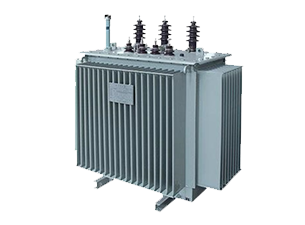
Power transformer is a static electromagnetic equipment, relying on the principle of electromagnetic induction to complete the power transmission between circuits, and the whole process does not change the AC frequency. It is the core equipment of high-voltage transmission network, power station and trunk substation.
The core function of this equipment is to complete the voltage rise and fall of high voltage and ultra-high voltage level, and adapt to the demand of large capacity and long distance power transmission. Its core design goal is to minimize the line loss of long-distance transmission and ensure the power supply stability of the main link of the power grid. Power transformers are only deployed in core scenarios such as power stations, trunk transmission substations, and cross-regional power grid hubs, and are not directly connected to terminal electrical equipment. They are the core carriers of the “trunk transportation system” of the power grid.
The operation of power transformer obeys Faraday’s law of electromagnetic induction, and the core realizes voltage conversion by electromagnetic coupling between iron core and high and low voltage windings. Modern large-scale power transformers have extremely high operating efficiency, with an efficiency of 98%-99.5% under full load conditions, which can guarantee the economy of large-capacity power transmission to the greatest extent.
What is a distribution transformer?
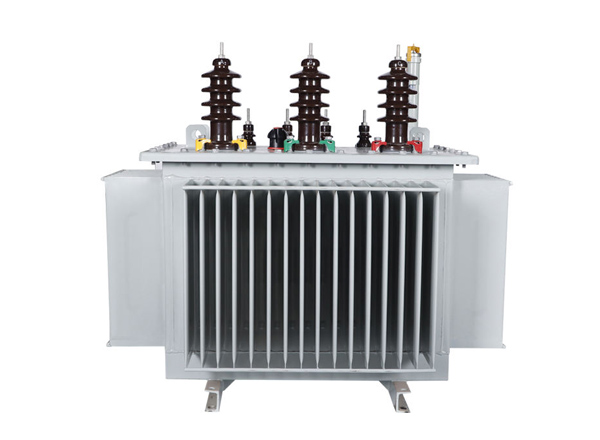
Distribution transformer belongs to the subdivision category of power transformer, which is the last core equipment of voltage conversion in power system. It is mainly responsible for reducing the voltage of the medium voltage distribution network to a low voltage level that can be safely used by the end user.
In the complete power grid link, its positioning is clear and clear: power station → power transformer (high-voltage transmission) → main power grid → distribution transformer (low-voltage distribution) → end user.
Different from the large-capacity stable operation of power transformers, the core design goal of distribution transformers is to adapt to fluctuating loads, reduce all-weather operating losses, and ensure continuous and stable power supply in residential areas, commercial areas, and small industrial scenarios.
Distribution transformers also rely on electromagnetic induction principle operation, structure includes medium voltage primary winding and low voltage secondary winding, conventional delta-star connection mode. Since the distribution transformer operates 24 hours a day without interruption and is mostly in a 50%-70% partial load state, the design focuses on optimizing no-load loss rather than simply pursuing full-load efficiency.
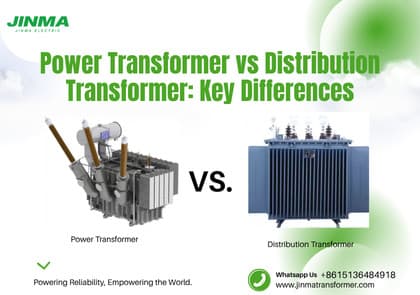
Power Transformer vs Distribution Transformer: Key Differences
The differences between the two types of transformers run through multiple dimensions such as voltage parameters, structural design, operating characteristics, installation scenarios, etc. The following is a refined comparison to clearly distinguish the core differences between the two transformer, providing a basis for accurate selection.
Difference between voltage class and grid level
In the selection of power engineering, voltage grade is the first core basis for quickly distinguishing power transformers from distribution transformers, and it is also the rigid classification standard for power grid planning, equipment bidding and system design. The voltage parameters of the two types of equipment strictly comply with IEC 60076 general standard for power transformers and ANSI/IEEE C57 North American transformer standard, and the voltage hierarchy is clearly divided without overlapping intervals, adapting to the two independent operation systems of power grid “transmission-distribution”.
Power transformers: special equipment for HV/EHV transmission level
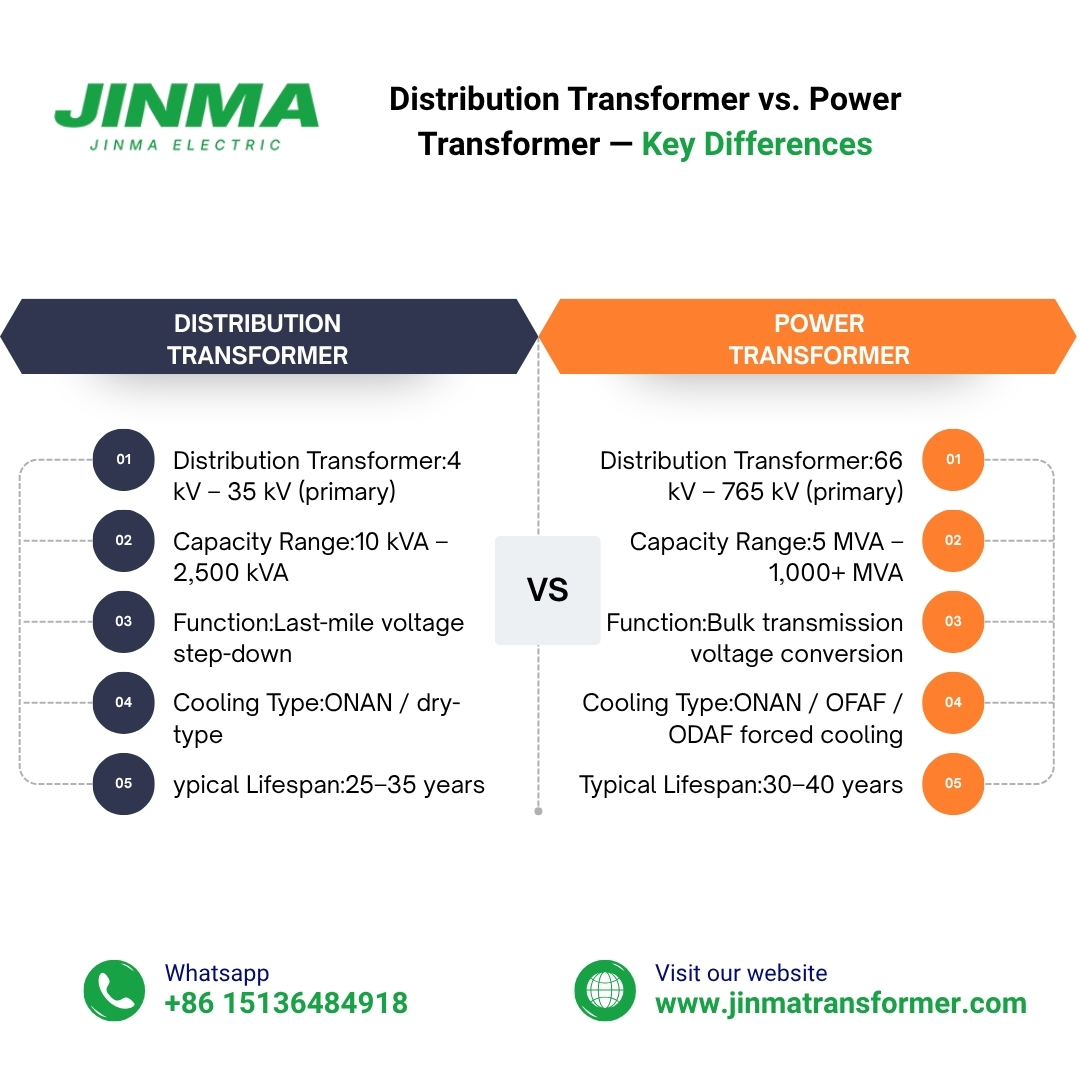
Power transformers are designed for high voltage (HV) and extra high voltage (EHV) backbone transmission networks with very wide voltage coverage. Its primary side input voltage standard is 66kV~765kV and above, covering all scenarios of regional power grid, cross-regional interconnection and large-scale power generation transmission. The output voltage of the secondary side is mostly 11kV~400kV, which is mainly used to connect trunk transmission lines of different voltage levels, and does not directly connect any terminal electrical equipment.
The industry mainstream standardization specifications include 400/220kV, 220/66kV, 132/33kV, 765/400kV, etc. All models are designed around “large capacity, long distance, low loss transmission”. In the power grid architecture, this kind of equipment is only deployed in the core position of power station booster station, trunk hub substation and inter-provincial networking substation, which is the core carrier of global power allocation.
Distribution transformer: special equipment for medium-voltage to low-voltage terminal distribution
Distribution transformer is the exclusive transformer equipment at the end of the power grid, which only serves the medium and low voltage distribution system. The primary side input voltage is 6kV~33kV, and the global civil and industrial distribution scenarios are mainly 11kV, 22kV and 33kV, which are suitable for urban and rural regional distribution lines.
The secondary side of the equipment uniformly outputs civil and industrial general safety low voltage, the domestic standard is 400V/230V three-phase four-wire voltage, and the North American region is 120V/240V, which fully matches the safety voltage requirements of terminal electrical equipment. The mainstream specifications in the market are 11/0.433kV and 33/0.433kV, and the structural parameters are highly standardized, which is suitable for the distribution requirements of batch deployment and scattered installation.
At the same time, the voltage transformation ratio of power transformer is much higher than that of distribution transformer, which can realize large voltage conversion from ultra-high voltage to large medium voltage, and meet the transmission demand of 100 kilometers and 1000 kilometers. The distribution transformer has a fixed transformation ratio and a smaller value. It is only suitable for short-distance terminal distribution voltage regulation. There is no need for ultra-high insulation redundancy. The structural design is more suitable for civil low voltage safety standards.
Capacity class and load scale difference
The capacity level is the core quantitative index to distinguish the power supply scale and applicable scenarios of the two types of transformers, which directly determines the power carrying capacity and service radius of the equipment. The capacity interval of power transformer and distribution transformer is completely fault, corresponding to two completely different load modes of power grid trunk large-capacity centralized power supply and terminal small-capacity decentralized power supply, and the adapted engineering scenarios and load characteristics are different from each other.
Power transformer: large capacity centralized power supply equipment
Power transformer belongs to grid-level large-capacity core equipment, and the general access capacity of the industry is 10MVA and above. Conventional substation model capacity is concentrated in 10MVA~500MVA, large-scale inter-provincial transmission, 10 million kilowatt new energy power station supporting transformer, capacity can reach more than 1000MVA, carrying a large amount of power.
The design core of this kind of equipment is batch, stable and continuous transmission of large-capacity electric energy, serving the scenarios of power allocation of trunk power grid, power transmission of large-scale power stations, centralized power supply of high-energy-consuming industries, etc. A single equipment can cover the load demand of the whole regional power grid, large industrial park and million kilowatt new energy base, with wide service radius and huge power supply volume.
Distribution transformer: small and medium capacity decentralized power supply equipment
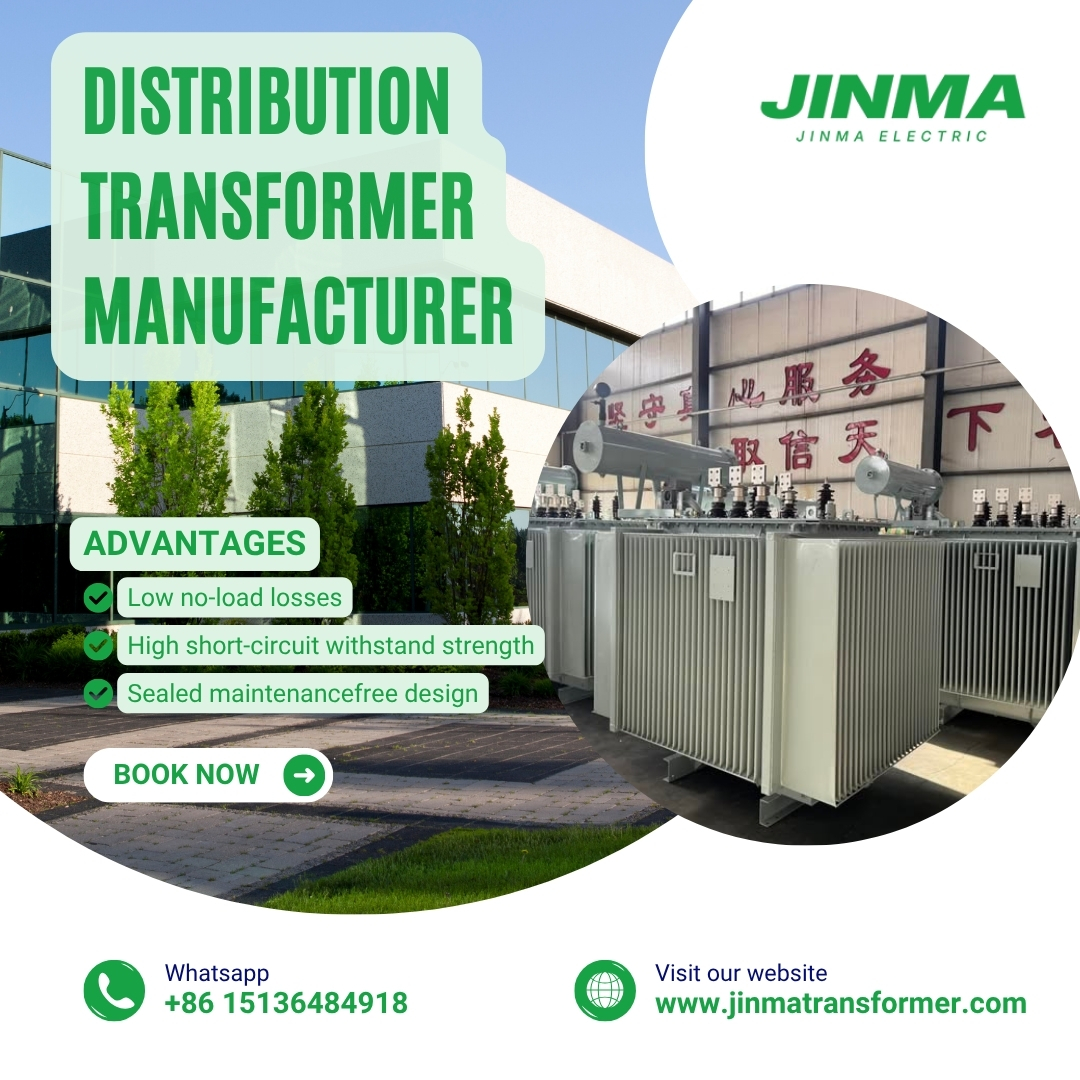
Distribution transformer belongs to terminal lightweight power supply equipment, the capacity range is strictly limited to 25kVA~5000kVA, no super capacity model. Combined with the actual application data of domestic urban and rural power distribution projects, the mainstream models in the market are concentrated in 100kVA~2500kVA, accounting for more than 90%, fully adapting to the terminal scattered load demand.
Its core service logic is “small range, close distance, decentralized power supply”, a single device only covers the load of a community, a village, a commercial building or a small and medium-sized workshop. The equipment does not need to bear high-power centralized transmission pressure, and focuses on adapting scattered, fluctuating and diversified terminal power loads. It is the basic power equipment from the power grid to the user end.
Structural design and manufacturing process
Based on different operating conditions, the core, winding, cooling system and box structure design of the two types of transformers are significantly different, and the manufacturing process standards are completely different.
Iron core and magnetic circuit: power transformer adopts large-section high-grade silicon steel sheet, high magnetic flux density, suitable for large-capacity stable operation; distribution transformer iron core size is smaller, structure is more compact, focus on optimizing no-load loss, suitable for 24-hour live standby condition.
Winding structure: power transformer adopts multi-layer staggered winding and three-winding design, with thick insulation layer, strong short-circuit resistance and voltage resistance; distribution transformer adopts simple concentric cylindrical winding, simple structure, lower cost and adaptability to conventional load fluctuation.
Cooling system: Power transformer is equipped with forced cooling system, including oil pump, fan, heat exchanger and other equipment, supporting multi-stage forced heat dissipation; distribution transformer is mainly natural oil cooling (ONAN), only a few large capacity models are equipped with simple air cooling device.
Voltage regulation device: power transformer is equipped with on-load voltage regulation switch (OLTC), which can dynamically regulate voltage with load to ensure the voltage stability of main power grid; almost all distribution transformers adopt no-load voltage regulation device, which can only be manually regulated without real-time dynamic voltage regulation.
Box and protection: The power transformer box is heavy and sturdy, equipped with oil conservator, breathing device, fire protection system, and is suitable for fixed installation in substations; the distribution transformer box is light and compact, with good sealing performance, and is suitable for tower, ground, and indoor installation scenarios.
Operating efficiency and load characteristics
The difference in efficiency design logic is the core technical difference between the two types of transformers, which directly determines the applicable operating conditions.
Power transformers: peak efficiency occurs at 90%-100% full load, and full load efficiency can reach more than 99%. Long-term stable operation of the equipment in the high load range, load factor up to 70%-90%, load fluctuation is very small. The design focuses on controlling load loss and reducing power loss under high-capacity transmission conditions.
Distribution transformer: The peak efficiency appears at 50%-70% half-load state, which is specially adapted to the characteristics of large fluctuations in peak and valley of terminal electricity. The equipment is continuously charged for 24 hours, and the no-load loss is the core optimization index, which improves the all-weather comprehensive energy efficiency by reducing the standby loss.
From the point of view of operation characteristics, the power transformer load is stable and the harmonic content is low; the distribution transformer needs to frequently deal with load mutation, motor start-up impact and harmonic interference of civil equipment, and the anti-fluctuation and anti-impact performance is stronger.
Installation scenario, size and operation and maintenance
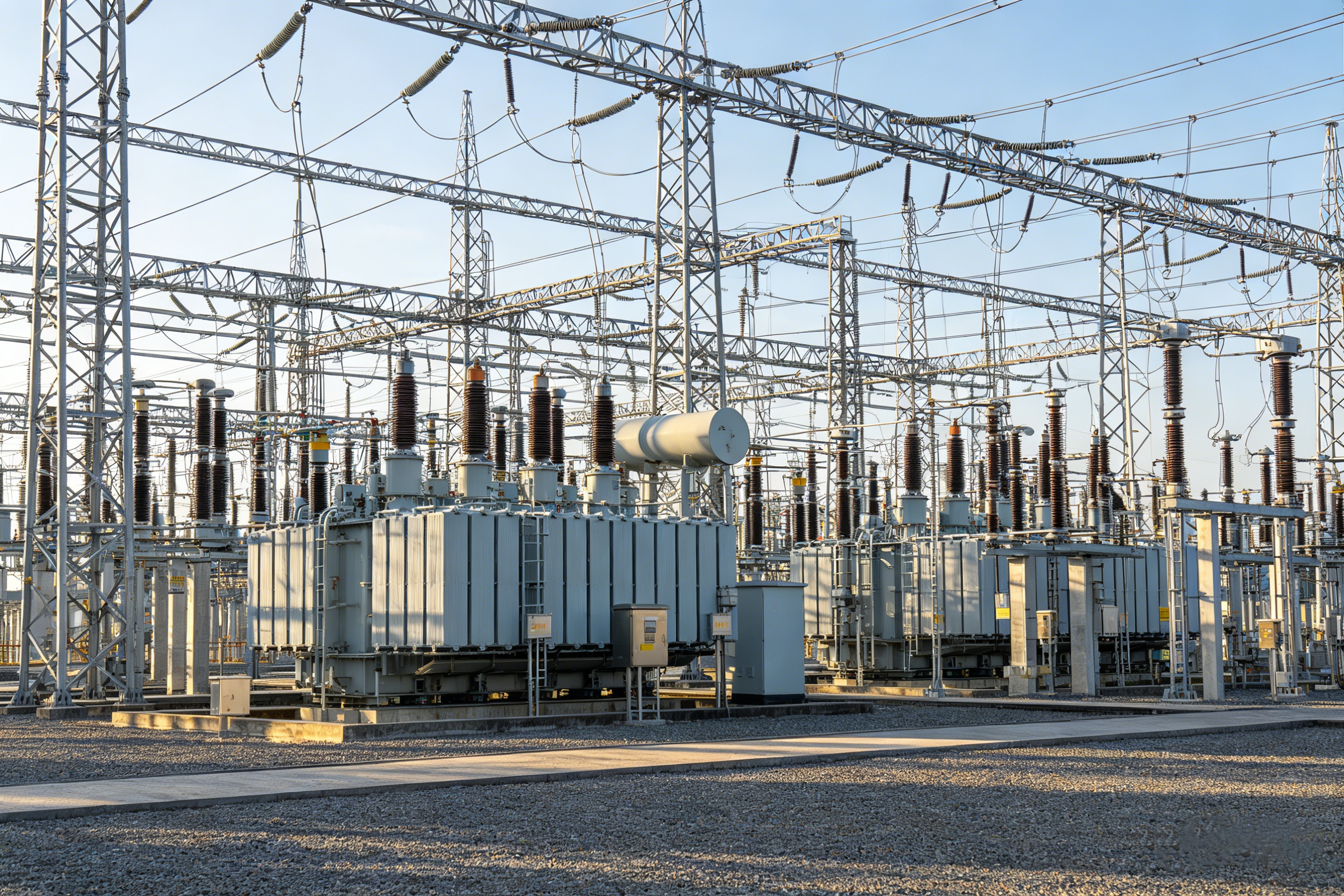
Power transformer: The equipment is huge in size and weighs tens to hundreds of tons. It must be fixed in a special substation. It needs supporting infrastructure such as foundation, oil storage tank, fire protection system and monitoring system. The installation cost is high and the operation and maintenance professional degree is high.
Distribution transformer: light and compact equipment, flexible installation mode, can be directly installed in power tower, outdoor ground, indoor distribution room, underground pipe gallery and other scenes, without complex supporting facilities, short installation cycle, small operation and maintenance workload.
Protection and monitoring system
As the core equipment of power grid, power transformer has a wide range of faults, so it is equipped with a full set of high-precision intelligent protection monitoring system, including differential protection, gas protection, winding temperature monitoring, oil online analysis, fault warning and other functions.
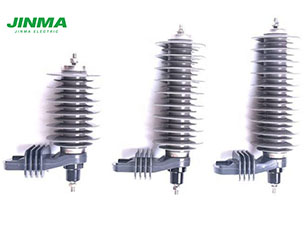
Distribution transformer fault only affects local small area load, protection system is mainly simple and practical, mainly equipped with fuse, arrester, basic temperature monitoring device, simple structure, low failure rate, convenient operation and maintenance.
2 types of transformer application scenarios
Application of Power Transformer
Power transformers focus on large-capacity, long-distance, high-voltage power transmission scenarios, and are the core equipment for power generation, transmission, and large-scale industrial power supply.
- Power station boost scenario:boost the 11 – 25kV low voltage power output by the generator to 220kV, 400kV and above ultra-high voltage to provide support for long-distance cross-regional transmission.
- Main substation interconnection scenario:It is used for interconnection voltage regulation of main power grids with different voltage levels, such as 400kV/220kV and 220kV/132kV voltage conversion, balancing power grid load and stabilizing main voltage.
- Large-scale new energy power station:adapt to million-kilowatt wind power base and photovoltaic power station, integrate centralized new energy power boost into trunk power grid, and solve the problem of large-capacity transmission of new energy.
- Heavy industry and special power supply scenarios:for steel, mining, refining, large-scale manufacturing and other energy-consuming enterprises, provide special high-voltage power supply voltage regulation services to meet the large-capacity stable load requirements of enterprises.
- HVDC transmission scenario:as a converter transformer, supporting the operation of HVDC transmission system to ensure the stability of cross-region, large-capacity and low-loss DC transmission.
Application of Distribution Transformer
Distribution transformers focus on power supply at the end of the power grid, covering all civil, commercial, small and medium-sized industrial power scenarios, and are one of the most widely used power equipment.
- Urban and rural residential areas:through pole-mounted and box-type models, 220V/380V safe civil voltage is provided for residential and rural residents to meet daily household electricity demand.
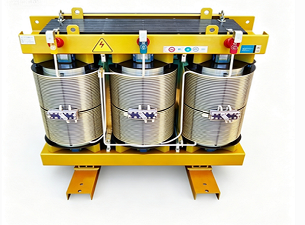
- Commercial public buildings:for office buildings, shopping malls, hotels, hospitals, schools and other public buildings power supply, mostly dry models, giving consideration to power supply stability and fire safety.
- Small and medium-sized industrial plant:adapt to the power demand of small and medium-sized processing plants, workshops and small data centers, and provide stable three-phase low voltage industrial power supply.
- Municipal and rural supporting facilities:covering the power supply demand of rural electrification, urban street lamps, municipal facilities and outdoor public equipment, adapting to scattered and fluctuating terminal loads.
- Distributed new energy scenario:adapt to household photovoltaic and small-scale distributed wind power projects, reduce the voltage of new energy generation and integrate it into local distribution network to realize nearby consumption.
How to quickly determine the type of transformer required?
In engineering design and project procurement, four core standards can be used to quickly select types, avoid selection errors, and give consideration to power supply stability and project economy.
Selection according to voltage class (primary standard)
Input voltage ≥ 66kV, involving trunk transmission, power grid hub, power station boost scenarios, unified selection of power transformers.
The input voltage is 6 – 33kV medium voltage level, which needs to be stepped down to 400V/230V terminal low voltage, and the distribution transformer is uniformly selected.
Selection according to equipment capacity
The total load capacity of the project is ≥10MVA, belonging to the large-capacity centralized power supply scenario, and the power transformer is preferred.
The total load capacity of the project is less than 5MVA, especially for scattered terminal loads below 2.5 MVA, distribution transformers are preferred, and the cost performance is higher.
Selection according to application scenarios
Power stations, trunk substations, trans-regional power transmission, large new energy power stations, heavy industrial projects with high energy consumption, adaptive power transformers.
Residential quarters, commercial buildings, small and medium-sized factories, municipal facilities, distributed new energy projects, adaptive distribution transformers.
Selection according to operating load characteristics
Equipment long-term full load, stable operation, load fluctuation is very small, select power transformer, play its full load and efficient advantages.
The equipment load fluctuates greatly day and night, the peak-valley difference is obvious, and the long-term light-load standby is selected. The distribution transformer is selected to reduce the all-weather operation energy consumption.
How to select that manufacture of high quality transformer?
Transformer belongs to 25 ~ 40-year long-life power equipment, and equipment quality directly determines power grid operation stability and long-term operation and maintenance cost, so it is very important to select reliable manufacturers.
Define complete technical parameters
Before procurement, it is necessary to accurately sort out the requirements, specify the core parameters such as transformer type, high and low voltage rated voltage, capacity, installation environment, insulation mode, voltage regulation requirements, executive standards (IEC/ANSI), energy efficiency grade, etc., so as to avoid customization deviation.
Core manufacturer assessment dimension
Qualifications and experience: electrical transformer manufacturers with more than 10 years of production experience and a large number of power grid and industrial project landing cases are preferred. The products have been verified by the market and have stronger stability.
- Authoritative certification: Check ISO9001 quality system, ISO14001environmental system, CE, UL certification and third-party type test report to ensure product compliance.
- Production and testing capacity: with independent production line, a full set of routine test, type test equipment, can strictly control the iron core, winding, insulation medium and other raw materials quality, to ensure equipment performance.
- After-sales and delivery capacity: It has a perfect after-sales system, which can provide installation guidance, operation and maintenance, and spare parts supply services. The delivery cycle is stable, and the risk of project delay can be avoided.
life cycle cost of transform
Selection procurement should not only look at the initial quotation, but also consider the 20 – 30 year life cycle cost of the equipment. Low-quality low-cost equipment no-load, load loss is higher, the long-term energy consumption cost far exceeds the equipment price difference. Priority shall be given to high-quality transformers with high energy efficiency and low loss, especially amorphous alloy iron core models, which can greatly reduce long-term operation energy consumption and improve economic benefits of the project.
Frequently Asked Questions
Q1: What is the core difference between power transformer and distribution transformer?
The core difference is the grid positioning and design logic. The power transformer is used for high-voltage and large-capacity power transmission, adapted to stable full-load working condition, with high voltage grade and large capacity; the distribution transformer is used for terminal low-voltage power distribution, adapted to fluctuating load, mainly featuring low no-load loss, all-weather efficient operation and direct service for terminal users.
Q2: Can the distribution transformer be used instead of the power transformer?
Very well. No. The insulation grade, withstand voltage capacity, structural strength, overload capacity and voltage regulating mode of the two types of transformers are completely different. Distribution transformer can not withstand high voltage transmission conditions, forced replacement will directly lead to insulation breakdown, equipment burning, power grid failure.
Q3: Which transformer has higher overall efficiency?
Under full load condition, the efficiency of power transformer is higher, which can reach more than 99.5%, and under partial load condition, the energy efficiency of distribution transformer is better. From the perspective of comprehensive all-weather operation energy consumption, the energy-saving advantage of distribution transformer is more obvious, which is suitable for civil fluctuation power consumption scenario.
Q4: What kind of transformer is the PV power station adapted to?
For centralized large-scale PV power station, power transformer is selected to complete step-up grid connection; for household and industrial and commercial distributed small-scale PV projects, distribution transformer is selected to complete terminal voltage regulation and grid connection consumption.
Q5: How long is the normal service life of the transformer?
Under the premise of standard installation and regular operation and maintenance, the normal service life of power transformer and distribution transformer can reach 25 – 40 years, which is one of the longest service life of power equipment.
Q6: Why should distribution transformers focus on reducing no-load loss?
The distribution transformer operates continuously 24 hours a year with electricity. Even if the power consumption at night is low and the load is extremely low, the no-load loss of the iron core will continue to occur. Reduce the no-load loss, can greatly reduce the annual invalid energy consumption, improve the overall energy saving level of power grid.
Conclusion
Power transformers and distribution transformers perform their respective duties and complement each other to form a complete power transmission network. The differential design of voltage grade, capacity scale, structure design, efficiency characteristics and application scenarios is to adapt to the operation requirements of power grids at different levels. Accurate distinction between the characteristics of the two types of transformers is the basis of power grid design, project selection, equipment procurement, operation and maintenance management. If you want to learn more, contact Jinma Electric for professional transformer solutions that can help your project achieve a safe, stable, cost-effective, long-term operation of the grid system.