

Distribution system is the core hub of power transmission and distribution, its operational efficiency is related to energy utilization, cost control and power supply stability. As an expert in the field of transformer production, I believe that the efficiency of the distribution system needs to be clear first power loss core source, and then through technology, equipment and management upgrades to achieve the optimization of the whole process, and high-efficiency transformer as the core equipment, is to reduce losses, improve efficiency of the key.
Main sources of power losses in distribution systems
Technical power loss
Technical power loss is caused by equipment characteristics, network structure and transmission law, can not be completely eliminated but can be reduced through optimization, mainly divided into fixed loss and variable loss, transformer-related loss is its core.
Fixed loss
Fixed loss is not affected by the power load, only through equipment maintenance, network transformation management, mainly in the transformer, lines and cables, of which the transformer’s fixed loss is the most prominent – due to the magnetic effect of the heat, noise form of heat dissipation, the core originates from the iron core loss; line high-voltage corona discharge, cable excitation current will also produce fixed Losses, and losses with the cable length, voltage increases.
Variable loss
Variable loss changes with the flow of electricity, determined by the user’s behavior, from the current through the equipment resistance generated by the Joule heat loss, transformer winding resistance loss is an important part of it.
Non-technical power loss
Electricity theft, where unrecorded losses result from unruly elements tampering with equipment to steal power;
Unmetered power supply, where public welfare scenarios are not accurately metered, and the difference between estimated and actual consumption creates losses
Transmission losses, mostly due to meter malfunctions leading to inaccurate metering, which does not truly reflect the consumption of electricity.
Adoption of high-efficiency transformers
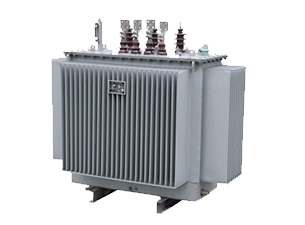
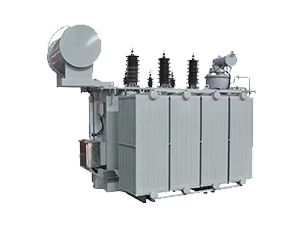
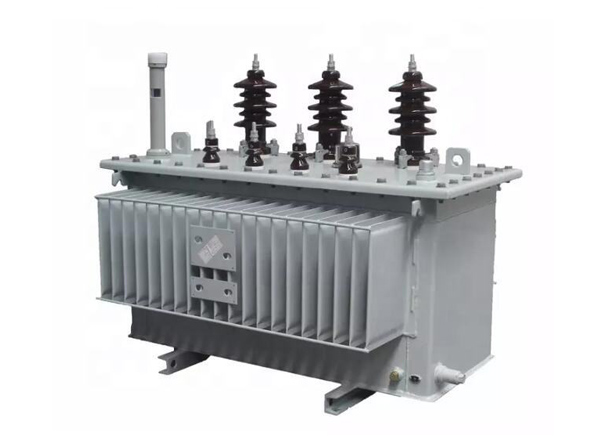
Adopting high-efficiency transformer and optimizing its technology and structure is the key to reduce system loss and improve efficiency.
The core advantage of high-efficiency transformer lies in material upgrading: abandon traditional silicon steel sheet, adopt amorphous alloy, nanocrystalline and other advanced core materials, which can reduce core loss by 30%-50%; adopt copper winding instead of aluminum winding, which can reduce Joule heat loss by virtue of better electrical conductivity, and at the same time prolong the service life of equipment.
Design optimization further strengthens the energy-saving effect: electromagnetic simulation shortens the magnetic flux transmission distance of the iron core and reduces the magnetic field loss; equipped with advanced cooling systems, such as forced air cooling and liquid cooling, to control the operating temperature and avoid the increase of loss; meanwhile, the design can be customized according to different distribution scenarios, to ensure optimal energy-saving effect in all kinds of scenarios.
Reducing Line Losses in Distribution Networks
Line losses are an important loss in the distribution system, accounting for more than 30% of the total losses in long-distance distribution scenarios. In order to effectively reduce line losses, form a synergistic effect with high-efficiency transformers, and improve the overall efficiency of the system, the following structured optimization measures can be taken:
Optimize current and voltage configuration: the core follows the principle of “high voltage and low current”, and reasonably adjusts the transmission ratios; especially in long-distance transmission, by raising the voltage and lowering the current, it significantly reduces the line loss, and at the same time, matches the output voltage of the transformer to ensure a stable and efficient power transmission.
Installation of chain insulators: 2-meter-long chain insulators are used to isolate the conductor from the support structure, reduce discharge losses, and improve line insulation and operational safety.
Strengthening loss calculation management: accurately calculating line loss through the power loss formula, combining with transformer operating parameters, optimizing line layout and specifications, avoiding line overloading, and ensuring controllable loss.
Improving Power Factor and Reactive Power Management
Low power factor causes hidden losses in the distribution system, increasing transformer and line loads and losses, and reducing transmission efficiency. Combined with the operating characteristics of the transformer, reasonable reactive power management can improve the power factor, reduce hidden losses, and improve the energy efficiency of the system in conjunction with high-efficiency transformers.
Power factor can be improved by adding reactive power compensation equipment
Shunt capacitor banks provide local reactive power for inductive loads, reducing transformer reactive power losses;
Synchronous regulators can flexibly adjust reactive power to suit complex scenarios;
Active front-end converters match current and voltage waveforms to improve power factor and protect the transformer.
Reducing reactive power demand from the source
Adopting high-efficiency motors and variable frequency drives to optimize system design and reduce reactive power consumption;
Promoting collaboration between power supply enterprises and users, relying on industry standards and incentive policies.
Combined with the optimization of transformer selection, land customized reactive power management solutions to improve the power factor of the whole system.
Application of smart grid technology
Smart grid technology is an important support for the efficiency improvement of power distribution system, which can be linked with high-efficiency transformers to reduce losses, highlight their intelligent adaptation advantages and expand product application scenarios.
Build an efficient communication network to realize real-time data interaction between intelligent electronic equipment and the central control system, accurately monitor transformer loads and losses, detect abnormalities in time, and avoid faulty losses.
Promote smart meters to replace traditional mechanical meters, accurately measure electricity consumption, reduce non-technical losses, and at the same time provide feedback on load changes to support transformer load adjustment and ensure its optimal operation.
Deploying intelligent management and control software to realize the digital control of the whole process of power distribution system (including transformers), accurately analyze losses, optimize parameters, remotely monitor transformers and warn of failures, and reduce operation and maintenance costs.
Integrating Distributed Energy Resources
Distributed Energy Resources Core Perceptions
Distributed Energy Resources (DERs) are miniaturized, decentralized power generation and storage technologies that are close to the end-use terminals and can replace traditional centralized power generation. Common types include solar photovoltaic, small-scale wind power, combined heat and power, battery storage, microgrids, etc., and each type has its own core advantages.
Core impacts of DERs on the distribution system
Local generation during peak hours reduces main grid and transformer loads and reduces losses;
Peak shaving and valley filling can reduce the cost of peak shifting and optimize the load curve; improve the resilience of power supply, independent power supply in case of failure, and guarantee the stability of power supply with efficient transformer backup function;
Fitting in with the goal of “dual-carbon”, helping users to save electricity costs, realizing a win-win situation.
Core Challenges and Responses to DERs Integration
There are three major challenges in DERs integration, which need to be optimized with high-efficiency transformers:
First, the intermittent nature of renewable energy leads to fluctuations in the power grid, which needs to be stabilized by combining high-efficiency transformers and energy storage equipment;
Second, the two-way flow of electricity has increased the requirements of the power grid, and transformer selection needs to be optimized to match the two-way power supply;
Third, the network equipment needs to strengthen network security protection, to ensure the safety of system operation.
Summary
Enhancing the efficiency of the power distribution system needs to clarify the source of loss, accurate optimization, of which technical loss is the core, transformer-related loss is the key; the use of high-efficiency transformers, combined with line optimization, reactive power management, smart grids and distributed energy integration, can achieve the whole process of energy efficiency. As a professional transformer enterprise, high-efficiency transformers are suitable for multiple scenarios, helping users to reduce costs and energy saving, and we will continue to research and development in the future to promote the integration of products and various technologies, and to help the transformation of the power distribution system and the sustainable development of energy.