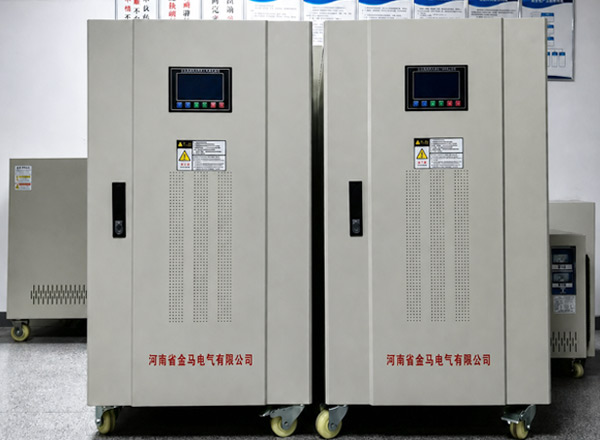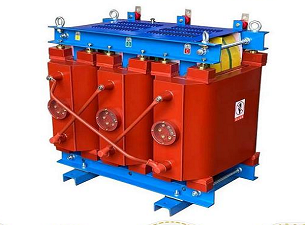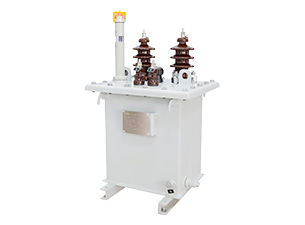


In power infrastructure projects, transformers as the core of energy conversion and transmission, its selection of scientific directly determines the project operational efficiency, safety and stability and long-term cost. Selecting the wrong transformer can easily lead to equipment failure, safety hazards and affect project progress.
Therefore, it is crucial to master the scientific selection method and accurately match the project requirements. In this article, we will disassemble the whole selection process to help choose the right transformer to ensure the efficient and long-lasting operation of the project.
transformer to ensure the efficient and long-lasting operation of the project.
Clarify the project’s power requirements
To do selection before the first comprehensive understanding of the project’s power needs, which is to avoid the selection of biased models to ensure that the equipment and the scene fit the foundation, can not simply check the voltage and power values, to do a systematic research and analysis, but also the key information organized into documents. Collect demand can be through the field research, and related personnel communication, etc., the project use, load range, peak fluctuations in power consumption and power quality of these core information are collected completely, these data will directly determine the rated parameters of the transformer and performance standards.
Get all the information according to the importance of the degree of prioritization, combined with the focus of the project, such as industrial projects focus on overload capacity, commercial projects more concerned about the energy-saving effect, screening out the core requirements, encountering conflicting demands should be sorted out in a timely manner, in advance to think of ways to cope with the situation. Finally, we should standardize the collated requirements into a document form, to quantify the energy indicators and qualitative description of the content of the record, as a reference basis for the entire selection process, to avoid selection errors due to unclear requirements.
Select the right type of transformer
The project power requirements sorted out clearly, we have to select the appropriate type of transformer, different types of transformers in the performance, applicable scene and cost differences will be very obvious, the industry statistics data can be seen, more than seventy percent of the transformer failure, are because of the pre-model did not choose the right one, this step must be extra careful. Load is the core basis for selection, to accurately grasp the actual load size, peak data and fluctuations in the range, but also in advance to set aside 10% to 20% of the expansion of space, such as industrial projects should pay particular attention to avoid the transformation of the later generation of additional costs.
Installation environment will also affect the selection results, humid environments to choose a moisture-proof corrosion-resistant models, high-temperature environments give priority to good heat dissipation, outdoor installation to take into account the performance of the wind, rain and dust, indoor installation should pay attention to the equipment footprint and the size of the operating noise. Here to add a little advice, the project has requirements for power quality, you can choose anti-harmonic transformer, cost control to balance the initial investment and later expenses, do not just want to buy the product at a low price, but to increase long-term energy consumption and maintenance costs, the selection of uncertainty, you can find industry experts or experienced manufacturers to consult.
Consider the installation environment
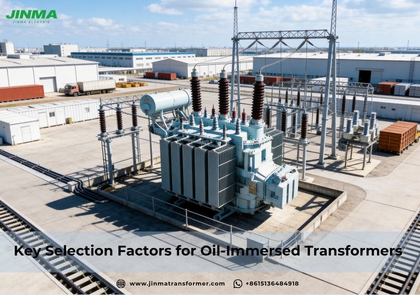
We should remember a core principle, the installation environment will directly affect the safe operation of the transformer, heat dissipation effect, daily operation and maintenance and compliance, selection time to synchronize the planning of the installation site, so that the site conditions and equipment performance match up. Installation to meet several core requirements, one is enough space, in addition to put down the transformer body, but also to leave the operation of ancillary equipment space, to ensure that the safety distance, does not affect the equipment heat dissipation and maintenance of the later maintenance; two is to comply with safety standards, outdoor oil-immersed transformer with oil storage facilities, indoor installation to ensure good ventilation, the whole process in accordance with the electrical and fire safety standards construction, grounding and lightning protection measures; three is to facilitate operation and maintenance measures; three is to facilitate the installation of the site, let the site conditions and equipment performance to match.
The third is to facilitate the operation and maintenance of transportation, leave a convenient access in advance, matching the size of the equipment footprint, so that the installation, maintenance and replacement of equipment are more economical. The actual planning can be flexibly adjusted, combined with the size of the transformer, the voltage level and cooling mode to arrange, high-voltage transformers need a greater safety distance, dry-type transformers require more stringent ventilation conditions, outdoor installation, but also to consider the impact of extreme weather, to ensure that the equipment can be a long-term stable work.
Evaluation of protection and safety requirements
Transformer belongs to the high-voltage electrical equipment, selection to strictly assess the safety and protection requirements, to ensure that the product meets the industry safety standards, comes with a perfect protection function, these safety standards are summarized after a long period of practice, covering the equipment from production to end of life of the whole cycle, is an important basis for safe operation.
There are a number of authoritative standards and certification bodies on the market, you can refer to as needed, UL will be responsible for product safety certification to ensure that the basic safety performance of the equipment; IEEE C57 is the core of the design and testing standards, a clear temperature rise, short-circuit withstand capacity and other key indicators; NEMA will standardize the consistency of product manufacturing and performance, the unity of the product quality on the market; ANSI is responsible for coordinating the industry standards to make the product more general and more authoritative; the product more general and more authoritative. ANSI is responsible for coordinating industry standards to make the products more general and authoritative; NEC will standardize the specific requirements for installation, clear grounding, overcurrent protection and other details to reduce the hidden dangers in the installation process.
Selection and daily operation and maintenance should grasp a few key points, according to the voltage level, cooling mode and use of the scene to select compliant products, such as high-voltage equipment in accordance with the IEEE C57 standard, indoor installation to comply with the NEC norms, to ensure that the equipment comes with overload, short-circuit, lightning and other protective functions, abnormalities can be stopped in a timely manner, the entire process of installation and maintenance should be carried out in accordance with the relevant standards, to ensure the safety of long-term operation.
Understanding the applicable transformer standards
In addition to safety standards, energy-efficiency standards is also a key reference for selection, related to the process of energy waste in the electricity, operating costs and project compliance, energy saving and emission reduction requirements of strict areas, to prioritize the selection of energy-efficiency standards to ensure that the project meets the local regulations.
Typical standards, the U.S. DOE based on the EPCA energy-saving transformer standards are mandatory requirements, no-load loss, load loss of these key parameters to do the limit, the lower the value of the loss of equipment, the level of energy efficiency and long-term economic performance will be better. Manufacturers need to assume the corresponding responsibility, through comprehensive testing and certification to ensure that the product meets the standard, and constantly optimize the design and production process; regulatory authorities will do a good job in monitoring and auditing, random sampling and the issuance of certificates to ensure that the market can supply high-efficiency products. As a buyer, you should prioritize the latest energy-efficiency models when selecting products, balance the upfront procurement costs and long-term energy-saving benefits, regularly monitor the operational performance of the equipment, and deal with any anomalies in a timely manner in order to maintain the efficient operation of the equipment and comply with the requirements of the law.
Considering future maintenance and reliability
The service life of transformers is on the long side, and most of the working environments are complex, so the reliability of the equipment will directly affect the stable operation of the project, however, the difficulty of fault data collection and the insufficient number of available samples will bring a lot of challenges to the reliability assessment. Bayesian method can come in handy in small sample scenarios, through this method to assess the probability of failure, the core idea is to combine the a priori probability and the newly collected fault data, update the posterior probability, the specific steps are divided into the construction of statistical models of the failure to determine the a priori distribution, and then combined with the likelihood function to calculate the posterior distribution.
When the a posteriori distribution is more complex, the MCMC method can be used to assist in the calculation, through the random sampling method of solving, constructing and matching the target distribution of Markov chain, generating samples to check the convergence, and then calculate the probability of failure, reliability and other key indicators. The practical value of doing so is obvious, can accurately assess the reliability of the equipment, pre-judge the risk of failure, for the selection of decision-making and maintenance plans to provide a reference to extend the service life of the equipment, reduce the cost of operation and maintenance process investment.
Cooperation with experienced transformer manufacturers
Selection of experienced, reliable transformer manufacturers to cooperate, is to ensure that the selection of scientific, product quality to meet the standards of the important premise of quality manufacturers not only to provide products to meet the needs of the project, but also to bring professional technical support and perfect after-sales service, and effectively avoid all kinds of risks in the selection and operation process.
Selection of manufacturers to focus on five core dimensions to ensure that the cooperation is compliant and long-lasting, one is the reputation and quality, there is a complete quality control system to ensure that the product performance is stable, quality uniformity; the second is the ability to supply products, not only to provide standard models of products, but also to undertake customized needs, rapid response to design changes in the requirements of the third is the production capacity, not only to meet the supply needs of the project at the moment, but also with the future.
Third, the production capacity, not only to meet the current project supply needs, but also with future expansion plans to ensure on-time delivery;
Fourth, local service support, professional local engineering team, the whole process of docking design, selection, operation and maintenance services; Fifth, the financial situation, the stable operation of funds, can independently control the production process, to ensure the stability of long-term cooperation.
Here can be an example, Triad Magnetics This manufacturer has been the quality of the core position, can provide standard and customized transformer products, production capacity and timely delivery, there are professional local team to provide full service, the financial situation is also very stable, can guarantee the quality of products and services. In-depth cooperation with high-quality manufacturers, not only can get a good product with strong suitability, but also with the manufacturer’s professional experience to optimize the selection program to avoid all kinds of risks, while enjoying the perfect after-sales and technical support for the long-term stable operation of the transformer to provide strong support.
Summarize
Transformer selection is a systematic and rigorous process, which requires comprehensive consideration of eight dimensions: project power demand, transformer type, installation environment, safety standards, application scenarios, energy-efficiency requirements, maintenance reliability and manufacturer selection, combined with the actual situation of the project, to make scientific decisions. Only by accurately matching the project demand, can we choose the right transformer, realize the project’s high efficiency, safety, energy saving, long-term operation, reduce long-term operating costs, and lay a solid foundation for the success of the project.