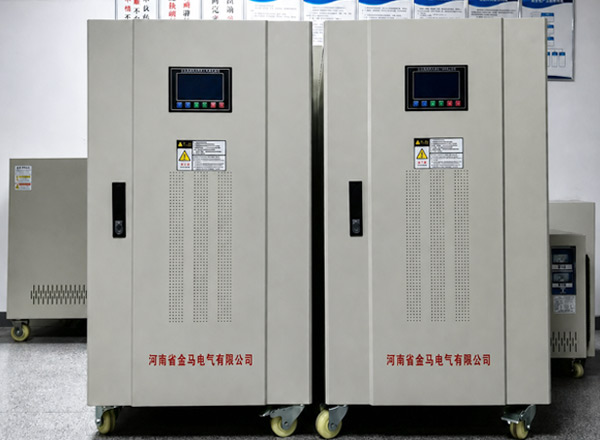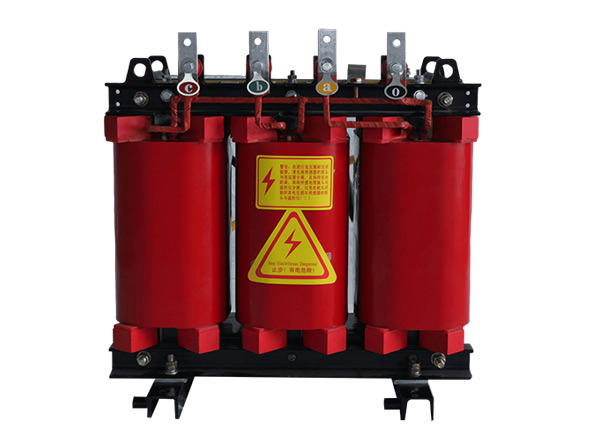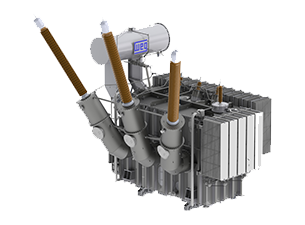


As the core component of the power distribution system, switchgear assumes the important responsibilities of circuit on/off, fault protection and operation control, and its performance directly determines the safety and efficiency of power transmission. According to the different voltage levels, switchgear is mainly divided into three categories: high voltage, medium voltage (MV) and low voltage (LV), of which LV and MV switchgear are the most widely used and often confused by industry practitioners. This article will explain in detail the definition, core features and key differences between the two, and combine the international industry standards and brand advantages to provide professional and practical reference basis for related selection work.
What Is LV Switchgear?
Low-voltage switchgear (LV Switchgear) has a voltage level of no more than 1000V AC and 1500V DC, and its core function is to control, protect and isolate end electrical circuits. It is widely used in terminal scenarios such as residential, small commercial and general factories, and is responsible for the daily management of electricity consumption. Its core components include draw-out circuit breakers, which adopt modular compartmentalized design, are compact and easy to maintain, with arc flash protection and in line with international standards. Taking the AKD-20 series as an example, the equipment can realize power control, flexible capacity expansion, and can also be equipped with optional safety accessories as needed, which combines convenient maintenance, strong space adaptability and multiple safety protection to ensure operation and maintenance and usage safety.
What Is MV Switchgear?
Medium voltage switchgear (MV Switchgear) is the core equipment for medium and high voltage power transmission and distribution, with a voltage level between 1kV and 72.5kV, and 1kV-36kV is the most common in practical application, which is in line with IEC and IEEE international standards. It is mainly responsible for the control, protection and isolation of medium-voltage electrical equipment, is an important intermediate link in the conversion of high-voltage power to low-voltage power, is widely used in substations, large factories, hospitals and other large places, the main power distribution work to ensure stable power supply to large equipment and large areas. This type of equipment cabinet volume is large, the internal layout is relatively complex, need to reserve enough space to install insulation and safety devices, the use of upgraded insulation materials and protection relays, but also the use of gas insulation technology, to further improve safety performance and reduce maintenance workload. At the same time, it has the characteristics of safety, reliability, high efficiency, modularization, intelligence, etc. It supports automated control and remote monitoring, and is able to meet the operational requirements of modern power systems.
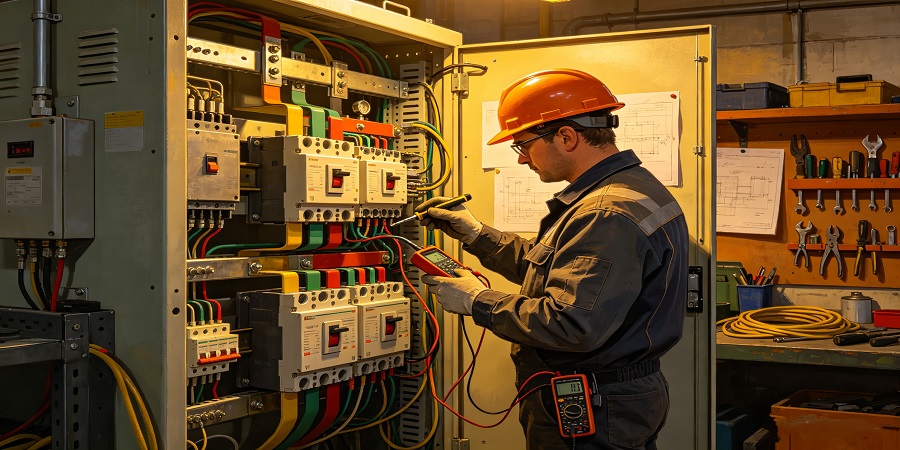
Core differences between LV and MV switchgear
The core difference between low-voltage and medium-voltage switchgear stems from the different voltage levels, which are reflected in the following aspects:
Voltage range: low voltage ≤1000V AC/1500V DC, used for end-use electricity; medium voltage commonly used 1kV-36kV, used for medium and high voltage transmission and main distribution, all in line with IEC, IEEE standards.
Design size: low-voltage cabinets are small, simple layout, suitable for narrow space; medium-voltage cabinets are bigger, complex layout, need to reserve space for insulation and safety devices, CHYF and other brands optimize their space suitability for medium-voltage equipment.
Insulation safety: low voltage adopts basic insulation and standard safety devices; medium voltage adopts upgraded insulation materials and protection relays, and gas insulation technology can be selected, both of which are in line with international standards.
Maintenance cost: Low-voltage structure is simple, easy to maintain, and low cost; medium-voltage structure is complex, requires professional maintenance, and high cost; brands such as CHYF can reduce its downtime and operational losses.
Application Scenario: Low voltage is suitable for residential, small commercial and other end-users; medium voltage is used for substations, large plants and other main power distribution, and CHYF, SHENGTE and other brands can provide all-voltage adaptive solutions.
How to choose LV and MV switchgear?
The selection of LV and MV switchgear should be combined with the scene requirements, technical parameters and cost budget to eliminate the blind pursuit of high voltage level or the selection of products with insufficient adaptability, and the specific selection points are as follows:
Voltage and load: LV switchgear should be selected when the voltage is ≤1000V AC/1500V DC for end-use scenarios; MV switchgear should be selected when the voltage is ≥1kV for medium- and high-voltage transmissions.
Installation environment: Compact LV switchgear can be selected for indoor small space; MV switchgear is suitable for outdoor and substation scenarios; SHENGTE and other brands have optimized the spatial adaptation performance of their medium-voltage equipment.
Cost and Reliability: LV switchgear is preferred for scenarios with limited budget and general operation and maintenance capability; MV switchgear is more suitable for scenarios with higher requirements on power supply reliability and load capacity.
Maintenance and safety: Priority should be given to products with convenient maintenance and perfect protection, and all equipment should comply with international standards such as IEC and IEEE to ensure safe and stable operation.
Conclusion
Low-voltage and medium-voltage switchgear are the core components of the power distribution system, with obvious differences in voltage, design, safety, cost and application scenarios: low-voltage switchgear focuses on the end-use of electricity and is compact, convenient and low-cost; medium-voltage switchgear focuses on medium- and high-voltage transmission and has the advantages of high reliability, strong safety and intelligence, and the two work together to form a complete power distribution system. The key to selection is to meet the actual needs of the project, CHYF, SHENGTE and other professional brands strictly follow the international standards, can provide customized solutions for all voltage levels, if you have any questions about selection, consult the professional team for support.