

Switchgear is the core of the power system, assuming the functions of power control, protection and isolation, and the insulation method is the key to its design and selection, which directly affects the equipment structure, cost, operation and maintenance, and environmental impact.
With the advancement of urbanization, grid intelligence and sustainable development, AIS and GIS have become the mainstream choices for high-voltage and medium-voltage power systems, with significant differences in technology and applicable scenarios, and the rationality of selection is directly related to project cost and grid stability.
This article will comprehensively compare the working principle, core features, advantages and disadvantages, application scenarios and cost differences of AIS and GIS, and sort out the key factors for selection, so as to help electric power engineers, project planners and industry practitioners to make scientific decisions, and at the same time, interpret the future development trend of switchgear technology.
What Is Air-Insulated Switchgear (AIS)?
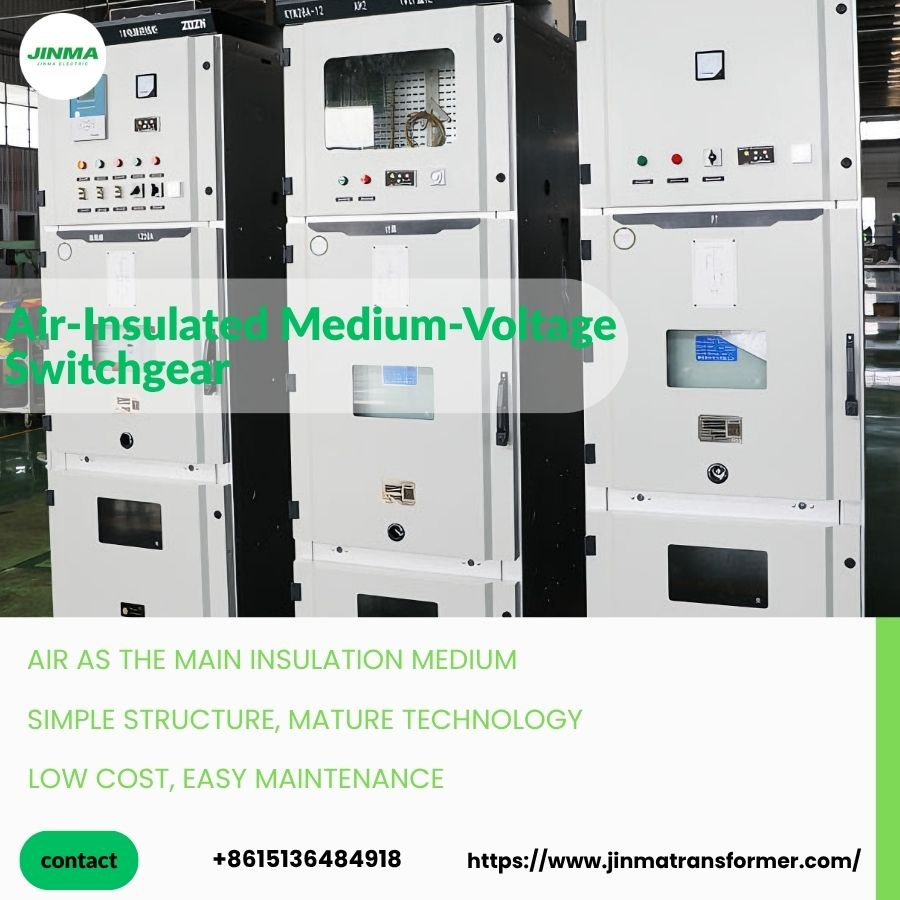
Air-insulated switchgear (AIS) uses natural atmospheric air as the core insulating medium. Relying on the insulating properties of air, AIS realizes effective isolation between live components and grounded parts, as well as between live components, thus guaranteeing the insulating safety of the equipment.
In view of the relatively low insulation strength of air, AIS needs to reserve sufficient air gaps between the charged components, so as to avoid insulation breakdown under normal operation and over-voltage conditions, and to ensure the stable and reliable operation of the power system.
Features of AIS
- Open design: Most of the live components adopt open or metal armored structure, without sealed shell, the components are exposed to the natural environment, which is easy for operation and maintenance personnel to observe, convenient contact and efficient maintenance, and reduces the threshold of operation and maintenance operation.
- Large gap requirement: In order to ensure that the insulation performance is up to standard, sufficient air gaps need to be reserved between the charged components and between the components and the grounding part, which results in a large overall volume of the equipment and certain requirements on installation space.
- Flexible installation scenarios: Outdoor installation is the core application scenario, while it can be flexibly deployed in indoor controlled environments according to the actual engineering requirements, which can be adapted to a variety of different climatic conditions and is highly adaptable.
- Flexible and expandable structure: Adopting modularized design architecture, it can be flexibly added or adjusted according to the expansion needs of the power system, with excellent expandability performance, and can be better adapted to the system upgrade needs in the later stage.
Advantages of AIS Substations
- Low initial cost: AIS has a simple design, the cost of steel, porcelain insulators and other materials is friendly, and the manufacturing process is mature and perfect, the overall initial investment is 20%-40% lower than that of GIS, which is the preferred option for budget-sensitive projects.
- Easy Maintenance: The open design makes the equipment components easy to access and inspect, without the need for specialized sealing equipment and gas management technology, O&M personnel can quickly detect hidden problems through visual inspection, and component maintenance and replacement is convenient and efficient, without the need for special operating skills.
- No environmental hazards: natural air is used as the insulation medium, no greenhouse gases or harmful chemicals are used, no direct environmental pollution, which is in line with the concept of sustainable development, and there is no potential risk of gas leakage.
- Strong adaptability: The optimized design of AIS can adapt to a variety of harsh environments such as extreme temperatures, high humidity, strong rainfall, etc., and can still maintain stable and reliable operation in rural areas, suburbs and other areas with complex environmental conditions.
Disadvantages of AIS
- Large footprint: limited by air insulation characteristics, AIS needs to reserve sufficient air gap to ensure insulation safety, resulting in the overall volume of the equipment is huge, the footprint is much larger than the GIS, the demand for land resources is high, and it is not suitable for installation scenarios with tight space.
- Susceptible to environmental interference: components exposed to the natural environment, vulnerable to dust, humidity, pollutants, salt spray and other external factors of erosion, which may lead to insulation performance degradation, increase the risk of flashover failure, additional configuration of protective measures to ensure operational safety.
- High maintenance frequency: affected by environmental factors, AIS needs to carry out regular cleaning, inspection and maintenance work (usually every 1-2 years to carry out a comprehensive inspection), the long-term accumulation of operation and maintenance costs are relatively high.
- Relative lack of safety: the open structure leads to a higher risk of personnel contacting energized components, and is prone to short-circuit faults caused by birds, rodents and other wild animals mistakenly entering the equipment, and the incidence of arc-flash accidents is higher than that of GIS.
What is Gas Insulated Switchgear (GIS)?
Gas-insulated switchgear (GIS) uses sulfur hexafluoride (SF₆) gas as the main insulating medium. SF₆ gas has excellent dielectric strength (three times that of air) and arc extinguishing properties, which can effectively isolate energized components and quickly extinguish electric arcs.
GIS seals all core components (circuit breakers, disconnect switches, busbars, etc.) in a metal casing, which is filled with SF₆ gas at a certain pressure to form a closed insulating environment and ensure stable operation of the equipment under various working conditions.
During the working process, when a power system fault occurs, the circuit breaker contacts separate to produce an arc, SF₆ gas through the valve quickly into the arc area, absorbing free electrons in the arc to form uncharged ions, so as to quickly extinguish the arc, cut off the fault current, and protect the safety of the power system.
Core Features of GIS
- Compact sealing design: all energized components are sealed inside the metal casing, the overall structure is compact and regular, the volume is much smaller than the AIS, which can effectively save the installation space, and the footprint is reduced by more than 90% compared with the AIS, which can be adapted to the space-constrained scenarios.
- High insulation strength: SF₆ gas has excellent insulation properties, and its insulation strength is much higher than that of air, which can significantly reduce the installation gap between components, thus realizing the miniaturization of the equipment design, taking into account the performance and space utilization.
- Diversified installation scenarios: highly adaptable, suitable for indoor, underground, offshore platforms and other space-constrained scenarios, as well as stable application in outdoor areas with harsh environments, such as coasts, deserts, and high-pollution, with outstanding anti-interference capability.
- Factory prefabricated modularization: GIS components are prefabricated, commissioned and tested in the factory, and can be transported to the site directly after leaving the factory, and can be put into use after completing the installation and fixing, line connection and SF₆ gas charging, which greatly improves the site installation efficiency and shortens the construction period.
Advantages of GIS
- High space utilization rate: Adopting compact sealed structure design, GIS occupies only 10%-20% of the area of AIS, which can significantly save land resources, especially suitable for substations and industrial plants where space resources are tight in the process of urbanization, effectively solving the problem of site constraints.
- Excellent operational reliability: The closed structure can effectively isolate the dust, humidity, pollutants and other external environmental factors, slow aging of components, low failure rate, high annual operational reliability, while avoiding equipment failures caused by wild animals entering by mistake.
- Economical operation and maintenance costs: SF₆ gas is chemically stable, the equipment has excellent sealing performance, the maintenance cycle is greatly extended, usually every 5-10 years to carry out a comprehensive maintenance, part of the components can be realized “lifelong sealing”, long-term operation and maintenance costs are significantly reduced.
- High operational safety: the fully sealed structure can completely avoid direct contact with the charged components, significantly reducing the probability of arc flash accidents, and SF₆ gas has the characteristics of non-flammable and non-explosive, further building a solid line of defense for equipment operation safety.
- Strong adaptability to harsh environments: relying on the closed structure, GIS can operate stably in various harsh environments such as coastal (salt spray), desert (sand and dust), high humidity, etc., and the insulation performance is not affected by changes in the external environment, which makes the adaptability performance outstanding.
Disadvantages of GIS
- High initial cost: GIS has high design complexity, stringent requirements for manufacturing process precision and sealing technology, and requires supporting SF₆ gas treatment equipment, so its initial investment is 10%-40% higher than that of AIS, which is a high threshold for the initial project budget.
- Environmental hazards: SF₆ gas is a potent greenhouse gas with a global warming potential (GWP) as high as 23,500 times that of carbon dioxide, and once leaked, it will cause serious damage to the ecological environment, and the process of recovering and treating SF₆ gas is complicated and difficult.
- Difficulty in installation and maintenance: GIS requires extremely high sealing performance, and the installation process needs to be equipped with a professional technical team and special equipment; maintenance needs to be completed first SF₆ gas recovery, overhaul and then re-filling, which is a cumbersome process, demanding on the professional skills of operation and maintenance personnel, and the maintenance cost is on the high side.
- Poor expandability: limited by the modular seal design, later expansion requires the addition of new seal modules with matching specifications, and the expansion process may need to interrupt the normal operation of the existing equipment, which is not only difficult to operate, but also increases the additional expansion costs.
AIS vs GIS: A Quick Comparison of Core Differences
The core differences between AIS and GIS are reflected in the insulation medium, structure size, cost and other key dimensions: AIS is insulated by atmospheric air, while GIS is insulated by SF₆ gas or a new environmentally friendly gas, sealed in a metal casing, with better insulation. Volume and footprint: AIS is insulated by atmospheric air, while GIS is insulated by SF₆ gas or a new environmentally friendly gas, sealed in a metal casing, with better insulation performance.
- Volume and floor space: AIS needs to reserve a large air gap, huge volume and wide area; GIS relies on the high insulation of SF₆ gas, compact structure, floor space is only 10-20% of AIS, saving land resources. Cost: The initial investment of AIS is lower than that of GIS, and the cost of GIS is lower than that of GIS.
- Cost: The initial investment of AIS is 20%-40% lower than that of GIS, which is suitable for budget-sensitive projects, but the long-term operation and maintenance costs are high; the initial investment of GIS is 10%-40% higher, but the maintenance frequency is low, and the cost performance is better in the whole life cycle. Maintenance: The open design and maintenance of AIS is widely used.
- Maintenance: AIS open design is easy to maintain, no professional equipment, but need to be fully inspected every 1-2 years; GIS maintenance is complex, need professional technology, maintenance cycle is 5-10 years, some components can be “sealed for life”.
- Reliability: AIS components are exposed to the natural environment and have a high failure rate; GIS is designed to be airtight and isolated from external interference, with fewer failures, higher annual reliability and less susceptible to wildlife.
- Environmental impact: AIS has no greenhouse gas emissions, environmental protection but occupies a wide area; GIS has SF₆ gas leakage potential, occupies a small area, and the industry is currently promoting SF₆-free environmentally friendly alternatives.
- Installation complexity: AIS on-site assembly is simple and has low technical requirements; GIS needs factory prefabrication and on-site gas charging, which has high technical requirements and complex processes.
- Expandability: AIS modular design, expansion flexibility and does not affect the existing operation; GIS expansion needs to match the sealing module, may interrupt the operation, difficult and costly.
- Applicable environment: AIS is suitable for outdoor, rural and other areas with sufficient space and clean environment; GIS is suitable for indoor, urban, coastal and other areas with tight space or harsh environment.
Performance Comparison
Reliability and Security
In terms of reliability, GIS has significant advantages: its airtight structure isolates the interference of the external environment, the insulation and arc extinguishing performance of SF₆ gas is stable, the incidence of equipment failure is low, and the average annual trouble-free operation time is long, which is especially suitable for scenarios with high requirements for electric power reliability (such as urban power grids and data centers).
On the other hand, the components of AIS are exposed to the natural environment and are easily affected by dust, humidity, pollution, etc. The insulation performance is prone to degradation, with a relatively high incidence of failures, and short circuits may be caused by the accidental entry of wild animals.
In terms of safety, the fully sealed design of GIS avoids direct contact with energized components, the probability of arc-flash accidents is extremely low, and SF₆ gas is non-flammable and non-explosive, which further enhances operational safety; the open structure of AIS makes it risky for personnel to contact energized components, and the probability of arc-flash accidents is higher than that of GIS, so additional safety protection measures are required.
Environmental Impact
AIS uses air as the insulating medium, does not use any harmful gases, has no greenhouse gas emissions, and has no direct pollution to the environment, making it a more environmentally friendly choice; however, AIS occupies a large area, and large-scale installation may lead to indirect environmental impacts such as waste of land resources and destruction of vegetation.
The core environmental hazard of GIS lies in SF₆ gas: SF₆ is a potent greenhouse gas, and although the equipment has good sealing performance, leakage may occur in long-term operation, and the gas recovery and treatment is difficult, which is not in line with the global low-carbon development trend.
Currently, the industry is developing SF₆-free environmentally friendly gas alternatives (e.g., dry air, gas mixtures) to reduce the environmental impact of GIS.
Service Life and Durability
The service life of an AIS is usually 30-40 years, and its durability is mainly affected by environmental factors. Components are exposed to the external environment and are prone to corrosion and aging, requiring regular maintenance and replacement of components to ensure service life; if not properly maintained, service life may be shortened.
The service life of GIS is longer, usually 40-50 years: its airtight structure makes the internal components not eroded by the external environment, the stability of SF₆ gas is strong, the aging speed of the components is slow, and the maintenance frequency is low, the core components can be kept in a good condition for a long time; only need to regularly check the sealing performance and gas status, to ensure the long-term stable operation of the equipment.
Application Scenarios of AIS and GIS
Common Application Scenarios of AIS
With the advantages of low initial cost, easy maintenance and strong scalability, AIS is mainly used in the scenarios with sufficient space, sensitive budget and relatively clean environment. Common applications include: Rural and suburban substations: land, land, land, land, land, land, land, land, land, land, and land:
- Rural and suburban substations: with abundant land resources, limited project budgets, and relatively simple operation and maintenance conditions, AIS is suitable for installation and use, giving full play to its advantages of low cost and easy operation and maintenance.
- Power plants and large industrial plants: with sufficient installation space and flexible expansion needs, the O&M team can rely on the open design of AIS to quickly carry out maintenance operations and ensure stable operation of the equipment.
- Airports, railway stations, shopping centers and other large public buildings: sufficient indoor and outdoor installation space, the project is sensitive to the initial investment cost, and requires convenient and efficient operation and maintenance services, AIS can accurately match such needs.
- Oil, natural gas, mining and other industrial areas: mostly outdoor installation scenarios, plenty of space, and the environment and climate are complex, AIS is highly adaptable to effectively deal with various types of harsh working conditions, to ensure the stability of power supply.
Preferred Application Scenarios for GIS
By virtue of its compactness, reliability, and adaptability to harsh environments, GIS is mainly used in scenes with tight space, high reliability requirements, and complex environmental conditions, and common applications include:
- City center substations, underground substations: land resources are scarce and tight, the requirements for footprint control are strict, and such scenes have a very high demand for the reliability of power supply, so the compactness and high reliability of GIS can be accurately matched.
- Offshore platforms, offshore substations: located in harsh environments, often facing high salt spray, high humidity and other erosion, need to be equipped with airtight, corrosion-resistant equipment, and the platform space is limited, GIS sealing design and compact size can be a perfect match.
- Data centers, subway stations: tight installation space, and the continuity of the power supply requirements are extremely high, do not allow frequent failures and operation and maintenance downtime, the high reliability of the GIS low failure rate to meet the needs of such scenarios.
- Coastal, desert, highly polluted areas: harsh environmental conditions, the insulation performance of AIS is susceptible to the influence of external factors and attenuation, the fully enclosed design of GIS can effectively isolate all kinds of interference, to protect the stable operation of the equipment.
- High-voltage direct current (HVDC) terminal substations, renewable energy grid-connected facilities: the reliability and operational stability of the equipment are demanding, GIS can be adapted to such high-end application scenarios by virtue of its excellent sealing performance and operational performance.
Cost Analysis: AIS vs GIS
Initial Investment
AIS has an obvious advantage in terms of initial investment: AIS has a simple design, low material costs (mainly steel, porcelain insulators), mature manufacturing process, and simple installation, without specialized gas treatment equipment and sealing technology, the initial investment is 20%-40% lower than GIS. For projects with limited budget and sufficient space, AIS is a more economical initial choice.
GIS has a higher initial investment: it requires high-precision manufacturing process, sealing technology, as well as SF₆ gas purchasing and filling equipment, and the components are mostly prefabricated in factories, and the transportation and installation costs are relatively high, so the initial investment is 10-40% higher than that of AIS. However, in urban areas where space is tight and land costs are high, the land resources saved by GIS can indirectly offset part of the initial investment.
Total Life Cycle Cost (TCO)
TCO covers initial investment, operation and maintenance cost, downtime cost, expansion cost, etc. The differences between the two are mainly reflected in the following aspects:
- AIS: low initial investment, but high O&M costs (high maintenance frequency, regular cleaning, inspection, replacement of components), and high downtime costs (high failure rate, affecting power supply); low expansion costs, and the flexibility to add components.
- GIS: high initial investment, but low O&M cost (low maintenance frequency, no need to frequently check and replace components), low downtime cost (low failure rate, strong continuity of power supply); high expansion cost, high difficulty and high cost of later expansion.
For projects with a long operation cycle (more than 15 years) and high reliability requirements, the full life cycle cost of GIS is instead lower; while for projects with a short operation cycle, sensitive budgets, and convenient maintenance conditions, the full life cycle cost of AIS is more advantageous.
Return on Investment (ROI) Consideration
The ROI of AIS is fast: the initial investment is low, and there is no need for a large amount of O&M investment in the short term, which is suitable for projects with short ROI cycle requirements and limited budgets (e.g., rural substations, small industrial plants).
The ROI of GIS is reflected in the long term: although the initial investment is high, the long-term operation and maintenance costs are low, the risk of failure is small, which can reduce the economic losses caused by power interruption, especially suitable for space constraints, power interruption loss scenarios (such as urban power grids, data centers, subways).
When the project operation cycle exceeds 15-20 years, the ROI of GIS will exceed that of AIS, making it a more economical choice.
Environmental and Regulatory Considerations
With the popularization of the global concept of low-carbon development, the use of SF₆ gas is subject to increasingly stringent regulatory restrictions.SF₆ is a potent greenhouse gas specified in the Kyoto Protocol, and its emissions are strictly controlled.Many countries and regions have introduced policies to limit the use of SF₆ gas, promoting SF ₆-free environmentally friendly alternatives are being developed and applied.
For AIS, with air as the insulating medium and no greenhouse gas emissions, it fully meets the requirements of environmental protection regulations, and there is no need to worry about the compliance risks caused by gas leakage and emissions; however, it is necessary to pay attention to the land use issues brought about by its large footprint, and an environmental assessment is required when installing it in ecologically sensitive areas.
For GIS, it is necessary to strictly comply with SF₆ gas management regulations, including gas filling, recycling, disposal and other aspects of the gas, to avoid gas leakage; at the same time, the industry is actively researching and developing new environmentally friendly gases (e.g., dry air, gas mixtures) to replace SF₆, the introduction of SF ₆-free GIS products to meet the requirements of environmental regulations and reduce environmental impact.
In the future, sustainable development will become the core trend of electric power infrastructure construction, and environmentally friendly switchgear (e.g., SF₆-free GIS, high-efficiency AIS) will become the mainstream of the industry. Enterprises need to give full consideration to the requirements of environmental protection regulations when selecting models, to avoid compliance risks.
Making the Right Choice: Which Is Better for You?
Core Decision-making Factors
Whether to choose AIS or GIS, you need to consider the following core factors, taking into account the specific needs of the project:
- Space availability: If the installation site space is tight (e.g., city centers, underground substations, offshore platforms, etc.), prioritize GIS; if the site space is sufficient (e.g., rural, suburban areas), then adapt to choose AIS.
- Budget constraints: If the initial project budget is limited, AIS is preferred; if more attention is paid to long-term operation cost control, and the initial budget is sufficient, it is recommended to prioritize the selection of GIS.
- Environmental conditions: If the installation environment is harsh (such as high salt spray, high pollution, high humidity areas), the choice of GIS is more advantageous; if the environment is clean and the climate is mild, AIS can meet the needs of use.
- Reliability requirements: high requirements for power supply continuity (such as data centers, metro and other scenarios), give priority to GIS; if the reliability requirements in general, and can accept a certain amount of downtime, the choice of AIS can be.
- Operation and maintenance capability: If the operation and maintenance team has limited technical level and maintenance conditions are convenient, AIS is the appropriate choice; if there is a professional operation and maintenance team and supporting equipment, GIS can be chosen.
- Expansion Demand: If there is frequent expansion demand in the future, choose AIS to be more flexible; if the expansion demand is less and higher expansion cost is acceptable, choose GIS.
- Environmental regulations: If there are strict restrictions on the use of SF₆ gas in the region, AIS or SF₆-free environmentally friendly GIS is preferred.
Decision Checklist
To help engineers and planners make quick decisions, the following is a simple decision checklist that can be checked on a project-by-project basis:
- Is the project installation site space limited? : If site space is scarce (e.g., city centers, underground substations, etc.), prioritize GIS; if site space is plentiful (e.g., rural, suburban areas), AIS is sufficient.
- Is the initial budget tight? AIS is preferred if the initial budget is limited (the initial investment is 20%-40% lower than that of GIS); GIS is preferred if the initial budget is sufficient and the long-term operation economy is important.
- Is the installation environment harsh? : If the installation environment is high salt fog, high pollution and other harsh scenes, give priority to GIS; if the environment is clean and the climate is mild, AIS can meet the actual use of demand.
- Does the power supply not allow frequent interruptions? If there is a high demand for continuity of power supply (e.g. subway, data center, etc.), GIS is preferred; if there is a high tolerance for power interruptions, AIS can be chosen.
- Does the operation and maintenance team have professional GIS operation and maintenance capability? If the operation and maintenance team has professional operation and maintenance capability and supporting equipment, GIS can be considered; if the operation and maintenance team has limited technical capability, AIS is preferred. Will there be frequent expansion in the future?
- Is there a need for frequent capacity expansion in the future? If there is a need for frequent expansion in the future, AIS is preferred (its expansion is flexible and convenient); if there is less need for expansion and a higher expansion cost is acceptable, GIS is preferred.
- Is there any restriction on the use of SF₆ gas in the region? If the region has strict control on the use of SF₆ gas, AIS or SF₆-free environmentally friendly GIS is preferred; if there is no relevant restriction and the focus is on the compactness and reliability of the equipment, traditional SF₆ GIS can be chosen.
Future Trends in Switchgear Technology
SF₆-free GIS Innovation
In order to respond to the requirements of environmental regulations and reduce environmental impact, SF₆-free GIS has become the core direction of the industry’s research and development.
At present, the industry has introduced environmentally friendly GIS products using dry air, nitrogen gas mixture, fluorinated ketone gas, etc. as insulation medium, whose insulation and arc extinguishing performance can be comparable to that of traditional SF₆ GIS, and with no greenhouse gas emissions, which is in line with the trend of sustainable development.
In the future, SF₆-free GIS will gradually replace traditional SF₆ GIS and become the mainstream product in the field of GIS.
Integration of Digitalized Switchgear with Smart Grid
With the upgrading of smart grid, digitalization and intelligence have become the development trend of switchgear, and both AIS and GIS are in the process of transformation to digitalization, through the integration of sensors, Internet of Things (IoT) technology, to realize real-time monitoring of equipment operation status, fault early warning, remote operation and maintenance, and other functions, to improve the reliability of the equipment and the efficiency of operation and maintenance.
For example, digital GIS can monitor SF₆ gas pressure, temperature and other parameters in real time to detect gas leakage hazards in a timely manner; digital AIS can realize remote monitoring of component status and reduce on-site maintenance workload.
Compact Hybrid Solution
In order to take into account the advantages of AIS and GIS, the industry is developing compact hybrid switchgear (HGIS), whose core components (e.g., circuit breakers, disconnect switches) adopt the hermetic design of GIS, and the busbar adopts the air-insulated design of AIS, which saves the footprint and reduces the initial cost, and at the same time, it has the advantages of easy maintenance and high scalability, which is suitable for the projects with relatively tense space and medium budgets. It will become one of the important development directions of switchgear in the future.
Conclusion
AIS and GIS have no advantages and disadvantages, each has its own advantages and is suitable for different scenarios: AIS has low initial cost, easy maintenance and strong expandability, and is suitable for the scenarios with sufficient space, sensitive budget and clean environment; GIS has compact structure, high reliability, and is suitable for harsh environments, and is suitable for the scenarios with tense space and high requirements for power supply continuity.
Selection needs to be combined with project space, budget, environment and other core factors, comprehensive consideration of the full life cycle cost and return on investment; the future SF₆-free GIS, digital equipment and hybrid solutions will become mainstream, selection needs to pay attention to technology trends and choose the optimal solution in combination with the project requirements.