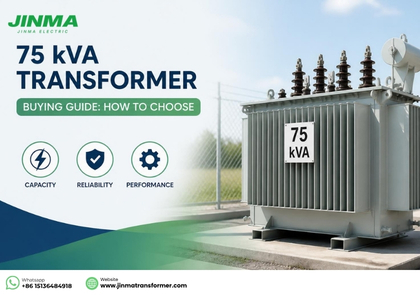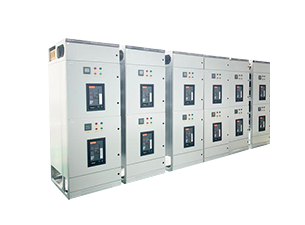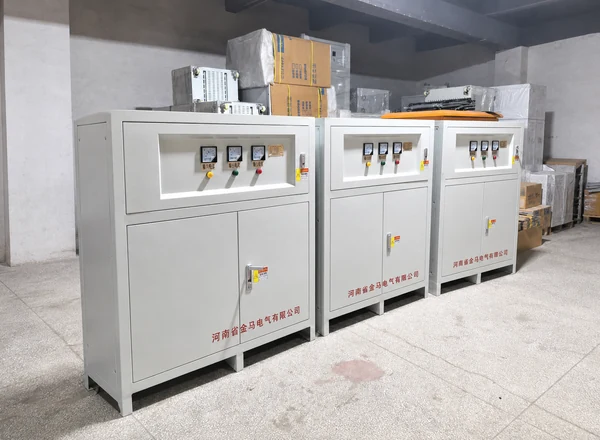


The green metal box commonly found in neighborhoods and along streets is an electrical transformer box, a metal cabinet that houses a transformer and serves the core purpose of converting high voltage power from the electrical system to low voltage power that is safe to use in homes and businesses.
What exactly is an electrical transformer box?
Why is it called a Pad-mounted transformer?
The core reason why an electrical transformer box is called“pad-mounted transformer” is because of the way it is mounted – it is usually fixed to a concrete base, which ensures the stability of the equipment.
Core meaning of the transformer box
Many people wonder why low-voltage electricity cannot be delivered directly to millions of homes. The answer is simple: the efficiency of low voltage power transmission over long distances is extremely low, resulting in large power losses that are neither economical nor practical.
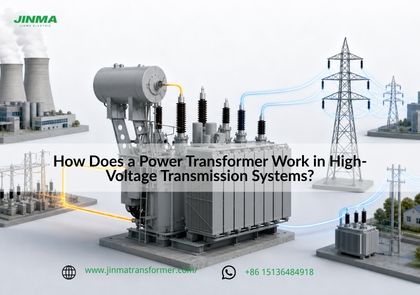
Power companies will first transmit power in the form of high-voltage power to residential communities and commercial districts, and then through the transformer box will be high-voltage power “downsizing”, converted into safe to use low-voltage power.
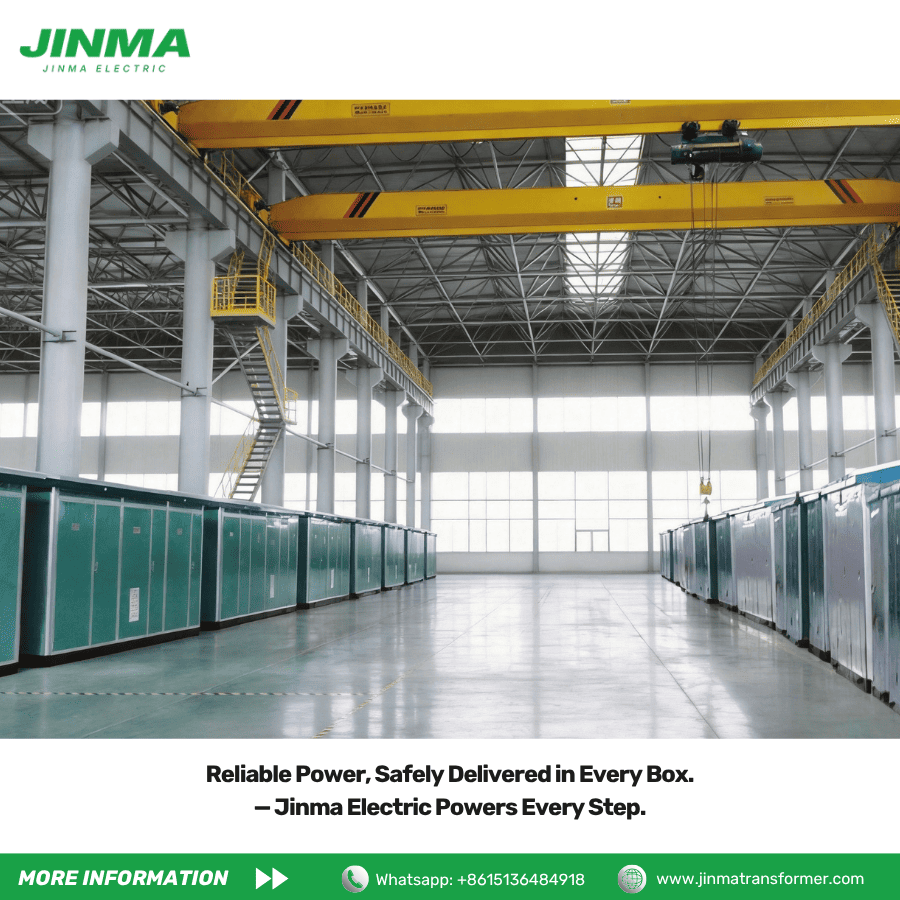
Principle of transformer box
The complete process of voltage conversion
The function of the electrical transformer box is to complete the conversion of high voltage electricity to low voltage electricity through the internal transformer, the whole process is divided into three simple steps:
The first step, high-voltage electricity through the underground cable into the transformer box; the second step, the transformer inside the box using the principle of electromagnetic induction, high-voltage electricity “step-down” to a safe range; the third step, after the step-down of the low-voltage power output, delivered to the home, business and other electricity terminals.
Voltage conversion principle
Many people on the “voltage conversion” feel abstract, we can use a simple analogy to understand: high-voltage electricity is like a high-pressure water pipe in the water, the pressure is too great, is not suitable for direct access to the family faucet; and the transformer box is like a “pressure-reducing valve”, high-pressure water to reduce the pressure into a suitable for home use. Pressure reduction, into an ordinary water pressure for home use.
This analogy can be visualized to reflect the principle of the transformer box – it is not to generate electricity, but to regulate the voltage of electricity, so that the power becomes safe to use.
Transformer box in the power system in the 4 big role
Role 1: to protect public safety
Transformer box using fully enclosed metal cabinet design, can be high-voltage equipment and the public completely isolated, to avoid accidental contact, close to high-voltage components and cause safety accidents, is to protect the public safety of electricity an important barrier.
Role 2: protection of core equipment
Transformer is the core component of power conversion, precision and fragile. Transformer box can effectively shield the wind and rain, dust, debris and other external environmental impact, while preventing external collision on the transformer caused by physical damage, to extend the service life of the equipment.
Role 3: enhance transmission efficiency
Transformer box exists, so that “high-voltage transmission, low-voltage use” mode can be realized, significantly reducing the loss of power transmission process.
Role 4: stabilize the voltage supply
Transformer box can adjust the output voltage through the internal components, to ensure that homes and businesses get a stable power supply, to avoid damage to electrical equipment due to over-voltage or under-voltage.
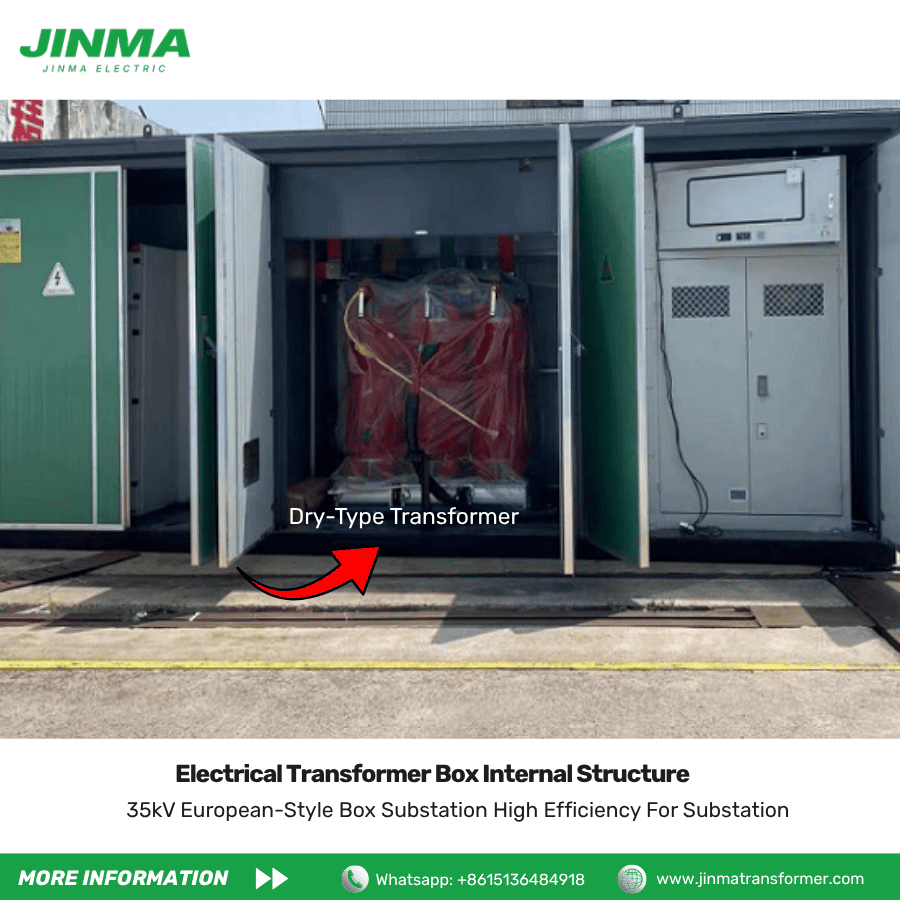
Internal components of the transformer box
The interior of the transformer box is a highly integrated system, each component works together to ensure the safety and stability of power conversion.
Core component: transformer
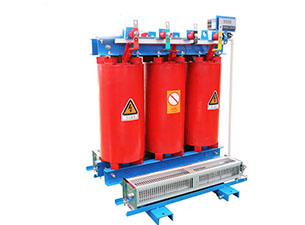
The transformer is the core component of the transformer box, which is essentially an electromagnetic device utilizing the principle of electromagnetic induction to realize voltage conversion, mainly composed of coils and cores.
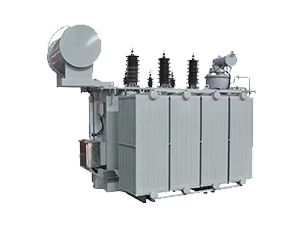
Most of the box-type transformers used in residential communities are of the oil-immersed design – where the windings and core of the transformer are completely submerged in mineral oil. In this design, mineral oil can not only play an insulating role to prevent short-circuiting of internal components, but also through natural convection to take away the heat generated by the operation of the equipment, to realize the function of heat dissipation and cooling, to ensure the long-term stable operation of the transformer.
Safety partition: high-voltage and low-voltage compartments
In order to maximize safety, the transformer box will be strictly divided into two independent compartments – high-voltage compartment and low-voltage compartment.
The high-voltage compartment is responsible for receiving high-voltage power from the power system, while the low-voltage compartment is responsible for outputting the low voltage power to the power terminals after voltage reduction. This physical separation can effectively prevent the interference between high voltage and low voltage power, and at the same time avoid the maintenance personnel to accidentally touch the high voltage components, is the important safety design of the transformer box.
Safety protection devices: fuses and lightning arresters
Fuses: Protecting the circuit
The role of the fuse is similar to that of a circuit breaker in a household circuit, and is mainly used to cope with extreme situations. When a short circuit occurs inside the transformer box, current overload, the fuse will quickly “blow”, cut off the circuit, prevent the fault from expanding, to protect the transformer and downstream electrical equipment, power lines.
Lightning arrester: resist voltage shock
Lightning arrester is the key equipment to ensure the safety of the transformer box, mainly used to cope with lightning strikes, power system fluctuations caused by transient high-voltage surge, it can be these transient high-voltage quickly into the ground, to avoid high-voltage shock damage to the transformer, to prevent the equipment failure caused by large-scale power outages.
Connection components: casing connector
The casing connector, often called “non-electrical front-end elbow” in the electric power industry, is a kind of insulated connector with anti-electrocution design. Its core role is to connect the underground cable with the transformer input and output terminals, not only to ensure the stability of power transmission, but also to prevent people from accidentally touching the electrified parts, to enhance the safety of the transformer box.
Types and parameters of transformer box
Capacity (kVA): determine the power supply range
Capacity is the core technical parameter of the transformer box, in kilovolt-amperes (kVA), representing the maximum power that can be safely delivered by the transformer box. The physical dimensions of a transformer box are usually proportional to the capacity – the larger the capacity, the larger the box volume.
Transformer boxes of different capacities are suitable for different scenarios: a small 25 kVA transformer box, which can usually only supply power to 2-3 households; a medium-sized 150 kVA transformer box, which can satisfy the power needs of a residential neighborhood or a small commercial plaza; and a large transformer box, with a capacity of up to several thousands of kVA, which is used in scenarios such as industrial parks and large commercial complexes.
Voltage level and number of phases
- Single-phase transformer box: residential housing
Single-phase transformer box is the most common type, mainly used in residential homes, the output voltage of 120/240 volts, can meet the electricity needs of ordinary families. This type of transformer box is small, usually installed in the corner of the residential neighborhood, does not take up too much space.
- Three-phase transformer box: industrial and commercial
Three-phase transformer boxes are larger in size, with an output voltage of 480 volts and above, and are mainly used in commercial buildings, factories, industrial parks and other scenarios. It can provide more stable and powerful power to meet the power needs of large machinery, central air conditioning and other high-power equipment.
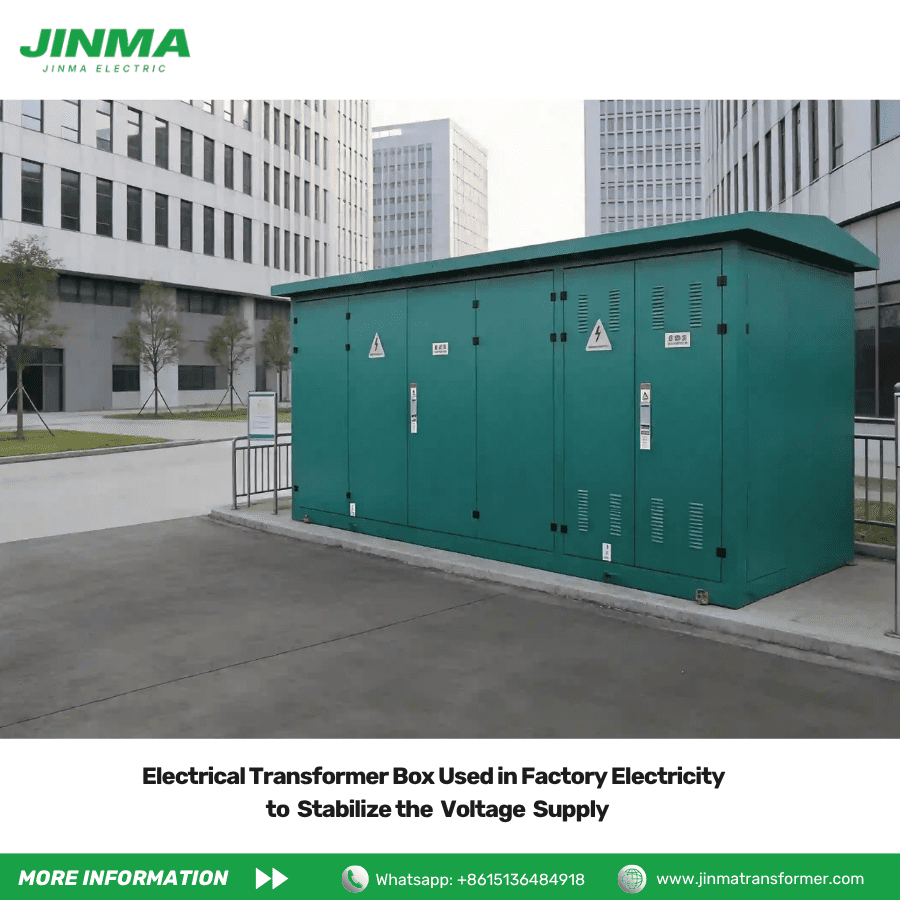
35kV European type box-type substation-Jinma Electric
Jinma Electric is a leading transformer manufacturer from China. 35kV European type box-type substation is a representative of high-end transformer box, which adopts the independent modular integrated design of high-voltage room, transformer room and low-voltage room. This product is built-in with Jinma S13/S15 series 35kV low-loss power transformers with high capacity, high overload and high protection.
Our box-type substation follows the IEC international standard and EU regulations, the insulation performance, safety protection, energy efficiency indexes are up to the level of the first-class European brands, and can be directly connected to the European 35kV medium voltage power grid.
The 35kV European box-type substations are used for upgrading substations in European cities, power distribution in large industrial bases, and grid connection of photovoltaic/wind power.
Jinma Electric transformer box technical parameters
| Item35kV European-style box | ParameterParameter |
| Rated Voltage | HV 35kV, LV 0.4kV/10kV (customizable) |
| Rated capacity | 1000kVA/1600kVA/2000kVA/2500kVA/3150kVA/4000kVA/5000kVA |
| Rated frequency | 50Hz/60Hz |
| Rated short-circuit breaking current | 20kA/25kA/31.5kA (customizable) |
| Protection grade | Enclosure IP54, can be customized IP55, meet the outdoor long-term operation |
| Cooling method | ONAN (oil-immersed self-cooling)/ONAF (oil-immersed air-cooling) |
| Applicable environment | Outdoor / Indoor, -30℃~+45℃, Altitude ≤3000m |
| Implementation standards | IEC 61330, IEC 60076, IEC 62271, EN 50588, CE, RoHS. |
| Core Features | IEC standardized design, 35kV high efficiency transformer integration, high capacity and high reliability, compatible with GIS switchgear. |
| Application scenario | Upgrading of substations in European cities, large-scale industrial power distribution, new energy grid connection, main power supply for commercial complexes |
Safety matters and routine maintenance of transformer boxes
Correct use specification and regular maintenance of transformer box can avoid the occurrence of safety accidents.
Observe warning signs and keep a safe distance
The outer shell of the transformer box is usually labeled with warning signs such as “High Voltage Danger” and “No Approach”, so no matter whether it is in operation or not, you should consciously keep a safe distance from it, and do not approach or watch it.
Strictly prohibit unauthorized operation, tamper box
Transformer box opening, repair, maintenance, must be operated by professional power staff, the general public is strictly prohibited to open the box without authorization, touch the internal components, or may lead to electric shock, equipment failure and other serious consequences.
Timely report damage
If you find that the transformer box shell is damaged, the line is exposed, there is a strange noise, odor, or oil leakage, smoke and other abnormalities, you should immediately contact the local power department or property, do not handle by yourself, to avoid the danger of expansion.
Regularly check the status of the transformer box
Electricity staff will regularly inspect the transformer box on site, check the integrity of the box shell, sealing, to ensure that the ventilation holes are not blocked, while observing the box whether there are abnormal vibration, rattling, and timely detection of potential problems.
FAQ about transformer box
Q1: Is it normal for the transformer box to hum occasionally?
Yes, it is normal. The low humming sound when the transformer box is running is generated by the vibration of the internal electromagnetic coil, which is a normal phenomenon of transformer operation, and there is no need to worry about it.
Need to be vigilant, if the humming sound suddenly become larger, sharper, or obvious beeping, popping sound, indicating that the transformer may be faulty, should promptly contact the power sector to investigate. This abnormal sound may originate from the core loose, winding short circuit, insulation aging and other problems.
Q2: How does the transformer box supply power?
Underground cables will deliver high voltage electricity to the transformer box, and after the transformer inside the box finishes its work of voltage reduction, low voltage electricity will be delivered to the distribution box of each household through underground cables. For household electricity, the voltage output from the transformer box is usually 120/240 volts, which is just enough to meet the needs of household appliances and lighting equipment; while enterprises and factories are supplied with higher specification low-voltage electricity by special transformer boxes.
Q3: How long is the service life of a transformer box? Do they need to be replaced?
Under normal maintenance, the service life of transformer box can reach 30-40 years or even longer. The Electricity Department conducts regular testing and evaluation of transformer boxes and will arrange for replacement once the equipment is found to be not working properly.
Q4: I live in an apartment building, why can’t I see the transformer box?
Buildings such as apartment buildings and commercial complexes often use larger capacity three-phase transformers, which are not installed outdoors, but are hidden in the basement electrical room, underground vault or equipment room of the building.
Q5: Can a transformer box be customized to meet my needs?
Yes, it can. Especially in industrial and commercial scenarios, where the demand for electricity is diverse, transformer boxes can be customized according to the actual capacity, voltage level, usage environment and other needs. Jinma Electric is a manufacturer of transformer boxes, and we can customize the rated voltage, short-circuit breaking current, protection level and other parameters according to customer needs. Contact us for a solution to fit your scenario!