

Ring Main Unit vs Conventional Switchgear: What’s the Difference?
In medium voltage (11kV-33kV) distribution networks, switchgear is the core of stable power transmission, which directly affects the reliability and efficiency of the distribution system. With urbanization, industrial upgrading and renewable energy development, the demand for compact and efficient power distribution is surging, and the difference between ring main unit (RMU) and conventional switchgear as mainstream equipment is often confused.
In this article, we will compare the core differences between the two from the definition, working principle and other aspects, to help readers select the type, and look forward to the future development trend of switchgear.
What is a Ring Main Unit (RMU)?
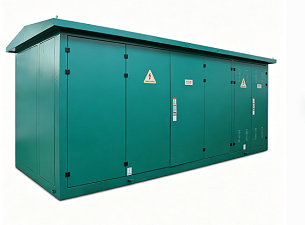
Ring Main Unit (RMU) is a key core component in medium-voltage (11kV-33kV) ring-shaped power distribution network. It is a kind of compact and fully-enclosed switchgear, which is mainly used for realizing efficient and reliable distribution of power.
Its core advantage lies in its redundant power supply capability, which can automatically switch the power supply path when a section of the grid fails, avoiding large-scale blackouts, and is therefore widely used in scenarios with high requirements for uninterrupted power supply, including urban areas, industrial parks, commercial buildings, and all kinds of critical infrastructures.
Core Components of Ring Mains Cabinets
Ring main unit is an integrated switchgear, which integrates a variety of key components to ensure the safe and stable operation of the power distribution system, mainly including:
- Load switch (LBS): Used for the safe opening and closing operation of circuits, ensuring the control of circuits under normal operating conditions, with safe and convenient operation, high efficiency and reliability.
- Circuit breaker: the core protection component, when the circuit short-circuit and other faults, can quickly cut off the fault current, effectively protect the equipment and power grid safety, to avoid the expansion of the fault.
- Fuse protection: specializing in circuit overload scenarios, can fuse and cut off the current in time to prevent overload damage to the power distribution equipment, to protect the stability of the system.
- Grounding switch: During the maintenance of equipment, it is used to ground the circuit reliably, build up a solid personal safety defense line for maintenance personnel, and prevent electrocution accidents from occurring.
How Does an RMU Work?
To understand the working principle of the ring main unit, first of all, we should clarify the structure of the ring distribution network in which it is located. Ring-shaped distribution network using closed-loop design, but in order to avoid generating loop current, normal operation will maintain a breakpoint.
The core advantage of this structure is redundancy, when a power supply path fails, the system can automatically switch the breakpoint location, through another path to continue power supply, to ensure uninterrupted power supply.
As a key node in the ring network, the ring cabinet is mainly responsible for the following tasks: it is not a monitoring device, but focuses on switching control and fault protection; cutting off faulty circuits in a timely manner to avoid the expansion of the fault;
controlling the operation of the circuit split and close to ensure the normal operation of the power grid; and maintaining the continuity of the ring network to ensure that the redundant power supply function is realized.
In actual installation, the ring main unit is usually divided into three parts: inlet cabinet, ring main unit and outlet cabinet:
- the inlet cabinet is responsible for receiving power from the superior substation or power grid;
- the ring main unitmaintains the continuity of the ring network, realizing the two-way flow of power;
- the outlet cabinet delivers power to downstream loads or transformers for orderly load distribution and redundant power supply.
Common Types of RMUs
According to the different insulation methods and structural characteristics, ring main units are mainly divided into the following four categories, which are suitable for different installation environments and needs:
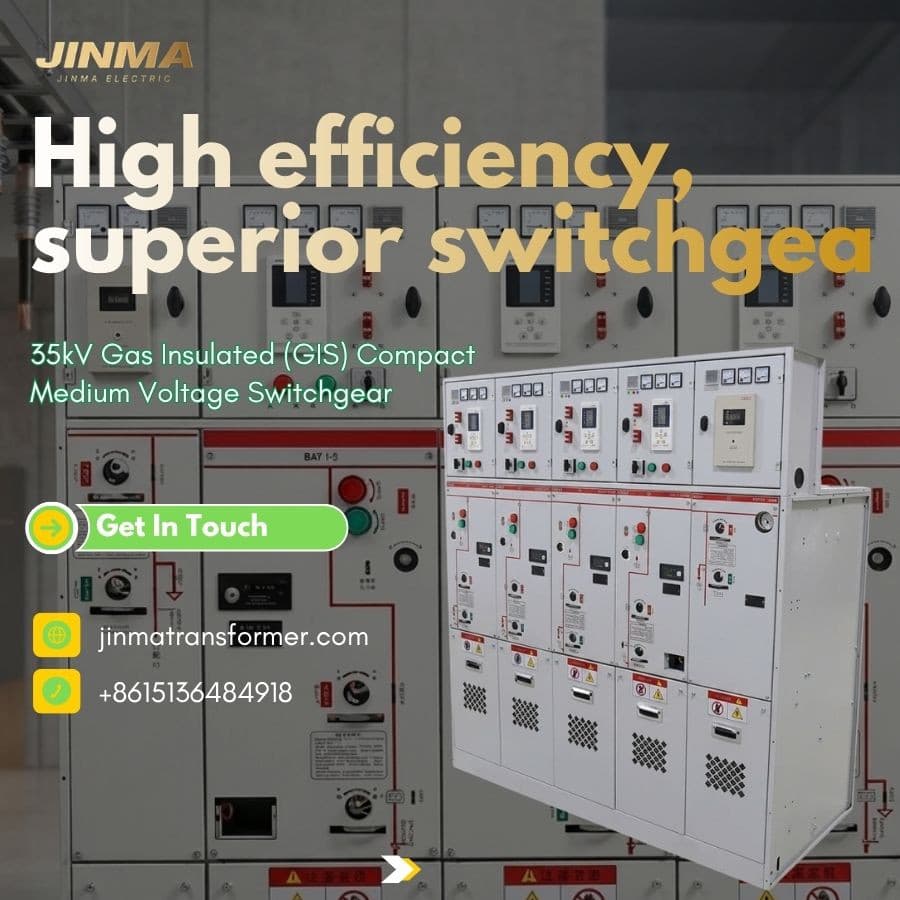
- Gas-insulated ring main unit: adopts SF6 gas as insulation medium, which has the advantages of high reliability and minimal maintenance, and is suitable for the scenarios with stringent requirements on equipment stability and restricted maintenance conditions.
- Air-insulated ring main unit: using air as insulation medium, simple structure, moderate cost, suitable for indoor installation scenarios, such as commercial buildings, small substations and so on.
- Compact Ring main unit: compact size, space-saving installation, especially suitable for urban areas, underground substations and other space-constrained scenarios, is the preferred equipment for urbanized power distribution.
- Modularized ring main unit: adopting modular structure design, it can be flexibly expanded and customized according to the actual demand, accurately adapting to the load growth and scenario changes, and convenient and efficient for capacity expansion in the later stage.
Applications of Ring Main Units
With its compact, reliable and low-maintenance features, ring main unit is widely used in many fields, becoming an important equipment of modern power distribution system:
- Urban power distribution field: as the core equipment of urban power grid, it is widely used in underground substations, high-rise buildings, shopping centers, airports, subway stations, railway stations and other densely populated and space-limited areas to ensure the stable supply of urban power, and maintenance will not affect the power supply in other areas.
- Industrial facilities: In manufacturing factories, processing plants and other industrial scenarios, ring mains cabinets are used to ensure the continuity of power in the production process, reduce production downtime due to power outages, and protect expensive production equipment, and their modular design can be adapted to the factory’s capacity expansion needs.
- Commercial buildings: In commercial scenarios such as office buildings, hotels, data centers, etc., ring mains cabinets can maximize building space savings by virtue of their compact size, and at the same time provide highly reliable power supply to meet the mission-critical needs of commercial operations and data centers with low maintenance costs.
- Renewable energy system: In solar power stations, wind farms, energy storage systems, microgrids and other scenarios, the ring main unithas bidirectional power supply capability, which can adapt to the fluctuation of renewable energy output, realize the efficient connection between new energy and the grid, and ensure the stable delivery of clean energy.
- Critical infrastructure: hospitals, sewage treatment plants, communication hubs and other critical infrastructure, the redundant power supply capability of the ring main unit ensures uninterrupted operation of the equipment, guaranteeing the normal development of public services and avoiding the serious consequences of power outages.
What is Conventional Switchgear?
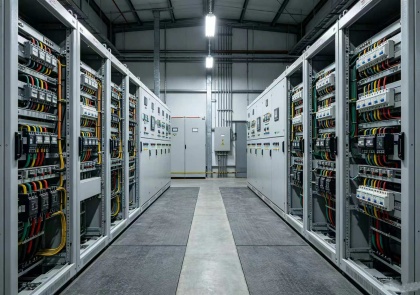
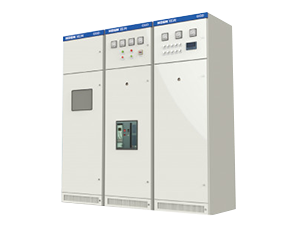
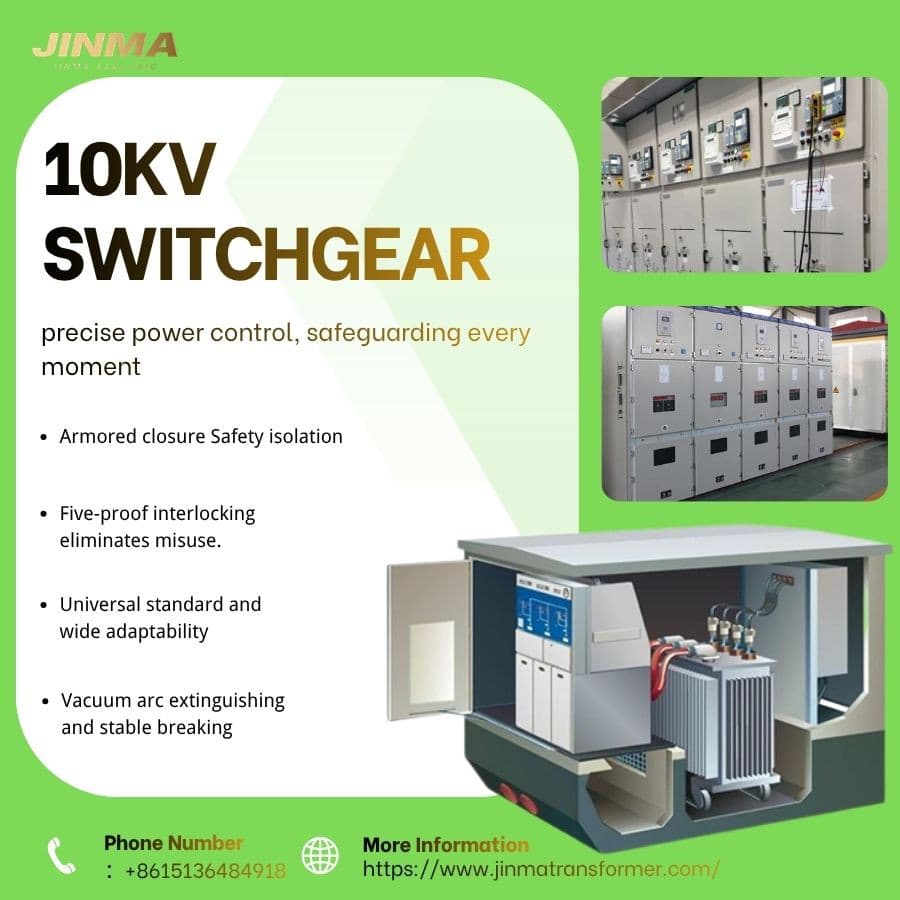
Conventional switchgear is a centralized, modular electrical equipment, mainly composed of circuit breakers, disconnect switches, fuses, relays and other components, with the core function of controlling, protecting and isolating electrical equipment, which is equivalent to the “traffic controller” of the power system.
Compared with the ring main unit, the conventional switchgear is larger in size, mainly used for heavy load distribution tasks, covering low voltage, medium voltage, high voltage and other voltage levels, widely used in various types of power systems, is the traditional core equipment for power distribution.
Main Classifications of Conventional Switchgear
Classification According to Voltage Level
According to different voltage levels, conventional switchgear can be divided into three categories, corresponding to different application scenarios:
- Low-voltage switchgear (≤1kV): mainly used in residential and light commercial scenarios, such as neighborhood distribution rooms and small stores, etc. Core components include molded case circuit breakers (MCCB), small circuit breakers (MCB), air circuit breakers (ACB), etc., which are used for controlling and protecting low-voltage circuits.
- Medium-voltage switchgear (1kV-36kV): used in industrial plants, distribution substations and other scenarios. Core components include vacuum circuit breakers (VCBs), gas-insulated switchgear (GIS), etc., which are used to undertake medium-voltage power distribution and protection tasks.
- High-voltage switchgear (>36kV): mainly used in power company substations, high-voltage transmission lines and other scenarios, mostly outdoor installation, using gas or high-pressure air as the insulation medium, to undertake high-voltage power transmission and control tasks.
Classification According to Insulation and Arc Extinguishing Medium
According to the different insulation methods and arc extinguishing media, the conventional switchgear is mainly divided into four categories:
- Air-insulated switchgear (AIS): air as insulation and arc extinguishing medium, simple structure, low cost, is the most widely used type of conventional switchgear, suitable for most of the conventional scene.
- Gas-insulated switchgear (GIS): SF6 gas is used as insulation and arc-extinguishing medium, relatively compact in size, with excellent insulation performance, suitable for high-voltage, space-limited scenarios.
- Vacuum switchgear: adopts vacuum arc extinguishing chamber for arc extinguishing, high reliability, low maintenance, widely used in medium voltage scenarios, is one of the mainstream types of medium voltage switchgear at present.
- Oil-insulated switchgear: insulating oil as insulation and arc extinguishing medium, mainly used in high-voltage scenarios, relying on the cooling and arc extinguishing effect of insulating oil to ensure the normal operation of the equipment, but the maintenance cost is relatively high.
How Conventional Switchgear Works
As a centralized control and protection hub of the power system, the core working principle of the conventional switchgear cabinet is to realize the monitoring, control and protection of the circuit through the synergy of internal components. The core components of the switchgear are installed in the metal casing to form a centralized control unit with the following specific workflow:
- Normal operation status: Under normal power supply conditions, the switchgear ensures that the power is stably delivered from the power supply side to the load side, and at the same time monitors the voltage and current of the circuits in real time to ensure that they are within the safety thresholds.
- Fault detection: Through current transformers and other sensors and protection relays, the real-time monitoring of the circuit state, timely detection of overload, short circuit, grounding and other faults.
- Circuit cut-off: When a fault is detected, the protection relay immediately sends a signal to the circuit breaker, which quickly breaks the circuit, cuts off the fault current and avoids the fault from expanding.
- Fault isolation: After the circuit breaker breaks, it isolates the fault area from the normal area to ensure that the power supply in the normal area is not affected, and at the same time, it provides a safe environment for maintenance personnel to carry out maintenance.
Different types of conventional switchgear have different ways of extinguishing arcs: vacuum switchgear utilizes the vacuum environment to extinguish arcs, air-insulated switchgear utilizes air to extinguish arcs, and SF6 gas-insulated switchgear utilizes the excellent arc-extinguishing performance of SF6 gas to ensure the reliability of fault cut-off.
Key Applications of Conventional Switchgear
With its modularity, customizability and adaptability to various voltage levels, the conventional switchgear has a wide range of application scenarios, covering all aspects of the power system:
- Power company substations: In high-voltage and medium-voltage substations, conventional switchgearis used to control and protect transformers and transmission lines, to realize the scheduling and management of power grids, and to guarantee the stable transmission of power.
- Industrial facilities: In heavy industrial scenarios such as petrochemical, mining, manufacturing, etc., conventional switchgearis used to control the power supply of heavy machinery and equipment, production lines, and is able to withstand large loads and fault currents to guarantee the continuity of production.
- Commercial and Critical Infrastructure: In hospitals, airports, universities, large shopping malls and other scenarios, conventional switchgearcabinets are used to manage large-scale power loads, combined with standby power systems, to ensure uninterrupted power supply and to safeguard the normal development of public services and commercial operations.
- Data center: It is used to protect sensitive server equipment from damage caused by voltage fluctuation, surge, power outage and other problems, and at the same time, it realizes seamless switching between utility power and standby generator to guarantee the stable operation of the data center.
- Renewable energy field: In new energy projects such as solar power stations and wind farms, conventional switchgearis used to connect new energy power generation equipment to the grid, control and protect the power generation system, adapt to the fluctuation of new energy output, and ensure the efficient grid connection of clean energy.
Key Differences Between RMU and Conventional Switchgear
The core difference between ring main unit and conventional switchgear is reflected in the structure, use, performance and other aspects, the specific comparison is as follows:
Volume and Structure
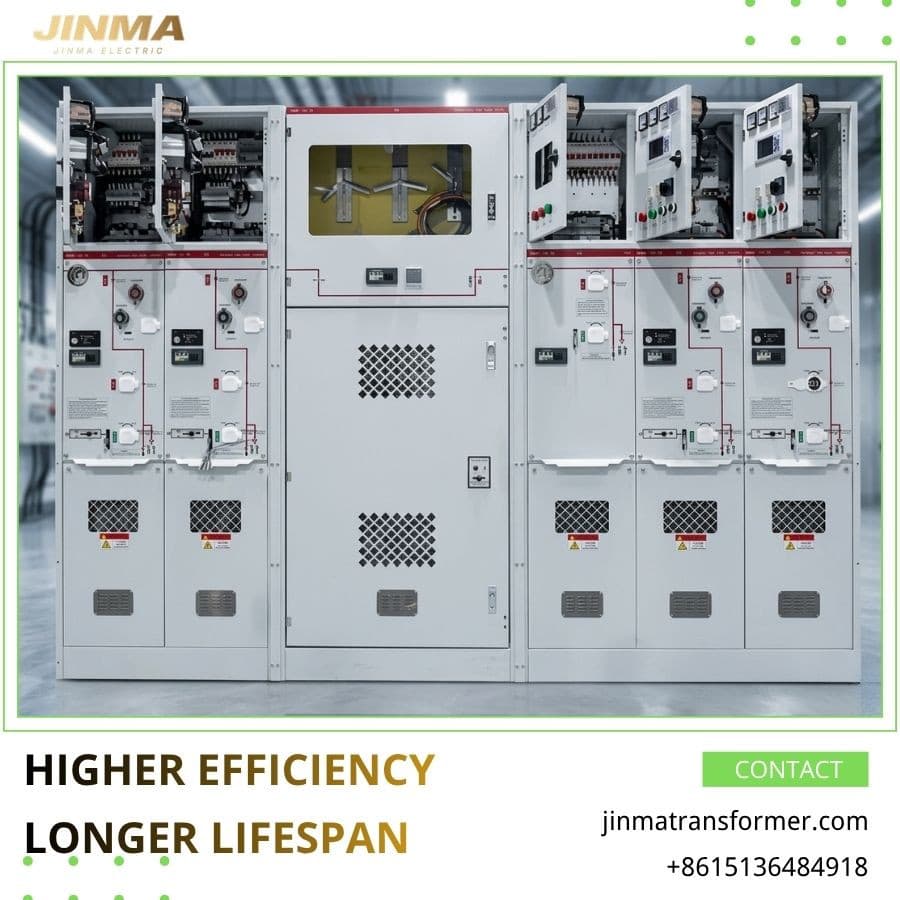
Ring main unit adopts compact and fully enclosed integrated design, the overall volume is small and regular, the core components (load switch, circuit breaker, fuse, grounding switch, etc.) are integrated, assembled and debugged in the factory, and undergoes strict performance testing and sealing test before leaving the factory to ensure the sealing, safety and reliability of the equipment as a whole.
This integrated sealing design not only significantly reduces the footprint of the equipment, saving 50%-70% of the installation space compared to conventional switchgear, but also effectively isolates the equipment from external dust, humidity, corrosive gases and other environmental factors, avoiding component aging or failure.
At the same time, the integrated design eliminates the need for complex component assembly on-site, and only requires simple fixing and wiring to complete the installation, which significantly shortens the on-site construction period and reduces the labor cost and construction difficulty of the on-site installation, and is especially suitable for installation scenarios with space constraints, such as underground substations in urban areas and power distribution rooms in high-rise buildings.
Voltage and Distribution Role
The voltage adaptation range of the ring main unit has a clear target, mainly focusing on medium voltage (11kV-33kV) power distribution scenarios, the core positioning is to undertake the secondary power distribution tasks, specializing in the efficient operation of the ring distribution network, and its core role is to realize the redundant power supply guarantee of the ring network.
In practice, the ring main unit through the two-way power supply design, to ensure that when a section of the ring network line, equipment failure, can quickly switch the power supply path, the fault area isolation, to avoid the expansion of the scope of blackout, to maximize the protection of power supply continuity, which is also widely used in the power supply reliability of the high requirements of the scene of the core reasons.
Compared with it, conventional switchgear has a wider range of voltage adaptability, which can comprehensively cover the whole level of low-voltage (≤1kV), medium-voltage (1kV-36kV), and high-voltage (>36kV), and has a flexible role in power distribution, which can undertake the tasks of heavy-load transmission of primary power distribution and subdividing and allocating of secondary power distribution, and is adaptable to all kinds of large-scale and complex distribution scenarios, and meets the needs of different scenarios, such as high-voltage transformer substations, industrial factories, and residential neighborhoods. Insulation type
Insulation Type
The insulation design of the ring main unit is centered on its compact and fully enclosed structure, and mainly adopts SF6 gas insulation or solid insulation, both of which have excellent insulation performance and arc extinguishing effect.
Among them, SF6 gas insulation by virtue of its high dielectric strength (insulation strength) and good arc extinguishing performance, can be achieved in a small space to achieve reliable insulation, effectively reducing the size of the equipment, and at the same time has a good stability, reducing the risk of insulation aging;
Solid insulation uses epoxy resin and other high-performance insulating materials, without the risk of gas leakage, which is more environmentally friendly and easier to maintain, suitable for scenarios with higher environmental requirements. Since the ring main unit does not need to consider on-site insulation assembly, both types of insulation can be perfectly adapted to its integrated sealing structure to ensure the long-term stable operation of the equipment.
The insulation type of conventional switchgear is more abundant, covering air, SF6 gas, vacuum, insulating oil and other media, which can be flexibly selected according to different voltage levels, installation scenarios and usage requirements: air insulation is suitable for low-voltage and conventional scenarios, with low cost and convenient maintenance; SF6 gas insulation is suitable for high-voltage and space-limited scenarios, with excellent insulating performance;
Vacuum insulation is mostly used in medium-voltage scenarios, with reliable arc extinguishing and low maintenance; insulating oil insulation is mainly used in high-voltage heavy-duty scenarios, relying on the cooling and arc extinguishing effect of insulating oil to ensure the stable operation of the equipment.
Maintenance Requirements
Ring main unit benefits from the fully enclosed integrated design, its internal core components are sealed in a closed shell, completely isolated from the external environment, effectively avoiding dust, moisture, rain, snow, corrosive gases and other external factors on the components of the erosion, but also reduces the wear and tear and aging of the components, so the maintenance is very small, and some of the high-quality ring main unit can even achieve “maintenance-free” operation. “Maintenance-free operation can even be realized for some high-quality ring main cabinets.
Daily only need to clean the equipment shell, check the sealing performance, regular monitoring of equipment operating parameters can be, without the need to frequently disassemble the equipment for internal maintenance, significantly reducing the cost of maintenance manpower and equipment downtime maintenance time, especially suitable for maintenance conditions are limited, remote areas or not easy to reach the installation scenarios.
The conventional switchgear cabinet adopts a modular, open or semi-open structure, and the internal components are mostly exposed or semi-exposed, which are easily affected by external environmental factors, such as dust and humidity, which may lead to poor contact and insulation degradation of the components, and thus cause equipment failure.
Therefore, the conventional switchgear cabinet needs regular comprehensive inspection, cleaning, commissioning and maintenance, including component fastening, insulation testing, arc extinguishing medium replenishment, etc. The maintenance frequency is high and the maintenance process is complicated, which not only requires more human and material resources, but also may affect the continuity of power supply due to downtime maintenance, and the long-term maintenance cost is relatively high.
Cost and Service Life
The initial procurement cost of ring main unit is high, and due to the integrated design, the factory needs to complete precision assembly, sealing and strict testing; however, in long-term use, the maintenance volume is small, the maintenance cost is low, and the installation cycle is short, no need for frequent replacement of components, so the overall life cycle cost is low.
In terms of service life, ring main unit is affected by sealing performance and component aging speed, the service life is relatively short, generally 15-20 years, the specific life depends on the performance of the insulation medium and the use of the environment.
The initial procurement cost of conventional switchgear is relatively low, and its modular design makes the procurement and assembly of components more flexible, with relatively less investment in the early stage, but the installation process is complicated, the installation cycle is long, the installation cost is high, and long-term frequent maintenance and replacement of wearable components are required, resulting in high long-term maintenance costs and high overall life cycle costs.
However, the core components in the conventional switchgear (such as vacuum circuit breakers) have a long service life of 25-30 years, and if properly maintained, the service life of the overall equipment can be higher than that of the ring main unit, which is suitable for scenarios with high requirements for equipment service life and long-term maintenance costs.
Number of Operating Cycles
The number of operation cycles is an important index to measure the service life and reliability of switchgear. The number of operation cycles of ring main unit is relatively small, usually about 2000-3000 times, which is closely related to its application scenario and design orientation.
Ring main cabinet is mainly used in secondary power distribution scenarios, the core role is to ensure the continuity of power supply, the daily operation frequency is low, mostly in fault switching, equipment maintenance operation, so its design focuses on the reliability and sealing, rather than high-frequency operation performance, 2000-3000 times the number of operation cycles to fully meet the needs of its daily use.
The number of operation cycles of conventional switchgear is significantly higher, especially for vacuum circuit breaker components, which can be operated tens of thousands of times, and some high-quality products can even be operated more than 50,000 times.
This is because conventional switchgear is more complex, covering primary and secondary power distribution, with high frequency of daily operation (e.g. industrial load switching, substation scheduling), and high requirements for high-frequency operation performance. The design of the components pays more attention to wear and tear resistance, which can withstand high-frequency switching and closing operations, and is suitable for large-scale and complex power distribution scenarios with frequent operations.
Technical Performance Comparison
In addition to the core differences, there are also obvious differences in technical performance, mainly reflected in the following four aspects:
- Voltage level and capacity: Ring main unit is only suitable for medium-voltage (11kV-33kV) scenarios, with relatively limited capacity, which is mainly suitable for supplying power to small and medium-sized loads; conventional switchgearcovers the whole voltage level from low-voltage to high-voltage, with larger capacity, which can stably carry large-scale and heavy-loaded loads to meet the demands of various types of heavy-loaded power distribution.
- Fault isolation and protection speed: Ring main unit has faster fault isolation speed, which can quickly switch power supply paths, effectively shorten the duration of power outage, and ensure the continuity of power supply; conventional switchgearhas more complex protection logic and slower fault isolation speed, but with a wider protection scope and more accurate protection precision.
- Load-carrying capacity: Ring main unit mainly carries small and medium-sized loads and is suitable for distributed distribution scenarios; conventional switchgearcan carry larger loads and is more suitable for centralized distribution scenarios, such as large substations and heavy industrial factories, to meet the demand for heavy-load power supply.
- Efficiency and energy consumption: ring main unithas compact structure, simple line layout, small line loss, and low energy consumption; conventional switchgear has larger volume, relatively complex line layout, and slightly higher energy consumption than ring main unit, but the difference in energy consumption between the two is not obvious.
Advantages and Limitations of Ring Main Units
The advantages and limitations of the ring main unit are closely related to its compact, sealed design features, as follows:
Advantages
- Low maintenance cost, the fully enclosed integrated design can isolate the external unfavorable factors, reduce component failure, daily only need to clean, check the seal and monitor the operating parameters, without disassembling and overhauling, suitable for scenes with limited maintenance conditions.
- Convenient and efficient installation, the core components are prefabricated and strictly tested in the factory, and only simple fixing and wiring debugging are required on site without complex assembly, which significantly shortens the construction period and reduces the construction cost, and is suitable for the scenarios with tight space and construction period.
- Compact size, saving 50%-70% of installation space compared with conventional switchgear, can be flexibly arranged in small distribution rooms, suitable for space-constrained scenarios such as urban core areas and underground substations, saving site costs.
- With redundant power supply capability and reliable operation, it can quickly switch to the backup path in case of line or equipment failure to avoid large-scale power outage, which is suitable for key scenarios with high requirements for power supply continuity.
- Integration of multiple protection components, can quickly respond to short-circuit, overload and other faults, with perfect sealing and grounding design, to ensure the safety of equipment and personnel, in line with the power system safety standards.
- Modularized design, flexible expansion according to load growth and scene changes, no need to replace the whole equipment, reduce the cost of later expansion, suitable for scenes with gradual load growth.
Limitations
- Higher initial procurement cost, due to the integrated design, precision processing, sealing test and special insulation medium requirements, the procurement unit price is higher than ordinary modular equipment, suitable for small projects with limited budget, low-cost power distribution scenarios are not enough.
- Short service life, the sealing design makes it impossible to replace the internal components individually after aging and damage, so it needs to be overhauled or replaced as a whole, and the insulating medium will decay with years, so the long-term replacement and operation costs are high.
- Limited voltage range, only suitable for medium-voltage (11kV-33kV) secondary power distribution, unable to meet the needs of low-voltage (≤ 1kV) and high-voltage (> 36kV) power distribution, application scenarios are limited to medium-voltage field.
- Limited capacity, due to the compact layout of internal components, insufficient load carrying and short-circuit breaking capacity, unable to adapt to high-load scenarios such as large substations, heavy-duty industries, etc., and can only meet the power supply of small and medium-sized loads.
Advantages and Limitations of Conventional Switchgear
The advantages and disadvantages of conventional switchgear are related to its modular and customizable features, as follows:
Advantages
- Low initial procurement cost, strong adaptability, suitable for limited budget scenarios; modularized split design can be combined on demand, the procurement unit price is lower than that of ring main units of the same voltage level, taking into account the economy and practicality.
- Component exposure, convenient maintenance, open/semi-open structure can be easily disassembled core components, no need for complex sealing and disassembly, shorten the fault processing time, suitable for the scenarios with requirements on maintenance efficiency.
- Mature technology, long history of application, after decades of iteration, structure, technology and operation and maintenance standards are perfect, reliable operation, suitable for industrial heavy-duty, substation and other scenarios, recognized by the industry.
- Some types (e.g. air-insulated switchgear) do not use SF6 gas, which is more environmentally friendly, no harmful gas leakage, reducing environmental hazards and operation and maintenance costs, and suitable for conventional scenarios with high environmental requirements.
- Extremely wide range of application, covering the whole voltage level, can be flexibly adjusted according to the voltage and load, suitable for residential neighborhoods, industrial plants, high-voltage substations and other full-link power distribution scenarios.
Limitations
- Large size, occupies more installation space, limited adaptability, especially not suitable for urban core city, underground power distribution room and other space constraints.
- Components are exposed and susceptible to dust, humidity and other external environmental factors, which not only leads to high maintenance frequency and high long-term maintenance costs, but also makes the equipment safety protection level relatively low, and there are potential risks of misoperation and electric shock.
- The installation process is complicated and requires assembly and commissioning of components on site, which takes a long time, and the corresponding installation labor and time costs are high.
How to Choose between Ring Main Unit Conventional Switchgear
When to Choose RUM
Combined with the characteristics of ring main unit, the following scenarios are preferred:
- Scenarios with limited installation space: Suitable for urban core areas, underground substations, high-rise buildings, shopping malls and other areas with tight space, the ring main unit can maximize the installation space by virtue of its compact design, perfectly adapting to the narrow installation environment without taking up additional site resources.
- Scenarios with limited maintenance conditions: For remote areas, outdoor hard to reach and other maintenance inconvenient areas, the low-maintenance, maintenance-free characteristics of the ring main unit can significantly reduce the workload of on-site operation and maintenance, reduce the difficulty of operation and maintenance, and ensure stable operation without frequent on-site maintenance.
- Sealed protection scenario: in the humid, dusty, corrosive media and other harsh environments, the ring main unit’s fully enclosed structure can effectively isolate the external factors, protect the internal core components from erosion, avoid component aging, failure, and ensure the long-term stable operation of the equipment.
- Medium-voltage secondary power distribution scenarios: Applicable to urban power distribution networks, small industrial parks, commercial buildings and other scenarios, such scenarios need to be supported by medium-voltage power distribution, and there are high requirements for power supply continuity, reliability and redundancy power supply capability, which are highly matched with the performance characteristics of the ring main unit.
When to Choose Conventional Switchgear
Combined with the characteristics of conventional switchgear, the following scenarios prioritize the selection of conventional switchgear:
- Scenarios requiring customized configuration: Applicable to large industrial plants, special customized power distribution scenarios, etc. The conventional switchgearcabinet adopts modular design, which can flexibly combine various functional components according to the actual power distribution needs on site, accurately matching individualized power distribution solutions and adapting to the customized needs of complex scenarios.
- Scenarios with future expansion planning: For example, in newly built industrial parks and areas in the development stage, the modular structure design of conventional switchgearenables flexible expansion in the later stage without the need to replace the equipment as a whole, which effectively reduces the expansion cost and adapts to the gradual growth of load demand.
- Scenarios requiring high fault current: In heavy load distribution scenarios such as large substations and heavy industrial factories, the conventional switchgearcabinet can stably carry larger fault currents, with stronger protection performance, and can effectively cope with the risk of faults in complex distribution environments, thus adapting to the demand for heavy load and complex power distribution.
- Low-voltage or high-voltage power distribution scenarios: such as residential neighborhoods (low-voltage power distribution), high-voltage transmission substations (high-voltage power distribution), etc. The conventional switchgearcabinet can comprehensively cover the whole voltage level from low-voltage to high-voltage, flexibly adapting to the power distribution needs of different voltage levels to meet the requirements of power supply in multiple scenarios.
Future Trend of switchgear Technology
With the upgrading of the power system, the improvement of environmental protection requirements and the development of digital technology, the switchgear industry is developing in the direction of being more environmentally friendly, more intelligent and more compact, with the main trends as follows:
- Environmentalization: Due to the high greenhouse effect of SF6 gas, the industry is promoting environmentally friendly insulation media such as clean air, mixed gas and vacuum to replace SF6 gas and realize green power distribution.
- Digitalization and Intelligence: Relying on the Internet of Things and artificial intelligence technology, switchgear is developing towards intelligence, real-time monitoring and fault warning through built-in sensors, reducing downtime and improving the efficiency of power distribution management.
- Safety Improvement: Arc light protection design is developed and equipped with relevant sensors to reduce the release of arc light energy in case of failure, safeguard the safety of equipment and maintenance personnel, and reduce safety accidents.
- Compactness and modularity: To meet the tight space requirements of urbanization, switchgear is becoming more compact and modular, saving installation space and facilitating installation, capacity expansion and maintenance.
- Integration of renewable energy sources: In view of the fluctuation of new energy output and the characteristics of bi-directional power supply, the research and development of adapted equipment improves the efficiency of integration of new energy sources and power grids, and assists in the promotion of clean energy.
- Application of digital twin technology: build digital twin models of equipment, simulate operation and fault scenarios, optimize maintenance and operation parameters, realize data-driven management, and improve the reliability and efficiency of power distribution.
Conclusion
Ring main unit and conventional switchgear as the core equipment for medium-voltage and above power distribution have no absolute advantages and disadvantages, but the core difference lies in the applicable scenarios and performance focus: ring main unit is compact, low-maintenance, high reliability, and is suitable for the scenarios with limited space, medium-voltage secondary power distribution, and the need for redundancy power supply;
conventional switchgear is modular, customizable, suitable for all voltage levels, suitable for large-scale heavy loads and flexible expansion scenarios. Selection should be based on installation space, voltage, load, maintenance conditions and budget. In the future, switchgear will be upgraded to environmental protection, intelligence and compactness to provide guarantee for stable operation of power system.