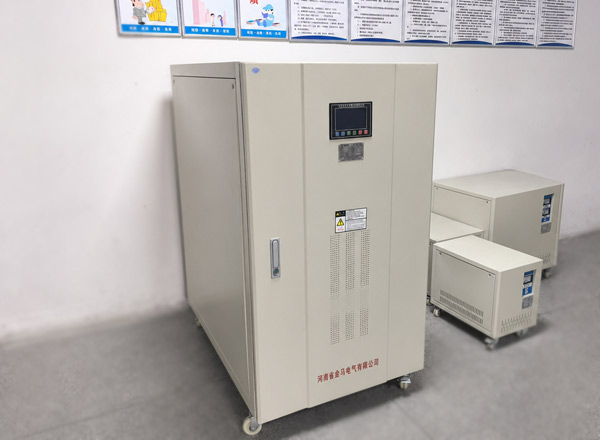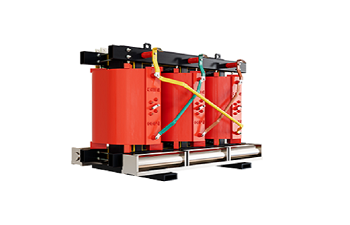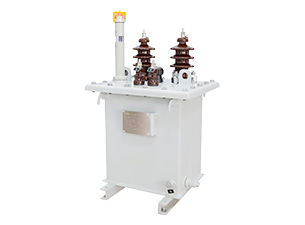


Power transformer is the core equipment of modern high-voltage transmission system, and it is the cornerstone of power grid to ensure long-distance, low-loss and low-cost transmission of electric energy.Whether it is hydropower, wind power, photovoltaic and other new energy power stations, or urban terminal electricity, the efficient distribution of electricity is inseparable from the voltage conversion function of transformers.This article will comprehensively analyze the working principle, transmission application value, equipment type, heat dissipation mode, core advantages and landing scenarios of power transformers.
Understanding Power Transformer?
Power transformer is a static electrical equipment without moving parts. Its core function is to realize the power transmission between two or more circuits without changing the current frequency (conventional power grid 50Hz/60Hz) through the principle of electromagnetic induction, and to complete the accurate conversion of voltage and current.
The equipment does not generate electricity, and almost does not consume electricity. It only undertakes the role of energy conversion and transmission. The operating efficiency is extremely high. The working efficiency of large power transformers can reach 98%-99.5%.It is this characteristic that makes it the core equipment for high-voltage long-distance transmission, grid voltage matching and safe power distribution, ensuring stable and safe transmission of electric energy from the power generation end to the power consumption end.
Why Are High-Voltage Transmission Systems Necessary?
Power transmission often spans hundreds to thousands of kilometers, low voltage transmission losses, high costs, can not meet the demand for large-scale power supply.The high-voltage transmission system (conventional 110kV-765kV, ultra-high voltage over 1000kV) is the core scheme of long-distance power supply, and its necessity is mainly reflected in four points:
Reduce Power Loss
The core formula of power transmission is P=V×I, and the resistance loss formula of transmission line is P_loss=I²R.Under the premise of transmitting fixed power, increasing the voltage will simultaneously reduce the current, and the small decrease of the current can greatly reduce the loss.
For example, after doubling the voltage, the current will be reduced to 1/2 of the original, and the line heat loss will be reduced directly to 1/4 of the original.Without high-voltage transmission technology, most of the power will be lost in the form of heat in the transmission process, and large-scale power grid construction will not be feasible.
Improve the Economy of Power Supply
The low current characteristics corresponding to high voltage transmission allow the grid to use thinner and lighter copper/aluminum transmission conductors, simplify the structural strength and size requirements of transmission towers, and greatly reduce the material cost, construction cost and operation and maintenance cost of power grid construction.Compared with the ultra-large cross-section cables and heavy support facilities required for low-voltage transmission, the infrastructure cost performance advantage of high-voltage transmission is extremely significant.
Ultra-long Distance Power Transmission
There are obvious geographical dislocations between modern power production and power demand: hydropower stations are mostly built in deep mountain river areas, wind farms are concentrated in remote plains or seas, photovoltaic power stations are located in desert areas, thermal power and nuclear power stations are located in safety and resource conditions, and power load centers are mostly densely populated cities and industrial areas.
Low-voltage lines (10-35kV) are only suitable for short-distance regional power distribution, and long-distance transmission losses will soar sharply; while high-voltage transmission systems can easily achieve bulk power transmission of hundreds to thousands of kilometers, perfectly matching the cross-regional power supply needs of new energy and large-scale power stations.
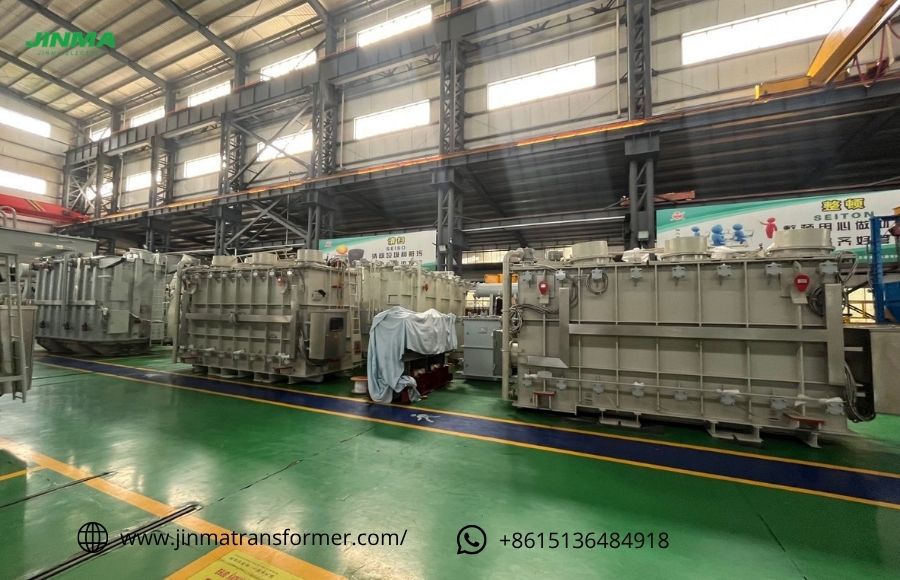
Adapting to Power Grid Hierarchical Power Supply System
The hierarchical power supply of the power grid completely depends on the transformer to cooperate with the high-voltage transmission system: the step-up transformer at the power generation end converts the low-voltage electric energy of the generator into high-voltage electric energy for long-distance transmission; the step-down transformer of the substation reduces the voltage step by step and finally converts it into low-voltage electricity available for civil and industrial use.This efficient voltage conversion system is the core foundation of stable operation of modern hierarchical power grid.
How Does a Power Transformer Work?
The core of all power transformers rely on the principle of electromagnetic induction, without direct contact with the circuit, it can complete the power transmission and voltage conversion across the circuit, and the overall operation process is stable, efficient and without mechanical wear.
When alternating current is introduced into the primary winding of the transformer, it will produce a continuously changing alternating magnetic field; the laminated silicon steel core will concentrate and guide the magnetic flux, and transmit the changing magnetic field to the secondary winding;
According to Faraday’s law of electromagnetic induction, the changing magnetic flux will induce electromotive force in the secondary winding, and then generate induced voltage to realize the transmission of electric energy from the primary circuit to the secondary circuit.
Turns Ratio Determines the Voltage Conversion Ratio
The voltage and current conversion of transformer strictly follows the formula of turns ratio:
Vs/Vp=Ns/Np=Ip/Is
Vp, Ip and Np are voltage, current and coil turns on the primary side, Vs, Is and Ns are corresponding parameters on the secondary side.Under ideal conditions, energy conservation (input power ≈ output power), current decreases when voltage increases, and current increases when voltage decreases. This is also the core principle of high voltage transmission and low loss.
AC Cycle Working Process
Depending on the 50Hz/60Hz AC characteristics of the grid, the transformer continues to cycle:
In the positive half cycle, the primary side current increases, the magnetic flux rises, and the secondary side induced voltage.
Negative half-cycle current reversal, magnetic flux attenuation and commutation, secondary side induced voltage synchronous reversal.The cycle of 50-60 times per second ensures continuous and stable AC power output, and the frequency remains unchanged.
The Principle of Electromagnetic Induction
The principle of electromagnetic induction is the core electrical law discovered by Faraday in 1831, and it is also the basis for the operation of all electromagnetic equipment such as transformers, generators, motors, etc. The core definition is that a changing magnetic field can induce a voltage (electromotive force) in a conductor.
Faraday’s electromagnetic induction formula shows that the induced voltage is positively correlated with the number of coil turns and the rate of magnetic flux change; the negative sign of the formula corresponds to Lenz’s law, and the induced magnetic field will cancel the original magnetic flux change, relying on energy conservation to ensure the stability of the transformer.
Transformers only adapt to AC, DC electromagnetic field constant can not produce induced voltage, which is also the core reason why AC power grid has become the mainstream, Faraday ring experiment also laid a theoretical prototype for modern transformers and high voltage transmission technology.
Step-Up vs. Step-Down Power Transformers
According to the voltage conversion function, the transformer in the high voltage transmission system is mainly divided into two categories: step-up and step-down. The operation principle of the two is the same, but the structure parameters, application scenarios and functions are completely opposite. It is the core partner of the hierarchical power supply of the power grid.
| Comparison Criteria | Step-up Transformer | Step-down Transformer |
| Core Function | Increase voltage, reduce current | Reduce voltage, increase current |
| Turns Ratio | Secondary turns > Primary turns | Secondary turns < Primary turns |
| Installation Location | Power plants, output terminals of renewable energy power stations | Transmission and distribution substations at all levels |
| Role in the Power Grid | Enables long-distance high-voltage transmission and reduces line losses | Converts high-voltage electricity to safe and usable industrial and residential voltages |
| Typical Voltage Conversions | 11kV→220kV、15kV→500kV | 500kV→230kV、11kV→0.4kV |
In the complete power grid link, the step-up transformer completes the “long-distance transmission preparation” of electric energy, and the step-down transformer gradually converts the ultra-high voltage electric energy into electric voltage suitable for different scenarios through multi-stage step-down. The two cooperate to realize the safe and efficient transmission of electric power from production to terminal.
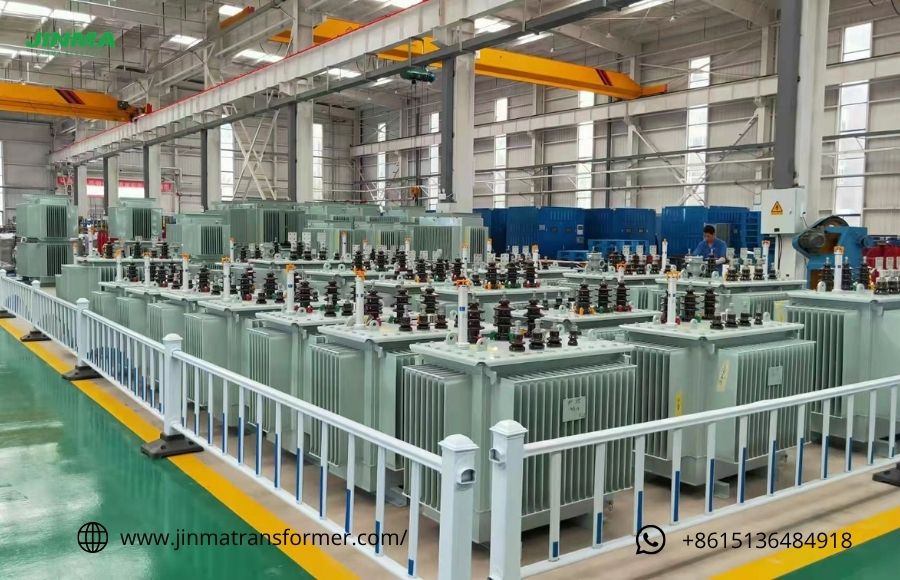
How Power Transformers Fit into the Transmission Grid
Power transformer runs through the whole process of power production, transmission and distribution, and is the core hub connecting all levels of power grid. The complete power transmission link and transformer layout are as follows:
- Generation link: The output voltage of the generator set is only 11 – 25kV, which needs to be boosted to 138 – 765kV EHV level through the generator step-up transformer (GSU) to meet the long-distance transmission conditions.
- High voltage transmission link: extra-high voltage electric energy can be transmitted across regions through trunk lines, interconnection transformers and autotransformers configured in substations can connect power grids of different voltage levels, and voltage stabilization and power grid interconnection dispatching can be completed synchronously.
- Regional distribution link: step-down transformer step-down voltage of the main network ultra-high voltage power, the voltage down to 11 – 69kV medium voltage level, for the regional distribution network stable power supply.
- Terminal power supply link: terminal distribution transformer will eventually reduce medium voltage power to 220V, 400V safety low voltage, adapt to residential, commercial and industrial equipment electricity standards.
In addition, the transformer also has the functions of power grid isolation, fault current limiting, voltage stability and power regulation. It can integrate hydropower, thermal power, nuclear power, wind power, photovoltaic and other multiple power sources to build a stable global synchronous power grid, which is the core guarantee for the large-scale and intelligent operation of modern power grids.
Types of Power Transformers Used in High-Voltage Systems
According to the function, structure and application scenario, the high voltage transmission system is equipped with a variety of special transformers, each of which adapts to the complex operation requirements of the power grid:
Generator Step-up Transformer (GSU)
Generator step-up transformer (GSU) is specially customized for all kinds of power station conditions, with large unit capacity and excellent short-circuit impact resistance. It can boost the low voltage side of the generator set to the ultra-high voltage transmission level. It is the core equipment at the head end of power grid transmission. It is widely suitable for thermal power, hydropower, nuclear power and large-scale wind and solar new energy power stations.
Transmission Network Transformer
Transformers of transmission network are deployed in main transmission substations, with core characteristics of high insulation strength and on-load voltage regulation, which can adapt to dynamic load fluctuation of power grid. They are mainly used for power conversion and regional power flow allocation of power grids with different voltage levels. The overall fault resistance and short circuit resistance performance are excellent to ensure stable operation of main power grid.
Autotransformer
Autotransformers are mostly used in grid connection scenarios with moderate voltage transformation ratio, typically adapted to voltage levels such as 500kV/345kV and 230kV/138kV.Compared with the traditional double-winding transformer, it is smaller in size, lower in cost and higher in operating efficiency. It is the mainstream energy-saving equipment for high-voltage transmission. The only characteristic is that there is no electrical isolation on the primary and secondary sides.
Phase-shifting Transformer
Phase-shifting transformer can accurately control the power flow direction of parallel transmission lines by adjusting the phase angle, effectively solve the power flow congestion problem of power grid, optimize the power distribution of complex mesh power grid, significantly improve the transmission utilization rate and operation stability of power grid, and have outstanding application value in new power system with high proportion of new energy grid-connected.
DC Converter Transformer
DC converter transformer is the core special equipment of HVDC system. It has strong insulation performance and can withstand DC component and harmonic interference. It is mainly used in special power transmission scenarios such as ultra-long distance DC transmission, cross-sea transmission and asynchronous power grid interconnection.
Current Limiting Reactor
Current-limiting reactor is a kind of transformer induction electrical equipment, which is an important protective device of high voltage power grid.Shunt reactors are used to absorb redundant reactive power and suppress voltage fluctuations; series reactors can effectively limit system short-circuit current and ensure safe and stable operation of high-voltage transmission equipment in all directions.
Cooling Methods Used in Power Transformers
The running loss of transformer core and winding will continue to heat up, high temperature will accelerate insulation aging and shorten equipment life, so efficient heat dissipation is the key to stable operation of equipment.High-voltage power transformers mainly adopt oil-immersed and dry-type heat dissipation schemes, and are equipped with various optimized heat dissipation structures.
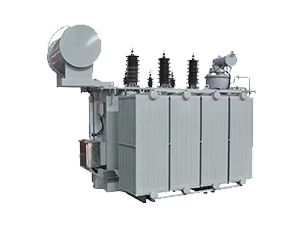
Oil-immersed heat dissipation
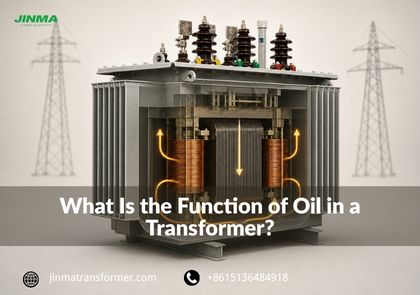
With mineral oil or environmentally friendly ester oil as the medium, the dual functions of insulation and heat dissipation are realized at the same time, and four mainstream modes are subdivided:
- l ONAN: Passive heat dissipation based on natural convection between insulating oil and air, simple structure, convenient operation and maintenance, mainly used in small and medium-sized high voltage transformers.
- l ONAF: On the basis of natural oil circulation, cooling fans are configured to enhance heat exchange, which can increase the rated capacity of equipment by 15%-30%. It is a mainstream heat dissipation scheme for transmission substations with high comprehensive cost performance.
- l OFAF: double forced heat exchange mechanism of oil pump and cooling fan is adopted to greatly improve the overall heat dissipation efficiency, which can stably support the continuous operation of large ultra-high voltage transformers under high load.
- l OFWF: heat exchange is completed through water cooling heat exchanger, and the heat dissipation performance is optimal for Class IV oil cooling scheme, which is suitable for ultra-large capacity and limited site power grid core hub transformer.
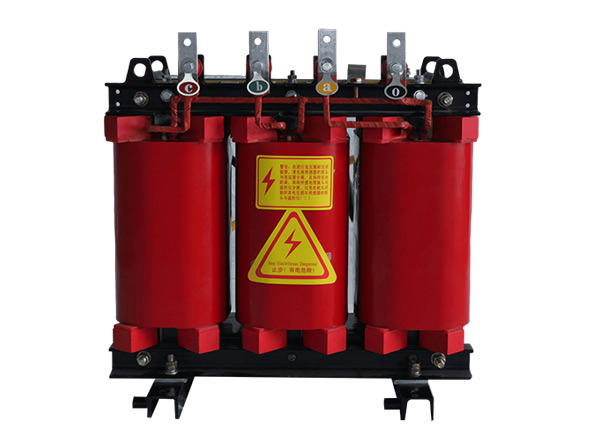
Dry heat dissipation
Dry heat dissipation uses air as heat exchange medium, relying on natural convection or forced air cooling by fans. Windings are sealed by epoxy resin casting. There is no insulating fuel, no fire and explosion hazards, and it is suitable for indoor installation and environmental sensitive scenarios.
However, the air heat exchange efficiency is limited, and the heat dissipation capacity is weak. It is only suitable for medium and low voltage distribution equipment below 69kV, and it is difficult to meet the high load heat dissipation requirements of EHV trunk transmission transformers.
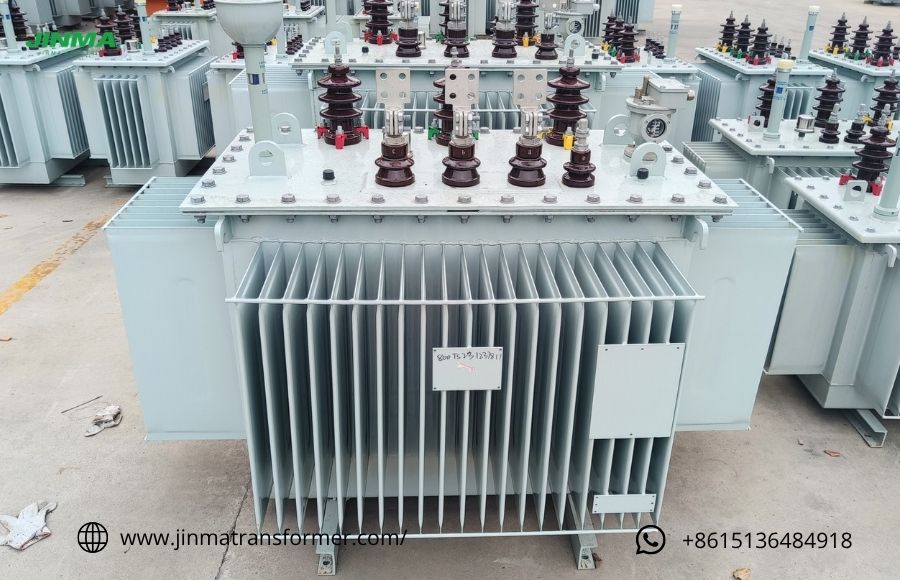
New intelligent cooling technology
The new generation of high-end power transformers are equipped with variable frequency fans, intelligent oil pumps and high-precision temperature sensing systems, which can dynamically adjust the heat dissipation power according to the equipment load and real-time temperature, and realize energy saving and consumption reduction while ensuring the reliability of heat dissipation.
At the same time, environmentally-friendly ester insulating oil is gradually replacing traditional mineral insulating oil by virtue of its strong flame retardancy, high temperature resistance and green pollution-free advantages, and has become a new type of heat dissipation insulating medium for high-voltage transformers.
Advantages of Power Transformers in High-Voltage Transmission
- l Extreme reduction of transmission loss: low-loss long-distance transmission is realized through step-up and current reduction, and the transmission loss of hundreds of kilometers is controlled at 2%-5%, which completely solves the energy consumption problem of long-distance power transmission, which is the core premise of large-scale power grid landing.
- l Significantly reduce the cost of power grid construction: low current adaptation lightweight conductors and transmission facilities, reduce a large number of infrastructure consumables and construction investment; autotransformer and other energy-saving equipment to further reduce equipment costs and floor space, long-term operation and maintenance cost-effective.
- l Increase power grid transmission capacity: Under the same transmission corridor, the ultra-high voltage line supported by high voltage transformer has several times the transmission capacity of medium and low voltage lines, greatly improving the utilization rate of power grid resources and adapting to the demand for large-scale power transmission.
- l Flexible adaptation to power grid dispatching and interconnection: on-load voltage regulating transformer can dynamically adjust power grid voltage and adapt to load fluctuation; various special transformers can realize interconnection of different voltage and different system power grids, and are compatible with fluctuating new energy sources such as wind power and photovoltaic.
- l Strengthen the safety and stability of the power grid: the electrical isolation function of the transformer can limit the spread of faults, and the phase-shifting equipment can optimize the power distribution, effectively reduce the risk of power grid failure, and improve the power supply reliability of the global power grid.
- l Long service life: modern power transformer operation efficiency can reach 98.5%-99.7%, under the standard operation and maintenance conditions, the service life can reach 40-60 years, long-term operation low energy consumption, low failure rate, comprehensive investment return advantage is significant.
Common Applications of High-Voltage Power Transformers
- l Power transmission from major power stations: thermal power, hydropower, nuclear power, large-scale photovoltaic and wind farms are equipped with step-up transformers to convert low-voltage electric energy of generator sets into ultra-high voltage electric energy, realizing power grid connection and cross-regional transmission, which is the core equipment for new energy consumption and clean energy cross-regional allocation.
- l Main transmission substation: all levels of transmission hub substations complete voltage grade conversion, regional power grid interconnection and power flow regulation through power transformers, supporting stable operation and power dispatching of national main power grid.
- l Cross-regional and transnational power grid interconnection: interconnected transformers and converter transformers are used to connect different power grids and power systems in different countries to achieve complementary allocation of power resources and improve power supply redundancy and risk resistance of the global power grid.
- l HVDC transmission project: converter transformer is the core equipment of HVDC transmission project, supporting special transmission scenarios such as ultra-long distance, cross-sea transmission, asynchronous power grid docking, etc., and solving the technical shortcomings of AC transmission.
- l Power supply for large-scale industrial and special scenarios: high-energy consumption and high-reliability scenarios such as iron and steel smelting, mining, and super-large data centers are equipped with dedicated high-voltage transformers to provide stable and high-quality high-voltage power supply.
- l Regional distribution hub: urban core distribution substation converts ultra-high voltage electric energy into medium and low voltage electric energy step by step through step-down transformer, providing basic power guarantee for urban commerce, residents and municipal facilities.
Conclusion
Power transformer is the core hub equipment of high-voltage transmission system. Relying on the basic scientific principle of electromagnetic induction, it solves a series of industrial problems such as large long-distance transmission loss, high cost, voltage mismatch and difficult coordination of power grid through core functions such as step-up, step-down, voltage stabilization, interconnection and power regulation.
From power production, long-distance transmission to terminal distribution, from traditional energy grid connection to new energy consumption, all kinds of high-voltage transformers perform their duties and work together to build an efficient, stable, economical and safe modern power grid system, which is an important cornerstone of electrification and energy interconnection for all people.