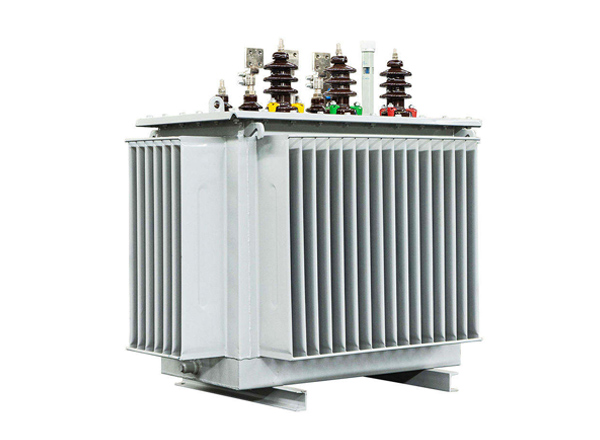


In modern urban power distribution, commercial buildings, data centers and industrial power distribution systems, transformers are the core equipment for voltage conversion and power transmission. With the upgrading of fire safety standards, the popularization of green buildings and the increase of indoor distribution scenarios, dry-type distribution transformers have gradually become the preferred equipment for high-risk, densely populated and environmentally demanding scenarios. It completely abandons the liquid cooling insulation medium of traditional transformers and avoids the safety and environmental risks of oil-immersed equipment from the root. This paper will disassemble the dry-type distribution transformer in all directions, providing professional reference for engineering selection and daily operation and maintenance.
What is a dry-type distribution transformer? Definition and characteristics
Dry-type distribution transformer is a kind of voltage conversion equipment used in power distribution system, which can realize voltage step-up or step-down function. The biggest difference from traditional oil-immersed transformers is that they do not use any insulating oil or liquid coolant.
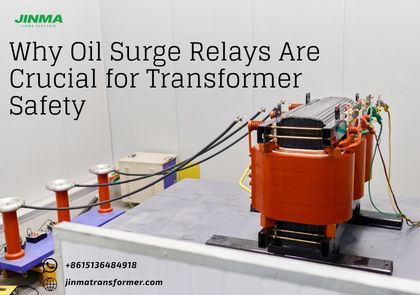
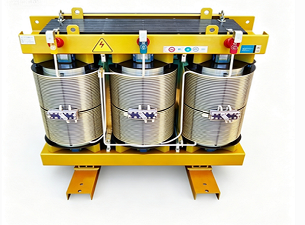
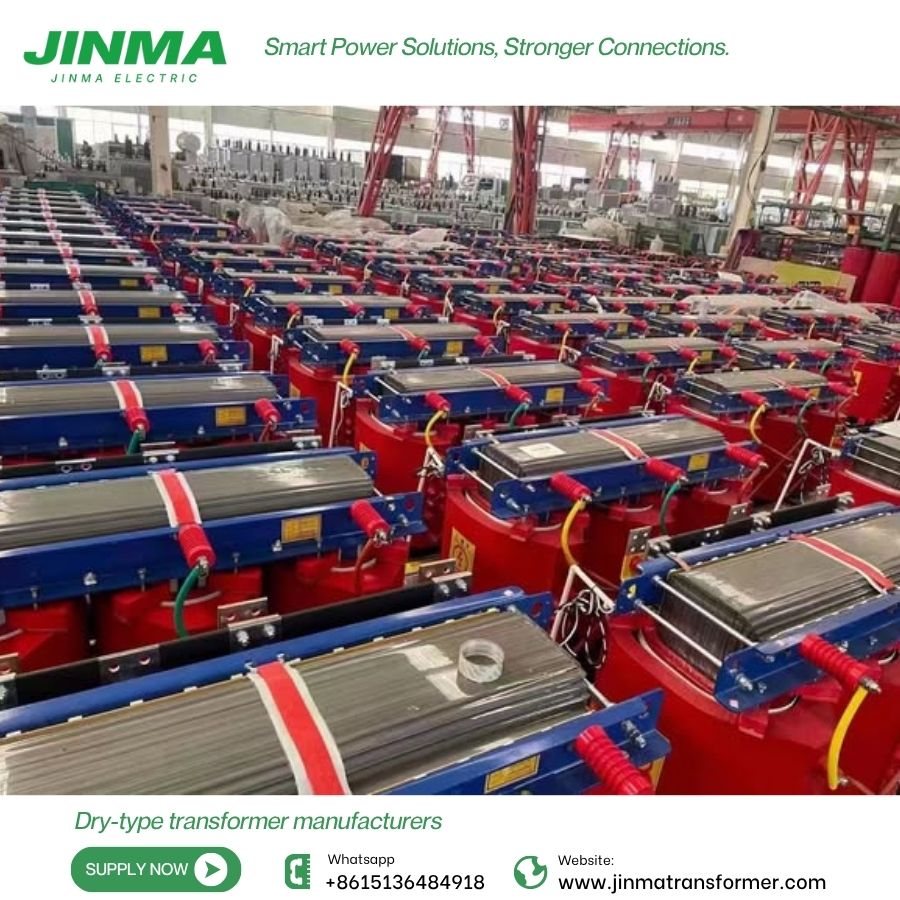
The equipment relies on solid insulation materials to complete the insulation protection of windings and iron cores, and at the same time realizes heat dissipation through natural air convection or forced air cooling. The overall structure has no liquid medium, which is a new type of power distribution equipment suitable for indoor precision power distribution and safety sensitive scenes.
Conventional dry-type distribution transformers are suitable for voltage classes up to 36kV and rated capacities ranging from 25kVA to 30MVA. In civil, commercial and ordinary industrial power distribution scenarios, most of them are mainly small and medium-sized capacity models, which are fully suitable for low voltage and medium voltage power distribution terminal scenarios.
4 core characteristics
- There was no liquid medium, and the safety attribute was fully filled.The iron core and winding of the equipment are not immersed in insulating liquid at all, completely eliminating the risk of oil leakage, combustion and explosion, belonging to intrinsically safe power distribution equipment.
- The air cooling dual mode adapts to multiple scenes.Includes natural air cooling (AN) and forced air cooling (AF) two modes. Natural convection heat dissipation is adopted for normal load, and forced heat dissipation of fan can be started under high load and overload conditions to improve equipment carrying capacity.
- Two mainstream solid-state insulation processes.The mainstream models in the market are divided into resin casting type (CRT) and vacuum pressure impregnation type (VPI). The two processes have different protection capabilities, costs and adaptation scenarios, which can meet the needs of different working conditions.
- It is designed for indoor power distribution scenarios.Compact structure, strong protection, no special oil pool, explosion-proof compartment, can be installed in close proximity to the load side, adapt to modern indoor distribution layout requirements.
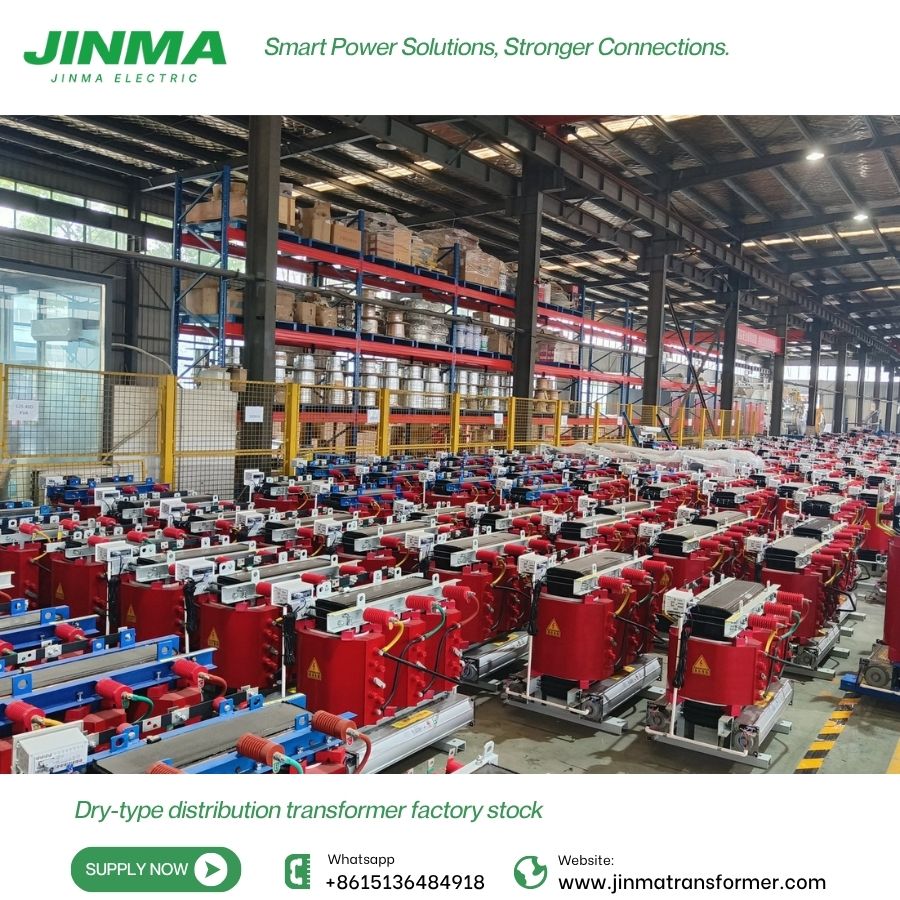
Working principle of dry-type distribution transformer
Core fundamentals
The core working principle of dry-type distribution transformers is consistent with all power transformers and is based on the law of electromagnetic induction (Faraday electromagnetic induction principle). The core logic of voltage conversion is realized by winding turns ratio, and the general formula is: V2/V1=N2/N1.
Simply put, the ratio of the secondary side output voltage to the primary side input voltage is equal to the ratio of the turns of the secondary winding to the primary winding. In power distribution scenarios, most dry-type transformers are step-down designed to convert high-voltage distribution voltages into low-voltage voltages that can be used by equipment.
5-Step Complete Workflow
Step 1: Connect AC voltage to primary winding. AC current flows into the primary winding of transformer, and AC current will generate alternating magnetic field around the winding, which provides basic conditions for electromagnetic energy conversion.
Step 2: the iron core generates stable magnetic flux. The equipment adopts silicon steel sheet iron core with high magnetic permeability, which can form magnetic circuit with low magnetic resistance. Alternating magnetic field converges into regular alternating magnetic flux through iron core, and minimizes equipment loss caused by hysteresis and eddy current.
Step 3:magnetic flux coupling secondary winding. The alternating magnetic flux in the iron core runs through the secondary side winding, and the primary and secondary windings are not electrically connected directly. The electric energy is completely transmitted through the magnetic field coupling to ensure the safety of electricity.
Step 4: Induction generates induced electromotive force. According to the principle of electromagnetic induction, the changing magnetic flux cuts the secondary winding coil, which will generate induced electromotive force on the secondary side and form AC voltage that can be output.
Step 5: complete the voltage conversion output. Precise adjustment of output voltage by designing winding turns ratio. If the number of turns is less than one side, the voltage can be reduced, and if the number of turns is more than one side, the voltage can be boosted to meet the voltage requirements of different distribution systems.
Dry-type distribution transformer components and functions
High permeability silicon steel core
The iron core is made of cold-rolled oriented silicon steel sheet laminated, and the single silicon steel sheet is insulated, which can effectively suppress eddy current loss and hysteresis loss. The whole is clamped and fixed by steel frame, with strong mechanical stability, lower vibration and noise during operation.
The core function of iron core is to construct low resistance magnetic circuit, concentrate magnetic flux and ensure efficient conversion of electromagnetic energy. It is the basic core component of stable operation and low loss operation of transformer.
Primary and secondary winding coils
The main winding material is pure copper conductor, and some economical models use aluminum conductor. Copper conductor has better conductivity, lower loss and stronger short-circuit resistance, which is the preferred material for engineering.
Winding concentric layout, low voltage winding inside, high voltage winding outside, structure regular. Voltage adjustment taps are reserved on the winding surface to achieve ±2.5% and ±5% voltage fine adjustment to adapt to grid voltage fluctuation scenarios.
Solid insulation system
Insulation system is the core advantage component of dry-type transformer, which completely replaces traditional insulating oil. Mainstream materials include epoxy resin, polyester insulating paint, mica tape, high temperature resistant polymers, etc.
The casted model is encapsulated with vacuum epoxy resin and cured into a solid structure; the impregnated model infiltrates the insulating paint by vacuum pressure to form a dense insulating layer. All solid insulation materials have flame retardant, self-extinguishing characteristics, excellent fire resistance.
Air cooling system
Natural air cooling (AN) is the basic heat dissipation mode, relying on natural convection of cold and hot air, bottom air inlet, top air outlet, continuously taking away equipment operation heat, meeting the normal rated load operation requirements.
Forced air cooling (AF) is an upgraded mode with temperature-controlled automatic fans. When the temperature of the equipment exceeds the standard, the fan automatically starts, quickly strengthens the air circulation, and can increase the short-term carrying capacity of the equipment by 30%-50%, adapting to peak overload conditions.
Protective shell
The shell is made of galvanized steel plate or aluminum alloy, which is anti-corrosion, rust-proof and high mechanical strength. According to the use scenario, it can be divided into ventilated type and fully enclosed non-ventilated type, which can achieve different protection levels from IP20 to IP54.
The shell can not only prevent dust, moisture and sundries from invading the inside of the equipment, but also effectively reduce the noise of the equipment operation, and at the same time play a protective role in safety isolation and electric shock prevention.
Auxiliary accessories
Core accessories include insulation sleeve, terminal, temperature sensor, temperature controller, surge protector, grounding device, etc. Temperature sensor can monitor winding temperature in real time, realize over-temperature alarm, fan start-stop, overload protection.
Grounding device and surge protector can effectively resist voltage shock and leakage risk, and comprehensively ensure the safe and stable operation of equipment and distribution system.
Advantages of dry-type distribution transformers
Ultimate security
No flammable insulating oil, prevent fire, explosion and oil leakage from the root cause. Solid insulation materials have self-extinguishing flame retardant properties, even if the equipment overload, fault heating, will not produce open fire spread. It fully meets the fire protection standards of high-rise buildings, schools, hospitals, shopping malls, data centers and other densely populated places, and is the preferred equipment for fire protection acceptance.
Green and environmental protection
The equipment is free of any liquid oil, so there will be no problem of oil leakage polluting soil and groundwater, and there is no need for supporting oil storage tanks and anti-leakage facilities. There is no oil pollution and no exhaust gas emission in the operation process, which conforms to the construction standards of green buildings and low-carbon factories, and has strong environmental protection compliance.
Very low operating costs
No need to carry out routine operation and maintenance work such as oil detection, filtration, replacement, filling, etc., only regular cleaning, appearance inspection and electrical inspection are needed, greatly reducing labor and consumables costs. The equipment has stable insulation performance and strong anti-aging ability. The service life under normal conditions can reach 15-30 years. The long-term operation stability is far superior to ordinary oil-immersed equipment.
Flexible installation
No special transformer oil chamber, explosion-proof partition wall and oil-proof facilities are needed, the site construction is simple, and the investment of civil engineering is greatly reduced. It can be installed close to the load end, shorten the length of low voltage cable laying, effectively reduce line loss and cable procurement cost, and make the distribution layout more flexible.
Dry-type vs oil-immersed distribution transformer: How to Choose?
Difference in equipment parameters
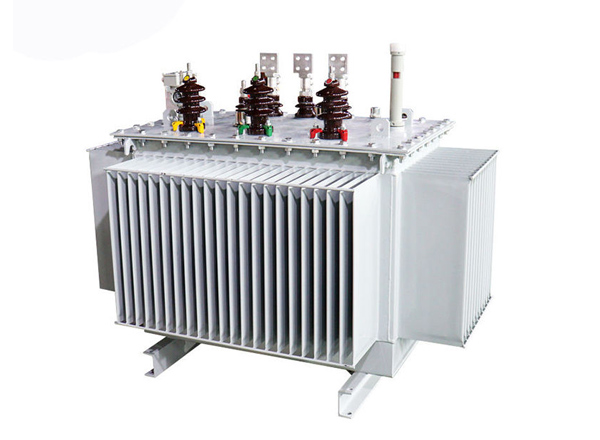
Heat dissipation medium: dry air, oil-immersed insulating oil; applicable voltage: dry up to 36kV, oil-immersed up to 765kV +; applicable capacity: dry medium and small capacity, oil-immersed can do ultra-large capacity.
Safety performance: dry fire and explosion prevention, zero leakage; oil immersion type has fire and oil leakage risk. Operation and maintenance difficulty: Dry type is maintenance-free, oil-immersed type requires regular oil change and inspection. Installation scenario: dry indoor preferred, oil-immersed outdoor main force.
Service life: dry 15-30 years, oil-immersed 25-40 years; operating efficiency: oil-immersed slightly higher, dry efficiency up to 96%-98.5%, to meet the vast majority of civil industrial needs.
How to choose a distribution transformer for your application
Priority shall be given to dry-type distribution transformers: indoor power distribution, densely populated buildings, strictly controlled environmental protection areas, limited operation and maintenance conditions, and scenes where open fire hazards are prohibited.
Oil-immersed distribution transformer is preferred: outdoor large substation, ultra-high voltage, ultra-large capacity, continuous heavy load operation, limited budget, empty space and no densely populated scenes.
Life Cycle Cost Analysis
Dry-type transformer has high cost in the early stage, but the cost of civil engineering, operation and maintenance, insurance and loss is extremely low, and the cost performance of the whole life cycle is higher. It is the optimal solution for indoor long-term power distribution.
The oil immersion type has low investment in the early stage, but the cost of operation and maintenance, hidden danger rectification and oil leakage treatment in the later stage is high, which is only suitable for outdoor large-scale public power distribution scenarios.
Application of dry-type distribution transformers
Compared with the use characteristics of oil-immersed transformers limited to outdoor open scenes, dry-type distribution transformers are suitable for most high-precision, high-safety, densely populated and environmentally sensitive distribution scenarios by virtue of their core advantages of fire and explosion prevention, zero pollution, maintenance-free and indoor installation. At present, it has been widely used in many core fields such as commercial buildings, precision machine rooms, industrial manufacturing, new energy, urban infrastructure, etc.
Commercial and Public Buildings
This scenario covers high-rise office buildings, large shopping centers, star-rated hotels, primary and secondary schools, universities, public hospitals, government buildings and other highly populated public places, and is also one of the most stringent power distribution scenarios for fire protection supervision. This kind of building internal space is closed, the flow of people is huge, the equipment is concentrated, once the electrical fire occurs, it is easy to cause large-scale casualties and property losses, fire safety is the core criterion of power distribution selection.
Traditional oil-immersed transformers have potential safety hazards such as oil leakage, fire and explosion, which cannot meet the fire protection standards for indoor installation. It is necessary to build separate explosion-proof transformer rooms, anti-seepage oil pools and other supporting facilities, which greatly increases civil construction costs and construction cycles. The dry-type distribution transformer has no flammable liquid medium, has the characteristics of flame retardant self-extinguishing, no open fire spread and zero oil leakage risk, and fully meets the fire acceptance standards of domestic high-rise buildings and public venues.
At the same time, the equipment can be directly installed in the building distribution shaft, indoor distribution room and other positions close to the load end, effectively shortening the laying distance of low voltage cables, reducing line loss and wiring costs.
Data center and precision room
Data center, cloud computer room, communication base station and other precision power scenarios have extreme requirements for the stability, cleanliness, safety and continuity of power supply system. Any oil pollution, electrical failure and fire hazard may lead to server downtime and data loss, resulting in huge economic losses.
The dry distribution transformer adopts all-solid insulation structure, which is clean and free of oil pollution, and will not cause pollution and corrosion to precision equipment in the room. Dry-type transformer has the advantages of low partial discharge, anti-interference and low operating noise, and will not interfere with the weak current system and data transmission in the room. The data center has extremely high requirements on power supply stability, safety and cleanliness, prohibits oil pollution and eliminates fire risks. Dry-type transformer low noise, clean, maintenance-free characteristics, is the standard equipment room power distribution.
Industrial production workshop
Modern industrial production scenarios are complex, and different industries have great differences in protection levels, explosion-proof capabilities and environmental adaptability requirements for power distribution equipment. With a wide range of categories, dry-type distribution transformers can be adapted to a variety of high-standard industrial workshops, especially for clean production, explosion-proof anti-corrosion, high-reliability power supply industrial scenarios.
In food processing, biological medicine, precision electronics manufacturing and other clean workshops, the production environment is strictly prohibited from oil pollution, impurity pollution, dry transformer no liquid medium, clean dust characteristics, perfect matching workshop clean production standards, to avoid oil pollution products and production environment.
In chemical, light industry, machinery manufacturing and other workshop environments where dust, moisture and slightly corrosive gases exist, resin cast CRT dry-type transformers have significant advantages. The overall sealed and cast structure can effectively resist dust accumulation, water vapor condensation, and slight corrosion. It has stable insulation performance, strong resistance to short circuits, and can operate stably under complex working conditions for a long time.
New energy power generation system
With the rapid development of photovoltaic, wind power and other new energy industries, dry-type distribution transformers have been fully popularized in indoor booster stations, distribution cabins, station control rooms and other scenarios of new energy power stations. Most of the new energy power stations have the characteristics of unattended, long-term outdoor supporting, complex environment and inconvenient operation and maintenance, which require extremely high reliability and maintenance-free requirements for power distribution equipment. The indoor distribution cabin of distributed photovoltaic power station and industrial and commercial photovoltaic roof has narrow space and strong tightness, and the fire hazard of oil-immersed equipment is extremely high. The dry-type transformer is safe and flame-retardant, compact in size and can be installed hermetically, perfectly suitable for the distribution scene of narrow cabin, and can complete voltage rise and fall and power convergence transmission.
Urban transport and infrastructure
Urban rail transit, highway tunnels, airport terminals, high-speed rail stations and other transportation infrastructure are mostly confined underground or semi-enclosed spaces with limited ventilation conditions, dense personnel flow and compact equipment layout, belonging to key fire safety control areas. Flammable and explosive oil-immersed power distribution equipment is strictly prohibited.
The internal space of subway and tunnel is narrow, so it is impossible to build large-scale transformer compartment and oil-proof facilities. Dry-type transformer has compact volume, flexible installation, no special protective civil structure, and can be directly installed in tunnel distribution section and station equipment room, greatly saving limited space resources.
Dry-type distribution transformer selection steps
Selection can not only look at the price, but also need to be combined with electrical parameters, working conditions, load characteristics, long-term cost comprehensive judgment, specifically divided into 8 core steps.
Step 1: Determine the core electrical parameters. Calculate the required kVA capacity according to the actual load, reserve 20%-30% expansion margin; confirm the secondary side voltage, power supply frequency, single-phase/three-phase mode and voltage tap requirements.
Step 2: Select the insulation process type. CRT casting type is selected for harsh and high safety scenarios; VPI immersion type is selected for common commercial and industrial scenarios; open type is selected for clean and dry simple scenarios.
Step 3: Match the heat dissipation and temperature level. For normal stable load, AN natural air cooling is selected; AF forced air cooling is selected for frequent peak overload; F and H high insulation temperature grades are preferred to improve the equipment heat resistance margin.
Step 4: Adapt the installation environment conditions. Distinguish indoor and outdoor installation scenarios, and select corresponding IP protection level according to dust, humidity and corrosion conditions; consider equipment capacity reduction and reserve power margin in high altitude areas.
Step 5: Analyze the load characteristics. UPS, frequency converter and other nonlinear harmonic load, must choose K class anti-harmonic transformer, avoid equipment overheating, insulation aging, loss increase.
Step 6: Verify industry standards and certification. Confirm that the equipment conforms to IEC, NEMA, DOE and other industry standards, and has CE, UL, ISO and other formal certifications to ensure compliance and universality of the equipment.
Step 7: Calculate the full life cycle cost. Abandon the misunderstanding of only looking at the initial quotation, integrate equipment loss, operation and maintenance cost, service life and failure risk, and select the best cost-effective model.
Step 8: Choose matching accessories. Add temperature control alarm, automatic cooling fan, surge protection, noise reduction shell and other accessories as required to improve the safety and intelligence level of the equipment.
Maintenance skills of dry-type distribution transformer
Dry-type transformers are mainly low maintenance-free, but regular standard maintenance can greatly extend the service life, avoid hidden dangers, and adapt to long-term stable operation requirements.
Monthly/quarterly routine inspection: regularly check the equipment shell, vent, clean up the dust and sundries accumulated in the winding and air duct, and ensure smooth ventilation. Check the shell for damage, terminals for looseness, discoloration, odor and other abnormal phenomena.
Semi-annual/annual professional inspection: Use infrared thermometers to detect winding and terminal temperatures and investigate hot spots; use megohmmeters to detect insulation resistance and monitor insulation aging. Regularly tighten the terminals and test the fan and temperature control system start and stop functions.
Annual in-depth maintenance: complete all-round dust removal and cleaning after equipment is de-energized and locked; detect reliability of grounding system and flexibility of tap operation; conduct partial discharge detection for long-term operation equipment to predict insulation failure in advance.
Core precautions for operation and maintenance: strictly implement the safety specifications for power-off and lock-up, and eliminate live work; encrypt inspection frequency in harsh environments with high dust and humidity; establish equipment operation and maintenance accounts to record detection data and fault conditions.
Frequently Asked Questions
Q1: Is dry-type transformer better than oil-immersed transformer?
There are no absolute advantages and disadvantages, only scene adaptation differences. Dry-type transformer wins in safety, environmental protection, low operation and maintenance, suitable for indoor; oil-immersed type wins in good heat dissipation, large capacity, low cost, suitable for outdoor large-scale power distribution scenarios.
Q2: How long is the service life of dry-type transformer?
Under normal operating conditions, the service life of 15-30 years, standardized operation and maintenance, stable load equipment, service life can exceed 30 years, far better than ordinary power distribution equipment.
Q3: Can dry-type transformers be installed outdoors?
Yes, but it must be equipped with IP54 and above high protection level sealed shell, rain, dust, corrosion protection, ordinary open type is strictly prohibited outdoor use.
Q4: Do dry-type transformers need frequent maintenance?
No frequent maintenance, no oil operation and maintenance requirements, only regular cleaning, inspection, electrical testing, is the lowest operation and maintenance cost distribution transformer category.
Conclusion
Dry-type distribution transformer relies on the core design of air heat dissipation and solid insulation, completely solving the safety and environmental protection pain points of traditional oil-immersed transformers. With the advantages of high safety, maintenance-free, flexible installation and green environmental protection, it has become the core equipment of modern indoor power distribution, precision scene, new energy and urban infrastructure. If you need to customize high-efficiency, energy-saving, anti-harmonic, high-protection dry distribution transformer, please consult Jinma Electric for accurate selection and technical support.