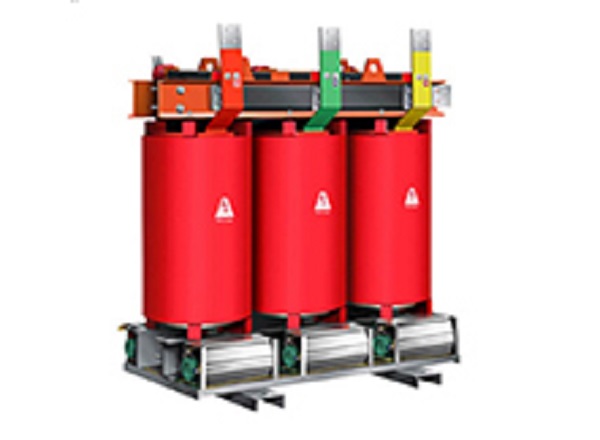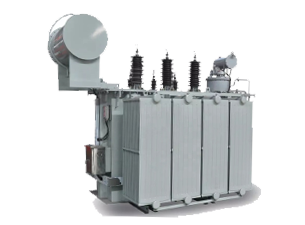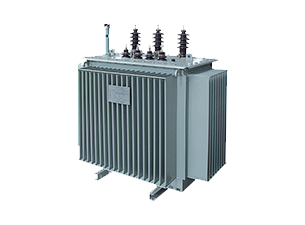


Transformers are the core equipment used in transformer, electrical isolation and power distribution in power systems, industries and new energy fields.The mainstream is divided into two categories: double winding and three winding. The working principle of the two is the same, but there are obvious differences in structure, performance, use and cost.This article simplifies the comparison of the characteristics, applicable scenarios and selection methods of the two, and at the same time combs common selection misunderstandings to help in rapid and accurate selection.
What Is a Two-Winding Transformer?
Double-winding transformers are the most basic type of transformers with the most basic structure and the most widely used engineering applications.The equipment arranges two sets of primary and secondary independent windings insulated from each other on the same iron core, which can accurately complete the electrical energy conversion between the two voltage levels, while realizing the electrical isolation of the high and low voltage sides to ensure the safe and stable operation of the power system.
Core features
- Complete electrical isolation: there is no direct electrical connection between the primary and secondary windings, and the whole process relies on electromagnetic induction coupling to transmit electrical energy, which can effectively cut off high and low voltage faults, leakage and interference signals, and the system operation safety and reliability are extremely high.;
- The transformer law is clear and stable: under the premise of ignoring the operating loss of the equipment, the winding voltage ratio and the number of turns ratio are basically the same, and the step-up or step-down conversion can be flexibly realized according to engineering needs, and the voltage regulation accuracy is high and the controllability is strong.;
- Simple and reliable operating conditions: only two-way power transmission between the primary and secondary sides is supported, the working logic is single and clear, the equipment structure is streamlined, the operation and maintenance are convenient, and the long-term operation failure rate is low and the stability is excellent.
Structure and principle
The transformer adopts a low-loss laminated iron core structure as a whole, which can effectively reduce hysteresis loss and eddy current loss, and improve the operating efficiency of the equipment. The winding is made of copper or aluminum insulated wires with high conductivity, the structure is compact and orderly, and the space utilization rate is high.
When the equipment is running, after the primary winding is connected to the alternating current, a continuous alternating magnetic flux will be generated inside the iron core, and the rated voltage will be induced at the secondary winding end through the coupling of the magnetic circuit. After the secondary side is connected to the load loop, the electrical energy can be continuously and stably output to complete the voltage conversion and power transmission.
What Is a Three-Winding Transformer?
The three-winding transformer is an integrated and multifunctional high-end substation equipment. It is arranged with three sets of independent and completely insulated winding structures on the same common core magnetic circuit, which are the primary main winding, the secondary main winding and the tertiary auxiliary winding.
Compared with a dual-winding transformer, it can be connected to three sets of power grids of different voltage levels at the same time. It has multiple functions such as power interconnection, power distribution, harmonic suppression, voltage regulation, and auxiliary power supply in the station. It is more adaptable and is mostly used in complex power grids and large-scale industrial power supply scenarios with multi-voltage grid-connected and high power quality requirements.
Core features
- Global electrical insulation isolation: The three sets of windings share the same iron core magnetic circuit, but the two are completely electrically isolated, and the insulation margin is sufficient, which can effectively avoid cross-loop electrical interference and fault coupling, and the system operation safety is significantly improved.;
- Flexible two-way power transmission: following the principle of electromagnetic induction, the winding voltage is proportional to the number of turns, and the power can be freely transmitted in both directions between any two sets of windings, and the flexibility of power scheduling and load distribution is much better than that of the dual-winding structure;
- Asymmetric capacity adaptation: Each winding supports independent and differentiated capacity configuration (typical parameters such as 100/100/30MVA), without the need for all windings to run at full load simultaneously, which can accurately match the load requirements according to actual working conditions, avoiding equipment capacity redundancy and waste of resources.
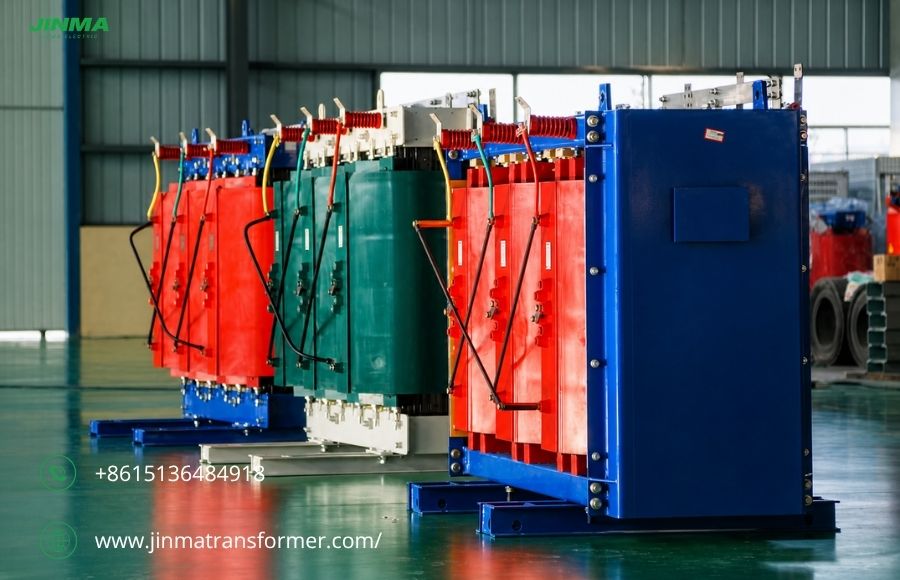
Three-time winding core function
The tertiary winding is the core function expansion unit of the three-winding transformer. Through different wiring methods, diversified power optimization functions can be realized and adapted to various complex power grid conditions. The specific functions are as follows:
- Harmonic suppression: It can effectively channel the third harmonic current in the power system, form a stable harmonic discharge path, greatly suppress the voltage distortion of the power grid, and optimize the quality of the power waveform.
- Auxiliary power supply: It can be used as an independent power supply circuit to provide a stable power supply for auxiliary loads such as equipment and reactive power compensation devices in substations, without the need for additional auxiliary transformers.
- Multi-system interconnection: relying on an independent third winding circuit, a single transformer can be connected to three different voltage levels of the power grid to complete the interconnection of multi-voltage systems and power distribution.
- Voltage regulation: effectively reduce the zero-sequence impedance of the system, improve the voltage regulation performance of the power grid, suppress voltage fluctuations, and ensure the stability of the operating voltage of the power system.
Structural features
- Iron core structure design: The mainstream equipment adopts three-column or five-column iron core structure, which can be adapted to high-voltage and ultra-high-voltage power conditions, effectively optimize the zero-sequence magnetic circuit, reduce the zero-sequence impedance, and meet the voltage regulation and grounding protection needs of complex power grids.
- Winding arrangement process: The three sets of windings are mostly arranged concentric or staggered. The leakage resistance parameters between the two windings need to be accurately calculated and controlled during the design phase to avoid problems such as internal circulation, voltage offset, and uneven output during operation, and to ensure the operating stability of the equipment.
- System supporting complexity: compared with dual-winding transformers, its overall structure is more precise and its manufacturing process requirements are higher.At the same time, the relay protection configuration, impedance matching, and system debugging logic are more complex, and the technical standards for design, construction, and operation and maintenance are more demanding.
Two-Winding vs. Three-Winding Transformers: Key Differences
Combining structural design, operating performance, operation and maintenance costs and applicable working conditions, the core differences between the two types of transformers are classified as follows, which is convenient for engineering selection and quick distinction.:
Winding structure and electrical isolation
The dual-winding transformer is only equipped with two sets of primary and secondary working windings, and the electrical isolation range is limited to between the two sides of the high and low voltage. The circuit structure is simple and the isolation form is single, which can only realize the independent protection of the two-stage circuit.
The three-winding transformer adds independent three auxiliary windings on the basis of the conventional two-winding structure, and the three sets of windings are isolated in pairs to achieve full-dimensional electrical insulation, which can effectively block cross-loop electrical coupling interference, avoid the impact of fault interconnection, and greatly improve the anti-interference ability of the system and the safety of fault isolation.
Voltage adaptation capability
The dual-winding transformer can only realize the power conversion between the two voltage levels. The function is limited to a single step-up or step-down conversion condition, and it is suitable for a power supply system with a simple structure and a fixed voltage level.;
The three-winding transformer can be connected to three sets of power networks of different voltage levels at the same time, which can realize the interconnection and flexible power distribution of multi-level voltage systems, and adapt to the complex power supply conditions of multi-voltage networking.
Power quality governance ability
The dual-winding transformer has no built-in harmonic control structure and does not have the ability to filter out harmonics independently. The problem of harmonic distortion in the power grid can only be dealt with by an external filter device, and there are more supporting equipment in the system.;
The three-winding transformer can rely on the three-winding of the triangular connection method to build an exclusive harmonic discharge circuit, independently divert and suppress the third harmonic, effectively optimize the voltage waveform of the power grid, reduce the harmonic distortion rate, and improve the overall power quality.
Power transmission characteristics
The power transmission path of the dual-winding transformer is fixed and single, and only supports two-way power interaction between the primary and secondary sides. The transmission mode is fixed and solidified, and the flexible deployment of multiple loops cannot be achieved. It is only suitable for simple one-way or two-way transformer conditions.;
The three-winding transformer can realize two-way power scheduling between any two sets of windings, with a wider dimension of power interaction and flexible distribution methods. It can dynamically allocate electrical energy according to changes in the load of the power grid, and fully adapt to the multi-loop and variable-load operating conditions of complex power grids.
Design and operation and maintenance costs
The structure of the double-winding transformer is simple, the manufacturing process is mature and standardized, the supporting relay protection logic is simple and clear, and it has the outstanding advantages of low cost, simple operation and maintenance, and low operating failure rate.;
The difficulty of winding layout design, multi-loop impedance matching and relay protection debugging of three-winding transformers has been greatly increased, and the equipment manufacturing cost, on-site construction difficulty and late operation and maintenance investment have all been significantly higher.
Brief summary: Dual-winding is an economical basic equipment, which is suitable for simple transformer scenarios; three-winding is a multi-function equipment, which can exchange higher costs for added value such as multi-system compatibility, harmonic control, and integrated power supply.
Applications: When to Choose a Two-Winding Transformer
For projects that only require dual-voltage conversion, no harmonic control and auxiliary power supply requirements, and pursue low-cost and low-operation and maintenance, dual-winding transformers are preferred.
- Urban and rural and commercial conventional power distribution scenarios: suitable for public power distribution scenarios such as residential areas, township power grids, commercial buildings, etc., mainly complete the high and low voltage step-down conversion, stable working conditions, small load fluctuations, relying on the advantages of simple structure of dual-winding transformers, economical and reliable operation and maintenance, to meet the basic power distribution needs;
- Simple generator set boost power transmission scenario: suitable for small and medium-sized thermal power, hydropower and other simple boost stations, for pure power generation and transmission conditions without in-station load and no need for electrical energy optimization, complete the boost transmission of low-voltage power generation to high-voltage power grids, and meet the basic grid-connected power transmission requirements;
- Special isolated power supply scenarios for industrial equipment: used in industrial production lines, electromechanical and precision instrument power supply circuits. With good electrical isolation performance, it isolates power grid voltage fluctuations, clutter and leakage interference, protects equipment safety and ensures stable production.;
- Supporting power supply scenarios for small and medium-sized power equipment: It can provide an adapted and stable working power supply for secondary power equipment such as UPS power supplies, power transformers, measurement and control devices, etc. The equipment has good adaptability, convenient operation and maintenance, and stable operation. It is suitable for the normalized power supply of various small and medium-sized auxiliary power equipment.
Applications: When to Choose a Three-Winding Transformer
When there is a need for multi-voltage interconnection, power quality optimization, and integrated auxiliary power supply, a three-winding transformer must be selected, which can simplify system configuration and save equipment and infrastructure costs.
Typical application
- Integrated substations with three-stage voltage interconnection: it is suitable for hub substations with high, medium and low three-stage voltages. It can rely on three sets of independent windings to connect to the multi-stage voltage power grid, and complete system interconnection, voltage regulation and power distribution in one stop, eliminating the need for multiple transformers to be configured in parallel, simplifying the layout of equipment in the station and saving infrastructure space.;
- Generator set booster stations with auxiliary power supply: widely used in thermal power, hydropower, and new energy booster stations, relying on three independent windings to power the station’s control, lighting, cooling and other self-use loads, without the need to install special station transformers, taking into account the delivery of electrical energy and the station’s self-sufficient power supply, streamline the supporting equipment system of the power station;
- New energy and frequency conversion industrial harmonic sensitive scenarios: suitable for photovoltaic, wind power grid-connected and industrial scenarios with nonlinear loads such as frequency converters and steel rolling equipment, harmonic discharge channels can be constructed through triangular wiring of three-way windings to effectively suppress the third harmonic, improve the voltage waveform, and ensure the stable operation of the power grid and precision equipment.;
- Supporting power systems for reactive power compensation that require voltage regulation and optimization: In power grids equipped with reactive power compensation devices, the zero-sequence impedance of the system can be optimized through three windings to improve voltage regulation capabilities, suppress voltage offsets and oscillations caused by load fluctuations, and cooperate with reactive power equipment to stabilize voltage, significantly improving the voltage stability and power quality of the power grid.
How to Choose Between Two-Winding and Three-Winding Transformers
Core working condition determination
Make basic judgments based on the voltage level of the power system and the number of power supply requirements.If the project only involves two independent voltage-level electrical energy conversion, only a single boost, step-down or basic electrical isolation function needs to be completed. When there is no need for excess electrical energy optimization and multi-loop power supply, dual-winding transformers are preferred.;
If the system has complex functional requirements such as power interconnection, multi-directional power distribution, and auxiliary power supply integration of three or more different voltage levels, a three-winding transformer must be selected to meet the multi-dimensional power operation conditions.
Quick scene screening
Quickly identify the type of equipment based on the actual working conditions of the project.When the project has special needs such as multi-voltage networking, harmonic control of the power grid, integrated auxiliary power supply in the station, and limited equipment layout space, the multi-function integration advantages of the three-winding transformer can effectively simplify the system structure and reduce the investment in supporting equipment.;
When the project focuses on controlling construction and operation and maintenance costs, simple and stable working conditions, only the basic dual-voltage transformer task needs to be completed, and there is no additional power quality optimization requirement, a dual-winding transformer with simple structure and higher cost performance can be selected to meet the operating requirements.
Final selection criteria
Follow the core logic of power engineering selection of “minimalist configuration and on-demand adaptation”.For general scenarios such as conventional power distribution with single working conditions and fixed functions, simple power generation boost, and electrical isolation of equipment, dual-winding transformers are used by default.;
For complex and multi-functional power scenarios such as multi-voltage grid-connected, large-capacity hub transformation, new energy grid-connected, power quality control, and integrated station power supply, three-winding transformers are upgraded to take into account the stability of system operation and the economy of equipment integration.
Common Mistakes When Selecting Transformer Winding Configurations
- Redundant optional three-winding transformers: The blind selection of three-winding transformers for simple dual-voltage transformer distribution scenarios will cause functional redundancy, greatly increase equipment procurement, construction, commissioning, and operation and maintenance costs, and cause waste of resources.When there are no special needs such as multi-voltage interconnection and harmonic control, dual-winding transformers should be preferred.
- Three-winding configuration is missing in key scenarios: new energy grid-connected, unit boost stations, and high-harmonic industrial scenarios. If the three-winding transformer is not configured, the equipment will lose its independent harmonic suppression and voltage regulation capabilities, and it will be prone to voltage distortion and power quality exceeding the standard. Additional filtering and voltage regulation equipment are required to increase system supporting investment.
- The labeling of the capacity of the three-winding transformer is not standardized: the capacity of each winding of the three-winding transformer can be configured differently. If the rated capacity is uniformly marked and the parameters of each winding are not distinguished, it will cause load distribution design deviations, which can easily cause single-winding overload, equipment heating and even out-of-operation failures. The independent capacity of each winding needs to be accurately marked during design.
- Ignore the verification of leakage resistance and zero sequence parameters: The coupling relationship between the three-winding transformer circuit is complex. If the leakage resistance, zero sequence impedance and grounding parameters are not accurately checked during construction and commissioning, it is easy to produce internal circulation, voltage offset, zero sequence abnormality and other problems, seriously reducing the operating stability of the power grid, multi-dimensional parameter verification and debugging must be completed.
- Underestimating the difficulty of relay protection design and debugging: The multi-loop operating characteristics of a three-winding transformer make its protection logic more complicated. The direct application of the dual-winding transformer protection scheme can easily cause protection malfunction and hidden dangers of rejection. Special multi-loop relay protection design and debugging strategies are required.
- Ignoring the long-term expansion requirements of the project: the selection is only based on the current load conditions, and the later load growth, system expansion and function upgrade requirements are not predicted. This will lead to equipment parameters and functions that cannot be adapted to the long-term operating conditions, and equipment needs to be modified or replaced in the short term, increasing the cost of engineering transformation and operation and maintenance pressure.
Conclusion
There are no absolute advantages and disadvantages of dual-winding and three-winding transformers. The core depends on the scene adaptation.The dual-winding is mainly economical, simple and stable, and is suitable for conventional dual-voltage transformer and isolation scenarios; the three-winding is mainly multi-function integration, which is suitable for complex power systems with multi-voltage interconnection, harmonic control, and auxiliary power supply.The selection of the project follows the principle of ”simplicity without complexity, on-demand configuration”, which can effectively control costs, avoid failures, and ensure the safe and stable operation of the system.