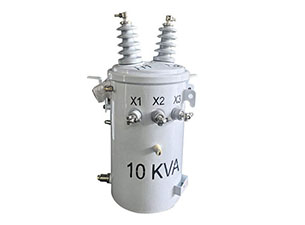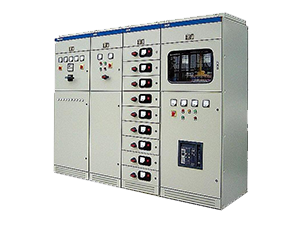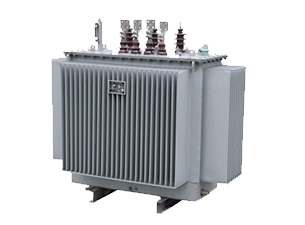


Transformer is the electric power grid, industrial production, new energy power station in the most core, the highest cost, the operation of one of the most critical power equipment. Transformer relay is a protection device, its core role is to monitor the real-time operating parameters of the equipment, accurately identify abnormal faults, issue early warning or quickly cut off the fault circuit, maximize the protection of transformer equipment safety, personnel safety and power grid operation stability.
This article will comprehensively explain the classification of the transformer relay, core functions, working principle, application scenarios, the use of value, as well as the operational risks of no relay protection, while answering the industry’s common questions, to help electric power practitioners to fully grasp the transformer relay protection system.
What is a transformer supporting relay?
Transformer is one of the most core, costly and critical power equipment in power grid, industrial production and new energy power station. A large power transformer service life of up to 30-40 years, long-term voltage conversion, power transmission and grid voltage stabilization of the core task.
But in the long-term operation process, insulation aging, overload heating, internal discharge, line short circuit, lightning surge and other types of faults occur frequently. If there is a lack of supporting protective devices, small hidden dangers will quickly expand, and ultimately lead to winding burn, tank explosion, oil fire, large-scale power outages and other major accidents, resulting in huge economic losses and safety hazards.
Transformer relay is the core protection equipment born to solve such risks.
Many electrical practitioners are prone to misunderstanding: the relay is not a built-in parts of the transformer body, but an independent supporting monitoring, protection and control devices, and transformer operation.
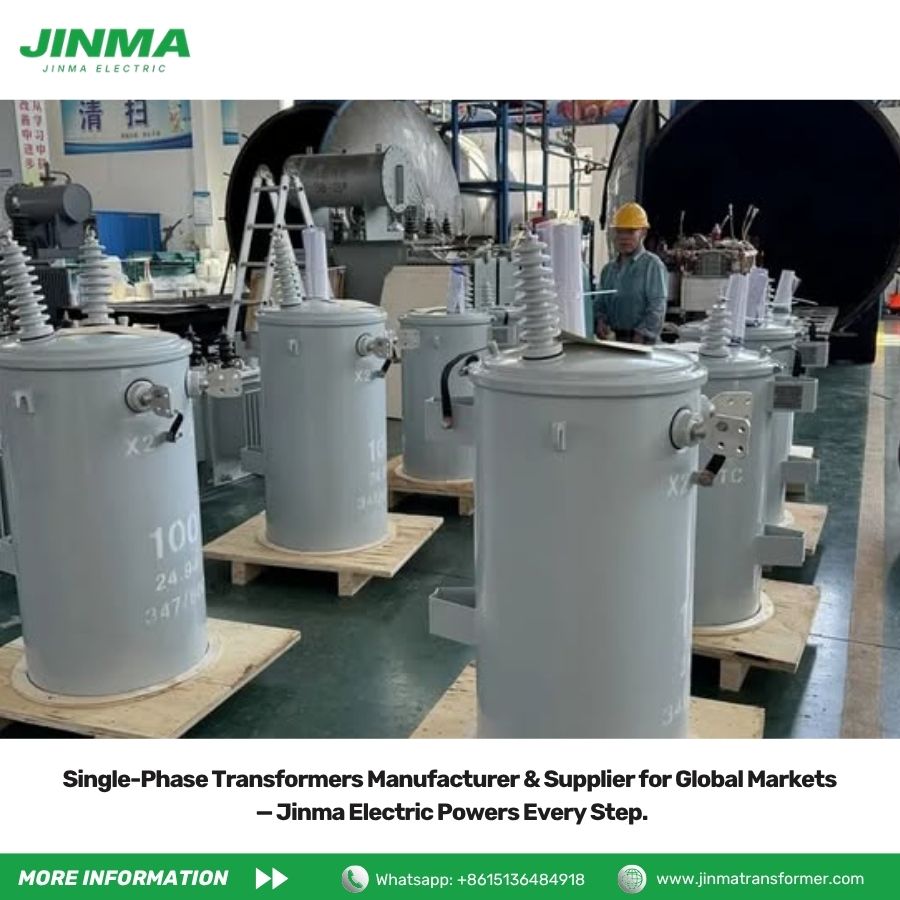
Two major classifications of transformer relays
Adapted to the transformer relay is mainly divided into two categories, respectively, for mechanical oil circuit faults and electrical parameter faults, the two complement each other, constituting a full range of transformer protection system. The monitoring dimensions, installation locations, and application scenarios of these two types of equipment are completely different, and are the core knowledge for power operation and maintenance, equipment selection, and substation design.
Gas Relay (Buchholz Relay)
Buchholz Relay, also known as Buchholz Relay, developed by Max Buchholz in 1921, is the most representative of oil-immersed power transformers, exclusive protection equipment, only suitable for oil-immersed transformers with oil storage cabinets, dry-type transformers do not need to configure.
Installed in the piping between the transformer’s main tank and the oil conservator, the device monitors the transformer’s internal oil condition, gas build-up, and oil flow surge, and specializes in capturing slow-developing, hidden faults within the transformer.
Different from electrical relays, gas relay does not monitor current, voltage and other electrical parameters, only through the mechanical structure of the oil circuit, gas circuit abnormalities, is the only early prediction of the transformer early latent faults of the core devices.
Electrical/microcomputer integrated protection relay
Electrical protection relay to microcomputer digital equipment, is currently the substation, industrial power distribution system of the mainstream configuration, can realize the all-in-one integrated protection function.
These relays need to be used with current transformers (CT), voltage transformers (VT/PT), temperature sensors and other ancillary equipment, real-time collection of transformer current, voltage, frequency, oil temperature, winding temperature and other core operating data.
Compared with the traditional mechanical relay, the digital microcomputer relay has higher integration, faster response speed, more comprehensive monitoring dimension, and at the same time, it has expanded functions such as data recording, fault analysis, remote communication, etc. It is suitable for all specifications and types of transformers.
8 Functions of Transformer Relay
Transformer relay is not a single-function equipment, but a set of monitoring, early warning, protection, control, traceability in one integrated system. Different types of relays in their respective roles, cooperate with each other, a full range of transformer operation against all kinds of abnormal conditions, the core function is mainly divided into eight categories.
Early warning of latent faults
This is the unique core advantage of the gas relay, but also other electrical protection relay can not replace the function. Hidden faults such as insulation aging, partial discharge, slight overheating and trace arcing inside the transformer will not cause current and voltage abnormalities at the initial stage, which cannot be recognized by the electrical relay.
These minor faults will slowly decompose the transformer insulating oil, generating hydrogen, methane and other combustible gases, which gradually gather inside the gas relay cavity, lowering the cavity oil level and triggering the warning signal.
Operation and maintenance personnel can use the early warning signal to investigate hidden problems, arrange for maintenance, and complete treatment before the fault worsens, completely avoiding small hidden problems from evolving into major accidents such as explosions and fires, and realizing the upgrade from “fault repair” to “predictive maintenance”.
Accurate detection of internal and external faults
Transformer operation will face internal winding short circuit, turn-to-turn short circuit, core fault, grounding fault, and external line short circuit, lightning surge, power grid abnormalities and other types of faults, microcomputer protection relay can accurately capture all kinds of abnormal conditions.
Among them, the differential relay (87T) is the core protection device for internal faults. By comparing the input and output currents of the transformer’s high-voltage side and low-voltage side, it can accurately determine whether there is a current leakage fault within the equipment.
Once a fault is detected, the relay sends a trip command to the circuit breaker within milliseconds, precisely isolating the faulty transformer, avoiding the fault current from continuously impacting the equipment, and preventing the fault from spreading to the entire power grid.
Overload and overcurrent protection
Transformers are allowed to be slightly overloaded for a short period of time, but long-term overload operation will lead to increased heating and accelerated aging of the insulation, significantly shortening the service life of the equipment, or even causing permanent damage.
Overcurrent relay (50/51) is specially designed for overload, external short-circuit, load surge, etc. It is divided into two modes: instantaneous protection and delayed protection, which is suitable for different fault scenarios.
Instantaneous mode for serious short-circuit faults, immediately tripped off the power supply; delayed mode for minor overloads, leaving time for load adjustment, to avoid false tripping, taking into account the safety of the equipment and the stability of the power supply.
Overheating and temperature protection
Temperature is the core indicator that affects the service life of the transformer, relevant data show that the transformer temperature rises 8-10 ℃, the insulation aging speed will be doubled, long-term high-temperature operation will directly lead to insulation breakdown, equipment scrapping.
Temperature, thermal relay (49) with oil temperature, winding temperature sensors, real-time monitoring of transformer hot spot temperature, top oil temperature and operating temperature rise changes.
When the temperature is close to the warning threshold, the device issues an alarm signal; when the temperature exceeds the standard, it automatically triggers a trip, and at the same time, it can link the cooling fan and oil pump to start, assisting the equipment to cool down, avoiding the risk of thermal damage in all aspects.
Overexcitation protection (V/Hz protection)
Overexcitation faults mostly occur in generator set step-up transformers, new energy step-up transformers and other equipment, mainly triggered by grid over-voltage, system frequency is too low resulting in abnormal voltage/frequency ratio.
The abnormal ratio will cause the transformer core to become saturated with magnetic flux and eddy currents, leading to overheating of the core, increased vibration, insulation aging and other problems, and long-term accumulation will lead to permanent damage to the core.
Overexcitation relay (24) real-time monitoring of V / Hz ratio, once the standard threshold is exceeded, immediately start the protection logic, effectively avoid iron core saturation damage, to protect the stable operation of high-power step-up transformer.
Prevention and control of winding ground fault
When ground fault occurs in the transformer winding, casing and surrounding area, the fault current is small, and ordinary overcurrent protection is difficult to recognize accurately, which is prone to leakage protection and late protection problems.
Restricted Earth Fault Protection (REF) has ultra-high sensitivity, specializing in monitoring tiny ground faults in the transformer protection area, and can accurately capture all kinds of hidden grounding anomalies.
This protection function effectively makes up for the short board of conventional protection, and avoids the long-term existence of ground faults causing winding burns, equipment leakage, safety electrocution and other accidents.
Backup protection function
In order to avoid the failure of the main protection device to cause the fault can not be removed, the transformer relay protection system set up a perfect backup protection logic, forming a double protection barrier.
When the main protection device such as differential protection fails or refuses to operate, the backup protection such as overcurrent protection and distance protection will start automatically to remove the fault circuit in time and eliminate the blind zone of protection.
At the same time, the relay can realize precise cooperation between the upper and lower levels of protection, isolating only the faulty section, ensuring continuous power supply to the rest of the normal area of the grid, and minimizing the scope of power outage.
Intelligent monitoring and remote control
Modern digital relay has long broken through the traditional basic functions of tripping and alarming, and added a full range of intelligent operation and maintenance capabilities to meet the operational needs of intelligent substations and unattended power stations.
The equipment can collect real-time current, voltage, power, harmonics and other operating data, automatically record fault waveforms, event logs, trip records, for fault tracing, equipment maintenance, analysis of working conditions to provide accurate data support.
At the same time support SCADA system remote communication, remote monitoring, parameter debugging, part of the high-end equipment also has a self-test, adaptive fixed value, network security protection and other functions, significantly reduce operation and maintenance costs.
Working principle of mainstream transformer relay
Different types of relays have different working mechanisms, mechanical relays rely on the physical structure to perceive abnormalities, digital electrical relays rely on algorithms and sensors to achieve accurate monitoring. The following is a detailed explanation of the working principle of the two core relays most commonly used in the industry, as well as the operation process of the entire protection system.
Working Principle of Gas Relay
Gas relay is equipped with upper and lower float, baffle plate, magnetic contacts and other mechanical structures, normal operation of the cavity is filled with transformer oil, the float in the floating state, the contacts remain disconnected, no alarm, no tripping action of the equipment.
When a slight latent fault occurs in the transformer, the gas generated by the decomposition of insulating oil continues to rise, gathering in the upper part of the relay cavity, gradually squeezing the internal oil. After the oil level in the cavity drops, the floating ball sinks, closing the alarm contact, the system issues a fault warning, prompting the operation and maintenance personnel to investigate the hidden danger.
When the transformer occurs serious short circuit, violent arc, large insulation breakdown and other major faults, it will instantly produce a large amount of gas, triggering a violent oil flow surge. The high-speed oil flow impacts the internal baffle plate of the relay, triggering the tripping mechanism, directly disconnecting the circuit breakers on both sides of the transformer and quickly isolating the faulty equipment.
In addition, when the transformer oil leakage, oil level is too low, the floating ball will sink to trigger the protection action, to avoid all kinds of safety accidents caused by the lack of oil operation of the equipment.
Differential Relay Working Principle
Relying on Kirchhoff’s current law, the differential relay is the fastest and most accurate main protection device for transformer internal faults, with almost no protection blind spot.
The device collects real-time current data from both sides of the transformer through the current transformers installed on the high-voltage side and low-voltage side of the transformer, and compares the difference in current vectors accurately. During normal operation or faults outside the grid, the input and output currents of the transformer are basically balanced, the difference value tends to be close to zero, and the relay does not operate.
When there are faults such as turn-to-turn short circuit, winding grounding, internal arcing, etc. inside the transformer, part of the current will be lost inside the equipment, resulting in a significant difference between the two sides of the current. When the difference exceeds the set threshold, the relay immediately triggers instantaneous trip protection.
Modern differential relay is equipped with ratio braking and second harmonic braking function, which can effectively avoid the false tripping triggered by transformer excitation inrush and current transformer saturation, and greatly improve the protection reliability.
Transformer relay protection system
The first step: fault occurs, the transformer appears gas gathering, oil flow surge, current imbalance, temperature exceeds the standard and other abnormal working conditions, all kinds of sensors real-time capture the abnormal signal.
The second step: the sensor will collect the analog signal transmission to the microcomputer protection relay, the equipment through the built-in algorithm to quickly analyze, compare the preset thresholds, accurate determination of fault type and fault level.
Step 3: According to the fault level, the corresponding actions are executed, minor faults trigger remote alarms, local sound and light prompts, and serious faults immediately output trip commands to disconnect the high-voltage and low-voltage side circuit breakers.
The fourth step: automatically record the fault time, fault waveform, operating parameters and other data, synchronously uploaded to the backstage monitoring system, for subsequent fault analysis, equipment maintenance to provide an accurate basis.
Transformer must be equipped with relay protection reasons
Transformer relay protection is not an optional configuration, but a core device mandated by power industry standards, and the key to safeguarding the safety of equipment, personnel and power grid. Whether it is a public substation or an industrial power station, the compliant configuration of relay protection is the basis for the stable operation of the equipment.
Reduce economic losses
The procurement and installation cost of a medium-sized or large power transformer can be hundreds of thousands to millions of dollars, and the procurement cycle of customized large-scale main transformer equipment can be as long as several months, which makes it difficult to quickly replace the equipment once it is damaged. Relay protection can accurately limit the scope of fault damage, avoiding the complete destruction of equipment, significantly reducing maintenance and replacement costs. At the same time, it can quickly isolate the fault section, reducing the production and power supply economic losses caused by large-area and long-time power outages. In addition, the early warning function can extend the design service life of the transformer by 30-40 years, maximizing the asset value of the equipment, and the long-term operation and maintenance is very cost-effective.
Stabilizing grid operation
Transformer is the core hub of grid power transmission and voltage regulation. Failure of a single device, if not isolated in time, can cause voltage oscillation and tidal current disturbance, which in turn leads to chain failures in the grid and regional power outages.
The relay has precise selective protection ability, only disconnecting the faulty transformer, maintaining the normal operation of the rest of the grid, maximizing the continuity of power supply and maintaining the overall stability of the grid.
Compliance with industry specifications
IEEE C37.91, IEC 60255 and other international power standards, as well as the domestic power grid operation and maintenance norms, all clearly require that medium and large transformers must be equipped with a full set of relay protection devices.
Compliance configuration of relay protection is a mandatory indicator for acceptance of substation and industrial power distribution projects, which can effectively avoid compliance penalties and guarantee the legal and compliant operation of equipment.
Application Scenarios for Transformer Relays
Relay configuration program should be flexibly adjusted according to the type of transformer, voltage level, the use of scenarios, different scenarios of protection configuration focus on the significant differences, specific applications are as follows:
High and low voltage power transformers in substations
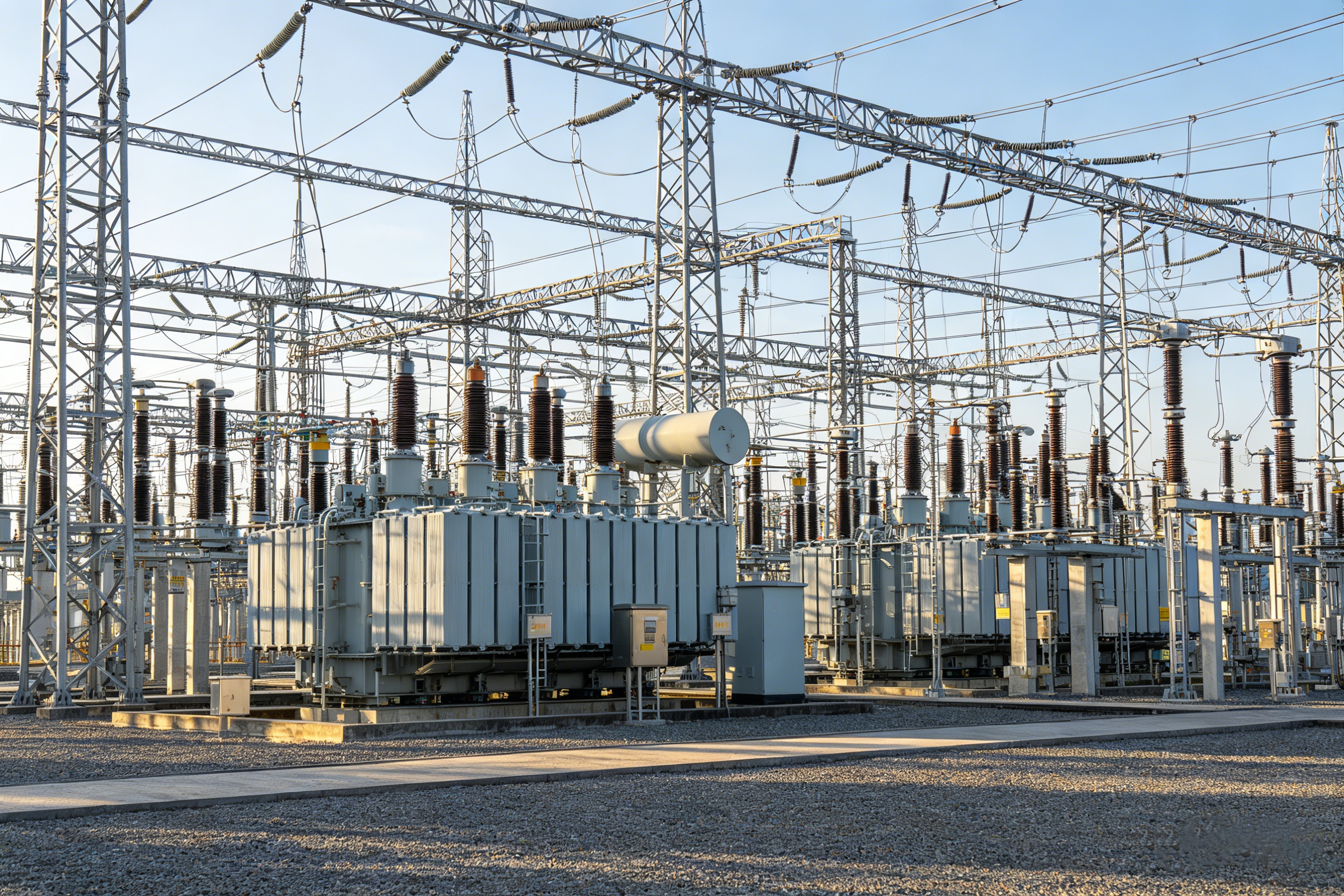
Grid substation high-voltage, medium-voltage main transformer is the core hub equipment of the transmission and distribution system, bears the regional power transmission, voltage rise and fall, grid load deployment of the key tasks, equipment capacity, high voltage level, continuous operation requirements, once the failure will directly affect the power supply stability of the entire grid, is the core of the relay protection application scenarios.
This kind of transformer runs for a long time with full load and heavy load, facing multiple risks such as internal insulation aging, line short circuit, lightning surge, abnormal oil temperature, etc., so it must be equipped with a full set of three-dimensional relay protection devices. The standard configuration includes gas protection, differential main protection, overcurrent backup protection, REF restricted grounding protection, temperature thermal protection and overexcitation protection, realizing the full coverage of protection against mechanical faults, electrical faults and temperature faults.
Power plant step-up transformer (GSU)
Generator set step-up transformer (GSU) is widely used in thermal power, hydropower, wind power, photovoltaic and other types of power generation scenarios, the core role is to step up the generator output of low-voltage power to the standard voltage of transmission, and into the high-voltage grid, is the key core equipment of the power generation side of the connection with the grid.
Compared with ordinary distribution transformers, GSU transformer operating conditions are more complex, with frequent starting and stopping of units, large fluctuations in power generation loads, unstable parameters at the moment of grid connection, which are prone to special conditions such as frequency shift, voltage fluctuation, excitation abnormality, etc., and the probability of core saturation and over-excitation faults is much higher than that of conventional transformers. Therefore, the relay configuration has strong pertinence, in addition to the basic differential protection, overcurrent protection, focus on strengthening the over-excitation protection, negative sequence voltage protection, pressure mutation protection.
Urban and rural distribution transformers
Urban and rural distribution transformers belong to the terminal power supply equipment, common types of column transformers, box-type transformers, outdoor pre-installed substations, widely used in residential housing, commercial areas, municipal support and other end-use scenarios, the number of equipment, widely distributed, low frequency of operation and maintenance, the working conditions of the relatively smooth and simple.
Small low-voltage distribution transformer capacity is small, the risk of failure is low, no need to configure a full set of complex protection devices, the conventional configuration of overcurrent relay, temperature relay can meet the daily protection needs, with the fuse can be realized with the basic short-circuit, overload protection, simple structure, operation and maintenance is convenient, the cost is lower, to match the end of the power supply of lightweight operation and maintenance needs.
For large-capacity distribution transformers in urban core roads, large communities and industrial parks, it is recommended to upgrade multifunctional digital integrated relays due to high load density and high importance of power supply. The equipment can realize multi-dimensional monitoring, accurate fault identification, remote alarm recording, effectively reducing the probability of false and refused to move, and significantly improve the reliability of the terminal grid power supply.
Specialized transformer for industrial and mining enterprises
Mining, chemical, iron and steel, metallurgy, manufacturing and other industrial and mining enterprises special transformers, belonging to the core power supply equipment for industrial production, the working environment is more severe compared to civil and public scenarios, and is the key application area of industrial relay protection.
Industrial production process exists in the motor frequently start and stop, shock load, high harmonic content, frequent switching of equipment and other issues, the transformer long-term fluctuations in the load and harmonic interference, is very easy to overload heat, current distortion, accelerated aging of the insulation and other faults. The scene generally choose industrial grade multi-function integrated protection relay, the equipment has a strong anti-electromagnetic interference ability, can accurately filter harmonic interference, identify the real fault. At the same time integrated overload, short circuit, grounding, temperature abnormalities and other multiple protection functions, can adapt to industrial complex working conditions, effectively resist shock loads brought about by the damage to the equipment, to avoid power outages caused by huge production losses.
Time to upgrade and remodel the old relay system
The traditional electromechanical relays have the defects of slow response, low precision, easy to false start, no data record, etc., which can’t be adapted to the modern smart grid operation requirements, and the following situations need to be upgraded in time to digital multi-functional relays:
- relay tripping action is slow, fault response lags, can not quickly remove the fault;
- frequent false alarms, false tripping, affecting the stability of normal power supply;
- no complete fault logs, unable to trace back and analyze the cause of the problem after failure;
- serious aging of equipment, operation and maintenance is cumbersome, and it is difficult to overhaul and replace the parts after production stops.
After upgrading the digital relay, it can realize fast and accurate protection, complete data logging, remote intelligent operation and maintenance, and at the same time, improve the degree of protection coordination and system stability, so as to provide a guarantee for the long-term safe operation of the transformer.
Frequently Asked Questions
Q1: What is the core difference between gas relay and differential relay?
Gas relay is mechanical protection, monitoring oil and gas anomalies, focusing on early latent fault warning, only suitable for oil-immersed transformers; differential relay is the main electrical protection, monitoring the current difference, focusing on serious internal faults and fast tripping, suitable for all transformer types, the two complement each other.
Q2: Do I need to install a gas relay for dry-type transformers?
No, it is not necessary. Dry-type transformer without insulating oil, no oil storage cabinet, will not produce oil decomposition phenomenon, no need to configure gas relay, rely on temperature protection, differential protection, overcurrent protection can meet the protection requirements.
Q3:Can small distribution transformers omit differential protection?
Low-voltage distribution transformers with smaller capacity can simplify the configuration, using overcurrent protection, fuse as the main protection; but medium and high-voltage, large-capacity distribution transformers must be configured with differential main protection to ensure equipment safety.
Q4:What faults are mainly protected by temperature relay?
The main protection against long-term overload, cooling system failure, load abnormalities caused by the oil temperature, winding temperature is too high, to avoid accelerated aging of insulation, overheating damage to the equipment, is the basic guarantee for the long-term operation of the transformer.
Q5: Do digital relays comply with international power standards?
Mainstream digital multi-function relays are fully compliant with international standards such as IEC 60255, IEEE C37.91, etc. They meet the requirements for grid acceptance and industrial power distribution compliance, and are extremely versatile and reliable.
Conclusion
Transformer relay is the core of the safe operation of power equipment to ensure the core value of early warning of latent faults, rapid isolation of serious faults, all-round resistance to abnormal working conditions, stabilize grid operation, reduce safety and economic risks. Whether it is the main transformer of the power grid, power plant step-up transformer, or industrial distribution transformer, suitable and perfect relay protection configuration is to extend the life of the equipment, ensure the stability of the power supply, to avoid safety accidents, in line with the core of the industry’s compliance basis.
If you need to adapt to different voltage levels and different scenarios of transformer relay protection configuration, please consult Jinma Electric’s professional electrical team to customize standardized and highly adaptable transformer protection system solutions.