

Air-insulated switchgear (AIS) and gas-insulated switchgear (GIS) are the two most widely used core power distribution equipment in medium and high-voltage power systems. Due to the obvious differences in insulation method, structural design, and applicable scenarios, whether the selection is reasonable or not will directly affect the substation footprint, project investment, long-term operational stability, and later operation and maintenance workload. Combined with practical engineering experience, this paper provides clear and practical selection references for engineering and procurement personnel from the perspective of core principles, performance differences, cost components and application scenarios.
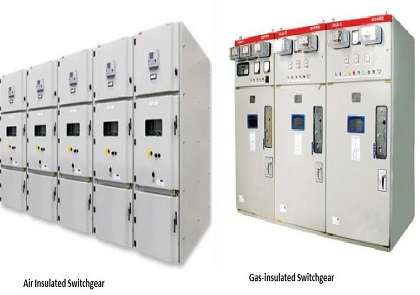
Choose Between Air-Insulated and Gas-Insulated Switchgear
Core difference and working principle of AIS and GIS
Insulation medium and structural design
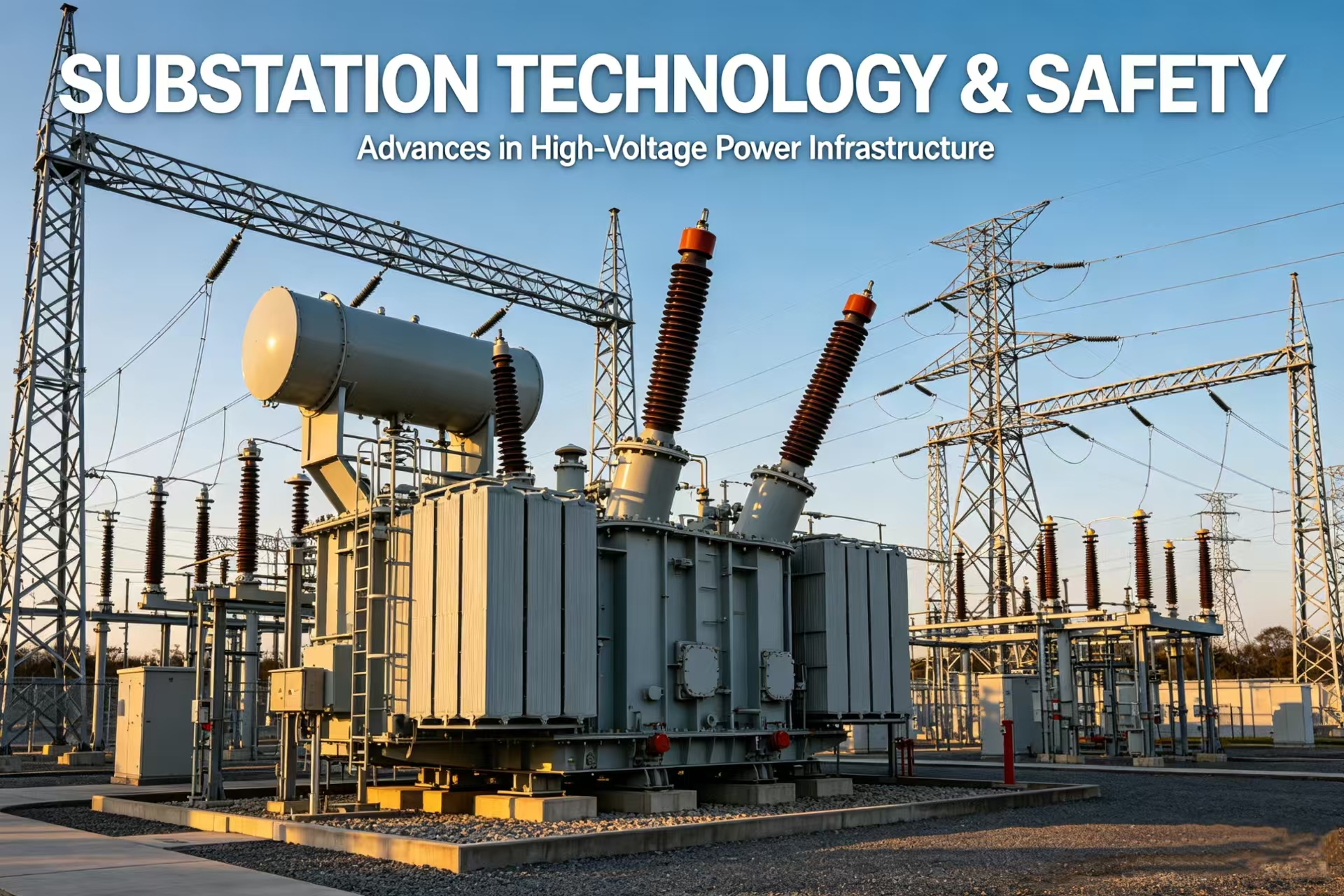
Air-insulated switchgear uses natural air as the insulation medium, the equipment adopts open arrangement and is installed on steel structure or concrete support, the structure is intuitive and clear, and on-site inspection and maintenance are relatively convenient. Gas-insulated switchgear adopts SF₆ gas as insulation and arc extinguishing medium, and all high-voltage components are enclosed inside the metal casing, the insulation spacing is greatly reduced, and the overall structure is highly integrated and more compact.
Floor space and layout
Characteristics of GIS equipment is only equivalent to 10%-30% of the traditional AIS equipment, can realize three-dimensional, compact layout, especially suitable for underground power stations, high-rise buildings, narrow platforms and other space-constrained scenarios.AIS equipment is mostly a planar open layout, which requires a large outdoor space, and it is difficult to be used in height-restricted areas.
Performance Comparison: Reliability, Safety and Electrical Efficiency
Electrical Performance
Both AIS and GIS can cover the mainstream voltage levels of 12kV-245kV and above, and their short-circuit capacity and insulation level are in line with the international common standards. They can be flexibly interfaced with cables, overhead lines, transformers and other equipments, and are able to satisfy the operation requirements of most power grids and industrial power systems.
Environmental adaptability
GIS adopts fully enclosed structure, with strong dustproof, moistureproof, salt spray and industrial pollution resistance, and can still maintain stable operation in harsh environments such as coastal, chemical parks, tunnels, etc. AIS equipment is exposed in the external environment, and is susceptible to the effects of weather, dust, and humidity, which usually requires increasing the design of creepage distances, and regular cleaning and maintenance.
Operation Reliability
GIS is sealed reliably, with lower failure rate, stronger anti-electromagnetic interference ability, and higher safety margin.AIS is affected by the external environment, and requires more frequent inspections, fastening and condition monitoring if it wants to maintain stable operation for a long period of time.
Cost Analysis: Initial Investment, Operation and Maintenance and Life Cycle Costs
Initial investment
AIS has lower equipment procurement and construction costs, which puts less pressure on the project’s initial capital. GIS equipment is more complex, and the overall cost is usually 1.5-3 times higher than that of AIS, so the initial investment is higher.
Operation and Maintenance Costs
AIS requires regular inspection, cleaning, tightening of bolts and testing of components, resulting in higher long-term maintenance labor and material costs; GIS is basically a maintenance-free design, with a small amount of workload for daily inspections, resulting in significantly lower long-term operation and maintenance costs.
Total Life Cycle Cost (TCO)
For projects with high land costs, high reliability requirements, and poor environmental conditions, GIS has a better overall benefit over the entire life cycle. If the site is sufficient, the project budget is limited, and more attention is paid to controlling the upfront investment, AIS will have a higher cost-effective.
Typical application scenarios and selection recommendations
Priority is given to AIS
Scenarios such as outdoor substations, transmission hubs, large industrial parks, traditional distribution networks, and other space-insensitive projects that give priority to economy.
Priority is given to GIS
Scenarios for projects with limited space or harsh environments, such as urban core areas, subways and underground power stations, high-rise buildings, offshore wind power, coastal salt spray areas, and heavily polluted industrial environments.
Hybrid program
In the AIS main variable site local GIS spacing, taking into account the cost control and space constraints, is currently a common compromise in many projects.
Key Points for Selection Decision
When actually selecting a model, you can focus on five core conditions: voltage level and short-circuit parameters, available site footprint, environmental corrosion and pollution, system reliability requirements, project budget and operation and maintenance capabilities. At the same time, combined with the future load growth, reserve a reasonable expansion space, so that the power system in long-term operation to maintain security, stability and economy.
Conclusion
There are no absolute advantages and disadvantages between AIS and GIS, only whether they are suitable for the actual needs of the project. AIS is a more secure choice when there is enough space and hope to control the initial investment; GIS has more prominent advantages when there is tight space, harsh environment, and the pursuit of high reliability and low operation and maintenance pressure. Reasonable switchgear selection not only reduces the one-time investment, but also enhances the safety of grid operation and realizes the optimal value in the whole life cycle.