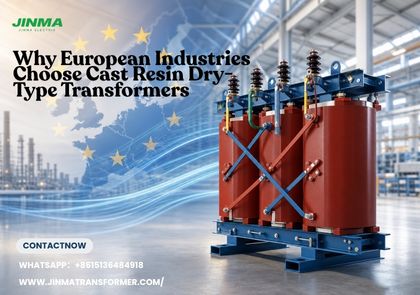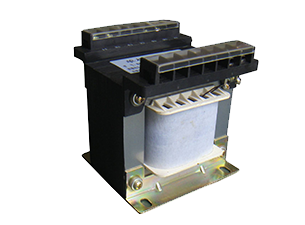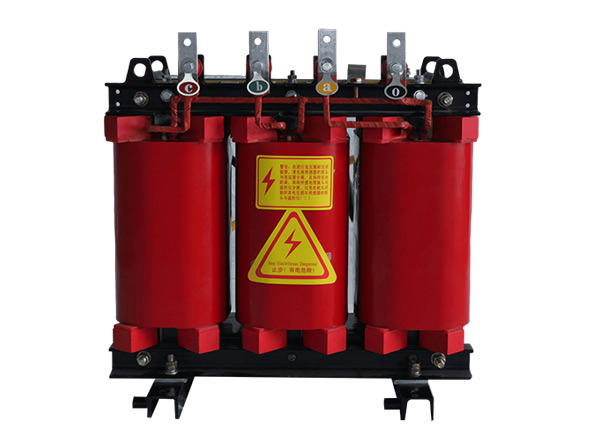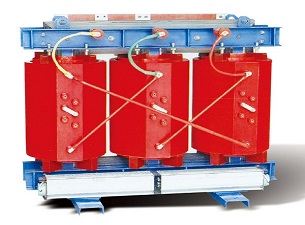


Subject to European industrial upgrading, the popularization of new energy sources and strict regulations, the selection of power equipment attaches great importance to safety compliance, energy saving, low carbon and low operation and maintenance costs.With its excellent performance, epoxy resin cast dry transformers (CRT) have become the mainstream power distribution equipment for European industry, data centers, new energy and urban infrastructure.
Compared with traditional oil-immersed transformers, it is more suitable for the intensive layout of European cities and environmental protection and fire protection standards, and fits the EU’s low-carbon strategy.This article will analyze the core reasons why it is favored in the European industry from the eight dimensions of product characteristics, market advantages, category comparison, industry application, compliance standards, cost analysis, selection skills, and procurement points.
What Is a Cast Resin Dry-Type Transformer?
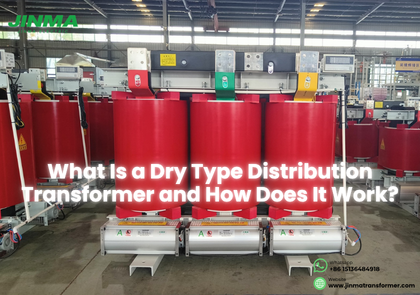
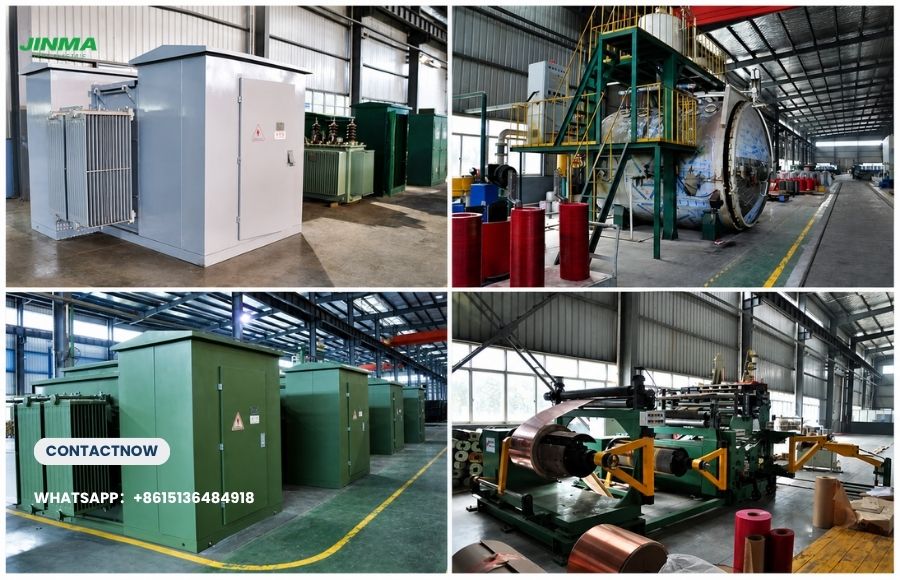
Epoxy resin cast dry transformer, also often referred to as epoxy cast transformer and cast coil transformer, is a kind of dry-type power transformer without liquid insulation.Its core feature is that the winding is completely encapsulated in a solid epoxy resin in a vacuum environment.
It does not use liquid media such as insulating oil and coolant throughout the process, and relies on natural convection of air or forced air cooling to achieve heat dissipation. It is a new type of power equipment that is different from paint-immersed dry transformers and oil-immersed transformers.
Working principle and core structure
The equipment follows the core principle of electromagnetic induction to complete the voltage rise and fall: after the primary winding is connected to alternating current, an alternating magnetic field is formed in the silicon steel laminated iron core, and the corresponding voltage is induced in the secondary winding according to the number of turns ratio to achieve power voltage regulation and transformer transmission. The basic transformer logic is consistent with conventional transformers.
The core of its differentiation lies in the insulating packaging process, which is also the root of the performance advantage:
- Accurately locate and fix the copper and aluminum windings in the customized mold;
- Liquid epoxy resin doped with quartz powder is poured in a vacuum environment to completely remove air bubbles and moisture, effectively improving the structural strength and thermal conductivity of the equipment;
- After the resin is cured, an integrated solid sealing structure is formed, which fully covers the conductor to achieve multiple protections of insulation, dustproof and moisture-proof.;
- The fuselage has a built-in dedicated cooling duct, which supports two cooling modes, natural air cooling (AN) and forced air cooling (AF), which can be adapted to the load requirements of different working conditions.
The stability and protection performance of this all-solid-state pouring process are better than that of VPI vacuum-dipped dry transformers.The conventional capacity of the equipment is tens of kVA to 25MVA, the maximum voltage is 36kV, higher voltage specifications can be customized, and F-class insulation is standard, which is perfectly adapted to the European medium and low voltage power distribution scene.
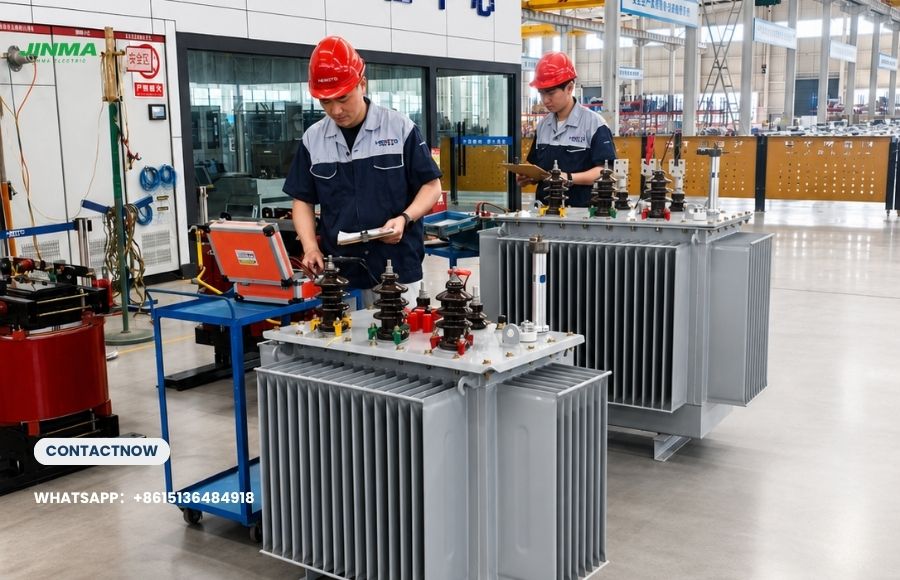
Why Are Cast Resin Transformers Popular in Europe?
The popularity of epoxy resin dry transformers in the European market is not simply the result of product iteration, but an inevitable trend jointly promoted by regional regulations, urban infrastructure, industrial structure, and development concepts, accurately matching the core pain points and development needs of European industry.
Fire protection and building code requirements
Europe has the most stringent fire protection standards for power equipment in the world. According to the IEC/EN 60076-11 standard, dry transformers are divided into two fire protection grades, F0 and F1. Among them, the characteristics of F1 self-extinguishing, low smoke and no dripping are the core access standards for indoor power equipment in Europe.
Fuel-permeable transformers are generally banned in densely populated and confined places in Europe, and their supporting fire-proof facilities will increase construction costs.The epoxy resin dry-type transformer comes with an F1 fire rating, no additional fire protection configuration is required, and it meets the stringent European fire protection standards.
EU environmental Policy
Environmental directives such as the EU Green New Deal, the REPowerEU Energy Transformation Plan, WEEE, RoHS, etc. put forward extremely high requirements for the low-carbon, zero-pollution, and recyclable attributes of industrial equipment.Traditional oil-immersed transformers have the risk of oil leakage pollution and residues of harmful PCB substances. They need to be regularly treated for anti-leakage and soil protection, and the cost of operation and maintenance and environmental protection is extremely high.
Epoxy resin dry-type transformers have no liquid insulating medium, eliminate leakage and pollution from the root cause, operate with zero emissions, easy to dispose of waste, and do not require complex environmental protection measures. They are fully in line with the EU’s sustainable development goals and help companies complete carbon neutrality and sustainable development compliance reporting.
Energy efficiency control standards
The EU 548/2014 Energy Efficiency Regulation (revised version 2019/1783) implements Tier 2 high-level energy efficiency standards, setting strict upper limits on transformer no-load loss and load loss, and the standards are tightened year by year, and high-energy-consuming equipment is prohibited from entering the market. Circulation.
Modern epoxy resin dry-type transformers use high-grade silicon steel cores and optimized winding structures, which can accurately meet the EU Tier 2 energy efficiency requirements, effectively reduce power grid losses and reduce carbon emissions, and not only help enterprises reduce long-term electricity costs, but also adapt to the core strategies of European energy security and energy conservation and emission reduction.
Adapt to European cities and complex industrial scenes
European cities have tight land use and dense buildings, making it difficult to arrange large-scale outdoor power transmission equipment.Epoxy resin dry-type transformers are compact in size and can be installed nearby indoors, effectively reducing cable wiring and reducing energy consumption and infrastructure costs.
At the same time, its moisture-proof, dust-proof, corrosion-resistant, and vibration-resistant characteristics can be perfectly adapted to harsh working conditions such as European coastal wind power, chemical parks, rail transit, and heavy industry manufacturing, and its operating stability is extremely strong.
Ultra-low operation and maintenance cost
In Europe, labor costs are high and equipment operation and maintenance processes are rigorous. Traditional oil-immersed transformers require regular oil inspection, filtration, and sealing maintenance, and long-term operation and maintenance costs remain high.The epoxy resin dry-type transformer is almost maintenance-free, requiring only routine appearance cleaning and inspection, which greatly reduces manpower, materials and downtime losses, and has become the cost-effective choice for industrial enterprises and municipal operation and maintenance departments.
Cast Resin vs. Oil-Immersed Transformers: Which Is Better for European Industry?
There is no absolute distinction between the two types of transformers, and the core adaptation scenarios are different.However, combined with European regulations, scenarios, and cost systems, epoxy resin dry transformers have more advantages in most industrial, commercial, and urban scenarios. Oil-immersed transformers only retain advantages in large-scale outdoor high-power scenarios. The detailed comparison is as follows:
| Contrast dimension | Epoxy resin dry transformer | Oil-immersed transformer | Advantages of European industrial adaptation |
| Fire safety | F1 grade fireproof, self-extinguishing, low smoke, no risk of combustion | Mineral oil is flammable and there is a risk of fire and leakage (ester oil has improved slightly) | Epoxy resin dry type (just needed indoors) |
| Environmental performance | Zero oil leakage pollution, in line with EU environmental directives | There is a risk of soil and water pollution, and protective facilities are required | Epoxy resin dry type |
| Operation and maintenance difficulty | Almost maintenance-free, only routine inspection and cleaning are required | Regular oil inspection, filtration, and sealing maintenance are required | Epoxy resin dry type |
| Installation conditions | The fuselage is compact and can be installed indoors, without the need for special foundation pits and | Mostly for outdoor installation, special foundation pits and fire-proof isolation facilities are required | Epoxy resin dry type |
| Thermal overload | Air-cooled heat dissipation, moderate overload capacity | Liquid-cooled heat dissipation, stronger continuous overload capacity | Oil-immersed (high-load scenario) Basically flat |
| Energy efficiency loss | Meets the EU Tier 2 energy efficiency standards, and the conventional load efficiency exceeds 98% | Energy efficiency at full load is slightly higher, and overall compliance is flat | Basically flat |
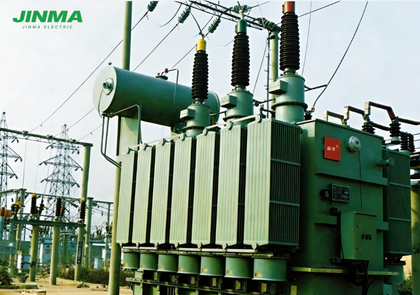
| Capacity voltage | Suitable for up to 25MVA and 72.5kV, suitable for medium and low voltage scenarios | Can be adapted to ultra-large capacity and ultra-high voltage conditions | Oil-immersed (large power station) |
| Initial cost | High (20%-50% higher) | Lower cost and higher cost performance | Oil-immersed |
| Full life cycle cost | Low cost of operation and maintenance, infrastructure, and insurance, with excellent long-term price ratio | High cost of late operation and maintenance and protection, and large long-term investment | Epoxy resin dry type (most scenes) |
Priority is given to epoxy resin dry transformers: indoor factories, data centers, hospitals, commercial buildings, tunnels and subways, urban distribution networks, new energy sites near residential areas, and inconvenient operation and maintenance scenarios. They are adapted to EU fire protection, environmental protection, and building regulations, and the whole life cycle cost is lower.
Priority is given to oil-immersed transformers: utility-level projects with large-scale outdoor power stations, ultra-high-voltage and large-capacity transmission, continuous high-load operation, adequate sites and perfect fire protection conditions, relying on high-efficiency heat dissipation and low cost have more advantages.
Procurement selection needs to abandon the misunderstanding of “only looking at the initial cost” and calculate the whole life cycle cost based on site working conditions, load characteristics, and compliance requirements in order to achieve the optimal input-output ratio.
Key Applications Across European Industries
Relying on the comprehensive advantages of safety compliance, low operation and maintenance, high adaptability, and green environmental protection, epoxy resin dry transformers have fully covered the core fields of European industry and people’s livelihood, and have become the standard choice for power supporting in various industries.
High-end manufacturing and heavy industry
European automobile manufacturing, machining, metallurgy, chemical industry, papermaking and other factories generally use this equipment as the core power supply equipment for workshop power distribution and motor control.Its anti-vibration, anti-dust, and anti-load fluctuation characteristics can be adapted to the harsh working conditions of heavy industries, greatly reducing the risk of downtime and failure, and are widely used in European car companies such as BMW, Mercedes-Benz, and Fiat, as well as steel and aluminum production bases.
Data center and IT infrastructure
European high-end data centers have extremely high requirements for power safety, stability, and fire protection.Epoxy resin dry-type transformers have no fire hazards, low electromagnetic interference, simple operation and maintenance, and stable power supply. They can ensure the continuous operation of precision equipment such as servers. They are standard equipment for digital infrastructure in Europe such as the United Kingdom, Germany, and Italy.
Medical and nursing institutions
Hospitals, health care centers and other personnel-intensive places have hard and fast regulations on fire safety and power supply continuity.The equipment has F1-level fireproof, zero pollution, and high stability characteristics. It fully complies with European medical building electrical standards and guarantees uninterrupted power supply for medical equipment. It is widely used in medical institutions in Germany, Italy, Finland and other countries.
Commercial buildings and urban real estate
Urban office buildings, shopping centers, hotels, schools, high-rise residential buildings, etc., have compact sites and dense personnel, and do not have the protective conditions for the installation of oil-immersed transformers.The epoxy resin dry-type transformer has a compact body, can be installed indoors, has low operating noise, and does not require special fire protection facilities, which is perfectly adapted to urban commercial power distribution scenarios.
New energy wind power and photovoltaic industry
In line with the EU REPowerEU new energy transformation goals, it is widely used in onshore and offshore wind power plants and centralized photovoltaic power plants as the core equipment for step-up, power collection, and auxiliary power supply.Its moisture-proof, salt spray-resistant, and operation and maintenance-free characteristics are suitable for remote, coastal, and outdoor complex new energy sites, and help Europe’s new energy to be connected to the grid on a large scale.
Transportation and municipal infrastructure
Transportation hubs such as rail transit, subways, tunnels, airports, and ports, as well as public infrastructure such as underground substations, urban pipe networks, and stadiums, are mostly closed and large-flow scenarios, with extremely high fire safety priorities.With its excellent fire resistance and space adaptability, the equipment has become the core choice for European transportation and municipal infrastructure, and can meet the requirements of maritime certifications such as DNV, ABS, and RINA for ships and offshore platforms.
Special industry and energy storage scenarios
It can be adapted to industrial rectifier, welding, induction furnaces and other converter conditions, and is widely used in battery energy storage systems (BESS). With its high reliability, corrosion resistance, and low failure characteristics, it can meet the demanding electricity needs of special industries and new types of energy storage.
European Standards and Transformer Compliance
The entry threshold for European power equipment is extremely high. Epoxy resin dry transformers must strictly comply with IEC/EN international standards and EU energy efficiency and environmental protection regulations, and pass compliance certification before they can be sold and put into operation.
Core technical standard: IEC/EN 60076-11
IEC 60076-11:2018 (EU synchronous EN standard) is the core implementation specification for dry-type transformers. It is suitable for dry-type power transformers with a maximum voltage of 72.5kV and a single-winding voltage of more than 1.1kV. It clearly defines the equipment rated parameters, temperature rise limit, insulation level, short-circuit tolerance, heat dissipation method, test standards, altitude adaptation, seismic resistance level and other core technical requirements, which are the core basis for European equipment selection and acceptance.
Three core grading standards (E/C/F)
According to the IEC/EN 60076-11 standard, the equipment is divided into three categories: environment, climate, and fire protection, which directly determine the scene adaptation ability.:
- Environmental level (E0-E4): measure moisture-proof and pollution-resistant capabilities, E2 is suitable for conventional industrial indoor scenes, and E3/E4 is suitable for coastal, high-pollution, high-humidity and harsh working conditions.;
- Climate level (C1-C5): suitable for ambient temperature, C2 level can withstand low temperatures of -25℃, covering most of Europe in four seasons, C3-C5 is suitable for extremely cold areas;
- Fire rating (F0/F1): F1 is just needed for high-end scenes in Europe. It has the characteristics of self-extinguishing, low smoke, and no dripping. It is a mandatory access standard for indoor and densely populated scenes.
Mainstream European manufacturers come standard with E2 C2 F1 basic grade, and the E4 C5 F1 high-protection version can be customized to adapt to extreme working conditions.
EU energy efficiency compliance standards
EU Regulation 548/2014 (revised 2019/1783) is a mandatory specification for transformer energy efficiency. From July 2021, the Tier 2 high-level energy efficiency standard will be fully implemented, strictly limiting the no-load loss, load loss and peak efficiency index (PEI) of dry transformers.All equipment entering the market must meet the standards and pass the CE certification. Non-conforming products are prohibited from being circulated and put into operation in the EU market.
Supporting compliance requirements
At the same time, it needs to meet EN 50588-1 energy efficiency and noise standards, RoHS environmental protection materials standards, and WEEE waste treatment specifications. Special scenarios need to pass additional special certifications such as maritime, seismic, and explosion-proof, and fully adapt to the European diversified compliance system.
Energy Efficiency and Total Cost of Ownership
European industrial procurement of transformers no longer focuses solely on the purchase unit price, but takes the whole life cycle cost (TCO) as the core decision-making basis.Although the initial purchase price of epoxy resin dry transformers is higher, the long-term comprehensive cost is significantly better than that of oil-immersed transformers.
Energy efficiency performance analysis
Limited by the air-cooled structure, the loss of dry-type transformers is slightly higher than that of oil-immersed models, but through the high-grade iron core and optimized winding design, the energy efficiency gap has been greatly reduced.In the 40%-70% load range of the mainstream European industry, its operating efficiency can reach more than 98%, and the annual energy consumption difference is minimal.
Compared with the initial cost difference, the incremental cost of long-term energy consumption can be completely offset within 5-10 years, and the long service life of the equipment for 25-40 years can sustainably reduce energy consumption and operation and maintenance investment.
Comparison of cost composition of the whole life cycle
Transformer TCO = Procurement cost + installation infrastructure cost + energy consumption and consumption cost + operation and maintenance cost + insurance risk cost + scrap disposal cost, the two types of equipment have significant differences in each dimension:
- Scrap recovery cost: Dry-type transformers do not contain insulating oil, the structure is mainly metal and resin, the disassembly is simple, the metal recovery rate is high, the residual value is stable, and there is no need to deal with hazardous waste oil products, which greatly reduces the cost of scrap disposal and environmental protection compliance; in contrast, the waste oil treatment process of oil-immersed transformers is complex, costly and environmentally risky.
- Procurement cost: The initial procurement cost of dry-type transformers is higher. Compared with traditional oil-immersed transformers, there is a 20%-50% price premium, and the initial equipment investment is relatively higher.
- Infrastructure cost: There is no need for special equipment, foundation pits, fireproof partitions and oil protection supporting facilities, which can significantly simplify civil construction and reduce supporting investment, and the overall infrastructure cost advantage is obvious.
- Energy consumption cost: Under conventional stable load conditions, the energy consumption of dry transformers is slightly higher than that of oil-immersed transformers; only in outdoor long-term high-load operation scenarios, oil-immersed transformers have better heat dissipation and energy efficiency.
- Operation and maintenance cost: The dry-type transformer adopts a cured and sealed structure, which requires almost no daily maintenance, and the long-term operation and maintenance cost is extremely low.Oil-immersed transformers need to be tested regularly to replace the insulating oil and overhaul the sealing structure, and the investment in continuous operation and maintenance is higher.
- Risks and insurance costs: dry transformers are fire-proof and explosion-proof, have no hidden dangers of oil leakage and pollution, and have low operating safety risks. They can effectively reduce equipment insurance rates and avoid equipment losses and economic compensation risks caused by fire and leakage pollution.
How to Select a Cast Resin Dry-Type Transformer
Combining European standards with the needs of industrial scenarios, the selection of models must follow the four principles of “electrical adaptation, environmental matching, compliance with standards, and optimal cost”, and complete the precise selection step by step to avoid overload, excessive energy consumption, and failure of compliance.
Clarify the core electrical parameters
The rated capacity is determined based on the continuous load of the equipment +20%-30% of the future expansion margin, and priority is given to adapting to the mainstream European 100-2500kVA specifications, and the large-capacity scenario can be customized to 25MVA; it matches the mainstream voltage system of 10/20/33kV input and 400/690V output, and is suitable for 50Hz European power frequency.
At the same time, determine the wiring groups such as Dyn11 and Dyn5, 4%-6% impedance voltage, and tap range as needed, and add a K-coefficient capacitance reduction design for harmonic load equipment to ensure the stability of the electrical system.
Match heat dissipation and temperature rise requirements
F-class insulation (155℃) and 100K temperature rise limit are used for conventional scenes; H-class insulation (180℃) is used for high temperature and frequent overload scenes.Standard indoor scenes use natural air cooling (AN), and scenes that need to expand capacity and cope with peak loads use forced air cooling (AF), which can increase equipment capacity by 25%-40%.At the same time, the equipment parameters are adapted according to the ambient temperature and altitude, and the ultra-high altitude and high temperature scenarios need to be optimized for capacity reduction.
Lock E/C/F protection level
Follow European selection benchmarks: E2 C2 F1 is standard for conventional industrial and commercial scenarios; E3/E4 high environmental ratings are upgraded for coastal, chemical, and high-pollution scenarios; C3 and above climate ratings are selected for extremely cold areas; all indoor and densely populated scenes must be locked in the F1 fire rating to meet compliance requirements.
Determine the installation and protection configuration
The indoor drying room can choose IP00 open type, and the protection level of IP21/IP23/IP31 and above is selected for dust and humidity scenes; PTC/Pt100 temperature sensing monitoring and alarm tripping functions are standard, lightning arrester is added in areas with multiple lightning strikes, and the seismic zone is adapted to the earthquake-resistant structure.At the same time, sufficient heat dissipation space is reserved to control the noise of equipment operation and adapt to living scenarios.
Strict compliance and energy efficiency screening
All equipment must meet the EU Tier 2 energy efficiency requirements, hold CE certification and EU declaration of conformity, and can provide a full set of type test reports such as temperature rise, short circuit tolerance, partial discharge, and E/C/F protection level to ensure equipment compliance from the source and meet EU market access regulations.
Refined customization and matching selection
Focus on low-loss, short-circuit resistance, optimal copper windings, and pursue lightweight, low-cost optional aluminum windings; special scenarios such as new energy, maritime, energy storage, and converter, customize special working conditions models; choose fans, shock-absorbing bases, mobile brackets, and terminal accessories as needed, and combine TCO costs to complete the final selection decision.
What European Buyers Should Ask a Transformer Manufacturer
European procurement has strict requirements for equipment quality, compliance, and after-sales system. When docking with manufacturers, core information needs to be checked in a targeted manner to avoid compliance risks, quality hidden dangers, and after-sales loopholes. The core inquiry dimensions are as follows:
- Technical performance verification: confirm the precise parameters of the rated capacity, voltage, frequency, wiring group, impedance and voltage of the equipment; clarify the insulation level, temperature rise limit, heat dissipation mode and expansion capacity; verify whether the no-load loss and load loss meet the EU Tier 2 standards, and confirm the core performance indicators such as partial discharge capacity, short circuit tolerance, operating noise, and tap adjustment range.
- Protection level certification: Clarify the three protection levels of equipment E/C/F, verify the type test report of a third-party independent organization, confirm that the IP protection level is adapted to the requirements of the scene, and eliminate false standard parameters and non-standard products.
- Compliance qualification verification: confirm that the equipment fully complies with the full set of IEC/EN 60076-11 standards and EN 50588-1 specifications, and has effective CE certification and EU declaration of conformity; a full set of type tests and factory test reports can be provided, and special certifications such as maritime, seismic, and explosion-proof can be provided for special scenarios.
- Material and process quality control: verify the grade of core silicon steel and winding material, confirm the quality control standards of vacuum casting process and resin system; clarify the temperature monitoring configuration, standard parts list, equipment design and service life, and verify the production quality control process and product traceability system.
- Testing and data delivery: confirm that the factory testing process complies with IEC standards, and support purchasers and third parties to witness the testing; clearly deliver a list of data, including drawings, operation manuals, test reports, material certificates, spare parts lists and other complete compliance documents.
- Business delivery and after-sales: clarify the total price including tax, trade terms, payment method, and delivery cycle; confirm the 12-36-month warranty rules, European local after-sales technical support, spare parts supply, installation and commissioning training services; provide European similar project cases and landing reference.
- Cost and customization services: manufacturers are required to provide professional TCO life cycle cost accounting based on local electricity prices, load conditions, and running time; support high-efficiency and energy-saving customization, special operating conditions model transformation, compare the scenario adaptation and cost differences of oil-immersed equipment, and give professional selection suggestions.
Conclusion
With the advantages of strong compliance, high safety, and low operation and maintenance costs, epoxy resin dry transformers meet the stringent European regulations and urban power distribution needs, and have become the mainstream local selection. They are widely used in industrial, commercial, new energy and municipal scenarios.
The selection of transformers in Europe no longer only looks at low prices, but also pays more attention to compliance, stability and long-term economy.Dry-type transformers are preferred for indoor and urban scenes, and oil-immersed transformers are more suitable for outdoor ultra-large and high-load conditions, and the optimal comprehensive benefits can be achieved by selecting the type on demand.