

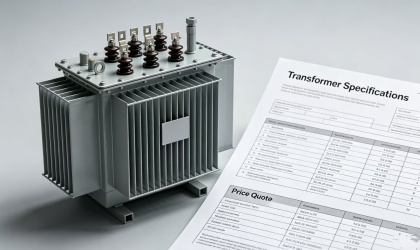
In the transformer procurement, bidding and project inquiry work, many buyers, engineers and EPC enterprises, often faced with quotation deviation, program repeatedly modified, delivery schedule is not accurate and other problems. The root of the problem, most of the problems are due to the preliminary docking to provide technical parameters, project information is not complete, not standardized enough, resulting in manufacturers can not accurately match the design and production program.
Transformers are highly customized core power equipment, the parameters directly determine the equipment materials, structural design, process solutions, production costs and delivery cycle. The more detailed the parameters provided, the more comprehensive the information, the more accurate the manufacturer’s offer, cost-effective and more in line with the project requirements, but also from the source to avoid parameter inconsistency, specification redundancy, the site can not be installed, later rectification and rework and other hidden dangers. Based on this, this article will disassemble the full set of information and parameters required for accurate transformer quotes, covering the basic specifications, core winding configuration, cooling and installation conditions, certification standards, optional accessories and project delivery requirements, to help industry users to efficiently complete the inquiry docking.
Basic Transformer Specifications
The basic parameters are the bottom of the transformer quotation basis, but also all manufacturers to carry out program design and costing basis. Regardless of oil-immersed, dry-type, box transformer, pad-mounted transformer, all inquiry orders must be clear about the following core parameters, and none of them is indispensable.
Core rated base parameters
Rated capacity is the primary parameter of the transformer offer, the unit is kVA or MVA, which directly determines the core size, winding materials, overall structural specifications, is the core benchmark for costing. Different capacity of the transformer, the production process, the amount of materials used, manufacturing difficulty varies greatly.
First and second side rated voltage needs to be accurately labeled, including high-voltage input voltage and low-voltage output voltage. Common specifications are 11kV, 33kV, 415V, 480V, etc. The voltage level directly determines the equipment insulation design and casing selection.
The number of phases and grid frequency need to be clearly distinguished. Conventional single-phase and three-phase, grid frequency is divided into 50Hz and 60Hz. 60Hz is mostly used in North America, part of South America, the wrong parameters will directly lead to the equipment can not be adapted to the local power grid.
The installation form determines the protection level and structural design of the equipment. Common types include indoor installation, outdoor installation, column-mounted type, pad-mounted type, substation-specific models, etc. The shell structure and heat dissipation design of different installation scenarios vary significantly.
Advanced Parameters for Improving Accuracy
Advanced parameters are the key to narrowing the design deviation, eliminating the estimation error of quotation and realizing accurate pricing, which is also the core reason for the price difference of different transformer quotations. Improve this kind of parameters, can completely avoid the generalization of the quotation brought about by the problem of inflated costs or inadequate configuration.
The core mandatory advanced parameters include: cooling mode, winding material, wiring group, short circuit impedance, tap changer type, temperature rise level, BIL insulation level, implementation standards, procurement quantities and actual application scenarios.
Purchasing quantity directly affects the unit price of the equipment and delivery program, and industrial, photovoltaic wind power, data centers, municipal power distribution and other different application scenarios, the transformer loss standards, operational reliability requirements vary significantly, is an important basis for customized offer.
Site environment working condition parameters
Site environmental conditions environment is easy to be ignored, but the key factors that greatly affect the design of the equipment. Harsh environments require special customization, otherwise there will be equipment overheating, insulation aging, corrosion damage and other problems.
Need to specify the site maximum and minimum ambient temperature, perennial humidity range and air pollution levels. High pollution, high salt spray environment needs to strengthen the corrosion and creepage distance design.
In addition, the site altitude, seismic rating, outdoor wind load requirements and equipment IP protection level, are manufacturers customized design and offer an important basis. Transformers in areas with an altitude of more than 1,000 meters need to be designed with reduced capacity to avoid insufficient heat dissipation.
Basic Supplementary Information
Customers need to clarify the project attributes, distinguishing between new installations, old equipment replacement or project expansion and renovation. Replacement and remodeling projects need to match the original equipment size, wiring and installation basis, to avoid the site can not be docked.
At the same time, you can specify the requirements of equipment loss, whether you need to support the conventional accessories, whether there is low noise, low loss and other special customization needs. Delivery schedule requirements and budget range can also help manufacturers match the optimal program to provide cost-effective offers.
Core and Winding Details
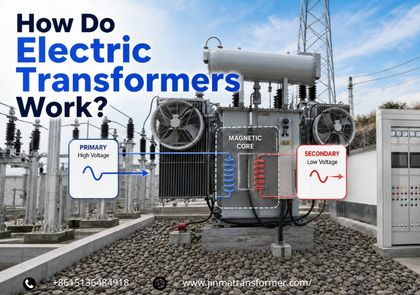
The core and winding are the core heart parts of the transformer, which directly determines the equipment no-load loss, load loss, operating noise, service life and overall cost. High-end customized, energy efficient transformer offer differences, mainly focused on this module.
Iron core core parameters
Iron core material is the key to loss control, common materials include ordinary cold rolled silicon steel, high magnetic conductivity silicon steel, laser etched silicon steel, amorphous alloy and so on. Amorphous alloy core has ultra-low no-load loss, mostly used in energy-saving transformation, photovoltaic power station, data center projects, the cost is relatively higher.
Core grade is divided into M3, M4, M5, Hi-B and other high-level models, the lower the grade value, the better the material performance, the lower the loss, but the cost will be raised accordingly. Manufacturers can match the corresponding material grade according to customers’ energy-saving needs.
Iron core structure is divided into core type and shell type, and the production process includes laminated iron core, coiled iron core, and ladder lap seam process. Different processes directly affect the operating noise, no-load loss and mechanical short-circuit resistance of the equipment.
In addition, magnetic flux density, core clamping structure, and single-point grounding design are the basis for stable operation of the equipment, as well as an important reference for the refinement of the offer.
Winding key parameters
Winding material is divided into pure copper winding and aluminum winding. Copper windings have good thermal conductivity, low loss, strong overload capacity and longer service life, and are mostly used in high-end working conditions and long-term running equipment. Aluminum windings are more cost-effective and suitable for general civilian power distribution scenarios.
Conductor types include round wires, rectangular flat wires, foil windings, continuous transposition cables and so on. High-voltage and large-capacity transformers mostly use transposition cables and disc windings to reduce eddy current losses and improve equipment stability.
Insulation class is divided into A, B, F, H class, corresponding to different temperature resistance upper limit. At present, the mainstream industrial dry-type transformer F class, H class insulation, high temperature resistance, anti-aging, suitable for long-term continuous operation conditions.
At the same time, the winding layout, current density matching, cooling duct layout, directly affecting the equipment temperature rise control and load loss, is the manufacturer of structural design and costing of the core details.
Core winding customized matching parameters
Conventional transformer is double winding structure, some special projects need three windings, autotransformer structure, need to be clear in advance in the inquiry. Different winding structure design difficulty and cost difference is obvious.Tap changer position, voltage regulation range, the number of tap position need to be accurately labeled. At the same time, the rated impedance voltage and short-circuit withstand time of the equipment need to be clarified to ensure the safety and stability of the equipment in the event of grid failure.
For industrial precision equipment scenarios, it can be required to add electrostatic shielding layer between high and low voltage to reduce harmonic interference. Neutral point full insulation, semi-insulation and whether to lead the neutral point, is also an important parameter of the customized offer.
Cooling and Installation Requirements
The cooling method and installation conditions directly determine the transformer’s shell structure, heat dissipation configuration, equipment size, protection standards and operation and maintenance methods. For transformers with the same capacity, the price difference between different cooling and installation solutions can be as high as 10%-30%.
Cooling system specifications
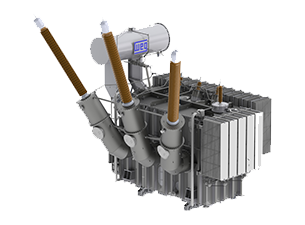
Oil-immersed transformers are commonly cooled by ONAN natural oil circulation natural air-cooled, ONAF natural oil circulation forced air-cooled, OFAF forced oil circulation air-cooled and so on. Small-capacity distribution transformers are more cost-effective ONAN cooling method.
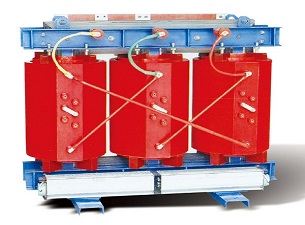
Dry-type transformers are divided into two modes: AN natural air-cooled and AF forced air-cooled. The addition of fan forced cooling allows the equipment short-time overload capacity to be increased by 15%-30%, which is suitable for industrial scenarios with large load fluctuations.
Different equipment types correspond to different temperature rise standards, oil-immersed conventional temperature rise of 55 ℃ / 65 ℃, dry-type transformers are divided into 80 ℃, 100 ℃, 125 ℃, 150 ℃ according to the insulation level of multi-grade standards. Temperature rise parameters directly affect the selection of insulation materials and equipment life.
Customers can specify the form of radiator, whether to configure removable radiators, forced cooling fan, temperature control start-stop system, special scenarios can also be customized water-cooled, environmentally friendly ester oil cooling program.
Equipment installation specification requirements
Installation scenarios are divided into indoor, outdoor, buried, box-variable integrated machine, substation platform installation and so on. Outdoor equipment needs to have rainproof, dustproof and sunproof design, while indoor equipment focuses on noise reduction and safety protection.
Shell protection level from IP21, IP23 to IP54, IP65 level by level, the higher the level of protection, sealing performance, dust and waterproof ability is stronger, the manufacturing cost will also increase.
At the same time, it is necessary to clarify the fixing method of the equipment, the need for vibration-damping base, the direction of the wiring inlet (top/side/bottom), and the requirements for reserving space for operation, maintenance and repair, so as to facilitate the manufacturers to accurately design the box structure and wiring layout.
Strict environmental conditions of the site
High temperature, low temperature, high altitude, high humidity, salt spray corrosion, dust and other harsh conditions will change the design standards of the transformer. High altitude equipment needs to reduce capacity design, optimize the heat dissipation structure.
Coastal salt spray, chemical pollution sites, need to upgrade the anticorrosion coating and shell material, to avoid rapid corrosion and aging equipment. Seismic zone, high wind area, need to strengthen the iron core clamping structure and box seismic design.
For residential areas, hospitals, schools and other noise-sensitive areas, the noise limit can be clear requirements, manufacturers can optimize the core process, add sound insulation structure to achieve low noise operation.
Standards and Certifications
Different countries, different industries, different end owners, the implementation of standards and certification requirements for transformers vary greatly. Standards do not match, the lack of certification will directly lead to the equipment can not be accepted, can not enter the network, can not be exported through customs.
Mainstream design and performance standards
The mainstream global standard is IEC 60076 series standard, applicable to Europe, Southeast Asia, the Middle East, Africa and most of the overseas projects. Domestic conventional power distribution and electric power projects also generally refer to IEC standards.
The North American market specializes in ANSI/IEEE C57 series standards, and at the same time need to meet the U.S. DOE, Canada NRCan energy-efficiency standards, equipment loss, energy-efficiency levels have strict mandatory requirements.
Dry-type transformers, rectifier transformers, wind power photovoltaic transformers, have corresponding special standards. Clear implementation of the standards, can allow manufacturers to strictly follow the rules of the project territory design, testing and production.
Market access safety certification
Export projects to the United States, Canada, need UL, cUL, CSA certification; the EU market must have CE certification; domestic sales equipment needs CCC certification.
Exporting to Russia, Central Asia and other Eurasian Customs Union countries requires GOST, EAC certification. Some high-end projects also require KEMA, DEKRA third-party authoritative testing and certification to protect the quality of equipment.
Enterprise system and special standards
Regular transformer manufacturers generally have ISO9001 quality management, ISO14001 environmental management, ISO45001 occupational health and safety three systems certification, is the basic entry conditions for project bidding.
In addition, seismic standards, fire rating, noise standards, short-circuit withstand standards, special standards for insulating oil, etc., can be specified according to the project needs, to ensure that the equipment is suitable for the project acceptance requirements.
Optional Features and Accessories
Transformer accessories and optional features do not affect the basic operation of the equipment, but directly determine the level of intelligence, ease of operation and maintenance, operational safety and service life of the equipment, and is one of the main sources of the quoted price difference.
Voltage regulation device
Conventional distribution transformer with no-load tap-changer, need to disconnect voltage regulation, lower cost, suitable for stable working conditions of the ordinary power distribution scenarios.
Grid hubs, photovoltaic wind power boosting, load fluctuations in the project, need to configure on-load tap-changer, can be loaded with automatic voltage regulation, with AVR automatic voltage controller, to protect the voltage stability, but the cost of equipment will be significantly higher.
Wiring and protection accessories
Including high and low voltage casing, cable junction box, busbar interface, casing CT, zinc oxide lightning arrester and other core accessories. Coastal, polluted areas can choose aging-resistant silicone rubber casing, instead of the traditional porcelain casing.
Lightning arrester can effectively resist lightning over-voltage, protect the main equipment of the transformer, is the necessary protection accessories for outdoor transformers.
Monitoring and protection devices
Conventional standard with oil temperature, winding temperature monitoring instrument, oil level indicator, pressure relief valve. Large-capacity oil-immersed transformer is equipped with gas relay as standard to realize fault alarm and trip protection.
High-end intelligent projects can be installed online DGA gas monitoring, remote temperature transmission, SCADA docking module, to achieve 24-hour online monitoring of equipment, suitable for data centers, power grid core sites and other key scenarios.
Shell, anti-corrosion and customized accessories
Anti-corrosion process can be customized according to the scene, including epoxy zinc-rich primer, polyurethane top coat, hot-dip galvanizing treatment, and stainless steel box can be selected for highly corrosive environments.
At the same time can be customized soundproof box, fireproof box, outdoor kiosk box shell, suitable for urban residential areas, commercial areas and other special scenes.
Project and Delivery Details
The technical parameters determine the price of the equipment, while the project delivery information determines the duration, logistics costs, commercial terms and overall landed costs, and is an indispensable part of a complete quotation.
Project Background
Clearly define the application areas of the equipment, distinguishing between scenarios such as grid municipalities, industrial plants, data centers, photovoltaic wind power, mining and chemical industries. Different scenarios have completely different design redundancy, reliability requirements, and loss criteria.
At the same time mark the project type as new installation, replacement or capacity expansion and renovation, the old equipment replacement project needs to match the site installation size, wiring mode, to avoid on-site docking failures.
Purchase quantity and delivery cycle
Purchasing quantity directly affects the unit price, bulk purchasing can enjoy preferential prices, while manufacturers can optimize the scheduling plan. If spare equipment is required, the number of spare units should be indicated separately.
Customers need to specify the target delivery date, whether they need to be delivered in batches, and whether they need expedited production. Expedited orders need to adjust the production schedule, which will incur a certain amount of expedited costs, and can be explained in advance to avoid disputes over the schedule.
Logistics and Packaging Requirements
Define the delivery destination, trade terms (EXW/FOB/CIF/DAP/DDP), determine the responsibility of transportation, customs clearance and insurance, and adapt to all kinds of projects at home and abroad.
Export equipment needs to be packed with solid wood fumigation packaging for sea transportation, waterproof, dustproof and shockproof packaging, matching the container transportation standard. Large and heavy transformers need to be planned in advance for large transportation and lifting programs.
Business and after-sales terms
Confirm in advance the payment method, prepayment ratio, warranty period, the regular transformer warranty is 12-24 months, according to the project needs to extend the warranty service.
At the same time can be clear whether you need factory acceptance, on-site installation guidance, operation and maintenance training, a full set of drawings and test reports, manufacturers can be based on the needs of supporting a complete service program.
Conclusion
Transformer is a highly customized power equipment, the technical parameters, configuration requirements, project information interlocking, directly determining the quality of equipment and transaction price. Parameter missing, information is not standardized, very easy to cause quotation deviation, program does not match, triggering later rework, rectification, delay and a series of project problems.
Procurement inquiry, complete provision of basic specifications, core winding configuration, cooling installation conditions, industry certification, optional accessories and delivery of business information, enabling manufacturers to quickly produce accurate, tailored to the scene of the customized offer, effectively avoiding design redundancy or inadequate configuration, while taking into account the operational reliability of the equipment, the procurement of cost-effective and efficient project delivery.