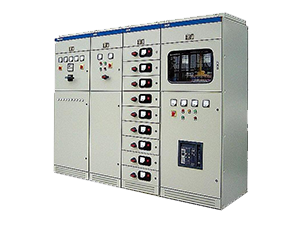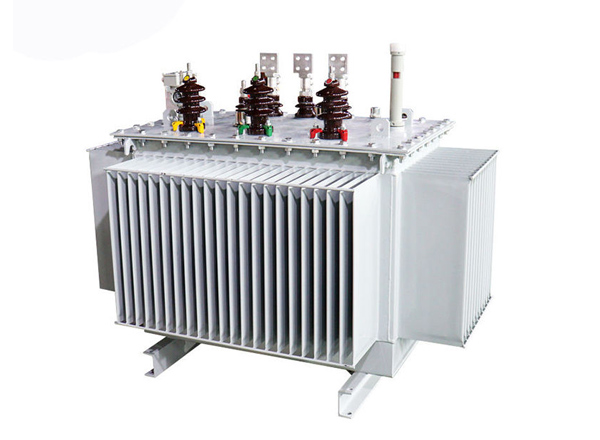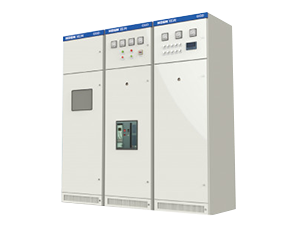


Transformer procurement, many purchasers fall into the “only price theory”, ignoring the whole life cycle cost, and transformer prices are affected by multiple factors such as product type, rated capacity, this paper will dismantle these core factors for the procurement decision to provide reference.
Transformer types
Transformer type is the core factor affecting the initial price, the mainstream is divided into oil-immersed and dry-type transformers, both of which have the same function, but the structure, cooling, insulation and maintenance differences directly lead to different prices.
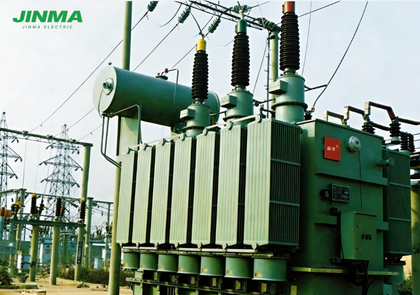
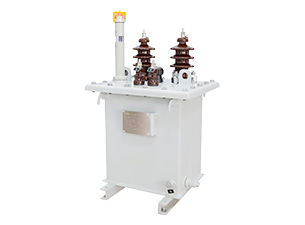
Oil-immersed transformer initial cost is 15%-30% lower than dry-type, insulating oil as a medium, suitable for large-capacity outdoor, power transmission and other scenarios; dry-type transformer to air or resin as a medium, safe and clean, low maintenance costs, suitable for indoor fire-sensitive scenarios, but the initial price is higher.
Procurement needs to be combined with the use of the environment and the full life cycle cost: indoor scenes dry-type transformer long-term more economical, outdoor large-capacity scenes oil-immersed cost-effective more prominent.
Rated Capacity
Rated capacity is to determine the price of the transformer is the most basic intuitive factors, the higher the capacity of the higher prices, but the growth of a stepped scaling curve, and non-linear.
Capacity increases lead to price increases, the core is the winding, core, insulation material usage and tank, cooling system specifications synchronized upgrade to adapt to higher power and heat dissipation needs.
There are significant differences in unit costs between different capacity zones: small (≤100 kVA) has the lowest unit cost and is suitable for small power scenarios; medium-sized (500 kVA – 5 MVA) has mature technology, optimal cost and is the most widely used; large (>50 MVA) has complex technology, high material usage and exponential cost growth, and is suitable for major power projects.
Voltage Level and Insulation Class
Voltage level directly affects the transformer design complexity, insulation structure and testing process, which in turn determines the price, the higher the voltage, the stricter the design, insulation and testing requirements, the more significant price increase.
Different voltage levels cost differences are significant: ≤ 33 kV for low-voltage benchmark (additional cost 0%); 66-132 kV for medium voltage (+10%-20%); 220-275 kV for high-voltage (+25%-35%); 400 kV and above are ultra-high voltage (+40%-60%), with each level corresponding to different insulation and testing requirements.
Voltage upgrades also increase additional costs, including heavier fuel tanks, higher-priced specialized casing and higher testing costs, e.g., a total cost increase of about 30% for a 132 kV to 220 kV upgrade.
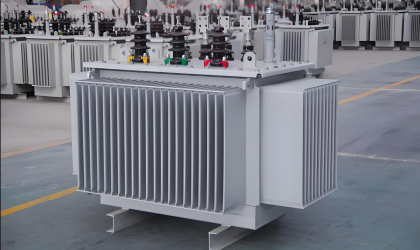
Core Material and Efficiency
Core and winding materials directly affect the transformer energy efficiency, initial price and long-term operating costs, is the procurement of key factors to be weighed.
Winding is divided into copper, aluminum two kinds: copper winding price is high, but low resistivity, good conductivity, loss is small, long-term heavy load scene is more economical; Aluminum winding initial price is low, but loss is big, suitable for light load, short running time long scene.
Iron core, oriented silicon steel core performance is stable, moderate cost, widely used; amorphous alloy core energy efficiency, no-load loss is very low, but the material and processing costs are high, the overall price is higher, need to be combined with the energy efficiency needs to choose.
Design Features and Customization
Special scenarios can not use the standard transformer, customized design is required, which is an important trigger for transformer price fluctuations, customized product prices are usually 20%-40% higher than the standard model.
Common customization needs include: voltage and frequency adjustment, special shell (IP protection, outdoor / marine), explosion-proof and anti-corrosion design, compact / modular structure to adapt to different scenarios.
The price of customization is on the high side, the core due to non-standard design, customized tooling, additional testing to increase the cost; but customization can accurately fit the working conditions, can avoid the cost of later transformation and replacement, special scenarios is still the optimal choice.
Manufacturing Standards and Certifications
Manufacturing standards and certifications directly reflect the quality and compliance of the transformer, in line with the IEC, ANSI, IEEE, ISO and other international mainstream standards of the product price is higher, because of the need to strictly follow the quality control and through the compliance test, to protect the performance and reliability.
These standards on transformer design, materials, production, testing and other aspects of the strict requirements, through the certified products not only quality assurance, but also to meet the market access requirements in different regions, reducing the risk of cross-regional applications.
This price premium guarantees product reliability, reduces long-term failures and maintenance costs, and is the key to avoiding procurement risks for large-scale, key projects.
Market and Supply Factors
Supply chain delay will push up the procurement cost, the core due to the long production cycle of the transformer, the core material price fluctuations, interruptions or delays will lead to lagging progress, cost increase; procurement needs to plan logistics in advance, give priority to choose the one-stop supplier with sufficient inventory and stable supply chain (such as Sunbelt Solomon), to ensure delivery and control costs.
Supplier reliability is crucial, high-quality suppliers can provide high-quality products and perfect after-sales service, to avoid the cost of maintenance and replacement in the later stage; Sunbelt Solomon has a mature reputation and can provide full-process services, which can help reduce the procurement risk and control the comprehensive cost.
Conclusion
Transformer prices are affected by multiple factors such as type, capacity, voltage level, etc. Purchasers need to abandon the “price theory”, establish the concept of full life cycle cost, combined with the project demand for reasonable selection, priority standard models, select the compliance and stability of the supplier, in order to achieve a balance between cost and performance.