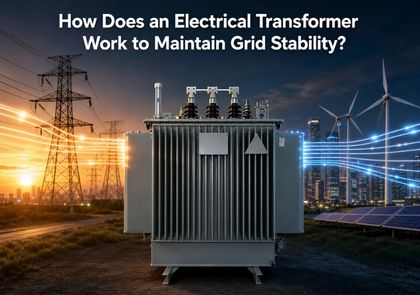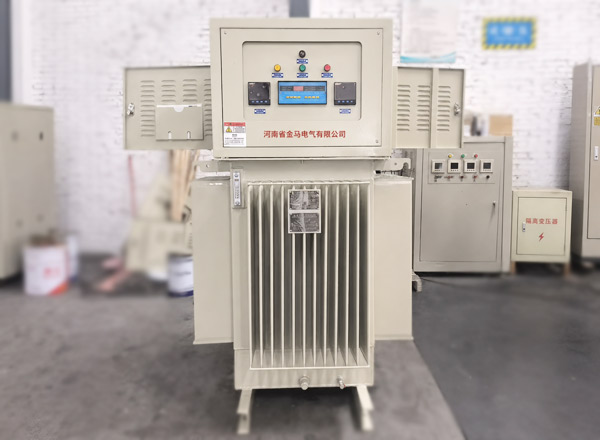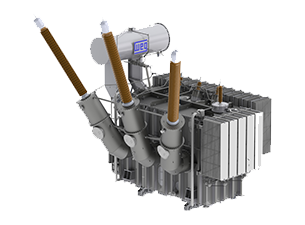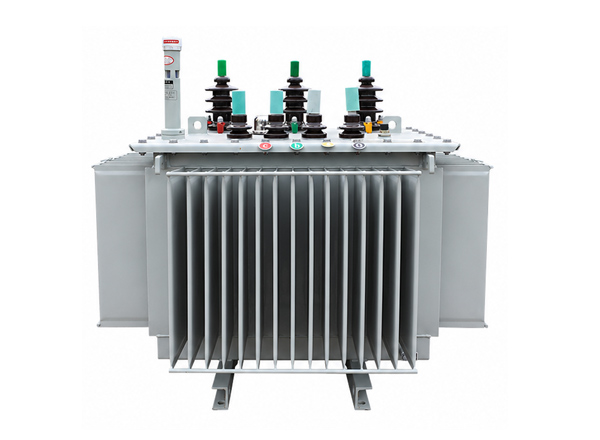


The modern power grid is a dynamic and complex energy transmission system, which is susceptible to load fluctuations, intermittent power generation of new energy sources, line failures and extreme weather. Voltage and frequency stability and power supply reliability are important guarantees for social production and life.Among them, power transformers are the core hub equipment to maintain the stable operation of the power grid.
Most people only know the voltage regulating effect of transformers, but ignore their core value of stabilizing the power grid.From the seven dimensions, this article systematically introduces the working principle of transformers, network stability functions, mainstream types, advanced technologies, operating problems and operation and maintenance strategies, and explains their importance to the stability of the power grid.
What Is an Electrical Transformer and Why Is It Important?
A power transformer is a kind of stationary power equipment without moving parts. It relies on the principle of electromagnetic induction to transmit electrical energy between two or more circuits. It can accurately adjust the voltage level while keeping the alternating current frequency unchanged. It is the basic core device for the transmission, distribution and safe use of electrical energy.
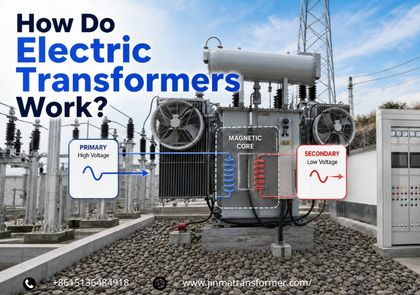
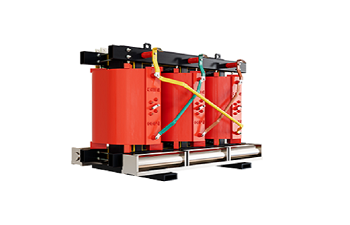
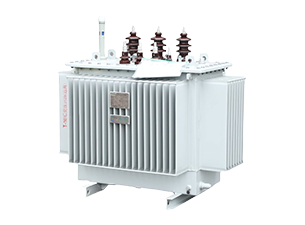
Its core structure is minimalist and efficient. It is mainly composed of primary and secondary windings wrapped in a guide magnet core (laminated silicon steel sheet material, which can gather magnetic fields and reduce energy consumption). With an insulating structure and a cooling system, it has the core advantages of high reliability, long life and low loss, and the conventional operating efficiency can reach 95%-99%.
Basic principles of core work
The core of the energy conversion and transmission of transformers relies on Faraday’s law of electromagnetic induction, and the working principle is simple and rigorous.:
- After the primary winding is connected to alternating current, an alternating magnetic field with periodic and dynamic changes will be generated;
- The guide magnet core effectively gathers the magnetic flux to ensure that the alternating magnetic field completely penetrates the secondary winding and realizes efficient magnetic field coupling;
- The changing magnetic field will induce the operating voltage in the secondary winding. The voltage ratio strictly follows the winding turns ratio relationship. The core formula: VsVp=NsNp;
- When the number of turns of the secondary winding is more than the primary side, it is a step-up transformer, and vice versa, it is a step-down transformer;
- The power of the transformer is approximately conserved during operation, and the voltage rise will simultaneously reduce the current, and vice versa, which can effectively reduce the power loss of the transmission line from the root cause.
It should be noted that the transformer is only suitable for AC operating conditions.Constant direct current cannot generate an alternating magnetic field, and electromagnetic induction energy conversion cannot be achieved, so it cannot drive the transformer to work.
The irreplaceable core value of transformers
Without transformers, the construction and stable operation of a modern large-scale power grid will not be possible. Its core role covers the whole process of the power grid.:
- Realize long-distance low-loss transmission: the power generation voltage of the generator set is only 11–25kV, and the low-voltage and high-current transmission will produce great cable heat loss (I2R loss).The step-up transformer can increase the voltage to the ultra–high voltage level of 230-765kV, greatly reducing the transmission current and minimizing long-distance power loss; the terminal then passes the step-down transformer step-by-step step-down to complete the power distribution.
- Ensure the safety and compliance of terminal electricity consumption: industrial equipment and household appliances have fixed adaptation low-voltage levels (domestic 220V, industrial 380V, etc.).The distribution transformer steps down step by step to convert the high-voltage transmission voltage into a safe voltage available at the terminal to avoid safety accidents caused by the direct access of high-voltage equipment.
- Provide electrical isolation protection: the first and second sides of the transformer are only coupled by a magnetic field, there is no direct electrical connection, and it has a complete electrical isolation function.It can effectively block single-sided circuit faults, leakage, and voltage fluctuations, prevent the spread of faults across regions, while reducing electromagnetic interference and improving the safety of power grid operation.
- Adapt to multi-scenario voltage requirements: different industrial processes, electronic equipment, and power facilities have very different voltage level requirements. Transformers can flexibly match various voltage requirements, while realizing circuit impedance matching to ensure efficient use of electrical energy.
- Widely used in all scenarios: from power grid power generation, transmission, and distribution links, to mobile phone chargers, home appliances, industrial machinery, to special scenarios such as power metering and signal transmission, transformers are everywhere, and they are one of the core equipment with the highest coverage rate and most stable power system.
How Does an Electrical Transformer Work?
The core operating logic of the transformer is alternating electromagnetic induction energy conversion. There is no mechanical movement throughout the process, and it relies on the magnetic field to complete the transmission of electrical energy across the circuit. The operation process is stable and efficient.
Basic equipment structure
Conventional transformers rely on the synergy of the four core components to achieve efficient, stable and low-loss transmission of electrical energy:
- Primary winding: As an energy input port, it is connected to the AC input voltage, and the original alternating magnetic field is excited by the alternating current to provide basic conditions for electromagnetic energy conversion.;
- Secondary winding: connect the electrical load at the back end, rely on the magnetic field coupling to generate the target voltage, and complete the power output and voltage level conversion;
- Guide magnet core: it adopts laminated insulating silicon steel sheet structure, which can effectively gather magnetic flux, suppress magnetic leakage loss, and greatly improve the overall efficiency of electromagnetic conversion.;
- Auxiliary structure: integrated insulation protection and air-cooled and oil-immersed cooling system, which can effectively avoid insulation breakdown, equipment overheating and other failures, and ensure the long-term safe and stable operation of the transformer.
Step-by-step operation process
- Connect to the alternating voltage.After the primary winding is connected to the AC power supply, the circuit generates a continuous alternating current, which lays the foundation for subsequent magnetic field excitation and electromagnetic energy conversion.
- Generate alternating magnetic flux.The alternating current excites a periodic alternating magnetic field inside the iron core, and the magnetic flux strictly follows the dynamic fluctuation of the 50/60Hz power frequency rhythm of the power grid to form a stable electromagnetic conversion carrier.
- Realize magnetic field coupling.The iron core efficiently gathers and constrains the alternating magnetic flux, so that it completely penetrates the secondary winding, realizes the pure magnetic field coupling without electrical connection on the first and second sides, and guarantees lossless energy transfer.
- Sense the output voltage.According to the law of electromagnetic induction, the changing magnetic flux induces the electromotive force in the secondary winding to form a stable output voltage. The voltage amplitude strictly follows the law of the winding turns ratio.
- Continuous energy transmission.The secondary-side voltage drives the load to work stably. At the same time, according to Lenz’s law, the secondary current will reverse weaken the primary-side magnetic field.In order to maintain a constant magnetic flux of the iron core, the primary side will automatically compensate for the current, so as to achieve continuous and stable transmission of electrical energy across the windings.
Operating loss and core characteristics
The ideal transformer can achieve complete power conservation, but there is a small amount of loss in the actual equipment, which is mainly divided into copper loss caused by winding resistance, iron loss caused by core magnetization and eddy current, and the overall loss is extremely low.At the same time, the transformer only changes the voltage and current size throughout the process, does not change the frequency of the power grid, and naturally has electrical isolation properties, which is an important basis for the steady-state operation of the power grid.
How Transformers Help Maintain Grid Stability
The core standards of power grid stability: constant voltage, balanced power, controllable faults, and adjustable fluctuations.As the connection hub of all levels of the power grid, the transformer can withstand power grid fluctuations in all directions and prevent chain power outages through the four core capabilities of voltage regulation, fault isolation, power diversion, and reactive power support.
Intelligent voltage regulation
The allowable fluctuation range of the grid voltage is only ±5%, and the surge in load, the development of new energy sources, and line switching will all cause voltage drift.A transformer equipped with an on-load voltage regulating switch (OLTC) can adjust the winding turn ratio in real time without stopping or powering up:
The voltage is boosted when the peak load voltage is low, and the voltage is lowered when the load is low and the new energy is surplus. Cooperate with the automatic voltage control system (AVC) to achieve dynamic global voltage balance and avoid voltage collapse and equipment tripping problems from the root cause.
Limit fault current
The transformer has its own inherent impedance, which can effectively limit the amplitude of the fault current in the event of a short-circuit failure of the power grid, so as to avoid the impact of excessive current and damage to the power grid equipment.At the same time, relying on the electrical isolation characteristics of the first and second sides, one-sided short-circuit and leakage faults are enclosed in local areas to protect the normal operation of the remaining power grid lines and equipment, and prevent large-scale chain power outages.
Optimize power flow
Conventional transformers realize efficient transmission of electrical energy through voltage rise and fall, while phase-shifting transformers can actively regulate the flow of active power in the power grid by fine-tuning the phase angle, diverting overload line loads, activating light-load line capacity, and solving the problem of grid congestion.Multiple shunt transformers can work together to divide the load evenly, avoid overload operation of a single equipment, and improve the overall carrying capacity of the power grid.
Support reactive power
Voltage stability is highly dependent on reactive power balance.The leakage resistance and excitation characteristics of the transformer directly affect the regional reactive power distribution. The on-load voltage regulation function can maintain the stability of the bus voltage and ensure the efficient output of reactive power by generators and capacitor compensation equipment.The new type of smart transformer can also actively absorb and emit reactive power, dynamically optimize the power factor of the power grid, and suppress voltage fluctuations.
Adapt to the new energy grid
The power generation of new energy sources such as wind power and photovoltaic is intermittent and volatile, and the inertia of grid-connected equipment is low and the anti-interference ability is weak.The new type of solid-state and hybrid smart transformers can quickly adjust voltage, isolate fluctuations, filter and reduce noise, decouple power grid frequency and phase interference, help distributed new energy to be stably connected to the grid, and solve the pain points of insufficient stability of the new power grid.
Key Types of Transformers Used for Grid Stability
The requirements for stable control of the power grid in different scenarios and at different voltage levels are different. The power system is equipped with specialized and differentiated transformer types, each of which performs its own duties to ensure the steady-state operation of the power grid.
On-load voltage regulating power transformer (OLTC)
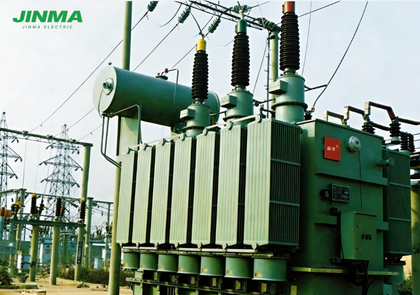
The core main equipment of power grid substations is mainly used for voltage conversion at the transmission and transformation levels.The core advantage is that the voltage can be charged and fine-tuned in real time, with a voltage regulation range of ±10% to ±15%, and it can accurately respond to load fluctuations and changes in new energy power generation. It is the core guarantee for the stability of the normalized voltage of the power grid.
Phase shift transformer (PST)
Special equipment focused on power regulation of the power grid, by changing the phase of the input and output voltages, actively diverting and transmitting power, solving the problems of congestion and uneven load distribution of transmission lines, greatly improving the utilization rate and dynamic stability of the transmission network, and is widely used in the mesh transmission backbone network.
Autotransformer
The high and low voltage sides share part of the winding, which has a more streamlined structure, lower loss and lower cost. It is suitable for medium and low dropout transmission scenarios such as 400/220kV and 230/115kV.Most are equipped with on-load voltage regulating devices, which can efficiently complete voltage conversion and reactive power regulation, and are the core equipment of the transmission network at the sub-level.The only shortcoming is that the electrical isolation performance is weaker than that of a double-winding transformer.
Distribution voltage regulator transformer/line regulator
Deployed in terminal distribution lines, close to user loads and distributed photovoltaic and wind power equipment.It can accurately stabilize the voltage of the peripheral power grid, solve the problem of low rural long-term transmission voltage and high household photovoltaic grid-connected voltage, and improve the stability of the power distribution side without large-scale transformation of the power grid.
Hybrid/solid state smart transformer
The new-generation core equipment of the power grid, combining the high reliability of traditional transformers with the controllability of power electronic equipment, can independently regulate the voltage and reactive power on both sides, and has multiple functions such as harmonic filtering, fault isolation, frequency support, and DC grid-connected adaptation. It is the core upgrade direction of the high-new energy permeability power grid.
Supporting special transformer
It includes a current/voltage transformer to provide accurate data for power grid monitoring and protection devices; a high-voltage DC converter transformer to achieve stable docking of AC and DC power grids; a flexible transmission interface transformer, which cooperates with reactive power compensation equipment to quickly stabilize voltage and assist the stable operation of the power grid in all directions.
Transformer Technologies That Improve Grid Reliability
With the complexity of the power grid structure, the increase in the proportion of new energy sources, and the frequency of extreme weather, traditional passive transformers can no longer meet the needs of high-end stable networks.Various new materials, intelligent and modular new technologies continue to be implemented, greatly improving the fault tolerance, service life and controllability of transformers.
- Intelligent monitoring and predictive operation and maintenance technology: through dissolved gas in oil (DGA) sensors, optical fiber temperature sensors, partial discharge monitoring equipment, and casing online monitoring devices, transformer operation data is collected around the clock.Combining AI algorithms and digital twin models, it accurately predicts potential faults such as insulation aging, overheating, and partial discharge, and upgrades traditional regular maintenance to state maintenance and predictive maintenance to prevent sudden failures from causing fluctuations in the power grid.
- New type of insulation and cooling medium technology: plant ester insulating oil is used instead of traditional mineral oil, which has the advantages of high ignition point, self-flame retardant, biodegradable, fireproof, explosion-proof, environmentally friendly and temperature-resistant, and can effectively delay the aging of insulation.With aramid high-temperature-resistant insulation materials, the operating toughness of transformers under overload, extreme temperatures, and electromagnetic interference is greatly improved.
- Modular, mobile rapid recovery technology: The modular transformer adopts a phase-separated independent structure, and a single-module fault can be replaced separately without the need for the whole machine to be out of operation; the mobile emergency transformer can be quickly deployed to the fault site, shortening the traditional equipment replacement period of several months to several hours, greatly improving the speed of power grid failure recovery and reducing the scope of power outages.
- Power electronics fusion intelligent control technology: hybrid and solid-state transformers rely on new power devices such as silicon carbide to achieve rapid voltage regulation, reactive power compensation, harmonic control, and fault isolation. They can actively suppress small fluctuations in the power grid, adapt to the two-way current operation of new energy sources, and solve the shortcomings of the passive operation of traditional transformers.
- Equipment disaster resistance enhancement technology: By optimizing the fixed structure of the winding, improving the short-circuit tolerance strength, and adding a geomagnetic disturbance protection design, the transformer can withstand short-circuit shocks, solar storms, geomagnetic induction currents, extreme high and low temperatures and other harsh working conditions, and reduce the risk of power grid instability in extreme scenarios.
Common Transformer Challenges Affecting Grid Stability
Transformers are power grid voltage regulators, but their own failures and hidden operating hazards can directly cause voltage fluctuations, load imbalances, equipment tripping and even large-scale power outages. They are an important cause of power grid instability. At present, the core pain points of the industry are concentrated in six major aspects.
- Equipment aging: A large number of main transmission transformers are out of service for a long time, and the long-term harsh operating environment causes the insulation layer to age and deteriorate, and the insulation strength decreases, which can easily cause internal discharges and short-circuit failures.The failure of a single core equipment will exacerbate the overload of the rest of the equipment, causing global voltage instability.
- Cumulative thermal stress damage: The surge in electricity consumption load is superimposed on the reverse current of new energy sources, causing the transformer to operate at high temperature and overload for a long time without a cooling window.Every time the winding temperature rises by 6-10℃, the insulation aging rate doubles, which can easily cause thermal runaway failure and weaken the voltage support capacity of the power grid.
- New energy reverse current disturbance: Distributed new energy is connected to the grid to form a two-way current in the power grid, which can easily cause saturation of the transformer core and harmonic distortion, causing abnormal voltage, frequent operation of the voltage regulator switch, and malfunction of the protection device, resulting in local voltage instability and accelerating equipment aging.
- Short-circuit impact damage: The strong electromagnetic force generated by the short-circuit failure of the power grid will squeeze loose windings and damage the insulation structure. At the same time, equipment impedance fluctuations will change the short-circuit current level of the system, damage the transformer body, interfere with the fixed value of the power grid protection, and expand the scope of the fault.
- Hidden dangers of geomagnetic disturbances: Geomagnetic disturbances caused by solar storms will induce DC-like currents in the transformer, causing core saturation, reactive power surge, and excessive harmonics, which can easily cause the voltage of the whole network to collapse, which has caused large-scale power outages.
- Insufficient equipment redundancy: the production and commissioning cycle of large transformers is up to 2-4 years, and production capacity and spare parts are limited.It is difficult to replace critical equipment quickly after failure, and the power grid is in a low-redundancy state for a long time, and slight load fluctuations can cause operational instability.
How Utilities Maintain Transformer Reliability
In order to solve the above pain points, power companies have built a full-process transformer reliability management system of “monitoring and early warning + scientific operation and maintenance + asset control + emergency protection” to maximize equipment life, reduce the probability of failure, and continuously consolidate the stability of the power grid.
Scientific operation and maintenance strategy
Abandon a single regular maintenance model and adopt a hierarchical operation and maintenance system: small distribution transformers are based on regular maintenance (TBM); core transmission transformers implement status maintenance (CBM) and reliability maintenance (RCM); high-end hub equipment landing AI predictive and normative maintenance, accurately focus on high-risk equipment, reduce invalid operation and maintenance.
Online monitoring and accurate diagnosis
Relying on core detection technology to achieve early detection and early disposal of faults: analysis of dissolved gases in oil (DGA) to predict internal overheating and discharge faults; oil product testing, furfural analysis to assess the degree of insulation aging; optical fiber temperature measurement, infrared imaging monitoring equipment temperature rise; partial discharge detection, frequency response analysis to investigate hidden dangers of winding deformation, all-round control of the health status of the equipment.
Daily preventive operation and maintenance
Implement normalized inspections, focusing on investigating oil spills, corrosion, casing damage, and cooling system failures; regularly replace desiccant, fasten terminal blocks, and clean up equipment dust accumulation; strictly control equipment load rate to avoid long-term overload; optimize on-load voltage regulation operation logic, reduce frequent start-stop losses, and reduce the risk of failure from daily operation.
Full life cycle asset control
Establish a transformer health scoring system, combining equipment life, operating load, test data, and power grid importance, and rank and sort renewal and transformation plans; build an industry shared backup equipment library to shorten the failure recovery time; rely on digital management systems and digital twin models to realize intelligent control of transformer clusters across the network; extend the service life of old equipment through technical means such as oil regeneration and casing replacement.
Operation and maintenance effectiveness
A mature operation and maintenance system can control the annual failure rate of distribution transformers within 2%, greatly reduce the probability of sudden downtime of transmission transformers, effectively avoid voltage collapses and chain power outages caused by transformer failures, and continuously ensure the safe, stable and efficient operation of the power grid.
Conclusion
Power transformers are the core equipment for the stable operation of the power grid. They have the functions of transformer voltage regulation, fault isolation, power equalization and reactive power support. They are suitable for new energy grid-connected and complex working conditions, covering the whole process of power grid generation, transmission, distribution and use.
In view of the problems of new energy grid-connected, load upgrading, equipment aging and other power grid problems, through new materials, intelligent monitoring and modular operation and maintenance technology, transformer performance can be optimized, operating failures can be avoided, and the safety of new power systems and the stability of power supply can be effectively guaranteed.