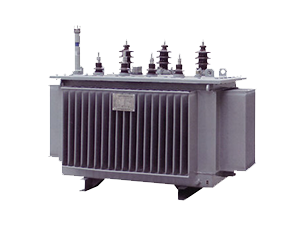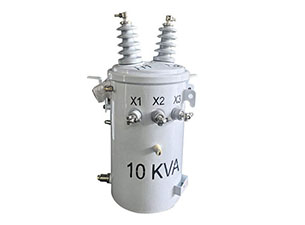


In modern power systems, electrical energy cannot be delivered and used at a single voltage level. Whether it is the raw electrical energy emitted by the power plant or the civilian electricity delivered to millions of households, it needs to go through a series of treatments such as voltage conversion, isolation and voltage regulation, and loss optimization.The power transformer can complete the voltage and current rise and fall conversion with almost no loss of electrical energy.This article will comprehensively analyze the working principle, core classification and detailed application of electrical transformers.
How does a Electrical Transformer Work?
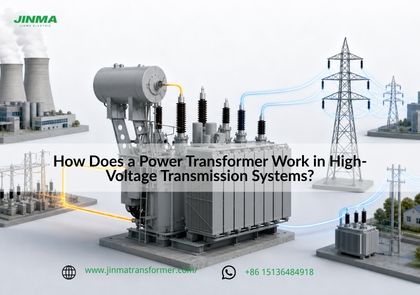
The core work of electrical transformers relies on the principle of electromagnetic induction to mainly realize the voltage and current conversion of AC power, and in an ideal state, the power of electrical energy can be retained to the greatest extent, and efficient power transmission can be achieved. The complete set of equipment has a simple structure and core, which is mainly composed of three core components: iron core, primary winding, and secondary winding.
The iron core of power transformer is made of laminated silicon steel. This structure can effectively reduce eddy current loss and hysteresis loss, and improve the overall operating efficiency of the equipment. As a magnetic conduction carrier, the iron core provides a stable path for the transmission of magnetic flux and is the basis for electromagnetic conversion.
When the primary winding is connected to alternating current, a periodic change in alternating magnetic flux will be generated in the iron core. According to Faraday’s law of electromagnetic induction, the changing magnetic flux induces an electromotive force in the secondary winding, which in turn generates voltage and current to complete the cross-circuit transmission of electrical energy.
The voltage and current of the transformer are completely determined by the turns ratio of the high and low voltage windings. The core formula is: primary voltage/secondary voltage = primary turns/secondary turns = secondary current/primary current. By adjusting the ratio of the number of turns of the winding, different functions such as step-up, step-down, and voltage regulation can be realized.
It should be noted that the physical transformers used in daily use are not ideal equipment, and there will be losses such as copper loss, iron loss, and magnetic leakage during operation.However, the operating efficiency of modern high-power power transformers can generally reach 98% to 99%, which can meet the efficient operation needs of various power scenarios. At the same time, the transformer is only adapted to alternating current, and cannot change the current frequency, nor can it realize the transformer transmission of constant direct current.
Common Electric Transformer Types
The classification dimensions of power transformers are diverse, and they can be divided according to voltage level, cooling method, phase number, and use scenarios. The performance, adaptation scenarios, and safety standards of different types of transformers vary greatly, which is the core basis for scene selection.
1. Divided by voltage and power level
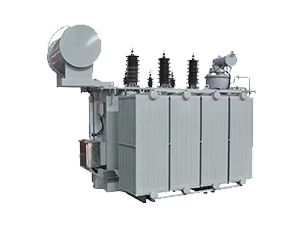
Power main transformer: It is a high-voltage and large-capacity equipment with a rated capacity usually greater than 5-10MVA. It is mainly used in transmission grids and large-scale power stations.The core role is to boost the medium and low voltage electrical energy produced by the generator to the 115kV-765kV ultra-high voltage level, to achieve long-distance and large-capacity transmission, and can also be used for the interconnection and docking of different high-voltage power grids, focusing on high reliability, continuous full-load operation, and low loss characteristics.
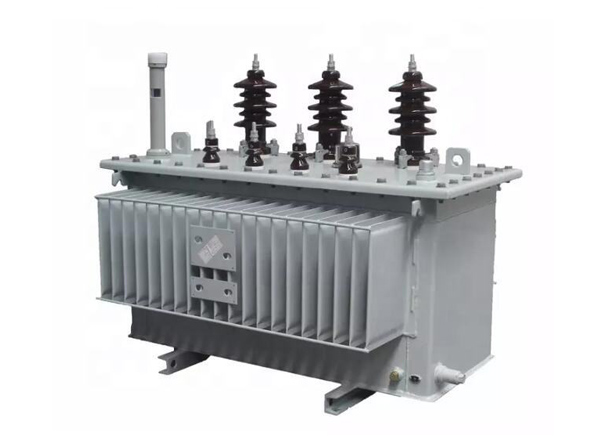
Distribution transformer: it belongs to medium and low voltage small and medium-sized equipment and is the core equipment of the terminal electric field scene.It mainly reduces the voltage of the 11kV-35kV medium voltage grid to the standard electricity voltages of 400V/230V, 120/240V for civil and industrial use, and is widely distributed in the terminal power grids of cities, villages, and parks to adapt to light-load and variable-load operating conditions.
2. Divided by cooling and insulation method
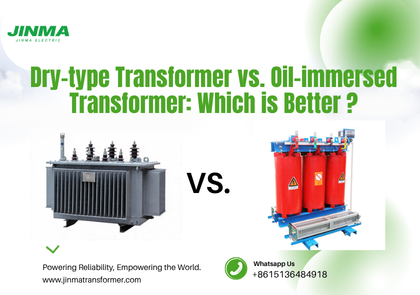
Oil-immersed transformer: mineral oil or environmentally friendly ester liquid is used as the insulation and cooling medium, including ONAN, ONAF, OFAF and other cooling modes.It has good heat dissipation effect, high carrying power and moderate cost, and is suitable for outdoor large-scale substations and high-voltage transmission scenarios.The disadvantage is that it contains combustible liquids, and there are fire hazards when used in indoor confined scenes.
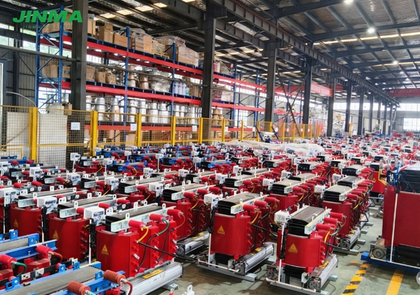
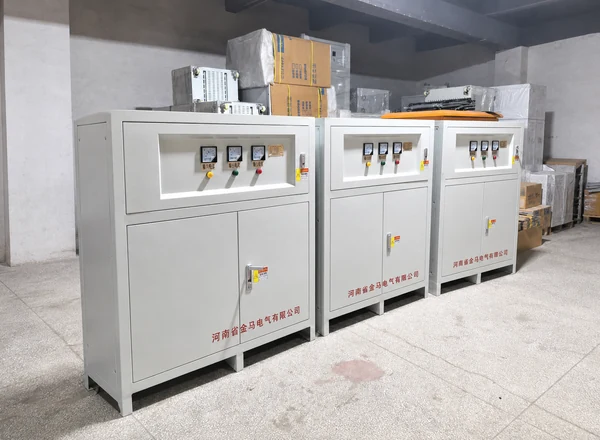
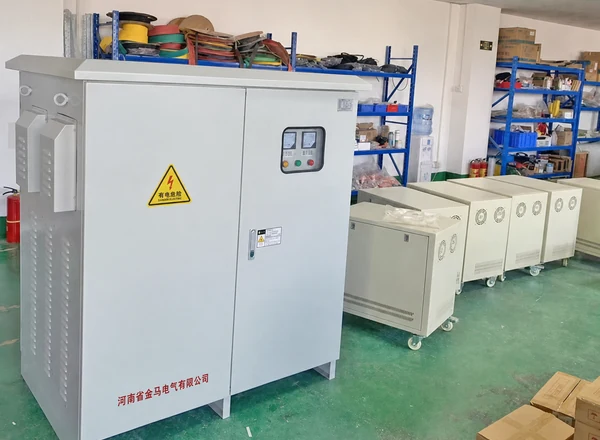
Dry-type transformer: it relies on natural air cooling or epoxy resin pouring and encapsulation, has no flammable media, and has excellent fire and explosion-proof performance. Equipment operation and maintenance is simple, low noise, and high safety. It is widely used in indoor computer rooms, commercial buildings, hospitals, data centers and other densely populated scenarios with strict fire protection requirements. It is also the mainstream choice for industrial and commercial scenarios.
3. Divided by phase number and function
Single-phase transformer: simple structure, compact size, mainly used in residential buildings, small shops, low-voltage control circuits, suitable for low-power, single-phase electrical loads.
Three-phase transformer: It has large power supply capacity and strong stability. It is the core equipment of industrial production, large-scale buildings, and the backbone of power grids. It can be adapted to different grounding, filtering, and voltage regulation needs through various wiring methods such as Δ-Y and Y-Δ.
Application of Electric transformers in Different Industries
Power plant
Power plants are the core scenarios for the centralized application of various types of transformers. Different types of transformers are required to be used in the whole process of power generation, plant electricity, and grid connection of thermal power, hydropower, nuclear power, and new energy power plants.
The voltage output by power plant generators is generally only 11kV-25kV, with low voltage levels and large losses, which cannot meet the needs of long-distance transmission.The oil-immersed power transformer (GSU step-up transformer) supporting the power station is the core equipment of large-capacity and high-voltage levels, and it is also the key hub for the power plant to be connected to the grid.This type of oil-immersed power transformer can directly boost the low-voltage electrical energy of the unit to 132kV, 220kV, 500kV or even higher transmission levels, greatly reducing the transmission current and effectively reducing the I2R loss of long-distance transmission.With the advantages of good heat dissipation, strong bearing capacity, and long-term full-load operation, it is widely used in large-scale main power stations of thermal power, hydropower, and nuclear power, and is the core equipment for external power transmission of power plants.
During the operation of a power plant, boiler water pumps, circulating fans, control systems, lighting instruments and other equipment need independent power support, which requires an auxiliary transformer (UAT) for the plant.According to different installation scenarios, it is divided into two types of oil-immersed and dry-immersed models. For large-capacity auxiliary transformers in outdoor and open areas of the plant, oil-immersed transformers are mostly used to carry the load of high-power auxiliary machines throughout the plant and adapt to continuous operating conditions.In indoor confined areas such as computer rooms and power distribution rooms, dry transformers are preferred. With the advantages of fuel-free, fire-proof, explosion-proof, and low noise, they meet the indoor fire safety regulations of power plants and provide stable power supply for precision control equipment and low-voltage circuits.
In addition to the main power generation and large-scale auxiliary power consumption, the terminal loads of the power plant’s office areas, maintenance workshops, on-site lighting, and small maintenance equipment do not require high-voltage and high-power power supply, and mainly rely on distribution transformers for power supply. This type of transformer has a moderate capacity and a voltage level adapted to the terminal load, which can step down the factory medium voltage to 400V/230V conventional civil and industrial voltages.
When the unit is shut down, overhauled, and started before being connected to the grid, the generator cannot supply power autonomously, and an oil-immersed backup transformer is required to take power from the high-voltage power grid to power the core equipment in the plant to achieve black start and smooth start and stop of the unit. Nuclear power and large-scale thermal power plants have extremely high requirements for the reliability of backup transformers, and basically all use large-capacity oil-immersed models to ensure that the power plant is not paralyzed under extreme working conditions.
Transmission grid and substation infrastructure
The core main equipment of high-voltage backbone power grids and large and medium-sized substations are all oil-immersed power transformers, which are generally suitable for high voltage levels such as 115kV, 220kV, and 500kV.This kind of equipment has excellent heat dissipation performance, large carrying capacity, and can operate continuously at full load for 24 hours, which is perfectly adapted to the needs of long-distance and large-capacity power transmission.Its core role is to realize the interconnection of different high-voltage power grids and complete the voltage rise and fall and power transfer of 400kV, 220kV, 132kV, and 35kV power grids at all levels.
Distribution transformers are widely used in the low-voltage side of substations and in the supporting scenarios of urban and suburban transmission.Unlike high-voltage power transformers, distribution transformers are mainly of medium and low voltage grade. They are mainly responsible for reducing the voltage of the 35kV and 11kV medium-voltage grid to 10kV, 400V and other distributable voltages to lay the foundation for subsequent industrial, commercial and residential terminal power supply. The distribution transformers supporting outdoor substations and urban overhead lines basically adopt oil-immersed models, which have low cost, convenient operation and maintenance, strong weather resistance, and are suitable for outdoor and open-air complex environments. They are the core equipment for voltage divider distribution at the end of the power grid. Some station area power distribution transformers will be equipped with voltage regulating tap switches, which can effectively suppress the voltage fluctuations caused by the peaks and valleys of electricity consumption, and ensure the stable quality of regional power supply.
The use of combustible oil-immersed equipment in confined indoor spaces such as the main control room of the substation, the high-voltage power distribution room, and the equipment room is strictly prohibited, so the dry transformer has become the exclusive choice.It is fuel-free, fire-proof and explosion-proof, low-noise, maintenance-free, and fully meets the indoor fire-fighting and safety specifications of substations. At the same time, some urban core areas and underground substations will adopt dry-type distribution transformers to completely eliminate oil spills and fire hazards, and adapt to high-density urban power grid construction standards.
Heavy industry manufacturing plants and facilities
Industrial manufacturing scenarios have large load fluctuations, complex equipment working conditions, concentrated nonlinear loads, and special working conditions such as high temperature, dust, flammable and explosive, and high harmonics exist in steel, coal mines, chemical and petroleum industries.
Large steel mills, coal mines, and petrochemical plants are all connected to municipal high-voltage voltages of 10kV to 35kV or even higher, and oil-immersed power transformers are required as the core of the total step-down voltage of the plant.This type of transformer has large capacity, strong overload capacity, excellent heat dissipation performance, can operate continuously at full load for a long time, and is suitable for heavy industry’s large power loads.
In the steel industry, oil-immersed electric power is mainly used for steelmaking blast furnaces, hot-rolling production lines, and large dust removal units to provide stable high-voltage power supplies to withstand the load impact caused by the start and stop of the furnace.In coal mine underground ground plants and petroleum refining and chemical plants, this type of equipment is responsible for voltage regulation of the whole network to ensure that the main production system does not have voltage dips or tripping problems.
Oil-immersed distribution transformers are generally used in open-air depots, peripheral auxiliary workshops, and open areas of coal mines in iron and steel plants.It has low cost, resistance to harsh outdoor environments, simple operation and maintenance, and is suitable for large-scale and large-capacity auxiliary load power supply.
In flammable and explosive high-risk factories such as petrochemical and fine chemicals, the use of oil-immersed equipment is strictly prohibited, and all dry-type distribution transformers are used.The dry-type transformer poured with epoxy resin has no fuel, no risk of fire and explosion, is maintenance-free and has high safety. It is perfectly adapted to the safety specifications of chemical workshops, storage tank areas, and refining workshops.
The production lines of iron and steel, chemical industry, and coal mines are equipped with a large number of PLC control systems, frequency conversion speed control equipment, and precision sensing instruments, which are highly susceptible to power grid clutter and transient voltage interference.The special dry-type isolation transformer for the factory area can realize complete electrical isolation and filter out harmonics and voltage shocks in the power grid.In petrochemical automation control systems, coal mine intelligent monitoring systems, and steel cnc rolling equipment, isolation transformers can eliminate ground loop interference, protect precision control components, and avoid production line downtime and parameter offset due to voltage fluctuations, greatly improving the accuracy and stability of industrial production.
New energy photovoltaic, wind power, energy storage system
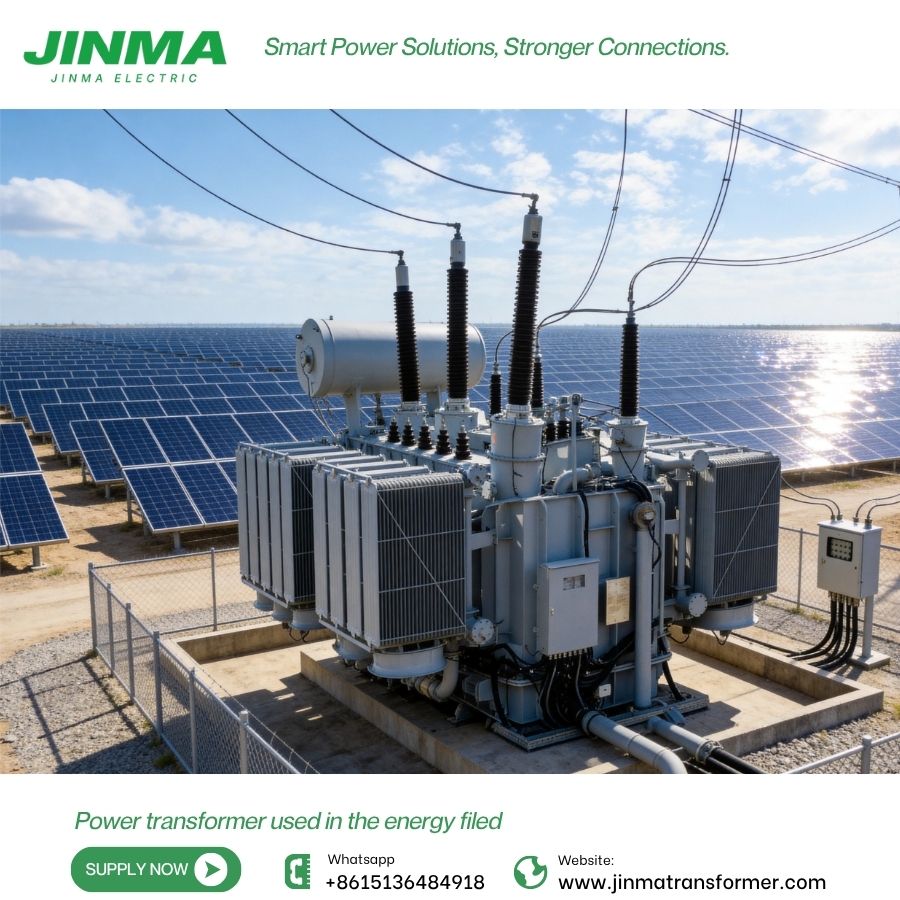
The power generation conditions of new energy power plants such as photovoltaic, wind power, and energy storage are special. They have the characteristics of large output fluctuations, high harmonic content, and two-way power flow. The adaptability requirements of power transformers are much higher than that of traditional power plants.
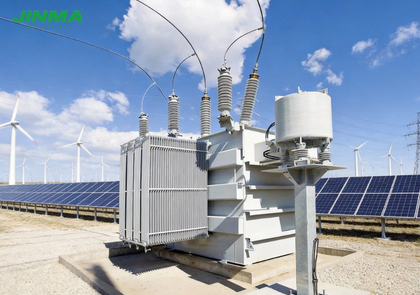
The core grid-connected equipment of large-scale ground photovoltaic power plants and onshore centralized wind farms are all oil-immersed power transformers.This type of transformer has large capacity, stable heat dissipation, and can operate at variable load for a long time, which is perfectly adapted to the intermittent and volatile power generation characteristics of new energy sources.Its core role is to complete the power aggregation and boost of the whole station, directly boost the 35kV and 11kV medium voltage energy in the field to the 110kV and 220kV high voltage transmission levels, and connect to the public backbone power grid to ensure the stability of the grid-connected voltage.
The unit power generation, regional power distribution, and self-use loads inside the new energy station mainly rely on the distribution transformer to complete the voltage conversion. Oil-immersed distribution transformers are generally used in the outdoor platform areas of large-scale ground photovoltaic power plants and open-air wind farms. Dry-type distribution transformers are preferred for mountain photovoltaic, distributed rooftop photovoltaic, indoor power distribution rooms of stations, and central control computer rooms.Relying on the advantages of fuel-free, fire-proof, explosion-proof, and low noise, it completely eliminates fire-fighting hazards, adapts to scenes where air-tight and frequent personnel inspections, and mainly provides stable electricity for station monitoring, lighting, and automatic control systems.
Industrial and commercial rooftop photovoltaic, household distributed photovoltaic, indoor energy storage power plants, and grid-side energy storage projects almost all use dry transformers.This kind of equipment is maintenance-free, pollution-free, and high-safety, and is suitable for strict fire-fighting regulations in urban factories, commercial areas, and residential areas.
The environment of offshore wind farms is special, with high salt spray, strong vibration, and large temperature difference. The main boost adopts anti-corrosion enhanced oil-immersed power transformers, which have corrosion resistance, vibration resistance, and low loss characteristics, and are suitable for long-term unattended working conditions of offshore booster stations.Sealed dry transformers are used for auxiliary power distribution in the field to eliminate safety hazards caused by moisture and salt spray erosion.
Commercial buildings and facilities
Commercial and public scenarios such as office buildings, shopping malls, hospitals, data centers, airports, etc. have strict requirements for the fire resistance, noise, safety, and power quality of transformers. Dry transformers are the absolute mainstream choice.
The main transformer of the building reduces the municipal medium voltage to 400V/230V special voltage for the building to provide basic power protection for air-conditioning, elevator, lighting, water supply and drainage, and fire-fighting systems.
Floor partition transformers are layered and partitioned for power supply, which effectively reduces the voltage loss of long-distance transmission, accurately controls the power supply load in each area, and facilitates later operation, maintenance, overhaul and troubleshooting.
Data centers, hospital operating rooms, and precision laboratories will be equipped with special isolation transformers to purify the power supply and suppress interference, ensure the stable operation of IT equipment, medical equipment, and precision instruments, and prevent equipment failures and safety accidents caused by voltage fluctuations.
Residential power distribution system application
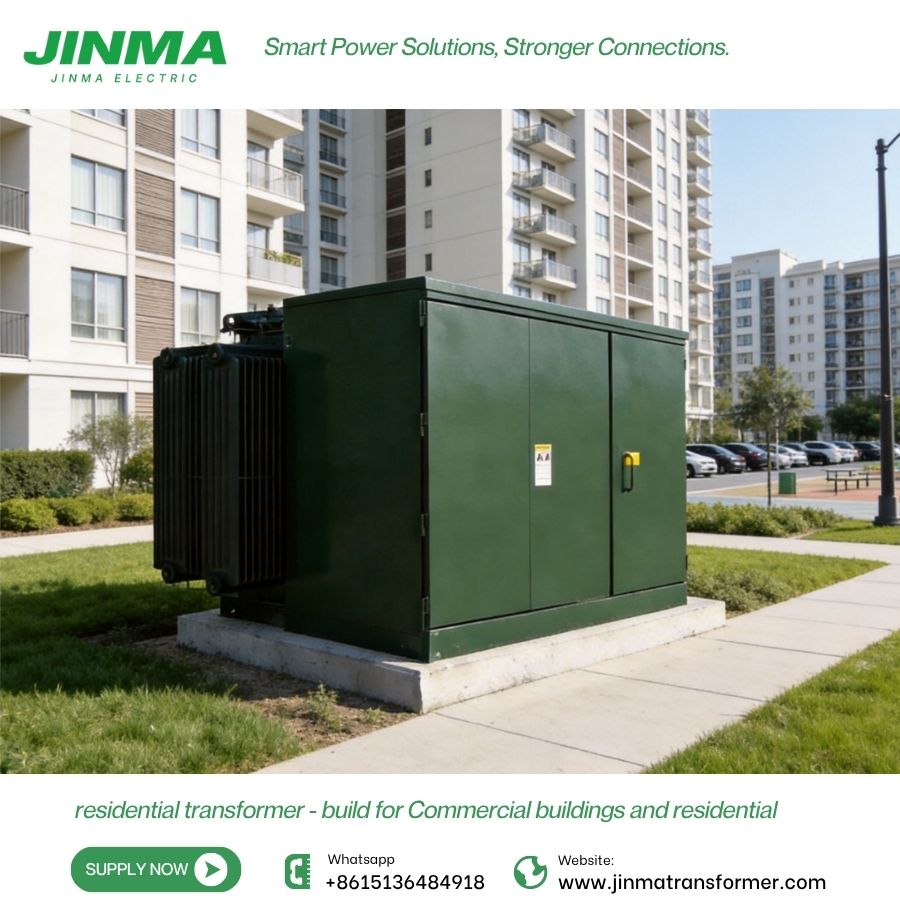
Residential distribution transformers are the last link of the power system, which is directly related to the safety and stability of electricity consumption for millions of households, and they are also the most common transformer equipment for the public.
Distribution transformers in cities and villages reduce medium-voltage mains electricity such as 10kV and 13.8kV to 220V/400V civilian standard voltages, which are suitable for daily electricity loads such as home appliances, lighting, and charging piles.
Pad-mounted transformers are mainly divided into three types: pole type, buried box type, and pit type.In rural suburbs, pole-mounted transformers with low cost and convenient operation and maintenance are mostly used; box-type transformers with beautiful and safe appearance, anti-theft and anti-accidental contact are used in urban communities and commercial areas; concealed buried transformers are used in core urban areas to adapt to the needs of urban landscape construction.
With the popularization of household photovoltaic and new energy vehicles, modern civil transformers need to have a two-way power carrying capacity, suitable for household photovoltaic grid-connected, high-power charging pile loads, and at the same time have the characteristics of low no-load loss, low noise, and overload resistance.
Precise selection guide for Power Transformers
The selection standards of transformers in different scenarios vary greatly, and blind selection is prone to overload and burning, excessive energy consumption, non-compliance with fire-fighting specifications, and non-compliance with grid-connected standards.Combined with the general standards of the industry, a complete set of practical selection points is summarized.
1. Clarify the scene load and power margin
The core of the selection is to match the rated capacity. It is necessary to count the maximum continuous load of the equipment, and at the same time reserve 20%-25% of the power margin to adapt to the later equipment expansion and load growth needs.Eliminate the selection of models according to the average load, avoid overload and tripping during peak electricity consumption, and accelerate equipment aging. At the same time, distinguish between continuous load, intermittent load, and fluctuating load according to working conditions, and match the corresponding models.
2. Matching voltage level and phase number
Strictly check the input voltage on the primary side and the output voltage on the secondary side, match the rated voltage of the power grid and equipment, and select the model with voltage regulation tap or on-load voltage regulation function as needed.Single-phase transformers are preferred for civil and small-scale control scenarios; three-phase transformers must be selected for high-power scenarios in industrial, commercial, and power stations.
3. Select electric transformer according to the installation environment
In indoor, densely populated, and fire-fighting scenarios (shopping malls, hospitals, computer rooms, and office buildings), dry epoxy resin transformers must be selected to eliminate fire safety hazards.For outdoor substations, large-scale power stations, and high-power transmission scenarios, oil-immersed transformers with stronger heat dissipation and larger capacity are preferred, and environmentally friendly ester liquid models can be used in outdoor humid and salt spray areas.
4. Energy consumption standards and long-term costs
In light-load operation scenarios (residential areas, office buildings), low-no-load loss models are preferred to reduce long-term idle energy consumption.Scenarios of continuous operation at full load (power stations, factories) give priority to reducing load loss and improving operating efficiency.At the same time, it must comply with national energy efficiency standards and EU ecological design standards, taking into account the initial procurement costs and the operating costs of the whole life cycle of 20-30 years.
Frequently asked questions
Question 1: What factors affect the efficiency of power transformers?
Transformer efficiency is affected by core material, winding design, load conditions, operating temperature and maintenance quality.
Question 2: How often should the power transformer be checked?
Most transformers should be inspected regularly, usually annually, including insulation testing, oil analysis, temperature monitoring and visual inspection.
Question 3: What causes the power transformer to fail?
Common causes include aging insulation, overheating, overload, moisture, short circuit, and improper maintenance.
Question 4: Can power transformers be customized according to specific projects?
Yes.Transformers can be customized according to voltage level, power level, installation conditions, cooling method and industry requirements.
Question 5: What are the key parameters that need to be checked before purchasing a transformer?
Key parameters include rated capacity (kVA/MVA), voltage ratio, frequency, insulation level, efficiency, protection requirements and applicable standards.
Conclusion
The power transformer serves as the core “voltage regulating center” of the power system.From the step-up grid connection of large-scale power plants, cross-regional transmission of power grids, to factory production, commercial offices, and residential electricity use, different scenarios rely on transformers of different types and parameters to achieve safe, efficient, and stable transmission and utilization of electrical energy. Contact us, Jinma Electic provides power transformer solutions and technical selection.